How much does camera repair cost in Virginia?
There is no Virginia price list for camera repair, because the bill depends on the camera, the part that failed, whether a warranty covers it and who does the work. Cleaning is cheap, a failed shutter or mainboard is not, and on an older body repair can cost more than the camera is worth. Get the diagnosis, each part and the labor in a written quote first.
Free to ask. Local shops send quotes, and you pay only when you book one.
By Kasra Taheri, Founder, LoclisPublished
Researched and drafted with AI, then checked claim by claim against the sources listed below before it was published. Prices and rules change; the dates beside each source say when it was last checked.
Step by step
Read when to stop and call a pro, further down this page, before you start.
Step 1: Note what happened
Write down the make, model and lens, what the camera does or does not do, and when it started. A shop can often give a rough range from a clear description.
Step 2: Try the cheap checks
Charge or swap the battery, reseat the memory card, try a second card and a second lens, and clean the battery and lens contacts with a dry, lint-free cloth.
Step 3: Remove the battery and card if it got wet
Switch it off, take out the battery and card, and do not try to power it on to see if it works.
Step 4: Copy your images
If the card still reads, copy the files to a computer or cloud account before the camera goes anywhere.
Step 5: Find the warranty and receipt
Look for the warranty card or purchase date, and any extended plan or insurance that might cover the repair.
Step 6: Ask two or three shops for itemized written quotes
Include a manufacturer service centre and at least one independent shop, and compare the diagnosis, parts, labor and turnaround.
Step 7: Compare against a replacement
Check what a comparable camera costs used and new before you approve the repair.
There is no Virginia price list for camera repair, and a flat number found online is a guess. The bill depends on the camera, the part that failed, whether a warranty still covers it and who does the work. A sticky button or a dirty sensor is a small job. A shutter, a mainboard or a lens with a failed autofocus motor is a large one, and on an older body the repair can cost more than the camera is worth. Your real number comes from a written quote after someone has examined the camera.
What drives the price of a camera repair
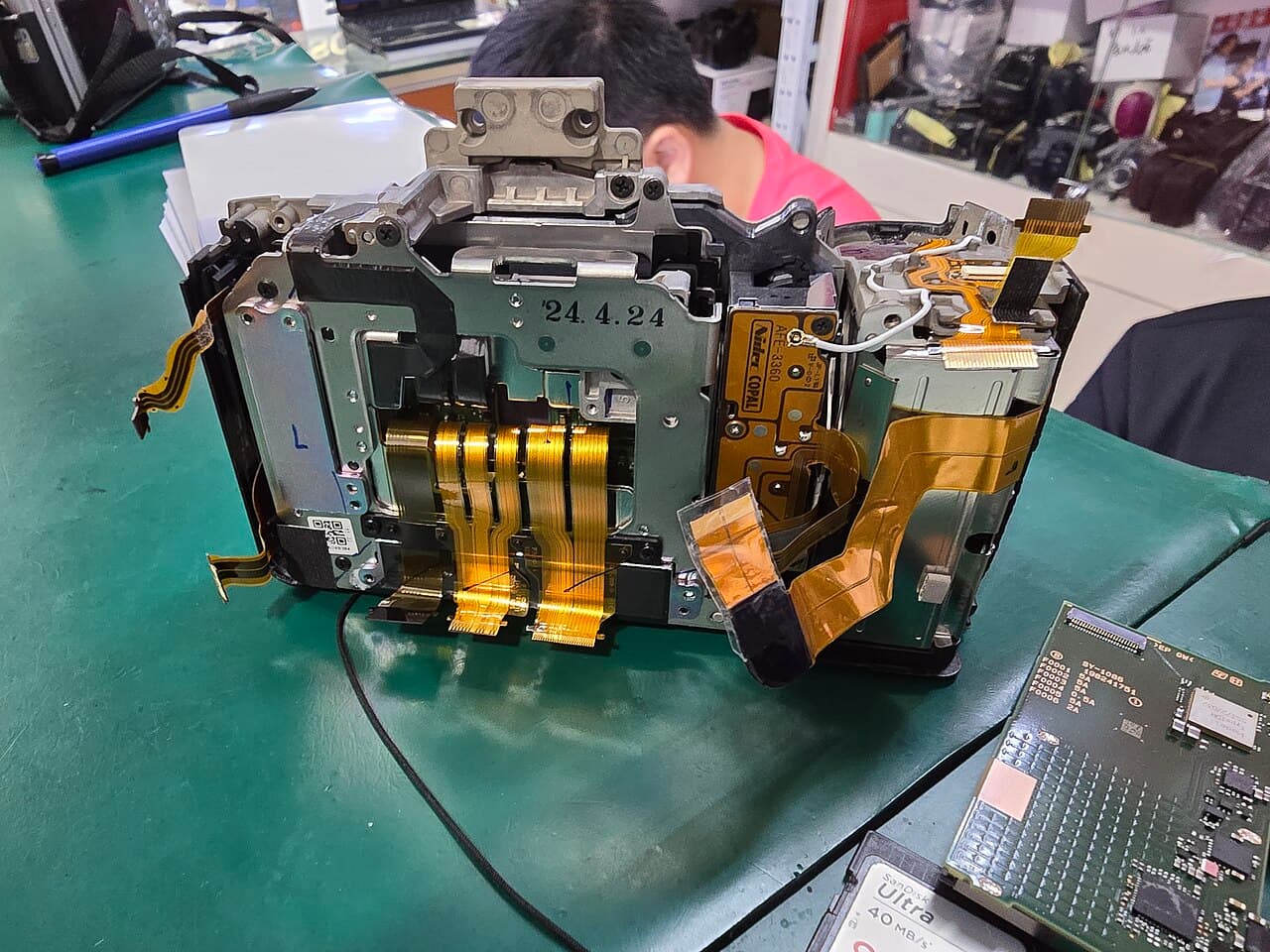
- The kind of fault. Cleaning a sensor or reseating a loose lens mount is quick. Replacing a shutter unit, a screen, a flash assembly or a sensor takes parts and bench time. Water damage often means a full strip-down and cleaning of the circuit boards, and the result is less certain.
- The camera body or the lens. A professional body and a lens with image stabilisation are built from many small precise parts, and their repairs cost more than those on a compact camera. Many compacts are priced as replace, not repair.
- Parts supply. Makers stop supplying parts for older models, so a shop may have to find a used part or decline the job.
- Calibration. Autofocus and sensor-alignment faults need test charts and adjustment after the repair, which adds labor.
- Diagnosis and shipping. Many shops charge to find the fault, and a manufacturer service centre may ask you to ship the camera in. Ask whether the diagnostic fee is credited if you go ahead and who pays for shipping and insurance.
Check the warranty before you pay anyone
A camera that is still under the maker's warranty may be fixed at no charge, so look at the card or the maker's support page for the model before you shop around. Warranties generally leave out accident and liquid damage, and a drop or a dunk is usually a paid repair.
If a repair outside the maker's network damages the camera, the maker may refuse cover for that damage. The Federal Trade Commission's guide to the federal warranty law notes that "it is permissible to disclaim warranty coverage for defects or damage caused by the use of parts or service."[1] Read the terms for your brand before an independent shop opens the camera.
Extended plans and some credit cards add cover, and a homeowner's or renter's policy may cover a camera lost to theft or fire. Those are worth a phone call before you pay out of pocket.
Getting a quote you can compare
Give each shop the make, model and lens, describe the symptoms and say what you have already tried. Then ask for:
- the diagnosis and the cause, in writing
- each part and the labor priced separately
- whether the parts are new, refurbished or used, and the warranty on the repair
- the turnaround time and any fee if you decline the repair
- how the shop will treat your memory card and the images on it
Virginia's Consumer Protection Act lists "Misrepresenting that repairs, alterations, modifications, or services have been performed or parts installed" as a prohibited practice.[2] A written, itemized quote, with any replaced part returned to you on request, makes that easy to check.
Repair or replace
Put the quote next to the price of a comparable camera, used or new, and weigh the camera's age and what it does for you. A small fix on a body you love is often sensible. A repair that approaches the cost of a newer model on a camera whose parts are no longer made usually is not. If the camera is a lens or body you shoot with weekly, a repair that restores a known, calibrated tool can beat the risk of an unfamiliar replacement.
Stop and call a pro if
Do not open the body of a camera yourself. The sensor, shutter and flash capacitor are delicate, and prying at them can add to the bill. Stop using a battery that is swollen, hot or dented. Lithium-ion batteries and devices containing these batteries should NOT go in household garbage or recycling bins.[3] To prevent fires, tape battery terminals and/or place lithium-ion batteries in separate plastic bags.[3] If the Li-ion battery becomes damaged, contact the battery or device manufacturer for specific handling information.[3] Do not charge or power a camera that has been under water or has liquid inside, and take out the battery and card and let a shop dry and inspect it.
Read more electronics repair answers, such as how much drone repair costs in Virginia and how much laptop repair costs in Virginia, which walk through the same warranty-and-quote routine.
Loclis lists local repair businesses. Browse electronics repair services, then describe the camera problem once and repair shops can quote it.
Common questions
- Does a warranty cover a camera I dropped?
- Usually not. Warranties generally leave out accident and liquid damage, so a drop or a dunk is typically a paid repair. Check the terms for your brand and model.
- Can an independent shop repair a camera still in warranty?
- It can affect your cover. The Federal Trade Commission's warranty guide notes that a maker may disclaim coverage for damage caused by the use of parts or service, so read the terms before anyone opens the camera.
- Is it worth repairing an old camera?
- Compare the written quote with the price of a comparable used or new camera, and ask whether parts are still made. A cheap fix on a body you like is worth it. A large repair on a camera with no parts supply usually is not.
- What should I do if my camera got wet?
- Switch it off, take out the battery and card, and do not power it on. Take it to a repair shop soon, because corrosion spreads, and copy your images from the card to a computer.
- What should a repair quote include?
- The diagnosis, each part and the labor priced separately, whether parts are new or used, the warranty on the repair, the turnaround time and any fee if you decline.
- What do I do with a swollen camera battery?
- Stop using it and keep it away from heat. Do not put it in household garbage or recycling; tape the terminals or bag it separately and contact the maker for handling information.
Sources
- [1] Businessperson's Guide to Federal Warranty Law, Federal Trade Commission. Checked October 27, 2026.
- [2] Code of Virginia § 59.1-200, Prohibited practices, Code of Virginia, Virginia General Assembly. Checked October 27, 2026.
- [3] Used Lithium-Ion Batteries, U.S. Environmental Protection Agency. Checked October 27, 2026.
Want a pro to handle it?
Describe the job once. Licensed local businesses send quotes, and you pay only when you book one.
Get a quote for Electronics