How much does chainsaw repair cost in Virginia?
Chainsaw repair shops in Virginia set their own rates, so there is no standard price. The bill depends on what failed: a chain, bar or sprocket is a parts job, a chain brake or oiler is more labor, and an engine that will not run takes diagnosis time. Ask for a written quote and compare it with a new saw.
Free to ask. Local shops send quotes, and you pay only when you book one.
By Kasra Taheri, Founder, LoclisPublished
Researched and drafted with AI, then checked claim by claim against the sources listed below before it was published. Prices and rules change; the dates beside each source say when it was last checked.
Step by step
Read when to stop and call a pro, further down this page, before you start.
Step 1: Write down what the saw is doing
Note whether it will not start, runs and stalls, cuts crooked, smokes, or does not oil the bar, since the symptom steers the quote.
Step 2: Find the saw model and the chain details
Copy the model number and the pitch and gauge etched near the rear of the bar.[2]
Step 3: Check the cheap causes first
Look at chain sharpness, chain tension and the bar-oil discharge slot, which are all things an owner can inspect.[1]
Step 4: Ask for a written quote
Request parts, labor and any diagnosis fee itemised, and ask whether the diagnosis fee is credited if you go ahead.
Step 5: Compare it with replacing the saw
Ask what a comparable new saw costs and weigh the quote against it, as covered in the guide on whether an old saw is worth repairing.
The short answer
Chainsaw repair has no fixed price in Virginia. Shops set their own labor rates and parts prices, so the honest way to learn what yours will cost is a written quote for your saw. What you can do ahead of time is work out which of three kinds of job you have, because each is priced differently.
Three kinds of chainsaw repair
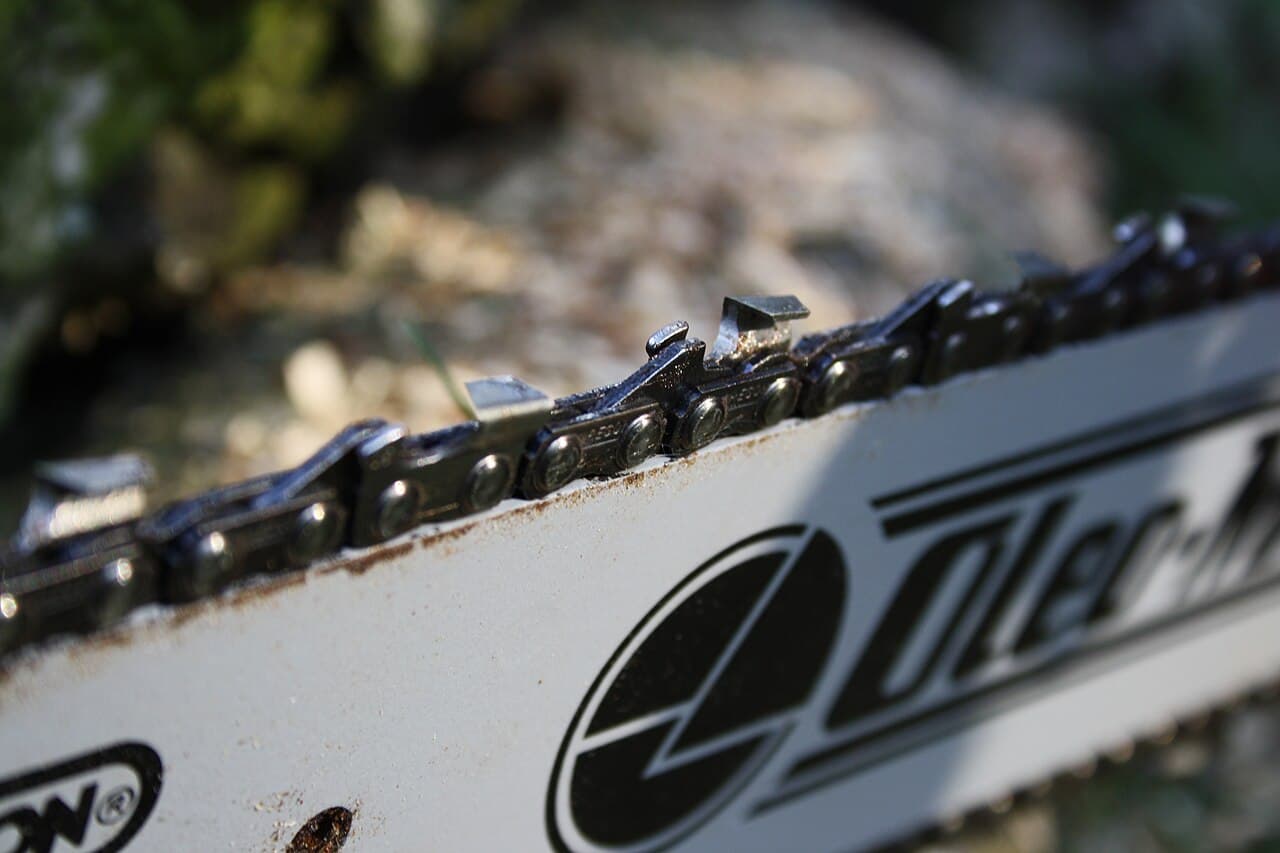
Cutting parts: chain, bar, sprocket. These are parts-driven and the cheapest to fix. Two measurements, pitch and gauge, are important when purchasing or replacing a chain.[2] The pitch of the chain must match the pitch of the drive sprocket and guide bar tip.[2] Better still, chainsaw manufacturers laser etch the chain pitch and gauge at the rear of the bar,[2] so you can read the numbers off the saw and get the same quote from any counter.
A chain is due for replacement when it is worn out: it is time to replace the chain when the longest portion of the cutting tooth has been worn down to less than 4 mm, or if you find cracks.[3] If the bar is curved, it is time to replace it.[2] If the chain wiggles side-to-side when properly tightened on the bar, it is time to get a new bar.[2] Do not fit a new chain to a tired sprocket either: a worn sprocket can ruin a chain quickly.[1]
Oiling and brake: labor-driven. If the bar-oiling mechanism is not operating properly, serious damage to the chain and bar can occur in a short time.[1] A clogged oil slot is a quick clean; a failed oil pump is a part and labor. The chain brake is different again. Maintenance of this important safety feature is critical and should be done by properly trained service technicians.[1] Expect a shop to charge for bench time on it, and do not skip the repair to save money.
Engine and fuel: diagnosis-driven. A saw that will not start, stalls or bogs may need a new spark plug, air filter or fuel line, or a carburetor clean or rebuild, or it may need an engine repair that costs more than the saw is worth. The shop usually has to run the saw to know, which is why many charge a diagnosis or bench fee.
What drives the price
- The saw's brand and age. Parts for current models from major makers are easy to get. Parts for an orphan brand or a decades-old saw may be hard to find or need ordering.
- Labor rate and shop type. An authorised dealer, an independent small-engine shop and a mobile repairer each set their own rate.
- Bar length and chain type. Longer bars and specialty chains cost more to replace.
- Whether it is one fault or several. A saw that has sat with old fuel can need a carburetor clean, a new fuel line and a new chain in one visit.
How to keep the bill down
Check what you can before you drop the saw off. Most new saws come with a troubleshooting guide, and using it with time and patience, you can diagnose chain saw problems, save on repair bills and keep your saw working.[1] A dull chain, loose chain or empty oil tank are common causes of a saw that seems to be failing, and you can sort them yourself: see how to adjust chainsaw chain tension and how to sharpen a chainsaw chain.
When you get a quote, ask for parts and labor listed separately, any diagnosis fee, and whether the shop will call you before doing work beyond the quote. Then compare it with the price of a comparable new saw. Is it worth repairing an old chainsaw? walks through that decision.
Stop and call a pro if
- The chain brake does not stop the chain or the hand guard does not move freely. Stop using the saw until a technician has checked it.
- The saw smells of fuel, leaks fuel or has a damaged fuel line. Do not run it.
- The engine runs rough, races or will not idle. Carburetor and engine work belongs in a shop.
- The chain smokes or the bar is not getting oil and cleaning the oil slot does not fix it.
- The housing, handles or hand guard are cracked.
To get quotes from nearby shops, post a chainsaw repair job, read more under small engine repair answers, or see chainsaw repair.
Common questions
- Is there a standard price for chainsaw repair in Virginia?
- No. We found no official or published Virginia price list for chainsaw repair, so every shop sets its own labor rate and parts prices. Get a written quote before you leave the saw.
- What parts wear out most often?
- University of Georgia Extension says to replace a bar that is curved or lets the chain wiggle side to side when properly tightened, and University of Missouri Extension notes a worn sprocket can ruin a chain quickly. Chains, bars and sprockets are the usual wear parts.
- Who should repair the chain brake?
- University of Missouri Extension says maintenance of the chain brake is critical and should be done by properly trained service technicians. Do not leave a brake problem for later.
- Can I diagnose a saw myself before taking it in?
- Partly. University of Missouri Extension says the troubleshooting guide that comes with most new saws can help you diagnose problems and save on repair bills. Chain, bar and oiling checks are things an owner can look at, and anything about the engine or brake is a shop job.
- What should a written chainsaw repair quote include?
- The saw model, the work to be done, parts and labor listed separately, any diagnosis or bench fee, and how long the shop will hold the saw. Ask whether the diagnosis fee comes off the bill if you go ahead.
Sources
- [1] Selecting and Maintaining a Chain Saw (G1954), University of Missouri Extension. Checked October 27, 2026.
- [2] Chainsaw Chains and Bars (C1208), University of Georgia Cooperative Extension. Checked October 27, 2026.
- [3] Filing the chain (Chainsaw Academy), Husqvarna US. Checked October 27, 2026.
Want a pro to handle it?
Describe the job once. Licensed local businesses send quotes, and you pay only when you book one.
Get a quote for Small Engines