Is it worth repairing an old chainsaw?
Usually yes if the fault is a chain, bar, sprocket, filter or other wear part and the saw's chain brake, hand guard and chain catcher are intact. Usually no if the engine is badly worn, the housing is cracked, safety parts are missing, or the written quote nears the price of a comparable new saw.
Free to ask. Local shops send quotes, and you pay only when you book one.
By Kasra Taheri, Founder, LoclisPublished
Researched and drafted with AI, then checked claim by claim against the sources listed below before it was published. Prices and rules change; the dates beside each source say when it was last checked.
Step by step
Read when to stop and call a pro, further down this page, before you start.
Step 1: Check the safety features
Confirm the saw still has its chain brake and front hand guard, chain catcher, throttle trigger lockout and handles, all intact.[1]
Step 3: Note the symptom
Write down what it does, such as no start, stalling, crooked cuts or no bar oil, using the saw's troubleshooting guide if you have it.[1]
Step 4: Get a written quote
Ask a repair shop for parts and labor itemised, plus any diagnosis fee.
Step 5: Price a replacement
Find the cost of a comparable new saw and compare the two, including a chain, safety gear and warranty.
Step 6: Decide
Repair if the quote is well under the replacement and the saw is sound; replace if it is close or the saw is unsafe.
The short answer
An old chainsaw is worth repairing when the problem is a wear part and the saw is otherwise sound, and not worth it when the engine is worn, the body is cracked, safety parts are gone, or the quote approaches the price of a comparable new saw. The decision is a comparison, so start with a written quote.
Start with the safety features
Age matters less than whether the saw still protects you. Look for the parts University of Missouri Extension lists. The chain catcher keeps a broken chain from flying back at the operator.[1] A chain brake stops the chain’s motion and can be activated in two ways.[1] The front hand guard also acts as a manual chain brake, and the safest brake is one with an inertia sensor that stops the chain automatically on a kickback.[1]
If any of these is missing, cracked or does not work, repair it or retire the saw. The brake is not a do-it-yourself part: maintenance of this important safety feature is critical and should be done by properly trained service technicians.[1]
Chain choice is part of the same picture. A consumer saw must be equipped with a low-kickback, or safety, chain.[1] Even so, low-kickback chains minimize the risk of kickback, but they do not eliminate the hazard.[1] Gear is part of the budget too: PPE can cost more than the saw itself but far less than a trip to the emergency room.[1]
Repairs that usually make sense
Wear parts are cheap relative to a new saw and do not mean the saw is finished.
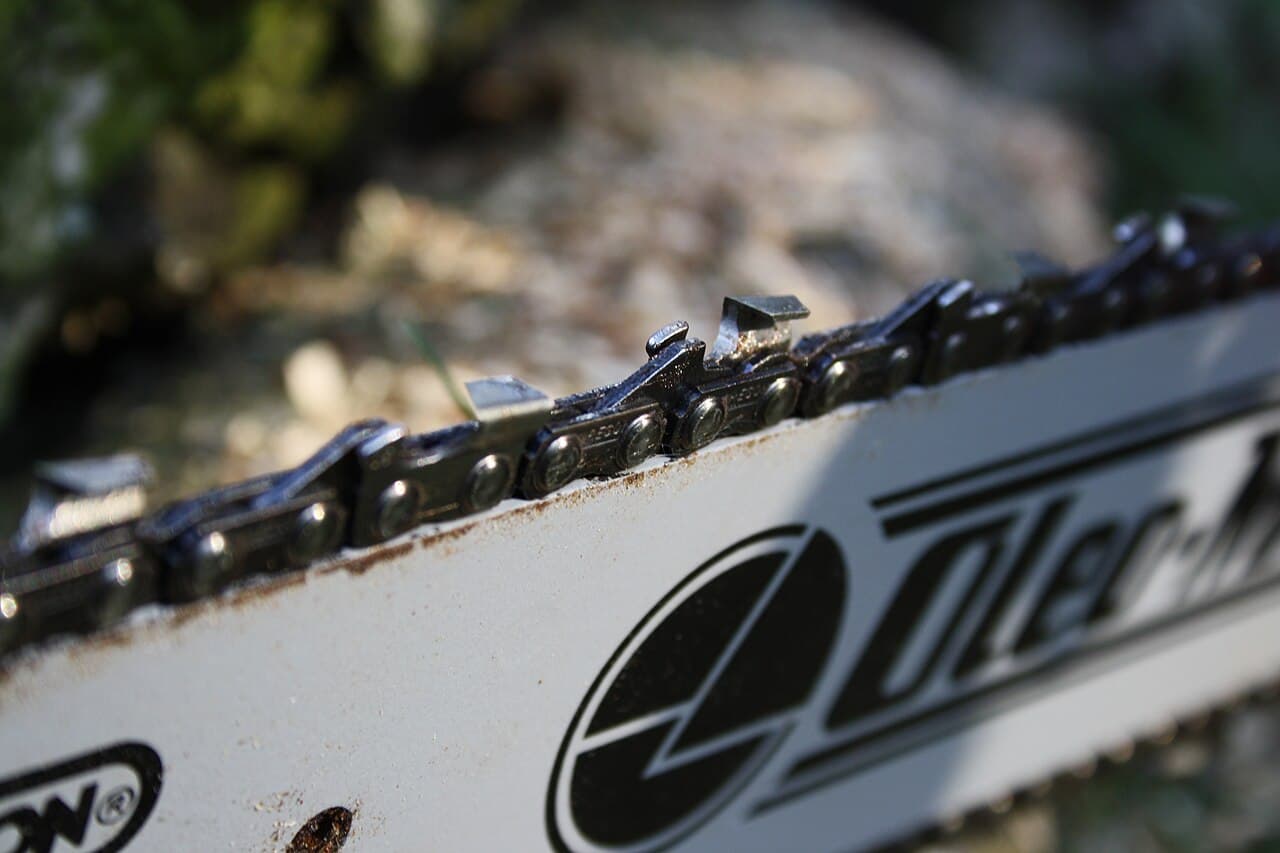
- Chain. It is time to replace the chain when the longest portion of the cutting tooth has been worn down to less than 4 mm, or if you find cracks.[3]
- Bar. If the bar is curved, it is time to replace it.[2] If the chain wiggles side-to-side when properly tightened on the bar, it is time to get a new bar.[2]
- Sprocket. A worn sprocket can ruin a chain quickly,[1] so replace it with a new chain when it is worn.
- Filters, spark plug, fuel line, carburetor clean. Typical for a saw that has sat with old fuel, and normal maintenance for any gas saw.
Try the free checks first. Most new saws come with a troubleshooting guide, and using it with time and patience, you can diagnose chain saw problems, save on repair bills and keep your saw working.[1] A loose or dull chain is the commonest false alarm: see how to adjust chainsaw chain tension and how to sharpen a chainsaw chain.
Repairs that usually do not
- A worn-out engine. Low compression, scored cylinder or a seized piston usually means a rebuild that costs close to a new saw.
- A cracked crankcase or housing, or damaged handles.
- Missing or broken safety parts that the maker no longer sells.
- A model with no parts support. Ask a dealer whether the parts exist before you agree to anything.
- Several faults at once, where each is modest but together they add up.
Compare the quote with a new saw
Shops set their own prices, so the numbers have to come from your own quotes. Get a written estimate that lists parts and labor and any diagnosis fee, then check the price of a comparable new saw. As a rule of thumb, repair when the quote is a small share of the replacement price and the saw has been reliable; replace when the quote is close to it or the saw needs more than one major repair. What chainsaw repair costs in Virginia explains what drives a quote.
Also count what a new saw gives you: a warranty, current safety features and a fresh chain and bar. And count what yours gives you: a saw you know, set up the way you like it.
Stop and call a pro if
- The chain brake, hand guard or chain catcher is damaged or missing. Do not run the saw until a technician has dealt with it.
- The saw leaks fuel, or the fuel line or tank is cracked.
- The engine runs rough, races, smokes or will not idle after you have checked the chain and filters.
- The housing or handles are cracked.
- You cannot say what is wrong, and you are tempted to keep running it. A shop can diagnose it.
If a shop can look at it, post a chainsaw repair job to compare quotes, see chainsaw repair, or browse small engine repair answers.
Common questions
- Is there an age at which a chainsaw is not worth fixing?
- No fixed age. A well-kept older saw with intact safety features and a wear-part fault is usually worth fixing; an older saw with a worn-out engine, a cracked housing or missing safety parts usually is not. Parts availability for the model matters too.
- Which faults are usually worth repairing?
- Wear parts: a dull or worn chain, a curved or loose bar, a worn sprocket, a clogged air or fuel filter, a fouled spark plug. University of Georgia Extension says a curved bar should be replaced and University of Missouri Extension says a worn sprocket can ruin a chain quickly.
- Is it safe to use an old saw with a missing hand guard or chain brake?
- No. University of Missouri Extension describes the hand guard as a manual chain brake and the chain catcher as the part that keeps a broken chain from flying back at the operator. Have missing safety parts replaced or retire the saw.
- Should I repair the saw or buy a new one with a warranty?
- Compare a written repair quote with the price of a comparable new saw. A new saw comes with a warranty and current safety features; a repair on a saw you know well can still be the better value when the quote is a small share of the replacement cost.
- What does a repair shop need to quote a repair?
- The saw's brand and model, what it does when it fails, and how old the fuel in it is. Many shops need to run the saw before they can price it, and some charge a diagnosis fee.
Sources
- [1] Selecting and Maintaining a Chain Saw (G1954), University of Missouri Extension. Checked October 27, 2026.
- [2] Chainsaw Chains and Bars (C1208), University of Georgia Cooperative Extension. Checked October 27, 2026.
- [3] Filing the chain (Chainsaw Academy), Husqvarna US. Checked October 27, 2026.
Want a pro to handle it?
Describe the job once. Licensed local businesses send quotes, and you pay only when you book one.
Get a quote for Small Engines