How do I adjust chainsaw chain tension?
With the saw off and the chain brake released, loosen the bar nuts slightly, turn the tensioning screw until the chain just touches the underside of the bar and still pulls around easily by hand, then tighten the bar nuts while lifting the bar tip. Re-check after a few minutes of use, because new chains stretch.
Free to ask. Local shops send quotes, and you pay only when you book one.
By Kasra Taheri, Founder, LoclisPublished
Researched and drafted with AI, then checked claim by claim against the sources listed below before it was published. Prices and rules change; the dates beside each source say when it was last checked.
Step by step
Read when to stop and call a pro, further down this page, before you start.
Step 1: Switch the saw off and put on gloves
Stop the engine or unplug or remove the battery, let it cool if it has been running, and wear leather gloves.[1]
Step 2: Release the chain brake
Pull the hand guard back so the brake is off and the chain can be turned by hand.
Step 3: Loosen the bar nuts a little
Back the bar nuts off until they are snug but the bar can slide; use the wrench or multipurpose tool that came with the saw.[1]
Step 4: Turn the tensioning screw
Turn the tensioning screw or knob until the chain is in contact with the underside of the guide bar and no longer hangs below it.[2]
Step 6: Tighten the bar nuts
Hold the bar tip up and tighten the bar nuts fully, then pull the chain around again to confirm it still moves freely.
Step 7: Re-check after a short run
Run a few cuts, switch the saw off, and re-tension, because most chain stretch happens in the first half-hour.[1]
The short method
Chain tension is the one chainsaw adjustment you will do again and again, and it takes a couple of minutes with the wrench that came with the saw. The target is simple: a chain that sits snug against the underside of the bar and still pulls around freely by hand.
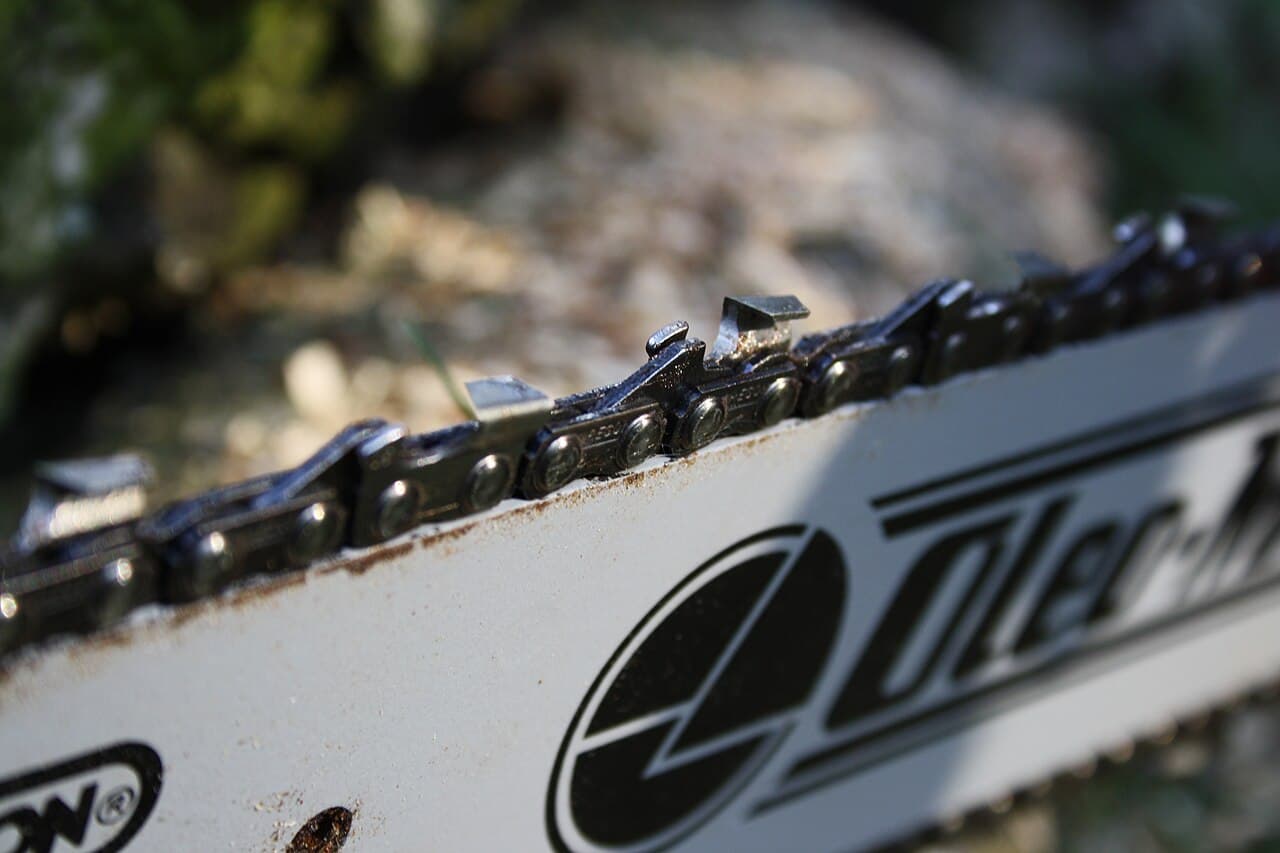
Why tension matters
If the chain is too loose, it will come off; if too tight, the chain will bind and overheat.[1] A slack chain can jump off the guide bar, cause injuries and damage the chainsaw.[2] A slack chain – as well as an overly tight one – can also cause premature wear on the bar.[2]
What correct tension looks like
A properly tensioned chain should not hang under the guide bar.[2] The chain tension is correct when the chain is in contact with the underside of the guide bar, and you still can pull it around easily by hand.[2]
University of Missouri Extension gives a measurable version. Most manufacturers recommend that a cold chain be tightened to where the chain tie straps hang away from the bar about 1/32-inch at the center of the bar. A warm chain should be adjusted to 1/8-inch gap.[1] It adds that chains should be somewhat tighter on a bar fitted with a sprocket nose tip.[1] Your owner's manual has the figure for your saw, and it wins over any general rule: follow the manufacturer’s recommendation on proper chain tension.[1]
Make the adjustment
Work with the saw off and the chain brake released, and wear gloves. Extension guidance is to put on hearing protection, goggles and leather gloves and chain saw chaps[1] whenever you are running the saw, and gloves are the minimum when you handle a chain that has been sharpened.
Loosen the bar nuts only enough that the bar can slide. Turn the tensioning screw (or knob on a tool-free saw) a little at a time, then pull the chain around the bar by hand. Stop when it touches the underside of the bar and still moves easily. Hold the nose of the bar up while you tighten the bar nuts, then pull the chain around once more.
A side-mounted tensioning knob is quick, but it has a weakness: the tensioning wheels can get easily clogged with sawdust and oil, making old-fashioned screwdriver adjustment more reliable.[1] If your knob will not turn, clean the area around it before forcing it.
Check again after a few minutes
New and newly fitted chains stretch. All chains stretch with use and will require periodic retensioning. Most of the stretch occurs during the first half-hour of operation.[1] Make a few cuts, switch off, let the saw sit, and re-tension. For a chain you use regularly, check the tension before each session.
Chain still slack, or the bar looks bad
If you keep running out of adjustment, the chain has stretched past what the screw can take up, or the bar and sprocket are worn. Look at the bar with the chain off. If the chain wiggles side-to-side when properly tightened on the bar, it is time to get a new bar.[3] A dealer can match a bar and chain to your saw. For the sharpening side of chain care, see how to sharpen a chainsaw chain, and for what a repair visit involves, see what chainsaw repair costs in Virginia.
Stop and call a pro if
- The chain keeps coming off or will not stay tight after you have re-tensioned it. The bar, sprocket or chain may be worn out.
- The chain brake will not release or does not hold. The brake is a safety part and is worth a look from a dealer's technician.
- The saw is damaged or the tensioning mechanism is stripped or broken. Have a shop repair it before you use the saw.
- You are not sure how to hold or work on the saw safely. A repair shop can set the tension for you in a few minutes.
If you would rather hand the job over, post a chainsaw repair job, and you can see chainsaw repair or more answers on small engine repair.
Common questions
- How tight should a chainsaw chain be?
- Husqvarna says the tension is correct when the chain is in contact with the underside of the guide bar and you can still pull it around easily by hand. The saw's manual gives the exact setting for your model.
- What happens if the chain is too loose?
- A slack chain can jump off the guide bar, cause injuries and damage the chainsaw, according to Husqvarna. University of Missouri Extension says a loose chain will come off.
- What happens if the chain is too tight?
- University of Missouri Extension says a chain that is too tight will bind and overheat. Husqvarna adds that an overly tight chain, like a slack one, can cause premature wear on the bar.
- Should I adjust the chain hot or cold?
- University of Missouri Extension says most manufacturers want a cold chain tightened so the tie straps hang away from the bar about 1/32-inch at the center, and a warm chain adjusted to a 1/8-inch gap. Check your manual for your saw's figure.
- Why does a new chain keep needing adjustment?
- All chains stretch with use and need periodic retensioning, and most of the stretch occurs during the first half-hour of operation, says University of Missouri Extension.
Sources
- [1] Selecting and Maintaining a Chain Saw (G1954), University of Missouri Extension. Checked October 27, 2026.
- [2] Filing the chain (Chainsaw Academy), Husqvarna US. Checked October 27, 2026.
- [3] Chainsaw Chains and Bars (C1208), University of Georgia Cooperative Extension. Checked October 27, 2026.
Want a pro to handle it?
Describe the job once. Licensed local businesses send quotes, and you pay only when you book one.
Get a quote for Small Engines