How much does chimney sweeping cost in Virginia?
Chimney sweeping has no set price in Virginia; each company prices the chimney in front of it. The total depends on how many flues are swept, whether it is a fireplace, stove or insert, the inspection level, any camera scan, how much glazed creosote there is, and roof access. Get written quotes that list exactly what is included.
Free to ask. Local shops send quotes, and you pay only when you book one.
By Kasra Taheri, Founder, LoclisUpdated
Researched and drafted with AI, then checked claim by claim against the sources listed below before it was published. Prices and rules change; the dates beside each source say when it was last checked.
This is a job for a licensed pro in Virginia
This page explains what the work involves, the permits, what a licensed pro does and what drives the cost. It does not give step-by-step instructions, because this work needs a licence, a permit or both, and doing it wrong can injure someone. Before you hire, check the licence on Virginia's DPOR record.
Chimney sweeping has no single price in Virginia. Each company prices the chimney in front of it, and the bill depends on how many flues there are, what is connected to them, how much inspection you need, and how dirty the system is. What you can do is understand those drivers and ask for quotes that spell them out, so you can compare them line for line.
If you are not sure what the visit includes, what a chimney sweep does explains the job.
What is being swept
The first thing a quote has to pin down is the scope. A complete sweeping covers the flue and the smoke chamber, the sloped space above the damper, and not only the firebox, so a low price that covers only brushing out the firebox is not comparable with a full sweep.
The number of flues matters. A house with a living-room fireplace, a basement wood stove and a furnace flue has three flues, and each one takes time. So does the appliance. Checking a stove's flue usually means disconnecting the stovepipe, which adds to the visit.
Ask each company to list every flue it will sweep and every appliance it will check.
The inspection
Inspections come in different depths, and the depth changes the price.
- A routine check goes with a yearly sweep: the sweep looks up the flue with a light, checks the damper and appliance, and looks at the cap and crown. A camera scan, if you want one, is often an extra line on the quote.
- A deeper inspection takes the sweep onto the roof and into the attic, basement and crawl space, usually with a camera scan of every flue and its connected appliance. It takes longer and costs more.
Ask for the deeper version when the property is being sold, before a liner is installed, or after a chimney fire. If one of those applies to you, a routine-check price is not the one to compare.
How dirty the chimney is
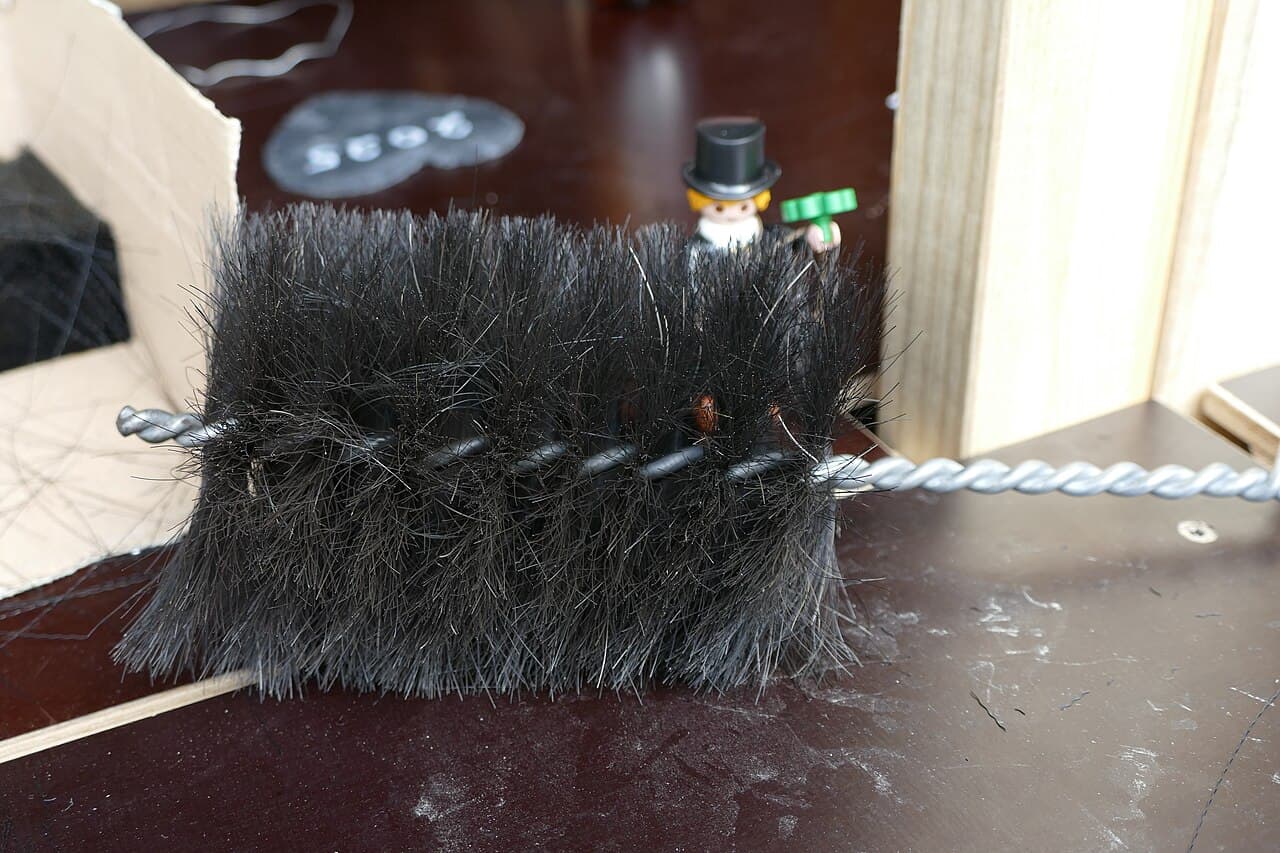
Loose soot brushes out quickly. Glazed creosote, the hard, shiny, tarry kind, is where costs climb, because it may need extra treatment or a second visit. Ask for that work to be priced separately from the basic sweep.
How you burn affects the next bill. EPA says creosote tends to build up when the air supply is restricted, when unseasoned wood is burned and when the chimney is cooler than normal.[5] Prince William County Fire and Rescue warns that closed air inlets on stoves and fireplaces cause creosote buildup, and that "Certain types of wood, like soft moist wood, increase creosote buildup."[4] Regular sweeping tends to keep each visit a routine cleaning rather than a creosote removal job.
Access and the roof
A one-storey ranch with a low chimney is a different day's work from a steep two-storey roof. Expect the quote to reflect the height and pitch of the roof, how the chimney is reached, and whether the sweep can work from inside or needs the top. Ask whether roof work is included in the price.
Repairs are priced separately
A sweep often finds something: a missing cap, a cracked crown, loose mortar, a damaged flue liner. These are repairs, not sweeping, and they are where a job can grow. In Virginia, the licence follows the price. The Code of Virginia says Class C contractors are those working on single contracts over $1,000 but less than $30,000,[2] and larger jobs need a higher class. Ask for any repair to be quoted on its own, in writing, so you can get a second opinion before agreeing.
Getting quotes you can compare
The Board for Contractors advises getting at least three written bids or estimates using identical plans and specifications,[1] and to beware of any bid substantially lower than the others.[1] For repair work, its rule of thumb for a deposit is an initial deposit of no more than 10% of the total price or $1,000, whichever is less.[1]
The paperwork depends on the job. The Board's rule that residential contracting needs a written contract excludes those who engage in routine maintenance or service contracts,[3] so a plain sweep may come with only an invoice. For repairs, the same rule requires a written contract that states the total cost, the amounts and schedule for progress payments including the down payment, and a listing of the specified materials and work to be performed.[3]
Either way, ask each company to put these in writing:
- Every flue and appliance included.
- The inspection level, and whether a camera scan is included.
- Whether the smoke chamber is swept, not only the flue.
- How glazed creosote is priced if they find it, and how many visits it might take.
- Whether roof access is included.
- A written report of what they found, with photos if they take them.
When to call a licensed pro
Chimney sweeping is pro-only work: it involves roof access, and a chimney left dirty or damaged risks a chimney fire or carbon monoxide in the house. Hire a sweep for the yearly inspection and cleaning, and a licensed contractor for any repair over $1,000. Before you sign for a repair, use how to check a contractor's licence to confirm the licence with DPOR, and see what certifications a chimney sweep should have for the credentials worth asking about.
Loclis lists DPOR-licensed businesses with their licence number and class. Browse chimney sweeping, look up chimney businesses in Blacksburg, or see all chimney and fireplace answers. Loclis's own fees are on the pricing page.
Describe your chimney once and local chimney businesses quote the sweep.
Common questions
- Is there an average price for a chimney sweep in Virginia?
- Not one worth relying on. Prices vary by company and by chimney, and a single number hides the things that change the bill: the number of flues, the type of appliance, the inspection level and how much creosote is in the chimney. Two or three written quotes for your own chimney tell you more.
- Why did one sweep quote much more than another?
- Usually because they are quoting different work. One may be pricing a routine check and a sweep of one flue, the other a deeper inspection with a camera scan of every flue. Line the quotes up item by item before deciding, and be wary of a price far below the rest.
- Does glazed creosote cost extra to remove?
- Often, yes. Hard, glazed creosote does not come off as easily as soft soot, so it may need extra treatment and sometimes more than one visit. Ask for that work to be priced separately from the basic sweep.
- Is a camera inspection worth paying for?
- It is optional for a routine check but normally part of a deeper inspection, which is worth having when a house is sold, before relining, and after a chimney fire. For an ordinary yearly sweep with nothing changing, many homeowners skip it; when something has changed, it is part of the job.
- Do I need a written contract for a chimney sweep?
- Virginia's Board for Contractors rule on written residential contracts excludes routine maintenance or service contracts, so a plain sweeping may come with only an invoice. Repairs over $1,000 are contracting work: get a written contract that states the total cost, payment schedule and the work and materials.
Sources
- [1] What You Should Know Before You Hire a Contractor, Virginia Board for Contractors, DPOR. Checked October 26, 2026.
- [2] Code of Virginia § 54.1-1100. Definitions, Code of Virginia. Checked October 26, 2026.
- [3] 18VAC50-22-260. Filing of charges; prohibited acts, Virginia Administrative Code (Board for Contractors). Checked October 26, 2026.
- [4] When Using Alternative Home Heating Systems - Use Wisely & Safely, Prince William County Department of Fire and Rescue. Checked October 26, 2026.
- [5] Frequent Questions about Wood-Burning Appliances, U.S. Environmental Protection Agency, Burn Wise. Checked October 27, 2026.
Want a pro to handle it?
Describe the job once. Licensed local businesses send quotes, and you pay only when you book one.
Get a quote from a local pro