Why does my fireplace smoke into the room?
A fireplace smokes into the room when the chimney's draft loses to something pulling the other way. The usual causes are a closed damper, a cold flue, negative pressure from exhaust fans or a tight house, a chimney that is too short, a blocked or dirty flue, and wet wood. If it keeps happening, have a chimney sweep inspect the system.
Free to ask. Local shops send quotes, and you pay only when you book one.
By Kasra Taheri, Founder, LoclisUpdated
Researched and drafted with AI, then checked claim by claim against the sources listed below before it was published. Prices and rules change; the dates beside each source say when it was last checked.
This is a job for a licensed pro in Virginia
This page explains what the work involves, the permits, what a licensed pro does and what drives the cost. It does not give step-by-step instructions, because this work needs a licence, a permit or both, and doing it wrong can injure someone. Before you hire, check the licence on Virginia's DPOR record.
A fireplace smokes into the room when the chimney's pull, its draft, loses to something pulling the other way. Draft comes from heat and height: the hotter the exhaust gases, the stronger the draft, and the taller the chimney, the stronger the draft.[1] Anything that cools the flue, blocks it, or lowers the air pressure inside your house works against it.
Most causes fall into a short list. A few you can rule out yourself in a minute. The rest need a chimney sweep's inspection.
The damper is closed or only partly open
Start here, because it is the most common and the easiest to fix. Look up into the fireplace with a flashlight and confirm the damper is fully open before you light the fire. EPA lists a damper that is not open wide enough among the causes of restricted air supply, and the longer smoke stays in the flue, the more likely creosote is to form.[5] Fairfax County Fire and Rescue adds: keep it open until the ashes are cool, to avoid a buildup of poisonous gases such as carbon monoxide.[2]
A damper that will not open fully, sticks, or has a broken handle is a job for a sweep.
The house is pulling air down the chimney
This is the cause people least expect. According to a fireplace best-practices paper by the industry's technical committee, the three most common causes of negative pressure in houses are stack effect, exhaust fans and imbalances in the air circulation system.[1]
- Exhaust fans. A kitchen range hood, a downdraft cooktop fan, bath fans or a clothes dryer all push air out. The paper explains that a large exhaust fan running in a modern, tightly built house can drop the indoor pressure below the outdoor pressure, enough to pull smoke into the house.[1]
- Heating and cooling ducts. Leaking ducts and air handlers in attics or crawl spaces, and unbalanced supply and return airflows, can depressurize the room the fireplace is in.[1]
- A tight house. The paper notes that most new homes do not leak enough air to supply the large amount of air an open fireplace consumes,[1] so the fire draws it from wherever it can.
If you light a fire in a fireplace that is backdrafting, the smoke comes into the room instead of going up the chimney.[1] The same pull can bring smoke down a second, unused flue in the house, so smoke from a fireplace you are not using points to the same cause. A quick test: turn off every exhaust fan and open a window a few inches near the fireplace. If the smoke stops, you have a pressure problem rather than a chimney defect.
The chimney is cold
A warm flue draws. A cold one can run backwards. The best-practices paper says a chimney in an outside chase tends to cool below room temperature when the fireplace is not in use, even if the chase is sealed and insulated.[1] Stack effect puts the lower floors of a house under negative pressure, and that is enough to force a cold backdraft down a chimney that is cooler than the room.[1] EPA suggests natural fire-starters for lighting, since they help warm your flue so it starts drafting sooner.[7] The giveaway is smoke at lighting time that clears once the fire is going, or cold air and odors coming out of the fireplace when it is not in use.
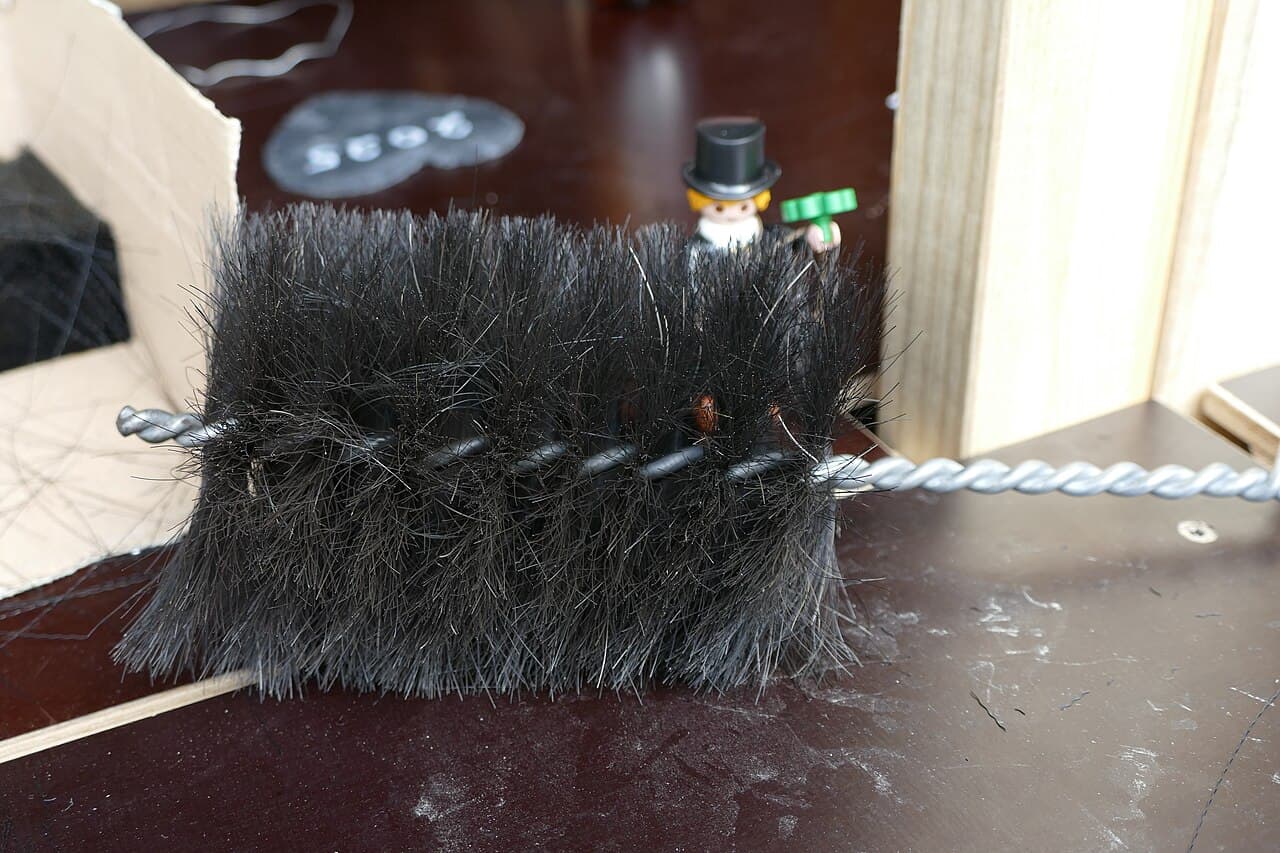
The chimney is too short or poorly placed
Height matters as much as temperature. The same paper says a chimney has to be as tall as the highest part of the warm house to overcome stack effect, so a chimney serving a one-storey section of a two-storey house can backdraft.[1] For factory-built units, it notes that factory-built fireplaces are normally approved for minimum system heights in the 14- to 15-foot range, with at least 20 feet preferable for large openings and see-through or corner fireplaces.[1] Each elbow or offset adds resistance to flow.[1] High-level leaks, from recessed lights, ceiling fan mounts, loose attic hatches, fold-down stairs and skylights, make stack effect worse.[1]
The flue is blocked or dirty
A flue narrowed by soot and creosote, or blocked by a nest, cannot carry the smoke away. EPA describes creosote as a highly combustible black or brown residue that condenses on the chimney walls, and says that if enough builds up it could cause a chimney fire.[5] Even a chimney you rarely use can be blocked by a bird or animal nest. Prince William County Fire and Rescue advises installing spark screens and caps on chimneys.[3] If you cannot remember the last sweeping, that is the first thing to book.
The wood is wet
Wet or green wood smolders and smokes. Prince William County Fire and Rescue says to use only seasoned wood,[3] and Fairfax County recommends wood that has been dried for a minimum of six months to a year and stored properly.[2] Seasoned wood is usually darker and lighter in weight than freshly cut wood.
Open fireplaces spill more easily
Open fireplaces are particularly vulnerable to smoke spillage,[1] and the paper notes that even people walking in front of the fireplace can be enough to cause spillage.[1] If your fireplace has glass doors, the quickest and most effective way to stop spillage is to close the glass doors.[1] Two common fixes work less well than people hope. On outside air kits, the paper says the available research shows outdoor air supplies do not reliably prevent smoke spillage.[1] On caps for factory-built fireplaces, the supplied cap should never be replaced or left off, and a specialized cap should go on only with the fireplace manufacturer's approval.[1]
When to call a licensed pro
Call a chimney sweep when smoke keeps coming into the room after you have checked the damper, turned off exhaust fans and burned dry wood, or right away if you see heavy soot, smell smoke when no fire is lit, or suspect a chimney fire. Smoke in the room means combustion gases are not leaving the house. Prince William County Fire and Rescue's advice is to install and maintain CO alarms to avoid the risk of CO poisoning,[3] and it is sensible to stop burning until the cause is found. EPA's advice if you smell smoke in your home is to shut down the appliance, open a window, be sure the flue is open and call a professional installer or chimney sweep.[6]
If the cause is not obvious, ask for a full inspection that includes a camera scan of the flue and a look at the chimney from the roof. The fix may be a sweeping, a new damper or cap, or a bigger change such as extending the chimney or adding make-up air. Those are repairs, and in Virginia the Code says Class C contractors are those working on single contracts over $1,000 but less than $30,000,[4] so check the licence of anyone quoting that work with how to check a contractor's licence.
What a chimney sweep does covers the visit, and how often a chimney should be cleaned covers the schedule. Loclis lists DPOR-licensed businesses with their licence number and class: browse chimney sweeping, look up chimney businesses in Blacksburg, or see all chimney and fireplace answers.
Describe the problem once and local chimney businesses quote the inspection.
Common questions
- Why does my fireplace only smoke when I first light it?
- A cold chimney has weak draft, and in a chimney that is cooler than the room, air can flow down it before the fire warms it up. This is common with chimneys built in an outside chase. A sweep can check the draft and the damper; the longer-term fixes depend on how the chimney was built.
- Why does smoke come out when the kitchen fan is on?
- A large exhaust fan in a tight house pulls the indoor pressure below the outdoor pressure, and the chimney loses. Turn exhaust fans off while the fire burns, or open a window near the fireplace. If you need the fan, a make-up air system interlocked with it can bring in a matching amount of outdoor air.
- Is smoke in the room dangerous?
- It can be. Smoke in the room means combustion gases are not leaving the house, and the Chimney Safety Institute of America warns that the same pressure problem can draw carbon monoxide back down a furnace chimney. Keep working carbon monoxide alarms, and stop burning until a sweep has found the cause.
- Will an outside air kit fix a smoking fireplace?
- Not reliably. A ducted outdoor air supply is required by some codes, but the fireplace industry's own best-practice paper says the available research shows outdoor air supplies do not reliably prevent smoke spillage. Where required, it must be installed, but it should not be the main fix.
- Can a chimney cap stop a smoking fireplace?
- Sometimes, if the problem is wind or rain, but a cap is not a cure-all. On a factory-built fireplace, the cap the manufacturer supplied should stay on, and any specialized cap should only go on with the manufacturer's approval.
- Does a dirty chimney cause smoke in the room?
- A flue partly blocked by soot, creosote, nests or debris can. That is one reason fire departments recommend an inspection every year. A sweep can tell you whether the flue is clear and whether the damper and smoke chamber are in good shape.
Sources
- [1] Best Practices for Woodburning Fireplace Installation, DuraVent (with the Hearth, Patio and Barbecue Association Technical Committee). Checked October 26, 2026.
- [2] Fireplace Safety Tips and Can Your Ashes, Fairfax County Fire and Rescue Department. Checked October 26, 2026.
- [3] When Using Alternative Home Heating Systems - Use Wisely & Safely, Prince William County Department of Fire and Rescue. Checked October 26, 2026.
- [4] Code of Virginia § 54.1-1100. Definitions, Code of Virginia. Checked October 26, 2026.
- [5] Frequent Questions about Wood-Burning Appliances, U.S. Environmental Protection Agency, Burn Wise. Checked October 27, 2026.
- [6] Wood-Burning Installation and Maintenance, U.S. Environmental Protection Agency, Burn Wise. Checked October 27, 2026.
- [7] Tips for a Better Burn, U.S. Environmental Protection Agency, Burn Wise. Checked October 27, 2026.
Want a pro to handle it?
Describe the job once. Licensed local businesses send quotes, and you pay only when you book one.
Get a quote from a local pro