How often should a chimney be cleaned?
Have the chimney inspected once a year and cleaned whenever the inspection finds buildup. EPA and fire officials recommend a professional inspection and cleaning of the stove, chimney and vents each year. Heavy wood burners usually need cleaning every year, and unused or gas chimneys still need the yearly check.
Free to ask. Local shops send quotes, and you pay only when you book one.
By Kasra Taheri, Founder, LoclisUpdated
Researched and drafted with AI, then checked claim by claim against the sources listed below before it was published. Prices and rules change; the dates beside each source say when it was last checked.
This is a job for a licensed pro in Virginia
This page explains what the work involves, the permits, what a licensed pro does and what drives the cost. It does not give step-by-step instructions, because this work needs a licence, a permit or both, and doing it wrong can injure someone. Before you hire, check the licence on Virginia's DPOR record.
Have your chimney inspected once a year, and cleaned whenever that inspection finds buildup. For a fireplace or wood stove used regularly through a Virginia winter, that usually means a sweeping every year. A chimney you rarely use, or one serving a gas appliance, still needs the yearly inspection even if it does not need much cleaning.
The yearly rule and where it comes from
Fire officials give the same advice everywhere. The U.S. Fire Administration says to have heating equipment and chimneys cleaned and inspected each year by a professional.[1] EPA and fire officials recommend having your wood stove, chimney and vents professionally inspected and cleaned each year to keep them in safe working order.[6] Fairfax County Fire and Rescue says that if you use a wood-burning stove or fireplace, have a licensed chimney sweep clean and inspect your chimney at least once a year.[2] Prince William County Fire and Rescue tells residents to have a certified chimney specialist clean annually.[4]
When cleaning is actually due
The inspection decides whether the chimney needs a sweep. The reason to clean is creosote: EPA describes it as a highly combustible black or brown residue that condenses on the chimney walls, and says that if enough builds up it could cause a chimney fire.[6] Its summary is "clean chimneys don’t catch fire."[6] A sweep can see how much deposit there is, and whether it has turned into hard glaze, which is more dangerous and harder to remove than soft soot.
Metal, factory-built fireplaces and prefabricated chimneys need the same yearly check. Ask the sweep what the manufacturer's manual says about cleaning yours.
In practice:
- Wood burned most evenings all winter, in a fireplace or stove: expect a sweeping every year, and ask the sweep whether a mid-season check makes sense.
- A few fires a year: the yearly inspection may find little to clean, but it still has to happen.
- No fires at all: still inspect. Even a chimney you hardly use can collect nests and debris or deteriorate over time, and a sweep can check for both.
- Gas fireplaces and furnace flues: inspect every year. The U.S. Consumer Product Safety Commission urges an annual professional inspection of all fuel-burning appliances, including furnaces, wood and gas stoves and fireplaces, to detect potentially deadly carbon monoxide leaks.[6]
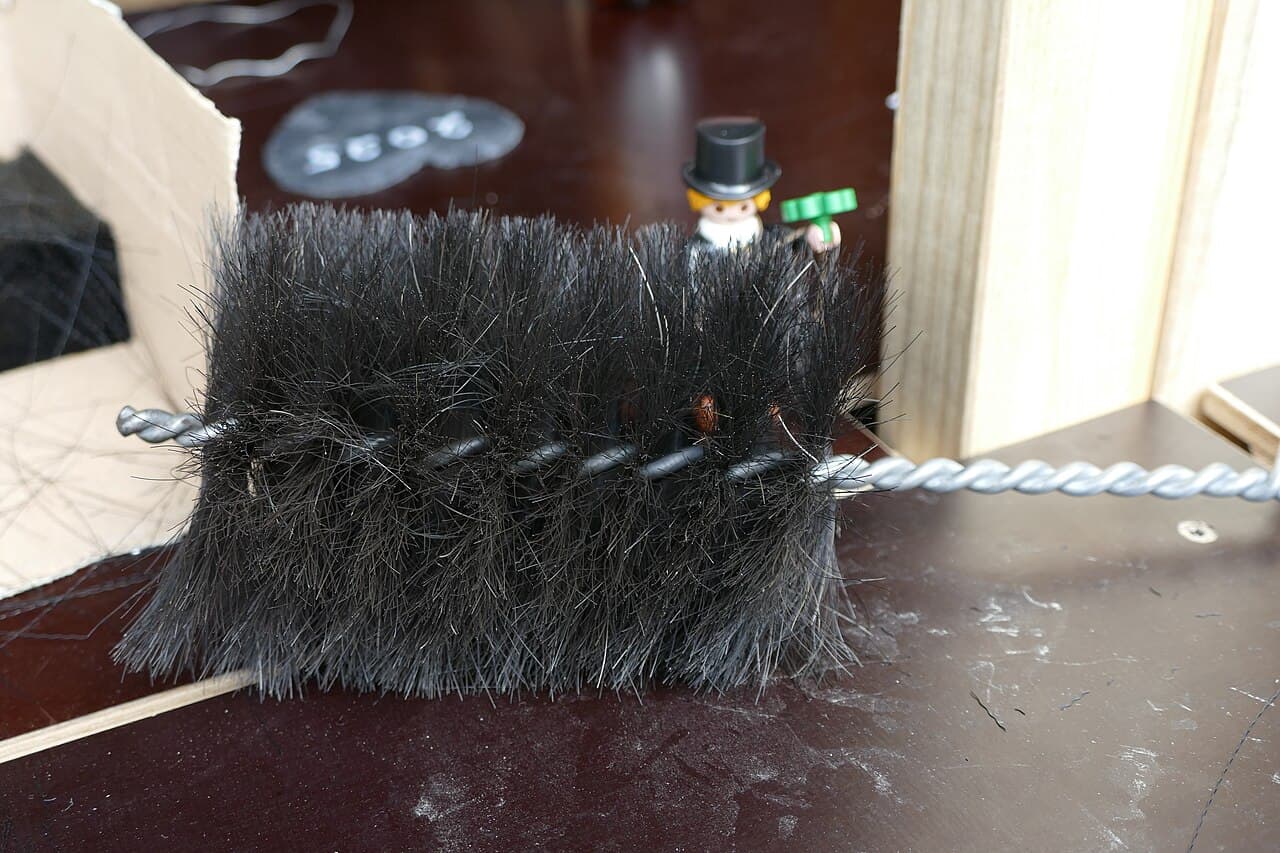
Habits that slow creosote down
How you burn decides how fast the deposits come back.
- Keep the air open. Prince William County Fire and Rescue's advice on stove and fireplace air inlets is blunt: "If closed, inlets cause creosote buildup and lead to chimney fires."[4]
- Burn dry wood. The same county warns: "Certain types of wood, like soft moist wood, increase creosote buildup."[4] Fairfax County recommends well-seasoned wood that has been dried for a minimum of six months to a year and stored properly.[3]
- Burn small, hot fires, not smoldering or roaring ones. Prince William County's advice is to "Build small fires that burn completely and produce less smoke."[4] Fairfax County adds a warning in the other direction: "Avoid “roaring” fires. They can start chimney fire from soot and creosote deposits in the flue."[3]
- Do not count on cleaning logs. Store-bought logs and powders are no replacement for the yearly professional inspection and cleaning that EPA and fire officials recommend,[6] and only an inspection finds cracks, nests or a damaged liner.
Between sweepings
A few checks keep the system in good shape through the season:
- The top of the chimney. Prince William County Fire and Rescue advises installing spark screens and caps on chimneys.[4] Look from the ground; leave anything on the roof to a pro.
- Ashes. Put them in a heavy metal container with a metal lid. Fairfax County's guidance is to never use a paper bag, a cardboard box or a plastic trash bag, and never use a vacuum cleaner to pick up ashes.[3] Prince William County notes that ashes can remain hot for several days.[4]
- Warning signs. Smoke in the room, a strong smell from the fireplace, or flakes of creosote falling into the firebox all mean the chimney should be looked at before the next fire. Why a fireplace smokes into the room covers the usual causes.
When a yearly check is not enough
Some events call for a fuller inspection, with a camera scan and a look from the roof, whatever the calendar says: a chimney fire, storm damage, a new appliance on an old flue, or a lining job. If you are buying a house with a fireplace, ask for one before closing.
When to call a licensed pro
Chimney sweeping and inspection are pro-only: the work involves roof access, and a missed crack or blockage can mean a chimney fire or carbon monoxide in the house. Book a sweep every year, ideally before the burning season, and call right away after a chimney fire or if smoke starts coming into the room. What a chimney sweep does explains the visit, and what certifications a chimney sweep should have covers who to hire.
If the inspection turns up repairs, they are contracting work in Virginia. The Code of Virginia says Class C contractors are those working on single contracts over $1,000 but less than $30,000,[5] so check the licence with how to check a contractor's licence before you sign, and see what chimney sweeping costs in Virginia for what drives the price.
Loclis lists DPOR-licensed businesses with their licence number and class. Browse chimney sweeping, look up chimney businesses in Blacksburg, or see all chimney and fireplace answers.
Book this year's sweep by describing your chimney once, and local chimney businesses quote it.
Common questions
- Do I need my chimney cleaned every year?
- You need it inspected every year; cleaning depends on what the inspection finds. If you burn wood most evenings through the winter, expect a sweeping every year.
- I hardly use my fireplace. Does it still need an inspection?
- Yes. The yearly inspection applies whether or not you burn much, because nests and debris can collect in a flue and chimneys deteriorate over time. A rarely used chimney may not need sweeping, but it still needs to be checked.
- Does a gas fireplace or furnace chimney need cleaning?
- It needs the yearly inspection. Gas burns cleanly, but the Consumer Product Safety Commission urges an annual professional inspection of all fuel-burning appliances, including gas fireplaces and furnaces, to detect carbon monoxide leaks.
- Can I use a creosote sweeping log instead of a sweep?
- Not instead. EPA and fire officials recommend a yearly professional inspection and cleaning. Store-bought products do not replace it, and only an inspection finds cracks, nests or a damaged liner.
- When is the best time to book a sweep?
- Late summer or early fall, before the burning season. Booking early leaves time for any repair the inspection turns up before you need the fireplace.
- What makes creosote build up faster?
- Wet or soft, moist wood, closed air inlets on stoves and fireplaces, and smoldering fires. Prince William County Fire and Rescue lists closed inlets and soft moist wood as causes of creosote buildup, and advises small fires that burn completely.
Sources
- [1] Heating fire safety outreach materials, U.S. Fire Administration (FEMA). Checked October 26, 2026.
- [2] Heating Systems Safety, Fairfax County Fire and Rescue Department. Checked October 26, 2026.
- [3] Fireplace Safety Tips and Can Your Ashes, Fairfax County Fire and Rescue Department. Checked October 26, 2026.
- [4] When Using Alternative Home Heating Systems - Use Wisely & Safely, Prince William County Department of Fire and Rescue. Checked October 26, 2026.
- [5] Code of Virginia § 54.1-1100. Definitions, Code of Virginia. Checked October 26, 2026.
- [6] Frequent Questions about Wood-Burning Appliances, U.S. Environmental Protection Agency, Burn Wise. Checked October 27, 2026.
Want a pro to handle it?
Describe the job once. Licensed local businesses send quotes, and you pay only when you book one.
Get a quote from a local pro