What does a chimney sweep do?
A chimney sweep inspects and cleans your fireplace or stove venting system. A complete sweeping brushes soot and creosote out of the flue and smoke chamber and clears debris and nests. The sweep also checks the damper, firebox, crown, flashing and cap, then gives you a written report saying whether the chimney is safe to keep using.
Free to ask. Local shops send quotes, and you pay only when you book one.
By Kasra Taheri, Founder, LoclisUpdated
Researched and drafted with AI, then checked claim by claim against the sources listed below before it was published. Prices and rules change; the dates beside each source say when it was last checked.
This is a job for a licensed pro in Virginia
This page explains what the work involves, the permits, what a licensed pro does and what drives the cost. It does not give step-by-step instructions, because this work needs a licence, a permit or both, and doing it wrong can injure someone. Before you hire, check the licence on Virginia's DPOR record.
A chimney sweep cleans and checks the whole venting system, not only the part you can see from the hearth. On a typical visit the sweep inspects the fireplace or stove and the flue, brushes out soot and creosote, clears debris, and tells you in writing whether the chimney is safe to keep using.
The U.S. Fire Administration's advice is to have heating equipment and chimneys cleaned and inspected each year by a professional,[2] so for most households this is a once-a-year appointment. How often a chimney should be cleaned covers the timing in more detail.
What a complete sweeping covers
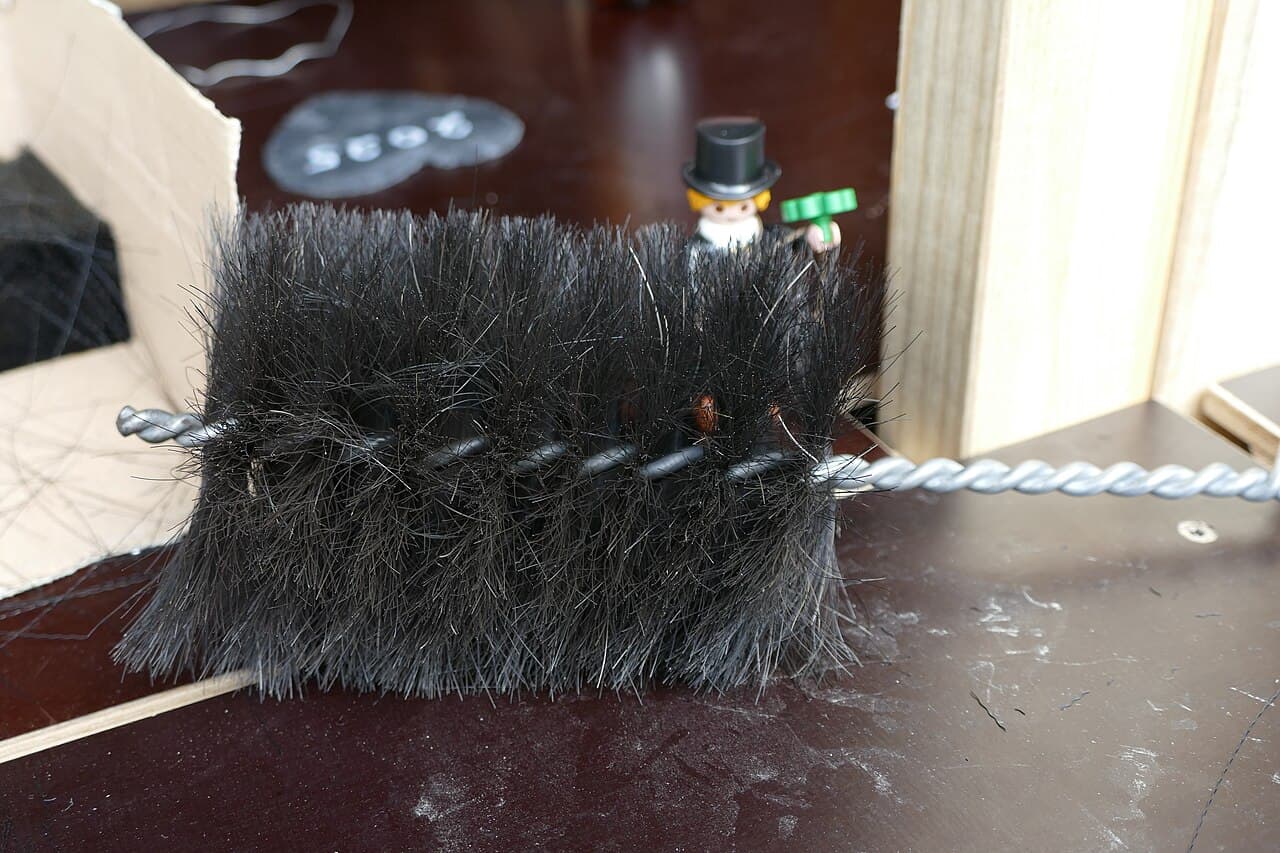
Brushing the brick inside the firebox is not a chimney sweeping. A sweep cleans the whole path the smoke takes: the damper area, the smoke chamber (the sloped space above the damper where the fireplace narrows into the flue, where deposits collect) and the flue itself. Brushing breaks the deposits off the flue walls, and the sweep then has to get that material out of the chimney and off the smoke shelf, not leave it sitting in a bend. Sweeps typically work with drop cloths and a vacuum built for soot so the room stays clean.
The reason is creosote. EPA describes creosote as a highly combustible black or brown residue that condenses on the inside walls of the chimney, and says that if enough builds up it could cause a chimney fire.[6] EPA's summary is short: "clean chimneys don’t catch fire."[6]
Sweeps also deal with what does not belong in a flue. Fairfax County Fire and Rescue lists damaged or obstructed flues among the causes of chimney fires, and says an annual inspection and cleaning as necessary reduces the risk of fire and carbon monoxide poisoning from creosote buildup or obstructions.[1] Nests and debris can block a flue that is used rarely, so a chimney does not have to be busy to need a look.
The inspection that comes with it
A sweep who only brushes is missing half the job. EPA says fire officials recommend having the wood-burning appliance, chimney and vent professionally inspected each year, including looking for chimney cracks that can let smoke into your home or expose the chimney's components to high temperatures that may cause a fire.[7] On a routine visit the sweep will typically:
- look up the chimney and into the flue with a light, and may send a brush through or run a camera when the flue has offsets;
- check the appliance itself, such as door gaskets, baffles, glass and cracks, and make sure the damper moves freely;
- check the chimney crown, flashing and cap from the roof or the ground, and that the cap is not blocked.
EPA lists what it wants checked on a wood-burning system: proper clearances between the appliance and venting system and combustible materials, proper protection of combustible floors, and proper assembly of appliance and venting components.[7] A stove maker makes the same point for new installations: all chimneys should be inspected by a professional, and needed repairs made, before a stove is hooked up.[8]
Inspections come in different depths, and the sweep may describe them as levels. A camera scan of the whole flue, and time on the roof and in the attic, cost more than a quick look from the hearth, so ask what your quote includes. Ask for the deeper version when you are buying the house, when the chimney is going to be lined, or when a new appliance is going onto an old flue, and call a sweep before using the chimney again after any chimney fire.
Creosote that a brush will not shift
Ordinary soot brushes off. Glazed creosote, the hard, shiny, tarry kind, often does not, and it may need extra treatment or more than one visit. That is worth asking about before you compare quotes. EPA says creosote tends to build up when the air supply is restricted, when unseasoned wood is burned and when the chimney is cooler than normal.[6]
Chimney cleaning logs and powders sold in stores are no replacement for a sweep. EPA and fire officials recommend having your wood stove, chimney and vents professionally inspected and cleaned each year,[6] and only an inspection finds cracks, nests or a damaged liner.
What you get at the end
Ask for a written report that says what was cleaned, what was found and what, if anything, is recommended, and keep it. It tells the next sweep, a home inspector or a buyer what was found, and it records anything the sweep recommended that you chose not to do yet.
A sweep can often handle related jobs on the same visit. Fairfax County Fire and Rescue notes that a certified sweep can also perform maintenance on a wood stove or help remove gas logs from a fireplace.[1]
Getting ready for the visit
A little preparation makes the appointment quicker:
- Skip fires for a day or so beforehand so the firebox is cool when the sweep arrives.
- Clear the hearth, the mantel and the floor in front of the fireplace or stove.
- Have the manual for your stove or insert handy, since sweeps check clearances against the manufacturer's instructions.
- Note anything you have noticed: smoke in the room, odors, a damper that sticks, or stains on walls or ceilings near the chimney. Why a fireplace smokes into the room explains the usual causes.
When to call a licensed pro
Chimney work is pro-only on Loclis. It involves roof access, and a chimney that is left dirty or damaged carries a risk of chimney fire and carbon monoxide. Book a sweep once a year, and sooner if you see heavy deposits, smoke in the room, or after any chimney fire.
What the sweep needs in Virginia depends on what the job includes beyond cleaning. The Board for Contractors' list of specialty services has no chimney-sweep specialty.[3] Repairs are different. Under the same regulation, masonry work falls under masonry contracting, a function the home improvement (HIC) specialty also covers, and the HIC specialty does not cover gas fitting.[3] The Code of Virginia defines Class C contractors as those working on a single contract over $1,000 but less than $30,000,[4] and the Board for Contractors' consumer guide says "a valid Virginia Contractor’s License is required for the license category in which the contractor is to work".[5] A sweep who quotes a liner, a new crown or a rebuild should hold a licence you can look up; how to check a contractor's licence walks through the DPOR search.
For credentials, see what certifications a chimney sweep should have. For prices, see what chimney sweeping costs in Virginia.
Loclis lists DPOR-licensed businesses with their licence number and class. Browse chimney sweeping, look up chimney businesses in Blacksburg, or see all chimney and fireplace answers.
Describe your chimney once and local chimney businesses quote the sweep.
Common questions
- Does a chimney sweep go on the roof?
- Often, but not always. A sweep can clean from the bottom or the top. A routine visit may stay at the hearth and what is reachable from inside, while a deeper inspection, the kind worth asking for when a house is sold or after a chimney fire, takes the sweep onto the roof and into the attic, basement and crawl space.
- Is a sweep who only brushed the firebox doing the job?
- No. A sweeping cleans the damper area, smoke chamber and flue, not only the firebox. If you paid for a sweeping and only the firebox brick was brushed, you did not get the service you paid for.
- Can a sweep remove glazed creosote?
- Often, though it may take more than one visit. Hard, glazed creosote does not come off as easily as soft soot, so ask the sweep how it will be removed and how many visits to expect, and have it priced separately from the basic sweep.
- Do gas fireplaces and furnace flues need a sweep too?
- They need a yearly inspection. Gas burns cleanly, but a flue can still be blocked by bird nests or other debris. Work on the gas piping or the appliance itself is a separate job for a licensed gas fitter or HVAC contractor.
- What should I get from the sweep after the visit?
- A written report of what was inspected, what was cleaned, what was found and what is recommended. Keep it for the next sweep, a home inspector or a buyer.
Sources
- [1] Fireplace Safety Tips and Can Your Ashes, Fairfax County Fire and Rescue Department. Checked October 26, 2026.
- [2] Heating fire safety outreach materials, U.S. Fire Administration (FEMA). Checked October 26, 2026.
- [3] 18VAC50-22-30. Definitions of specialty services, Virginia Administrative Code (Board for Contractors). Checked October 26, 2026.
- [4] Code of Virginia § 54.1-1100. Definitions, Code of Virginia. Checked October 26, 2026.
- [5] What You Should Know Before You Hire a Contractor, Virginia Board for Contractors, DPOR. Checked October 26, 2026.
- [6] Frequent Questions about Wood-Burning Appliances, U.S. Environmental Protection Agency, Burn Wise. Checked October 27, 2026.
- [7] Wood-Burning Installation and Maintenance, U.S. Environmental Protection Agency, Burn Wise. Checked October 27, 2026.
- [8] Masonry Chimneys, Woodstock Soapstone Company (stove manufacturer). Checked October 27, 2026.
Want a pro to handle it?
Describe the job once. Licensed local businesses send quotes, and you pay only when you book one.
Get a quote from a local pro