How much does a cord of firewood cost in Virginia?
Virginia has no set price for firewood: it depends on the seller, the species, whether the wood is seasoned, how it is split and how far it is delivered and stacked. What the law fixes is the unit. A cord is 128 cubic feet of wood ranked and well stowed, such as a 4 by 4 by 8 foot stack, so compare quotes per full cord.
Free to ask. Local shops send quotes, and you pay only when you book one.
By Kasra Taheri, Founder, LoclisPublished
Researched and drafted with AI, then checked claim by claim against the sources listed below before it was published. Prices and rules change; the dates beside each source say when it was last checked.
Step by step
Read when to stop and call a pro, further down this page, before you start.
Step 1: Ask for the price per full cord
Have every seller quote a full cord or a stated fraction of one, since a cord is 128 cubic feet by Virginia law.[1]
Step 2: Ask what the wood is
Ask the species, whether it is seasoned or green, and how long it has been split and stacked.
Step 3: Ask the piece length
Ask how long the pieces are cut and whether they fit your firebox, so you do not pay for wood you have to cut again.
Step 4: Ask about delivery and stacking
Ask whether delivery is included and what stacking costs, since sellers may charge extra to stack it.[5]
Step 5: Get a written receipt
Get a receipt showing the seller's name and address, the price, the amount and the kind of wood.[5]
Step 6: Stack and measure it
Stack the wood tightly in a row and multiply width by height by length; 128 cubic feet is a cord.[5]
Step 7: Check the moisture
Split a piece and test the fresh face with a moisture meter; dry wood reads 20% or less.[8]
Step 8: Report a short load
If the load is short, contact the seller first, then the state weights and measures office before you burn any of it.[5]
There is no official or typical statewide price for a cord of firewood in Virginia. Prices are set by each seller and change with the species, how dry the wood is, how it is cut and split, how far it travels and whether someone stacks it for you. What Virginia law does fix is how much wood a "cord" has to be, and that is the key to comparing quotes fairly.
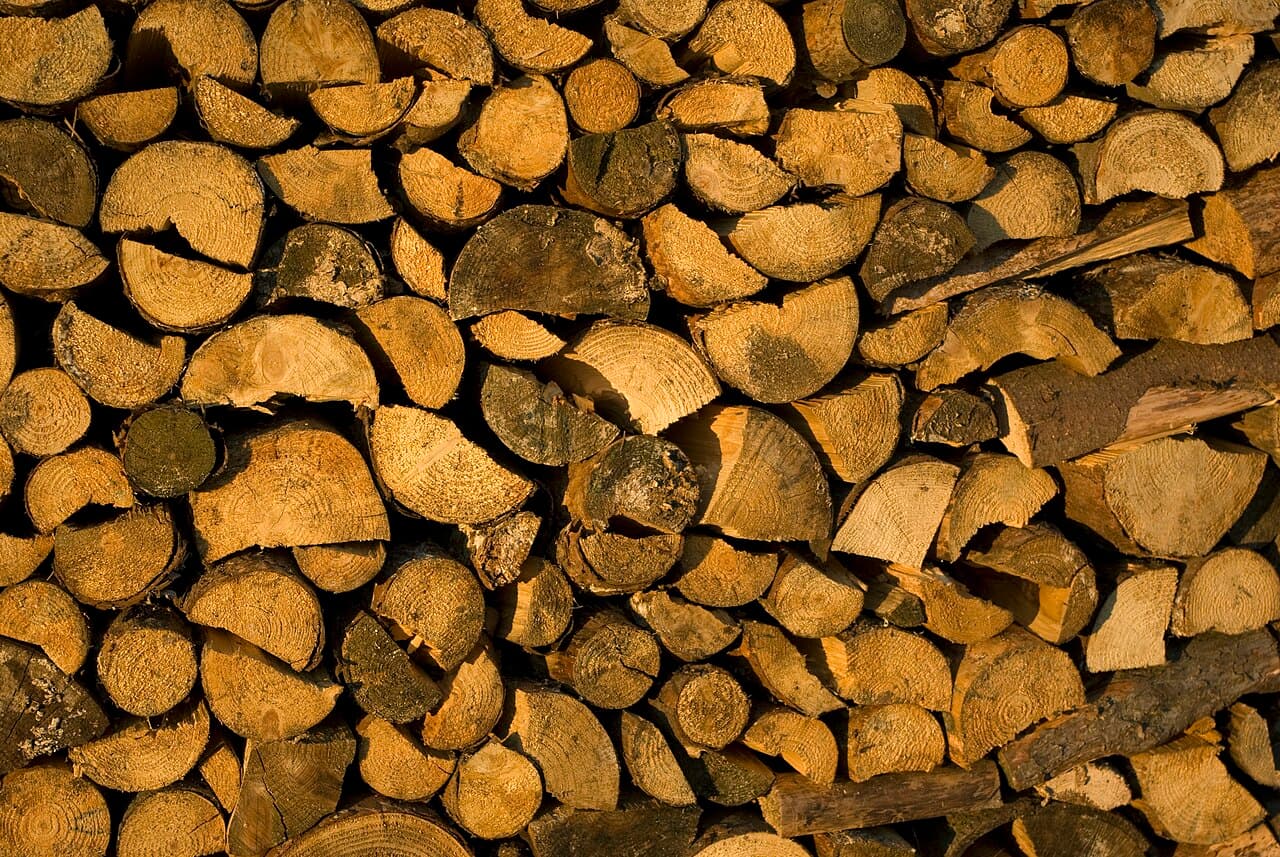
What a cord is in Virginia
The Code of Virginia defines a cord as "the amount of wood that is contained in a space of 128 cubic feet when the wood is ranked and well stowed."[1] It is unlawful in Virginia to use the word "cord" to mean anything other than that standard in the sale of firewood,[2] including in a price quote or in settling payment.[2]
In practice, a full cord stacked tightly measures 4 feet wide, 4 feet high and 8 feet long, or 2 feet wide, 4 feet high and 16 feet long.[5] Because of the air between pieces, Virginia Cooperative Extension notes that an actual stacked cord generally contains closer to 80 to 90 cubic feet of solid wood.[6] That is normal, and it is why the stack, not the pile in the driveway, is what you measure.
Face cords, racks and truckloads
Much of the confusion over price comes from the unit. Virginia applies the Uniform Regulation for the Method of Sale of Commodities published in NIST Handbook 130,[3] and the National Conference on Weights and Measures, which writes those model rules, says terms such as "truckload," "face cord," "rack" or "pile" have no legally defined meaning.[5] Its guidance is that wood can only be sold by the cord or by fractions of a cord.[5]
A "face cord" usually means a single row of wood one piece deep, so how much it holds depends on how long the pieces are cut. Here is a worked example. A row 4 feet high and 8 feet long of 16-inch (1⅓-foot) pieces is 4 × 8 × 1⅓, or about 43 cubic feet. Since a cord is 128 cubic feet,[1] that row is roughly a third of a cord, so a low face-cord price can work out higher per cord than it looks. Convert every quote to a price per full cord before you compare.
What drives the price
When you ask for quotes, these are the things that usually explain the difference between sellers:
- Seasoned or green. Freshly cut wood needs time before it burns well. Softwoods take about 6 months to dry and hardwoods about 12 months,[8] and wood burns best at a moisture content of less than 20 percent.[9] Ask how long the wood has been split and stacked.
- Species. Ask what the wood is. A mixed load of hardwood, a single species and softwood are different products.
- Piece length and splitting. Shorter pieces cut for small stoves take more labor. Ask for a length that fits your firebox.
- Delivery distance. Ask whether delivery is included in the price and how far the seller will deliver.
- Stacking. Delivery often means a dumped pile. The weights and measures guidance notes you may have to pay extra for stacking.[5]
- Quantity and timing. Ask whether the price per cord changes for a half cord or for more than one cord, and whether early-season orders are priced differently.
Buy and burn locally cut firewood to decrease the risk of carrying invasive forest pests,[9] and a nearby seller may charge less to deliver. For the rules on moving wood, see moving firewood across county lines.
What to get in writing
When the buyer and seller are not both there to witness the measurement of a bulk delivery, Virginia law requires duplicate delivery tickets showing the names and addresses of the buyer and seller, the date of delivery and the quantity delivered.[4] The national weights and measures guidance adds that you should get a receipt showing the seller's name and address and the price, amount and kind of wood,[5] and, if you can, the seller's phone number and the license plate of the delivery truck.[5]
Check the delivery
To check the amount, stack the wood in a tight row with the pieces touching and parallel, then multiply width by height by length.[5] If you come up short of what you paid for, contact the seller before you burn any of it,[5] and a photo of the stacked wood helps document the shortage.[5]
In Virginia, the Office of Weights and Measures at the Department of Agriculture and Consumer Services (VDACS) investigates consumer complaints, including questionable practices in the sale of commodities sold by weight or measure.[7] To reach the office, the contact section of its Weights and Measures Services page points to the office's services directory.[7]
Once it is stacked, keep it drying properly; see how to stack firewood so it dries.
Stop and call a pro if
- The seller will not correct a short or misdescribed load. Take it to VDACS's Office of Weights and Measures rather than burning the evidence.
- You plan to cut your own wood from trees on your lot that still have to come down. Felling, especially of dead or storm-damaged trees, is work for a tree service.
- Your fireplace, stove or chimney has not been cleaned and inspected this season, or it smokes even with dry wood. A chimney sweep should look at it before you burn a new cord.
More seasonal answers are under snow and seasonal services. You can browse firewood delivery and seasonal services around Blacksburg, or describe the job once and local businesses quote it.
Common questions
- What is a face cord, and is it legal to sell one in Virginia?
- Sellers usually use face cord for a single row of wood one piece deep, so it holds only part of a cord, and how much depends on the piece length. The National Conference on Weights and Measures says the term has no legally defined meaning, and Virginia law reserves the word "cord" for 128 cubic feet. Ask the seller to quote in cords or fractions of a cord.
- How big is a half cord?
- Half of 128 cubic feet, or 64 cubic feet of stacked wood: for example, a stack 4 feet high, 8 feet long and 2 feet deep. Measure it the same way as a full cord, width times height times length, after the wood is stacked tightly.
- Is seasoned firewood worth paying more for?
- It depends on when you need it. Green wood needs about 6 months (softwood) to 12 months (hardwood) of drying before it burns well, so it suits someone buying a year ahead. If you plan to burn it this winter, ask for wood that has been split and stacked long enough, and test a few pieces with a moisture meter on delivery.
- What should I do if my firewood delivery looks short?
- Stack it and measure it before you burn any. If the volume is short, contact the seller first and keep a photo of the stack. If the seller will not fix it, contact VDACS's Office of Weights and Measures, which investigates complaints about goods sold by measure.
- Why do firewood prices vary so much between sellers?
- Quotes often cover different things: a full cord or a smaller stack, hardwood or softwood, seasoned or green, long or short pieces, delivery included or extra, stacking included or not. Putting every quote on the same footing, price per full cord delivered and stacked, usually explains most of the gap.
Sources
- [1] Code of Virginia § 3.2-5600. Definitions generally, Virginia General Assembly (law.lis.virginia.gov). Checked October 26, 2026.
- [2] Code of Virginia § 3.2-5641. Use of word "cord" in connection with purchase or sale of wood, bark, or other forest product, Virginia General Assembly (law.lis.virginia.gov). Checked October 26, 2026.
- [3] Code of Virginia § 3.2-5622. How certain commodities to be sold, Virginia General Assembly (law.lis.virginia.gov). Checked October 26, 2026.
- [4] Code of Virginia § 3.2-5635. Bulk sale and delivery of commodities, Virginia General Assembly (law.lis.virginia.gov). Checked October 26, 2026.
- [5] Avoid Getting Burned When Buying Firewood, National Conference on Weights and Measures (published by NIST). Checked October 26, 2026.
- [6] Forest Landowner's Guide to the Measurement of Timber and Logs (420-085), Virginia Cooperative Extension, Virginia Tech. Checked October 26, 2026.
- [7] Weights and Measures Services, Virginia Department of Agriculture and Consumer Services. Checked October 26, 2026.
- [8] Wet Wood Is a Waste: Four Easy Steps to Dry Firewood (EPA 456/F-10-003), U.S. Environmental Protection Agency, Burn Wise. Checked October 26, 2026.
- [9] Best Wood-Burning Practices, U.S. Environmental Protection Agency, Burn Wise. Checked October 26, 2026.
Want a pro to handle it?
Describe the job once. Licensed local businesses send quotes, and you pay only when you book one.
Get a quote from a local pro