Why is my firewood smoking and hard to light?
Usually because the wood is too wet. Firewood burns best below 20 percent moisture, and wet or green wood smolders and smokes. The other common causes are too little air, a closed damper, a cold flue, pieces that are too big, or rotten wood. If tested dry wood still smokes with the damper open, have the chimney or stove inspected.
Free to ask. Local shops send quotes, and you pay only when you book one.
By Kasra Taheri, Founder, LoclisUpdated
Researched and drafted with AI, then checked claim by claim against the sources listed below before it was published. Prices and rules change; the dates beside each source say when it was last checked.
Step by step
Read when to stop and call a pro, further down this page, before you start.
Step 1: Test the wood
Split a piece and test the fresh face with a wood moisture meter; dry wood reads 20% or less.[1]
Step 2: Open the damper
Open the fireplace damper fully before lighting and leave it open until the ashes are cool.[3]
Step 3: Open the air controls
On a stove, open the air controls fully until the fire is burning vigorously.[1]
Step 5: Warm the flue
Let the small fire heat the chimney or flue before you add bigger pieces.[1]
Step 6: Leave gaps
Keep space between the pieces as you add them so air reaches every piece.[1]
Step 7: Use smaller splits
Split large pieces down to no more than 6 inch wedges, and split some small pieces for kindling.[1]
Step 8: Burn only clean, dry wood
Set aside rotted or moldy wood and anything painted, treated or glued.[2]
Step 9: Restack wet wood
Stack wet wood in a single row off the ground with only the top covered and give it time to dry.[1]
Most often, the wood is too wet. Firewood that has not dried long enough is slow to catch, hisses, smolders and sends up smoke. The rest of the time the fire is starved of air, the chimney is cold, the pieces are too large, or the wood is rotten. Work through the checks below in order; the first one usually solves it.
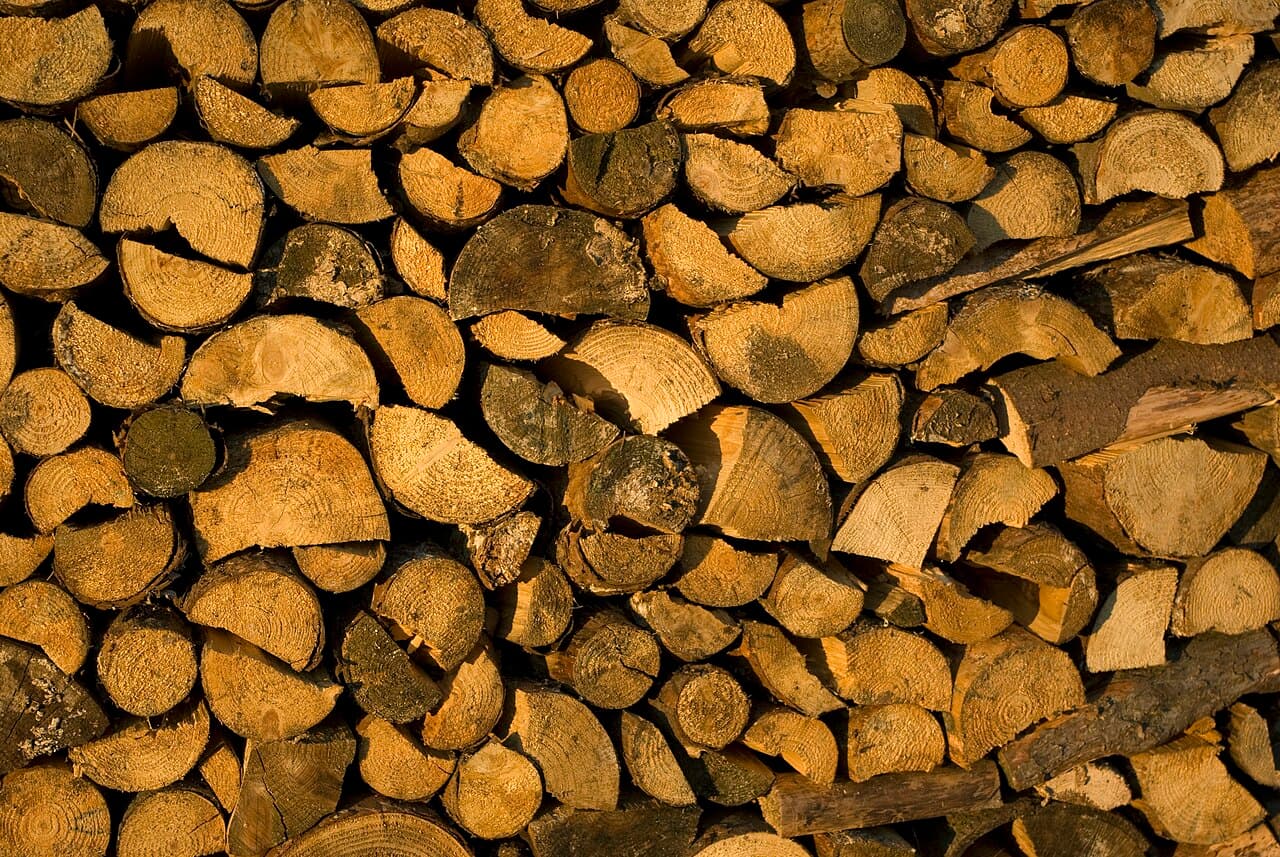
1. The wood is too wet
Wood burns best at a moisture content of less than 20 percent.[2] EPA lists the symptoms plainly: "A smoldering fire, 'dirty' glass doors, or smoke from the chimney are all signs that the fire needs more air or your wood is too moist."[1] It adds that wet wood can create excessive smoke, which is wasted fuel.[1]
How to tell. Seasoned wood is darker and lighter than wet wood, and sounds hollow when knocked against another piece.[2] Wet wood feels heavy for its size and may hiss or bubble at the ends in the fire. For a firm answer, buy a wood moisture meter, split a piece and test the newly split face; properly dried wood reads 20% or less.[1] The outside of a log can read dry when the center is not, which is why the fresh face matters. Test several pieces, since a delivered load can be mixed.
What to do. Wet wood does not dry in a week. Softwoods take about 6 months to dry and hardwoods about 12 months,[1] split, stacked off the ground and covered only on top. Set the wet wood aside to season and buy dry wood or kiln-dried bundles for this winter. If you bring a day's supply indoors to warm up, keep it, and anything else that can burn, at least 3 feet from fireplaces and wood stoves.[5] [4] See how to stack firewood so it dries.
2. The fire is short of air
A fire with too little air smolders and smokes even with good wood. Prince William County's fire department says to keep air inlets open on wood stoves and fireplaces, because closed inlets cause creosote buildup and lead to chimney fires.[4] When lighting a stove, EPA's advice is to fully open the air controls until the fire is burning vigorously.[1]
On a fireplace, check the damper. Fairfax County Fire and Rescue says to open the damper before lighting the fire and keep it open until the ashes are cool, to avoid a buildup of poisonous gases such as carbon monoxide.[3] A damper that is only partly open, or stuck, is a common reason smoke rolls out into the room.
3. The chimney is cold
A cold flue does not draw well, so the first smoke can spill into the room instead of rising. EPA's checklist is to start a small fire with dry kindling, then add a few pieces of wood,[1] and to burn the fire to heat the chimney or flue before adding more wood.[1] Loading a cold firebox full of big logs at the start is the usual way to get a smoky, sulking fire.
4. The pieces are too big or packed too tight
Large rounds and tightly packed loads light slowly and smolder. Split wood to a range of sizes that fit your firebox, no larger than 6 inch wedges,[1] keep a supply of small kindling, and keep space between the pieces as you add more.[1] Air has to reach the wood for it to burn cleanly.
5. The fuel is wrong
Light fires with newspaper, dry kindling, or all-natural fire starters,[2] and never use gasoline, kerosene or charcoal lighter fluid to start one.[2] Some wood should not be burned at all. EPA lists wet, rotted, diseased, or moldy wood,[2] and coated, painted or pressure-treated wood, plywood, particle board and saltwater driftwood.[2] [1] Soft, punky wood from a pile that sat on the ground is a common culprit; Prince William County notes that soft, moist wood increases creosote buildup.[4]
When it is not the wood
If tested, dry wood still smokes with the damper and air controls open, the problem is probably the chimney, flue or stove. Fairfax County Fire and Rescue recommends chimneys be inspected annually, and cleaned as necessary, by a sweep certified by the Chimney Safety Institute of America.[3] It warns that creosote buildup or obstructions in the chimney raise the risk of fire and carbon monoxide poisoning,[3] and advises you to keep the top of the chimney clear of tree limbs and debris.[3] See why a fireplace smokes into the room for chimney causes.
Stop and call a pro if
- Smoke keeps coming into the room even with dry wood, an open damper and a small, well-lit fire.
- You see heavy black or shiny deposits in the firebox, stovepipe or flue, or nobody has had the chimney cleaned and inspected in the past year. Fire safety officials recommend having heating equipment and chimneys cleaned and inspected each year by a professional.[5]
- The damper will not open or close, or something seems to be blocking the flue, such as a nest.
- A carbon monoxide alarm goes off, or anyone gets a headache, dizziness, nausea, vomiting or difficulty breathing while the fire is burning. Get everyone outside to fresh air right away,[7] [8] then call for help from outside or from a neighbor's home, and let the fire department tell you when it is safe to go back in.[8] Prince William County's fire department advises that you install and maintain carbon monoxide alarms.[4]
- You see flames or dense smoke coming from the top of the chimney, hear loud roaring or popping from the flue, or smell burning from the walls near it. Treat it as a chimney fire: fire officials say to be prepared to leave your home immediately in the event of a fire,[6] so get everyone out and call the fire department from outside.
More seasonal answers are under snow and seasonal services. You can browse firewood delivery and seasonal services around Blacksburg, or describe the job once and local businesses quote it.
Common questions
- Why does my firewood hiss and bubble at the ends?
- Hissing, sizzling or water bubbling out of the cut ends means the wood still holds a lot of moisture. It will burn poorly and smoke until it dries. Set it aside, restack it outdoors with the top covered, and burn drier wood in the meantime.
- The seller said the wood was seasoned. How can I check?
- Split a few pieces from different parts of the load and test the freshly split faces with a wood moisture meter. Wood that reads 20% or less is ready to burn. Seasoned wood is also darker, lighter and sounds hollow when two pieces are knocked together.
- Can I dry wet firewood next to the stove?
- Keep it out of the stove's clearance zone: anything that can burn belongs at least 3 feet from a fireplace or wood stove. Bringing in a day's worth to warm up is common, but real drying takes months outdoors in a stack.
- Is it the wood or the chimney?
- Test the wood first. If it reads 20% or less, the damper is open and the air controls are open, and the fire still smokes into the room or smolders, the cause is more likely the chimney, flue or stove. Have it inspected by a certified chimney sweep.
- Do fire starter logs or lighter fluid fix wet wood?
- No. A starter can get kindling going, but it does not dry the logs. EPA's guidance is to use newspaper, dry kindling or all-natural fire starters, and never to start a fire with gasoline, kerosene or charcoal starter.
Sources
- [1] Wet Wood Is a Waste: Four Easy Steps to Dry Firewood (EPA 456/F-10-003), U.S. Environmental Protection Agency, Burn Wise. Checked October 26, 2026.
- [2] Best Wood-Burning Practices, U.S. Environmental Protection Agency, Burn Wise. Checked October 26, 2026.
- [3] Fireplace Safety Tips and Can Your Ashes, Fairfax County Fire and Rescue Department. Checked October 26, 2026.
- [4] When Using Alternative Home Heating Systems - Use Wisely & Safely, Prince William County Department of Fire and Rescue. Checked October 26, 2026.
- [5] Heating fire safety, U.S. Fire Administration, FEMA. Checked October 26, 2026.
- [6] Home Fire Escape Plans, U.S. Fire Administration, FEMA. Checked October 27, 2026.
- [7] Carbon Monoxide, Virginia Department of Health, Environmental Health. Checked October 27, 2026.
- [8] Carbon Monoxide: The "Invisible" Killer, U.S. Consumer Product Safety Commission. Checked October 27, 2026.
Want a pro to handle it?
Describe the job once. Licensed local businesses send quotes, and you pay only when you book one.
Get a quote from a local pro