How do I stack firewood so it dries?
Split the wood first, then stack it outdoors in a single row on rails or blocks so nothing touches the ground, split side down, with room for air to move through. Cover only the top and leave the sides open, and keep the stack away from the house. Softwoods take about 6 months to dry and hardwoods about 12.
Free to ask. Local shops send quotes, and you pay only when you book one.
By Kasra Taheri, Founder, LoclisPublished
Researched and drafted with AI, then checked claim by claim against the sources listed below before it was published. Prices and rules change; the dates beside each source say when it was last checked.
Step by step
Read when to stop and call a pro, further down this page, before you start.
Step 1: Split it first
Split wood dries much faster than whole rounds, so split everything to a range of sizes no larger than 6 inch wedges before you stack it.[1]
Step 3: Build a base
Lay two rails, a pallet or a row of blocks so the bottom layer sits off the ground and air can pass underneath.[1]
Step 4: Brace the ends
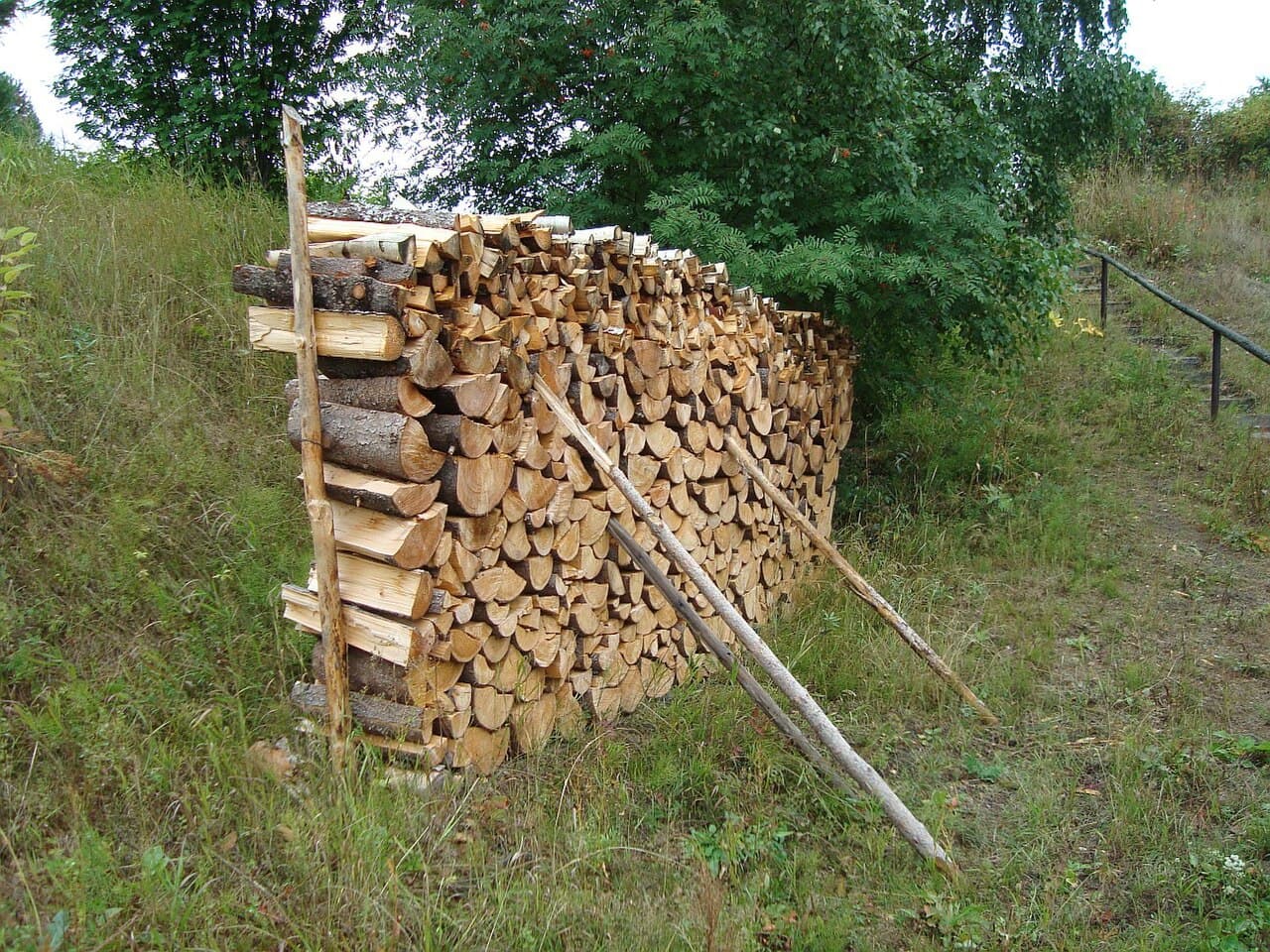
Start each end with a post or a crisscrossed tower of pieces laid in alternating directions so the row does not lean.
Step 5: Stack a single row
Lay the pieces in one row with the split side down, snug enough to stand but loose enough for air to move through.[1]
Step 6: Keep it a safe height
Stop at a height you can reach from the ground and where the stack still stands firm when you push on it.
Step 7: Cover only the top
Put a sheet of roofing or boards over the top layer with a gap above the wood, and leave the sides open.[1]
Step 8: Give it time
Leave softwoods about 6 months and hardwoods about 12 months before burning.[1]
Step 9: Test before burning
Split a piece and test the fresh face with a wood moisture meter; dry wood reads 20% or less.[1]
Firewood dries through its split faces and cut ends, and only as fast as moving air can carry the moisture away. Split it, raise it off the ground, stack it loosely in the open and cover just the top, and most wood is ready in six months to a year. A heap on the ground, or a stack wrapped in a tarp down to the dirt, can still be wet a year later.
Why dry wood matters
Wood burns best at a moisture content below 20 percent, and EPA's advice is to check it with a wood moisture meter before you burn it.[2] Wet wood can create excess smoke, which is wasted fuel.[1] It also dirties the chimney: Prince William County's fire department warns that soft, moist wood increases creosote buildup in the chimney.[6] Good stacking is an easy way to avoid that.
Choose the spot
Look for an open, sunny place where the wind can reach the stack, on ground that does not puddle. EPA's guide says to build the stack away from buildings.[1] Virginia Cooperative Extension also advises against storing firewood beside a house or on a front porch,[4] [5] for a practical reason: wood cockroaches are sometimes carried inside with firewood.[4] A spot a short walk from the door is a fair trade for fewer bugs in the house.
Build a base
Never stack straight on soil, which wicks moisture into the bottom layer and invites rot. EPA's guidance is to keep wood off the ground by stacking it on rails,[1] and a base under the stack also cuts down on pests and moisture.[3] Two lengths of lumber laid on blocks, an old pallet or a row of concrete blocks all work. What matters is that air can move under the bottom row.
Split before you stack
Split wood dries much faster than whole rounds,[1] because splitting opens the wet interior to the air and the bark no longer seals it in. Split to a range of sizes that fit your stove or fireplace, no larger than 6 inch wedges, plus some small pieces for kindling.[1] If your wood arrived as unsplit rounds, splitting is the first job, not something to do next winter.
Stack it in a single row
Stack in a single row with the split side down,[1] and leave room for air to circulate through the stack.[1] A single row exposes every piece to moving air. A deep pile keeps the wood in the middle damp for months. If you need more than one row, leave a gap between rows wide enough for air to pass, and run the rows in the direction of the usual breeze if you can.
The ends are where stacks usually fail. Start each end against a sturdy post, or build a small tower of pieces laid crisscross in alternating directions, and keep the row's height to what you can reach from the ground. A stack that leans or wobbles when you push it should be rebuilt before it falls on someone.
Cover the top, not the sides
Cover the top of the stack to keep off rain and snow, leave space between the cover and the wood, and keep the sides open.[1] EPA warns that covering the sides "traps in moisture."[2] A sheet of metal roofing or a few boards across the top layer works well; a tarp pulled down to the ground does not. If you build a woodshed instead, EPA suggests a roof large enough to overhang the wood, sloped so water does not collect.[3]
How long to leave it
Plan on about 6 months for softwoods and about 12 months for hardwoods.[1] [3] Wood cut and split in spring is usually ready for the following winter. For the full timeline, see how long firewood needs to season.
You can judge it roughly by hand. Dry wood is lighter, darker in color and sounds hollow when knocked against another piece.[1] [2] For a firm answer, split a piece and test the newly split face with a moisture meter; properly dried wood reads 20% or less.[1] The outside of a log can read dry while the middle is still wet, which is why the fresh face matters.
Bringing it inside
Carry in only what you will burn in the next day or so, and keep the rest outside. Shake or knock pieces before you carry them in to dislodge insects,[4] and wear gloves and long sleeves when moving firewood that has sat undisturbed, since spiders can hide in anything left undisturbed for a length of time.[5]
If your fire still smokes after all this, the wood may not be the problem; see why firewood smokes and is hard to light.
Stop and call a pro if
- Dry, tested wood still smolders, smokes or blackens the stove glass. The stove, flue or chimney may need attention, and fire safety officials recommend having heating equipment and chimneys cleaned and inspected each year by a professional.[7] See how often a chimney should be cleaned.
- Smoke spills into the room from the fireplace or stove.
- You find termites or other insects tunneling into wood that touches the house, deck or a wooden fence.
- The wood still has to be cut from a standing or storm-damaged tree. Felling and chainsaw work on trees is a job for a tree service.
More seasonal answers are under snow and seasonal services. You can browse firewood delivery and seasonal services around Blacksburg, or describe the job once and local businesses quote it.
Common questions
- Can I stack firewood against my house?
- It is better not to. EPA's drying guide says to build the stack away from buildings, and Virginia Cooperative Extension advises against keeping firewood beside the house or on a porch, because insects such as wood cockroaches can be carried indoors with the wood. A stack against siding also holds moisture against the wall.
- Should I put a tarp over my firewood?
- Only over the top. A tarp or sheet of roofing across the top layer keeps rain and snow off, but pulling it down the sides traps moisture and slows drying. Leave a gap between the cover and the wood, and weight or tie the cover so wind cannot lift it.
- Should the bark face up or down?
- EPA's guide says to stack wood with the split side down, which leaves the bark side facing up. On the top layer, bark up sheds some rain, but a cover over the top does more.
- How high can I stack firewood?
- There is no set number. Keep a stack low enough that you can reach the top from the ground and stable enough that it does not move when you push on it. Bracing each end with posts or crisscrossed pieces helps a long row stay upright.
- Does delivered firewood come stacked?
- Not always. Ask before you order: sellers may stack it for an extra charge, or tip it in a pile for you to stack. Either way, stack it before you burn any, so you can check that you received the full amount you paid for.
Sources
- [1] Wet Wood Is a Waste: Four Easy Steps to Dry Firewood (EPA 456/F-10-003), U.S. Environmental Protection Agency, Burn Wise. Checked October 26, 2026.
- [2] Best Wood-Burning Practices, U.S. Environmental Protection Agency, Burn Wise. Checked October 26, 2026.
- [3] Build Firewood Storage, U.S. Environmental Protection Agency, Burn Wise. Checked October 26, 2026.
- [4] Wood Cockroaches (ENTO-426NP), Virginia Cooperative Extension, Virginia Tech. Checked October 26, 2026.
- [5] Spiders of Medical Concern in Virginia (ENTO-73), Virginia Cooperative Extension, Virginia Tech. Checked October 26, 2026.
- [6] When Using Alternative Home Heating Systems - Use Wisely & Safely, Prince William County Department of Fire and Rescue. Checked October 26, 2026.
- [7] Heating fire safety, U.S. Fire Administration, FEMA. Checked October 26, 2026.
Want a pro to handle it?
Describe the job once. Licensed local businesses send quotes, and you pay only when you book one.
Get a quote from a local pro