How much does a crawl space dehumidifier cost in Virginia?
There is no set Virginia price. The total depends on the unit (a portable model you place yourself or a professional crawl space unit), how its water drains, whether an outlet or circuit has to be added, and what prep the space needs first. Running it costs electricity: Virginia homes paid an average of 17.64 cents per kilowatt-hour in August 2026.
Free to ask. Local shops send quotes, and you pay only when you book one.
By Kasra Taheri, Founder, LoclisPublished
Researched and drafted with AI, then checked claim by claim against the sources listed below before it was published. Prices and rules change; the dates beside each source say when it was last checked.
Step by step
Read when to stop and call a pro, further down this page, before you start.
Step 1: Measure before you shop
Log the crawl space humidity for a few days, including after rain, so quotes are sized to real conditions.[2]
Step 2: Fix the water first
Get gutters, downspouts and grading sorted, since a unit fighting rainwater costs more to run and may be oversized.[5]
Step 3: Match capacity to dampness
Use the pints-per-day chart to judge whether a quote's unit is in the right range for your space.[2]
Step 5: Decide the drain
Ask whether the unit drains by gravity to a drain or sump or needs a condensate pump, which adds parts and upkeep.[2]
Step 6: Get written quotes
Ask two or three businesses for written quotes that name the model, capacity, drain route and electrical work.[8]
Step 8: Price the upkeep
Ask what filter the unit uses, how often it needs changing and what a replacement costs.[4]
There is no standard price for a crawl space dehumidifier in Virginia, and a quote that names a number without seeing the space is guessing. What you pay comes from four things: the unit itself, how its water leaves, how it gets power, and what the crawl space needs before a dehumidifier can keep up. After that comes the running cost, which is electricity and filters.
One fixed number helps with the running cost: Virginia homes paid an average of 17.64 cents per kilowatt-hour for electricity in August 2026.[1] Every 100 kilowatt-hours the unit uses costs about $17.64 at that average; your own rate is on your power bill.
The unit: portable or crawl space model
Portable dehumidifiers are the low end. ENERGY STAR sizes them at about 20 to 30 pints a day for a space under 2,000 square feet that feels damp and smells musty at times, 25 to 40 for one that is consistently damp, and 30 to 50 where walls or floors sweat or seepage is present.[2] Two features matter more in a crawl space than in a basement: Frost can form on the coils below 65 degrees,[2] so it needs a low-temperature rating, and it must drain by hose, because nobody empties a bucket under the house.
Crawl space units are built for cold, dusty spaces and continuous draining, and they are usually sold through installers rather than off a shelf. AprilAire's E070, for example, is rated at up to 70 pints a day for crawl spaces, basements and whole houses up to 2,200 square feet; the company sells it through its network of Healthy Air Professionals and recommends professional installation.[3] It ships with 8-inch inlet and outlet duct collars, 10 feet of drain tubing and a washable MERV 8 filter,[3] which tells you what an installer may add: ducting, a drain line and a mounting spot off the ground.
Efficiency. An ENERGY STAR certified unit uses 20% less energy[2] than a similar conventional one. To compare models, look at the integrated energy factor, in liters of water removed per kilowatt-hour;[2] a higher number costs less to run.
The drain
Gravity draining to a floor drain or sump is the simplest. If there is no low point to drain to, the job needs a condensate pump, which is another part to buy and maintain. For ducted whole-home units, Most whole-home dehumidifiers drain through a line that an HVAC professional routes to a floor drain or condensate pump during installation.[2]
The power
ENERGY STAR's safety advice includes "Make sure the dehumidifier is connected to a properly grounded outlet."[2] Many crawl spaces have no outlet at all, or an old one near the access door. Adding one is electrical work, which is usually best left to an electrician, and under the Virginia Uniform Statewide Building Code a permit is required before work on electric wiring.[6] That can easily cost more than a portable unit, so ask about it at the first visit.
The prep
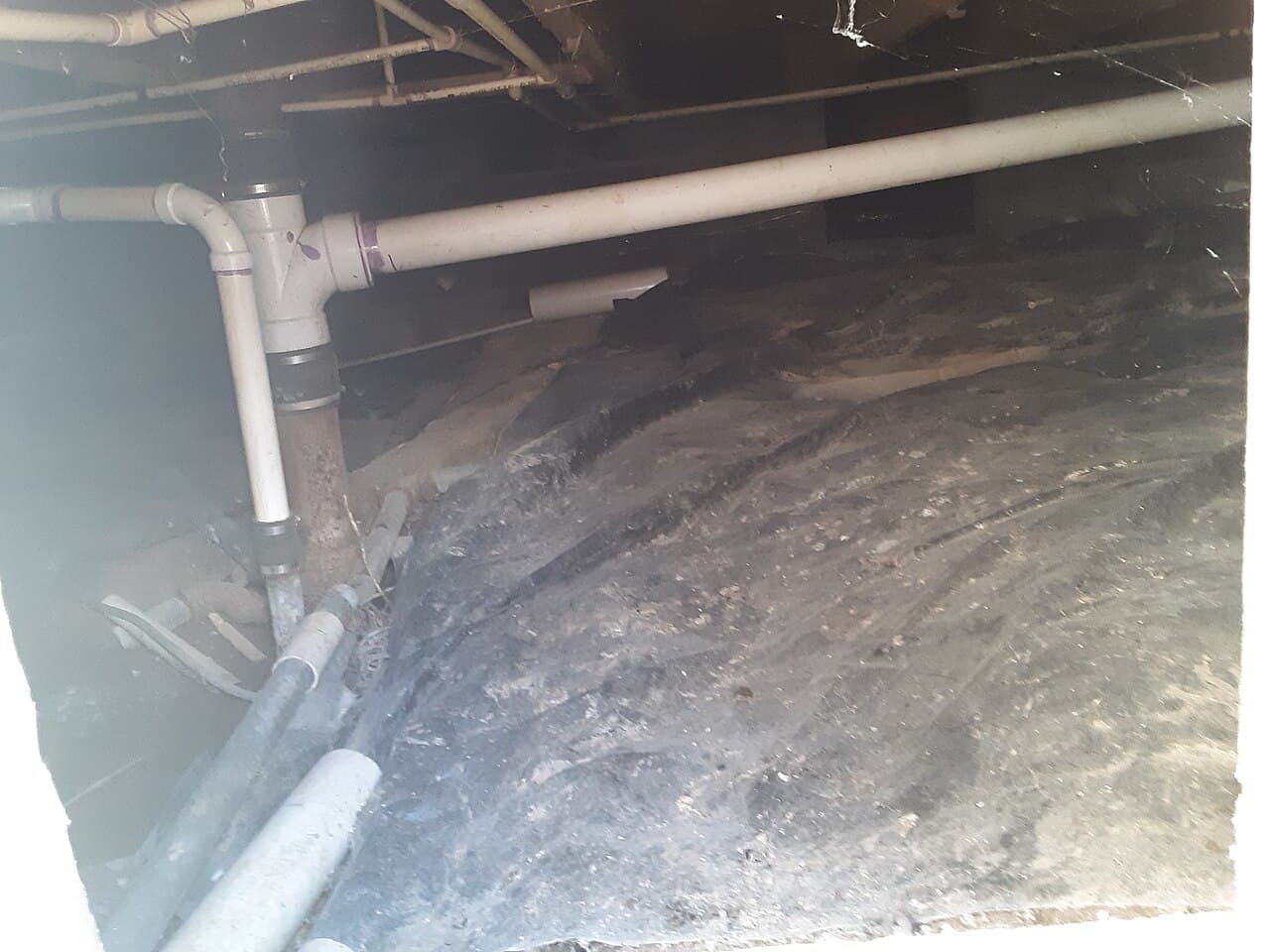
A dehumidifier is the drying step, not the whole fix. Crawlspaces must always have a drying mechanism,[5] but if rain runs in or the dirt floor is bare, the unit runs constantly and wears out sooner. Many quotes therefore include a ground cover, vent sealing or full encapsulation. Ask for those as separate lines so you can see what the dehumidifier itself costs; see how much crawl space encapsulation costs in Virginia and how to lower crawl space humidity for the free and cheap fixes to do first.
The upkeep
Filters are the main recurring part. When we checked on October 26, 2026, the replacement filter for that model was listed at $28.70 on AprilAire's own store, and its wireless water sensor at $59.99.[4] Other brands differ, so ask each installer what their unit takes and how often. Some installers also offer A monitoring system to inform the homeowner of relative humidity levels in the crawl space,[10] which is worth having when the space is hard to get into.
What to ask for in a written quote
- The make, model and rated capacity in pints per day, and the humidity it will be set to hold.
- Where it will sit, and whether it is raised off the floor or liner.
- The drain route, and whether a condensate pump is included.
- Any electrical work, who does it, and whether the permit is in the price.
- Any ground cover, sealing or ductwork, priced separately.
- The warranty on the unit and on the labour, and what happens if humidity stays high.
- Filter type, replacement interval and cost.
Licence. Virginia's Class C contractor licence covers single jobs over $1,000 but less than $30,000,[7] so any installer whose quote is above $1,000 should hold at least that licence. DPOR warns that A license number in an advertisement or on a business card does not necessarily mean the contractor’s license is valid.[8] Check it on DPOR's License Lookup[9] or see how to check if a contractor is licensed in Virginia.
Stop and call a pro if
- There is no grounded outlet near the crawl space, or the wiring down there looks damaged.
- Water stands on the floor after rain; that is a drainage job before it is a dehumidifier job.
- A gas furnace or water heater sits in the crawl space and the quote includes closing the vents.
- You want a ducted unit tied into the heating and cooling system.
- Mold covers more than a small patch, or the wood is soft.
Browse more pest control answers, crawlspace and moisture services or pest control businesses near Blacksburg.
Describe your crawl space once and get written quotes from licensed pros.
Common questions
- Why won't anyone give me a price over the phone?
- Because the unit is often the smaller part of the bill. The drain route, the power supply, access to the space and any prep work, such as a new ground cover, change the total, and an honest installer needs to see the crawl space first.
- Can I use a regular portable dehumidifier in a crawl space?
- Often, if it is sized for the dampness, rated for temperatures below 65 degrees, drains by hose to a drain or sump, and plugs into a properly grounded outlet. Units built for crawl spaces are made for the cold, the dust and continuous draining.
- What does it cost to run?
- Its electricity use times your rate. Virginia's average residential price was 17.64 cents per kilowatt-hour in August 2026, so each 100 kilowatt-hours costs about $17.64 at that average. Doing the drainage fixes first shortens how long it runs.
- Does the installer need a licence in Virginia?
- For a job over $1,000, yes: Virginia's contractor law covers construction, repair and improvement work above that value, and a permit is required before work on electric wiring. Check the licence on DPOR's License Lookup.
- Is a dehumidifier enough, or do I need encapsulation too?
- In a crawl space with bare soil and open vents, a dehumidifier alone fights outside air and wet ground. Many quotes bundle a ground cover or full sealing; compare those as a separate line item and see the encapsulation cost guide.
Sources
- [1] Electric Power Monthly, Table 5.6.A: Average Price of Electricity to Ultimate Customers by End-Use Sector, by State (data for August 2026), U.S. Energy Information Administration. Checked October 26, 2026.
- [2] Dehumidifiers, ENERGY STAR (U.S. EPA). Checked October 26, 2026.
- [3] AprilAire E070 Dehumidifier, AprilAire. Checked October 26, 2026.
- [4] Collection: Dehumidifiers, AprilAire. Checked October 26, 2026.
- [5] Guide to Closing and Conditioning Ventilated Crawlspaces (January 2013), U.S. Department of Energy, Building America Program (IBACOS for NREL). Checked October 26, 2026.
- [6] 13VAC5-63-80. Section 108 Application for permit (Virginia Uniform Statewide Building Code), Virginia Administrative Code, Virginia General Assembly. Checked October 26, 2026.
- [7] Va. Code § 54.1-1100, Definitions, Code of Virginia, Virginia General Assembly. Checked October 26, 2026.
- [8] What You Should Know Before You Hire a Contractor, Virginia Board for Contractors, DPOR. Checked October 26, 2026.
- [9] License Lookup, Virginia Department of Professional and Occupational Regulation. Checked October 26, 2026.
- [10] Designing Closed Crawl Spaces: A Quick Reference (February 2012), Advanced Energy, published by ENERGY STAR. Checked October 26, 2026.
Want a pro to handle it?
Describe the job once. Licensed local businesses send quotes, and you pay only when you book one.
Get a quote from a local pro