How much does lawn mowing cost in Virginia?
It depends on the lawn more than the state. A mowing price is set by how long the crew spends on your yard: its size, slopes and obstacles, how often the grass needs cutting, whether trimming, edging and blowing are included, and whether clippings are bagged. Get two or three written quotes that list exactly what each visit includes.
Free to ask. Local shops send quotes, and you pay only when you book one.
By Kasra Taheri, Founder, LoclisPublished
Researched and drafted with AI, then checked claim by claim against the sources listed below before it was published. Prices and rules change; the dates beside each source say when it was last checked.
Step by step
Read when to stop and call a pro, further down this page, before you start.
Step 1: Measure the lawn
Pace off or look up the mowed area in square feet or acres, leaving out the house, beds, driveway and wooded parts.
Step 2: Name your grass
Tell the crew whether it is tall fescue, a fescue and bluegrass mix, bermudagrass or zoysiagrass, since growth rate and mowing height differ.[3]
Step 3: Choose a frequency
Ask for weekly visits in the growing season and say whether you want every-other-week visits when growth slows.[2]
Step 4: List the extras
Write down trimming, edging, blowing off walks, bagging clippings, leaf pickup and gate or pet instructions so every quote covers the same work.
Step 5: Flag the hard parts
Point out steep banks, ditches, tight gates, play sets and beds the crew must mow around, because they add time.
Step 6: Ask for a written quote
Get the per-visit price, the season length, how skipped or rained-out visits are handled, and the payment terms in writing.
Step 7: Ask about chemicals
If the quote includes weed killer or other pesticide treatments, ask for the company's Virginia pesticide business license.[4]
Step 8: Compare like for like
Line the quotes up visit by visit and season by season, not just by the headline price.
There is no single Virginia price for lawn mowing, because a crew prices your lawn by the time it takes. A small, flat, open yard mowed weekly costs far less per visit than an acre with banks, trees, fences and beds to work around. The fastest way to a reliable number is to describe the lawn and the visit clearly and collect two or three written quotes that cover the same work.
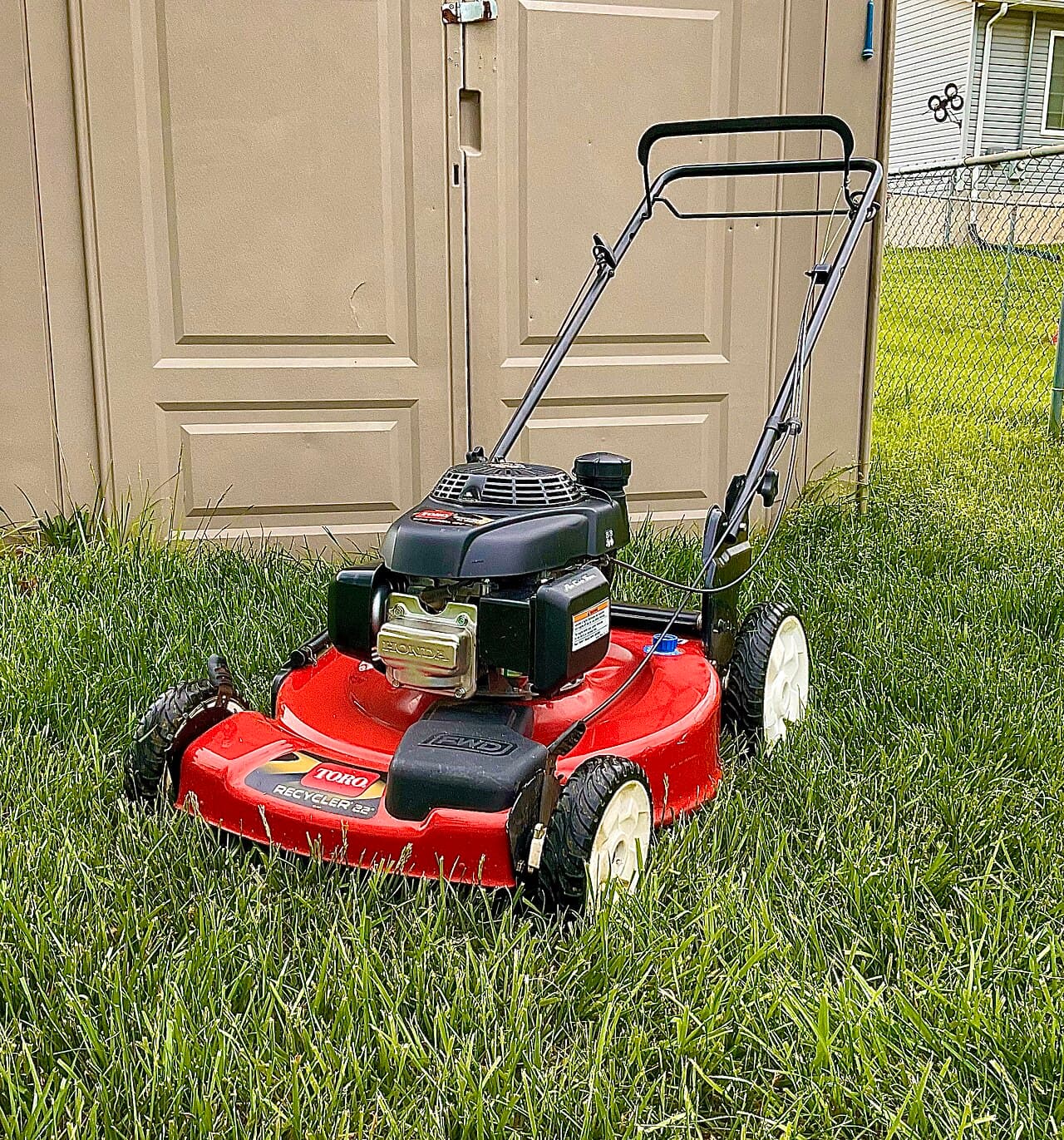
What sets the price of a mowing visit
Size and layout. The mowed area is the starting point, but layout matters as much. Every tree ring, flower bed, play set and fence line adds trimming time. Open rectangles are quick; narrow side yards behind gates are not.
Slopes and access. Steep banks often have to be mowed with a walk-behind or string trimmer instead of a riding mower. Tight gates, ditches and soft ground slow a crew down, and some businesses price those areas separately.
How often the grass needs cutting. This is set by the grass, not the calendar. Virginia Tech's grasscycling guide recommends mowing often enough that no more than one-third of the leaf height comes off at once, which is probably every five to six days during active growth and every 10 days or less when growth slows.[1] Henrico County's Extension office describes mowing twice a week for a high-maintenance cool-season lawn, weekly for regular maintenance, and every 10 to 14 days for a reduced-maintenance lawn.[2]
What kind of grass you have. In Virginia, tall fescue has a high mowing requirement during active growing periods,[3] which means spring and fall. Warm-season lawns follow a different calendar: bermudagrass has a high mowing requirement during summer, then little or none during a winter dormancy of 4 to 5 months.[3] By contrast, zoysiagrass needs less mowing than bermudagrass, but its turf is so dense that it takes a mower with a strong engine to cut it properly,[3] and centipedegrass is the lowest-input warm-season grass in Virginia, including its mowing requirement.[3] A crew that knows your grass can quote a season more accurately.
What each visit includes. A basic visit may be mowing only. Trimming around obstacles, edging walks and the driveway, and blowing clippings off hard surfaces each add time. Some companies include all three; others list them separately.
Clippings. Bagging and hauling clippings takes longer than leaving them, and it is not a cost-free habit for the community either, since bagging is an additional expense for municipalities.[1] On the other side of the ledger, returning clippings can often cut the season's fertilizer total by about one-third.[1] Unless you have a reason to bag, ask for a quote with clippings left on the lawn.
Overgrown grass. A first cut after weeks of growth, or a lawn being taken over from a crew that quit, usually costs more. Tall grass may need two passes and a cleanup.
Extras that change the paperwork
Many mowing companies also offer weed control or fertilizer programs. Those are priced separately, and once weed killer or any other pesticide is involved, Virginia's rules change. In VDACS's words, "A pesticide business license is required for any person or business operating in Virginia, which, in exchange for compensation, sells, stores, distributes, mixes, applies or recommends pesticides."[4] To get that license, a business has to file a certificate of insurance showing at least $100,000 for property damage, $100,000 for injury to or death of one person, and $300,000 per occurrence.[4] A higher quote from a licensed, insured company is not the same thing as a cheaper one from a crew that sprays without a license.

The cost of not mowing
Skipping the mowing can cost money too. Under state law, localities may require owners to cut grass and weeds, and after reasonable notice may have it cut by their own agents and charge the cost to the owner.[6] The same statute says one written notice per growing season counts as reasonable notice.[6] Each locality sets its own rules. In Fairfax County, residential lots under one-half acre must keep grass under 12 inches,[5] and the county is plain about the next step: "If the grass isn't cut, a County contractor will be directed to cut the grass. The property owner will be charged for the service."[5] If you travel in summer or own a rental, a mowing contract can be cheaper than a locality's bill.
What to ask for in a written quote
- The price per visit, and what one visit includes: mowing, trimming, edging, blowing.
- How many visits the season covers, and when it starts and ends.
- What happens to rained-out weeks, and whether visits slow to every other week in a summer drought.
- Whether clippings are left, bagged or hauled away.
- How fall leaves, the first overgrown cut and storm debris are priced.
- Proof of liability insurance and, for any chemical work, the pesticide business license.
Stop and call a pro if
- The lawn includes banks too steep to mow safely with your own equipment.
- You are adding weed control or fertilizer treatments and want them applied by a licensed business.
- The lawn is thinning or browning in patches even with regular mowing; a quote for mowing will not fix a disease, drought or soil problem. See why a lawn turns brown after mowing.
- Your locality has sent a tall-grass notice and you cannot cut it yourself in time.
For more, read what height to mow fescue and how often to mow in Virginia, browse the lawn and landscaping answers, or see lawn mowing services. To compare real prices for your yard, describe the job once and local businesses quote it; how Loclis pricing works explains the rest.
Common questions
- Is it cheaper to pay per visit or for the season?
- It depends on the contract. A season price spreads the cost evenly but may include visits in slow weeks when the grass barely grew. A per-visit price follows the weather more closely. Ask each company how it handles skipped, rained-out and extra visits, and compare the season total either way.
- Why does the first mow of spring cost more?
- Grass that has been left to grow takes longer to cut, often needs a second pass, and leaves more clippings to deal with. Mowing to the one-third rule from the first warm week of spring keeps every visit closer to the standard price.
- Does leaving the clippings on the lawn lower the price?
- It can. Bagging and hauling clippings adds time and disposal, and Virginia Tech's grasscycling research found that returning clippings can often cut a lawn's yearly fertilizer total by about a third. A mulching or side-discharge mower spreads them well when the grass is cut regularly and dry.
- Can my county mow my lawn and send me the bill?
- In some places, yes. Virginia law lets localities require owners to cut grass and weeds and to charge the owner when the locality has it cut after notice. Fairfax County, for example, sends a county contractor to lots under half an acre with grass over 12 inches and charges the owner. Rules vary by locality.
- Does a mowing crew need a license in Virginia?
- Mowing itself involves no pesticides, so the pesticide license does not come into it; ask for proof of liability insurance. If the crew will spray weed killer or apply other pesticides for pay, Virginia requires a pesticide business license from VDACS and a certified applicator.
Sources
- [1] Mowing To Recycle Grass Clippings: Let the Clips Fall Where They May (430-402), Virginia Cooperative Extension, Virginia Tech. Checked October 26, 2026.
- [2] SMART Lawns (revised March 2022), Virginia Cooperative Extension, Henrico County Office. Checked October 26, 2026.
- [3] Selecting Turfgrass for Virginia (SPES-748), Virginia Cooperative Extension, Virginia Tech. Checked October 26, 2026.
- [4] Pesticide Business License, Virginia Department of Agriculture and Consumer Services. Checked October 26, 2026.
- [5] Grass Height, Fairfax County Department of Code Compliance. Checked October 26, 2026.
- [6] Va. Code § 15.2-901, Locality may provide for removal or disposal of trash and clutter, cutting of grass, weeds, and running bamboo, Code of Virginia, Virginia General Assembly. Checked October 26, 2026.
Want a pro to handle it?
Describe the job once. Licensed local businesses send quotes, and you pay only when you book one.
Get a quote from a local pro