Why is my lawn turning brown after I mow it?
Most often the mower is the cause: a dull blade shreds the leaf tips so they dry tan, or the deck is set so low that it removes more than a third of the blade and leaves pale stubble. Heat and drought, clumps of wet clippings and summer diseases such as brown patch are the other usual causes, and each has its own fix.
Free to ask. Local shops send quotes, and you pay only when you book one.
By Kasra Taheri, Founder, LoclisPublished
Researched and drafted with AI, then checked claim by claim against the sources listed below before it was published. Prices and rules change; the dates beside each source say when it was last checked.
Step by step
Read when to stop and call a pro, further down this page, before you start.
Step 1: Look at the leaf tips
Pull a few blades from the browned area; frayed, torn, whitish tips point to a dull blade rather than a sick lawn.[1]
Step 2: Measure the cut height
Stand a ruler in the mowed grass; a fescue lawn well under 3 inches is being cut too short.[2]
Step 3: Check for scalped spots
Look for brown stripes or patches on bumps and high spots, where the deck dips and cuts lower than elsewhere.
Step 4: Sharpen or replace the blade
Have the blade sharpened, or follow your mower manual to do it, before the next mowing.
Step 5: Raise the deck
Set cool-season lawns to the taller side of the range, never below 2.5 to 3 inches in summer.[3]
Step 6: Go back to the one-third rule
Mow often enough that no more than one-third of the leaf blade comes off at once.[4]
Step 7: Break up clippings clumps
Rake or blow apart thick piles of wet clippings so they do not smother the grass beneath.
Step 8: Check the soil moisture
If the lawn has had little rain, water deeply to wet the root zone about 4 inches down rather than sprinkling lightly.[3]
Step 9: Pause mowing in drought
Keep mowers and other traffic off the lawn during extreme drought until the grass is growing again.[3]
Step 10: Look for spreading patches
Brown patches that widen in hot, humid weather while the rest of the lawn stays green may be brown patch disease.[2]
Step 11: Wait for fall rain
After a dry summer, give the lawn a soaking rain or two before deciding what is dead; living grass greens up quickly.[5]
Step 12: Reseed what did not recover
Repair dead spots in the fall, the best season to establish cool-season grass by seed or sod.[5]
When a lawn browns right after mowing, look at the mower before the lawn. A dull blade or a deck set too low accounts for most cases, and both are easy to fix. If the mower checks out, the usual suspects are summer heat and drought, clumps of wet clippings and, in hot humid weather, a fungal disease called brown patch.
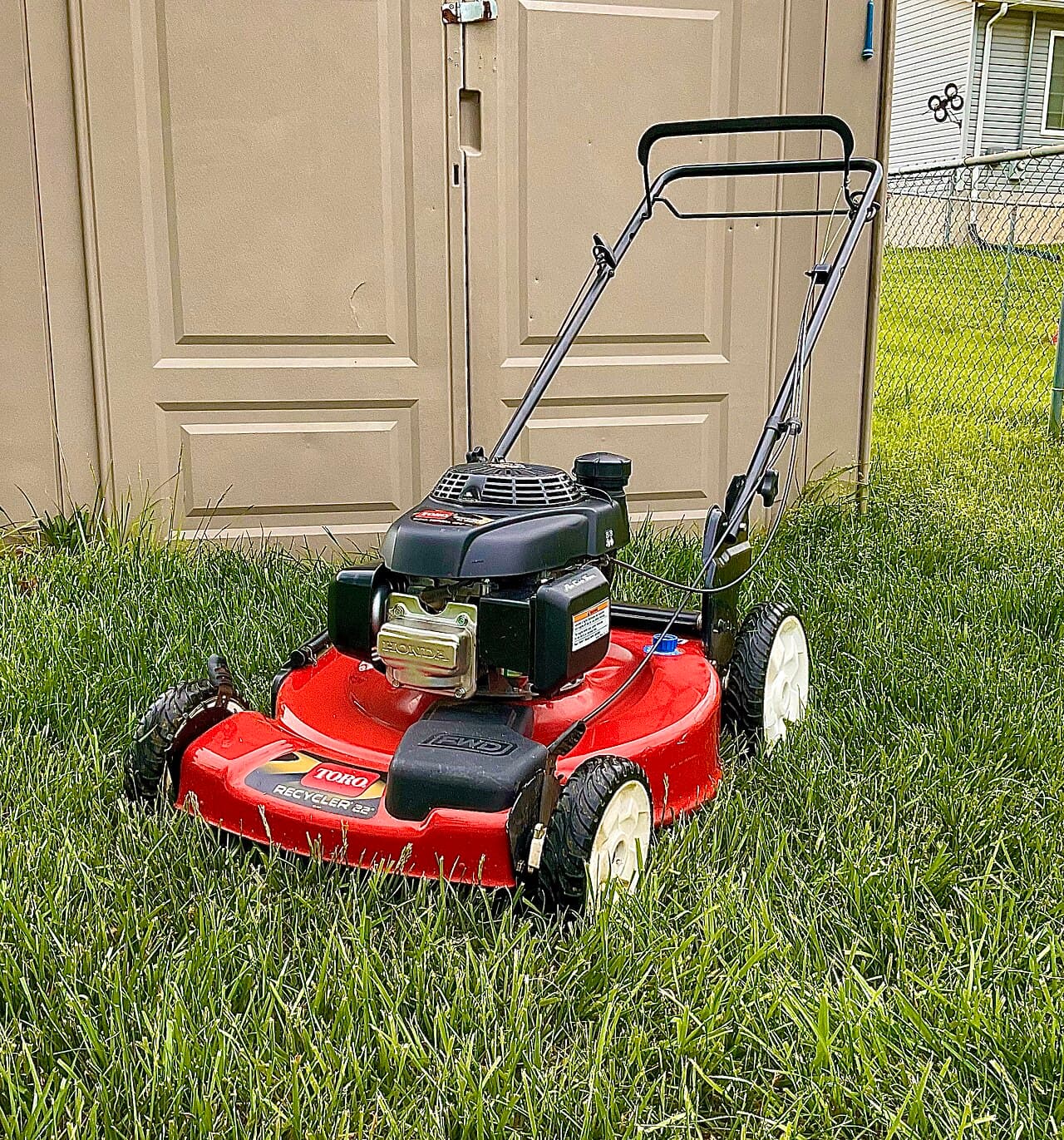
1. A dull blade
This is the most common cause, and it shows up within a day or two of mowing as a pale, tan or whitish cast over the whole lawn. Dull blades rip and tear the grass, which promotes disease, leaves the shredded tips tan and ragged, and weakens the plants.[1] Pull a blade of grass and look at the end. A clean, straight cut means the blade is fine. A frayed, split tip means it is time for sharpening. Blades dull faster when they hit sticks, stones and sandy soil, so a mower that mows a lot of rough ground needs attention more often.
2. Cutting too short
The second cause is taking off too much at once. The guideline is to never remove more than one-third of the leaf blade at any one mowing.[4] Cut lower than that and the lawn is often left with pale, stemmy stubble that looks brown for days. Low cutting also weakens the lawn over time, since grass mowed too short is more prone to disease.[2]
For tall fescue, Henrico County's Extension office recommends 3 to 4 inches for fescue lawns.[2] For summer, Virginia Tech's drought guidance sets a minimum of 2.5 to 3 inches for tall fescue, Kentucky bluegrass, perennial ryegrass and fine fescues,[3] and says to raise the cutting height on cool-season lawns ahead of summer stress.[3] See what height to mow fescue for the details.
Scalping can also be local. If the brown is in stripes or on bumps and the edges of beds, the deck is dipping over high spots. Raise the deck a notch, or smooth out the worst bumps in the fall.
3. Heat and drought
Sometimes mowing simply reveals stress the lawn was already under. Lawns that get little or no water from irrigation or rain during the summer go dormant, their color lightens, and most recover when water returns.[3] Kentucky bluegrass, for example, survives extended drought by slowing its growth, turning straw colored and going dormant.[3] A mower pass over grass in that state, especially in the heat of the day, makes the browning more obvious.
As a rule of thumb, most turfgrasses need roughly 1 inch of water a week, from rain or irrigation, to keep growing in warm weather.[3] If you water, aim for watering deeply and infrequently, soaking the root zone to a 4-inch depth,[3] rather than light daily sprinkles. If you do not water, let the lawn go dormant and stay off it: the advice is to keep mowers and other traffic off the lawn during extreme drought.[3]

4. Clumps of wet clippings
Mowing wet or overgrown grass leaves rows and piles of clippings. Wet grass sticks to the mower and falls in clumps on the lawn,[1] and a thick layer of wet clippings can smother turf.[1] The result is yellow or brown strips where the clumps sat. Scatter clumps with a rake or blower the same day, and mow when the grass is dry and before it gets too tall.
5. Brown patch and other diseases
If the browning comes as roughly round patches in hot, humid weather, think disease. Henrico County's Extension office says brown patch is the most common lawn disease in its area,[2] caused by a fungus that thrives in warm, humid summers; the leaf blades turn brown and die in patches, but the grass plant itself usually survives and recovers when the weather turns cooler and less humid.[2] Mowing does not cause it, but short mowing and too much fertilizer at the wrong time both leave grass more open to disease.[2]
To confirm it, your local Virginia Cooperative Extension office can help; Henrico's office asks for a six-inch round sample of turf with the roots intact.[2] It also recommends that you wash mowing equipment after each use, because disease pathogens can live on plant debris and be transported to other locations.[2]
6. It is the season, not the mower
Warm-season lawns, such as bermudagrass and zoysiagrass, go dormant after repeated frosts and lose their green color for 4 to 5 months from late fall to early spring.[6] If your lawn browned in October and the mower happens to be the last thing that touched it, the mower is not to blame.
When the lawn does not come back
After a dry summer, wait for rain before deciding what to do. Fall rains quickly show which cool-season turf is alive and which is dead, with living grass greening up within a day or so of a significant rain.[5] Most damaged lawns end up with problem spots of 50 to 150 square feet surrounded by healthy grass,[5] which are worth repairing on their own rather than renovating the whole yard, and fall is the best season to establish cool-season grasses by seed or sod.[5]
Stop and call a pro if
- Brown patches keep spreading through the lawn even after you have fixed the blade, height and watering.
- Large areas are dead after fall rains and you are considering a full renovation.
- You want a fungicide or insect treatment applied; that is work for a business holding a Virginia pesticide license.
- The mower vibrates, cuts unevenly from side to side, or the blade is bent. A shop that does lawn mower repair can fix it.
For more, read how often to mow in Virginia, browse the lawn and landscaping answers, or see lawn mowing services. If you would rather have someone else keep the lawn cut right, describe the job once and local businesses quote it.
Common questions
- Will grass grow back after it was scalped?
- Usually, if the crowns at the base of the plants were not damaged and the weather is not hot and dry. Raise the deck, water if rain is short, and give it a couple of weeks of growth. Spots that stay brown into fall can be reseeded then.
- How can I tell a dull blade from drought?
- Look closely at a single blade of grass. A dull mower leaves a torn, frayed tip that turns tan or whitish within a day or two, across the whole mowed area. Drought lightens the color of the entire leaf, usually shows first in the driest, sunniest spots, and the grass stops growing.
- Is it brown patch or just heat?
- Brown patch shows up as roughly circular brown areas in hot, humid weather while the lawn around them stays green, and the grass usually recovers once the weather cools. Heat and drought brown the lawn more evenly. Your local Extension office can confirm a disease from a turf sample.
- Should I stop mowing when the lawn is brown?
- If the browning is drought dormancy, yes. Dormant grass is not growing, and Virginia Tech advises keeping mowers and other traffic off the lawn during extreme drought. Resume once rain or watering brings back growth.
- My bermudagrass turned brown in October. Did I kill it?
- Probably not. Warm-season grasses such as bermudagrass and zoysiagrass go dormant after repeated frosts and lose their green color for 4 to 5 months from late fall to early spring. It should green up again in spring.
Sources
- [1] Mowing To Recycle Grass Clippings: Let the Clips Fall Where They May (430-402), Virginia Cooperative Extension, Virginia Tech. Checked October 26, 2026.
- [2] SMART Lawns (revised March 2022), Virginia Cooperative Extension, Henrico County Office. Checked October 26, 2026.
- [3] Summer Lawn Management: Watering the Lawn (430-010), Virginia Cooperative Extension, Virginia Tech. Checked October 26, 2026.
- [4] Fall Lawn Care (430-520), Virginia Cooperative Extension, Virginia Tech. Checked October 26, 2026.
- [5] Cool-season Lawn Recovery Following Summer Stress (SPES-353), Virginia Cooperative Extension, Virginia Tech. Checked October 26, 2026.
- [6] Selecting Turfgrass for Virginia (SPES-748), Virginia Cooperative Extension, Virginia Tech. Checked October 26, 2026.
Want a pro to handle it?
Describe the job once. Licensed local businesses send quotes, and you pay only when you book one.
Get a quote from a local pro