How much does post-construction cleaning cost in Virginia?
There is no standard price for post-construction cleaning in Virginia. Businesses quote it as a flat price, by the hour or by the square foot, and the number turns on how much of the house got dusty, whether debris is left, the task list, ladder work, and lead rules in pre-1978 homes. Check what your contractor already owes, then compare written quotes.
Free to ask. Local shops send quotes, and you pay only when you book one.
By Kasra Taheri, Founder, LoclisPublished
Researched and drafted with AI, then checked claim by claim against the sources listed below before it was published. Prices and rules change; the dates beside each source say when it was last checked.
Step by step
Read when to stop and call a pro, further down this page, before you start.
Step 1: Check your remodel contract
Read what cleanup and debris removal your contractor already agreed to, so you do not pay twice.[1]
Step 2: Wait for the last trade
Book the clean after touch-up paint, fixtures and the final inspection, so the house is cleaned once.
Step 3: Describe the job
Note the rooms and square footage that got dusty, floor types, ceiling heights, and whether the heating system ran during the work.
Step 4: List the tasks
Name everything you want: walls, trim, inside cabinets, windows and tracks, light fixtures, vents, labels and paint specks, floors.
Step 5: Say what debris is left
Tell each business whether scraps, packaging or leftover materials still need to be hauled away, or that none are left.
Step 6: Mention the age of the house
Say whether the house was built before 1978 and whether painted surfaces were disturbed.[6]
Step 7: Send photos
Photograph the dustiest rooms, the floors and any paint, adhesive or grout haze so every business prices the same condition.
Step 8: Get written quotes
Ask for the task list, crew size, expected hours or flat price, number of visits, and whether a HEPA vacuum is used.
Step 9: Ask about insurance
Ask what liability and workers' compensation coverage the business carries and ask to see the certificate.[3]
Step 10: Compare line by line
Put the quotes side by side and compare the task lists and hours, not only the totals.
There is no official or standard price for post-construction cleaning in Virginia. Businesses quote it as a flat price for the job, an hourly rate per cleaner, or a rate per square foot, and the same house can get very different numbers depending on how dusty it is and what is on the task list. The useful answer is to know what drives the price, check what your remodel contract already covers, and compare written quotes that describe the same work.
Start with what you already paid for
Before you hire a cleaner, read your remodel contract. DPOR's consumer guide tells homeowners to make sure your contract includes everything you feel is important to the job, including complete cleanup and removal of debris and materials.[1] If your contractor agreed to remove debris and leave the house broom clean, a cleaning business only needs to price the detail work. If the contract is silent, see whether your contractor should do the final cleanup before you pay someone else to do it.
What drives the price
How much of the house got dusty. A bathroom remodel behind a sealed door is a small job. A kitchen opened to the living room, with the heating system running during the work, can mean cleaning the whole house. EPA's advice during dusty work is to seal off supply and return registers and do not operate the heating and cooling system until after cleaning up the dust,[8] and whether that happened shows up in the cleaning bill.
How the drywall was finished. Sanding joint compound is where most of the dust comes from. USG notes that wet sanding with a damp sponge produces no dust,[9] while dry sanding without dust collection can coat every room. Ask your drywall finisher which method they used; it tells you what the cleaner will face.
Rough clean, final clean, or both. On a large job, businesses often quote a rough clean when the heavy work is done and a final clean after the last touch-ups. Two visits cost more than one, but cleaning before trim, paint and flooring are finished usually means paying to clean again.
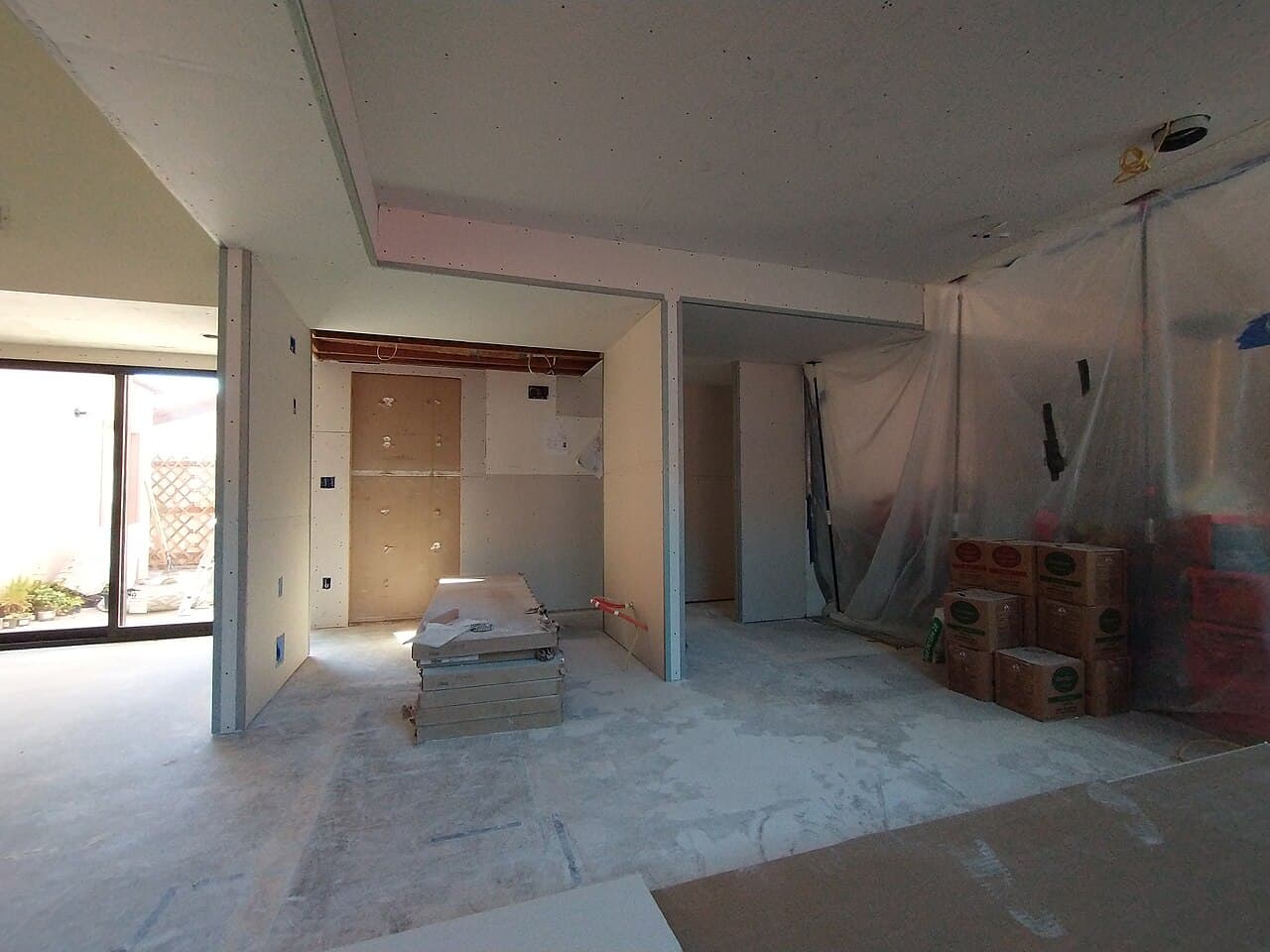
The task list. Walls and trim, the insides of cabinets and drawers, windows inside and out, window tracks, light fixtures and ceiling fans, vent covers, paint specks, adhesive and labels on new fixtures and windows, and grout haze on new tile all take time. Two quotes that look far apart are often for two different lists. A HEPA vacuum and several passes on the floors are normal for construction dust; ask whether the quote includes them.
Height and access. Vaulted ceilings, two-storey foyers, high windows and fixtures that need a tall ladder take longer and need equipment.
Debris left behind. Many cleaning businesses expect the debris and leftover materials to be gone before they arrive. If scraps remain, someone has to haul and dispose of them. EPA says most waste from residential renovation is solid, non-hazardous waste that should go to a licensed solid waste landfill, but to check local and state disposal requirements first.[5] Disposal fees are set locally. As one example, when we checked on October 27, 2026, the Montgomery Regional Solid Waste Authority charged $53.00 per ton for construction material at its transfer station.[4] Your own county or city sets its own rates. For the options, see the cost of construction debris removal in Virginia.
Ducts, if they need it. Duct cleaning is a separate service with its own price. EPA does not recommend that air ducts be cleaned routinely, only as needed,[8] so do not let it be added to a cleaning quote by default. See what air duct cleaning costs in Virginia.
Houses built before 1978
Lead rules move part of the cost to the contractor. EPA says anyone paid to perform work that disturbs paint in housing built before 1978 must be certified in lead-safe work practices,[6] and under the federal rule the renovation firm must clean the work area until no dust, debris or residue remains, and a certified renovator must verify the cleaning.[7] That cleaning is part of the renovation price, not an extra for a cleaning business to pick up. If you want confirmation beyond that, a certified lead dust sampling technician, lead-based paint inspector or risk assessor can do post-renovation dust-lead testing,[5] at an added cost.
The labor floor under every quote
Most of what you pay for is hours of labor. Under Virginia's Minimum Wage Act, from January 1, 2026, until January 1, 2027, every employer must pay its employees at least $12.77 per hour, or the federal minimum wage if that is higher.[2] The floor rises to $13.75 per hour on January 1, 2027, and to $15.00 per hour on January 1, 2028.[2] A business also pays payroll taxes, insurance, equipment, supplies and travel, which is why its hourly price is higher than the wage.
Insurance is part of the price
Construction cleanup involves ladders, sharp debris and heavy bags, so ask what a business carries. Virginia's Workers' Compensation Act does not count domestic servants as employees,[3] and it also leaves out employees of a business that regularly has fewer than three employees in the same business in Virginia, unless they and the employer choose to be covered.[3] Do not assume a small crew is covered; ask for the certificates. A business that pays for liability and workers' compensation insurance often charges more, and that protects you if someone is hurt or something is damaged.
Stop and call a pro if
- The house was built before 1978, painted surfaces were disturbed, and the renovation firm has not done its required cleaning and verification. Raise it with the firm before any cleaner starts.
- The work disturbed old insulation, ceiling texture or flooring that might contain asbestos. That needs a qualified asbestos professional, not a cleaning crew.
- Dust keeps blowing from the supply vents after a full clean and a new filter. Have the heating and cooling system inspected.
- You find mold, water damage or a musty smell in opened walls or under old flooring.
Getting quotes on Loclis
Read how to clean up drywall dust yourself if you are weighing doing part of it, browse post-construction cleaning businesses, or look up cleaning services around Blacksburg. Loclis's own fees are on the pricing page, and more answers are under cleaning. When the trades are finished, describe the cleanup on Loclis and local businesses will quote it.
Common questions
- Is post-construction cleaning more expensive than a deep clean?
- Often, for the same size home. Fine construction dust settles on every surface, including walls, trim and the insides of cabinets, and usually needs a HEPA vacuum, damp wiping and more than one pass. There can also be paint, adhesive and labels to remove. Compare task lists, not just prices.
- Does the price include hauling away debris?
- Not unless the quote says so. Many cleaning businesses expect debris and leftover materials to be gone before they start. If scraps remain, ask whether the business hauls them and what it charges, or have your contractor remove them under the remodel contract.
- Should I pay for one clean or two?
- On a large remodel, a two-visit quote is common: a rough clean when the heavy work is done and a final clean after the last touch-ups. On a smaller job, one thorough clean after all trades finish, with a light second pass you do yourself, is often enough.
- Is air duct cleaning part of post-construction cleaning?
- Usually not. Cleaners typically vacuum and wipe the vent covers and may change the filter, but duct cleaning is a separate service. EPA does not recommend routine duct cleaning, only cleaning as needed, such as when ducts are clogged with dust and debris or particles blow out of the supply vents.
- Can I cut the cost by doing part of it myself?
- Yes. Bagging debris, removing coverings, emptying rooms and doing the second wipe-down yourself all save crew time. Tell each business what will already be done when you ask for a quote.
Sources
- [1] What You Should Know Before You Hire a Contractor, Virginia Department of Professional and Occupational Regulation. Checked October 27, 2026.
- [2] Va. Code § 40.1-28.10, Minimum wages, Code of Virginia, Virginia General Assembly. Checked October 27, 2026.
- [3] Va. Code § 65.2-101, Definitions (Virginia Workers' Compensation Act), Code of Virginia, Virginia General Assembly. Checked October 27, 2026.
- [4] Disposal Guide, Montgomery Regional Solid Waste Authority. Checked October 27, 2026.
- [5] Lead-Safe Renovations for DIYers, U.S. Environmental Protection Agency. Checked October 27, 2026.
- [6] Lead Renovation, Repair and Painting Program, U.S. Environmental Protection Agency. Checked October 27, 2026.
- [7] 40 CFR 745.85, Work practice standards, Electronic Code of Federal Regulations. Checked October 27, 2026.
- [8] Should You Have the Air Ducts in Your Home Cleaned?, U.S. Environmental Protection Agency. Checked October 27, 2026.
- [9] Finishing and Decorating Gypsum Panels (white paper J2010), USG Corporation. Checked October 27, 2026.
Want a pro to handle it?
Describe the job once. Licensed local businesses send quotes, and you pay only when you book one.
Get a quote from a local pro