How do I clean up drywall dust after a renovation?
Keep the heating and cooling system off and the vents covered, bag the debris, then vacuum with a HEPA vacuum from the ceiling down, wipe every surface with a damp cloth, mop hard floors with two buckets, and change the furnace filter. Plan a lighter second pass a day or two later. In a house built before 1978, check for lead first.
Free to ask. Local shops send quotes, and you pay only when you book one.
By Kasra Taheri, Founder, LoclisPublished
Researched and drafted with AI, then checked claim by claim against the sources listed below before it was published. Prices and rules change; the dates beside each source say when it was last checked.
Step by step
Read when to stop and call a pro, further down this page, before you start.
Step 1: Check the age of the house
If the house was built before 1978 and the work disturbed painted surfaces, treat the dust as possibly containing lead and follow EPA's lead-safe cleanup.[2]
Step 2: Keep the HVAC off
Leave supply and return registers sealed and the heating and cooling system off until the dust is cleaned up.[1]
Step 3: Gear up
Put on a disposable respirator, safety glasses and gloves, because cleaning stirs the finest dust back into the air.
Step 4: Bag the debris
Pick up scraps, tape and screws and put them in heavy-duty plastic bags before you vacuum.[2]
Step 5: Vacuum from the top down
Use a HEPA vacuum on walls, trim, ledges and fixtures, working from the ceiling down to the floor.[4]
Step 6: Vacuum the floors and carpet
Vacuum hard floors, then carpets and rugs slowly with a HEPA vacuum that has a beater bar.[4]
Step 7: Wipe every surface
Wipe walls, sills, counters, cabinets inside and out, and fixtures with damp cloths, changing cloths until they come away clean.[2]
Step 8: Mop with two buckets
Mop hard floors with one bucket for wash water and one for rinse water, and change the water when it turns cloudy.[4]
Step 9: Clean the vents
Take the plastic off the registers, vacuum the grilles and wipe them with a damp cloth.
Step 10: Change the furnace filter
Put in a new filter that fits snugly with no gaps around it before you run the system again.[1]
Step 11: Do a second pass
A day or two later, dust and damp-wipe the high ledges and floors again to catch dust that settled after the first clean.
Drywall dust is fine enough to float through the house, settle on every ledge and get pulled into the heating and cooling system. The cleanup works when it follows an order: keep the system off and the vents covered, pick up the debris, vacuum with a HEPA vacuum from the ceiling down, wipe every surface with a damp cloth, mop the floors, and change the furnace filter. Then plan a lighter second pass a day or two later. If the house was built before 1978, check for lead before anything else.
First, check the age of the house
EPA says any renovation, repair or painting project in a pre-1978 home that has lead-based paint can easily create dangerous lead dust.[2] If your house was built before 1978 and the work disturbed painted walls, trim or windows, treat the dust as possibly containing lead.
When a paid contractor did that work, the cleanup is theirs under the federal lead rule: after the renovation it must clean the work area until no dust, debris or residue remains,[4] and a certified renovator must inspect the work area and have it cleaned again if dust, debris or residue is still there.[4] Ask the contractor to finish that before you start your own cleaning. If you did the work yourself, use the lead-safe routine further down this page.
Keep the dust out of the ducts
During dusty work, EPA advises that you seal off supply and return registers and do not operate the heating and cooling system until after cleaning up the dust.[1] Leave the plastic on the registers and the system off until the last wipe-down is finished. Running it early pulls dust into the return, through the filter if it fits well, and around it if it does not.
What you need
- A HEPA vacuum. EPA's advice is to use a HEPA vacuum or the highest efficiency filter bags your vacuum cleaner can take, because vacuuming can increase the amount of dust in the air during and after vacuuming.[1]
- Cloths, buckets and bags. EPA's cleanup list for do-it-yourselfers includes disposable wet-cleaning wipes, a mop with disposable mop heads, two buckets and heavy-duty plastic bags.[2] Microfiber cloths that you rinse often work for an ordinary job.
- A disposable respirator, safety glasses and gloves. Cleaning puts the finest dust back in the air, and EPA notes that small particles, less than 10 micrometers in diameter, can get deep into your lungs.[6]
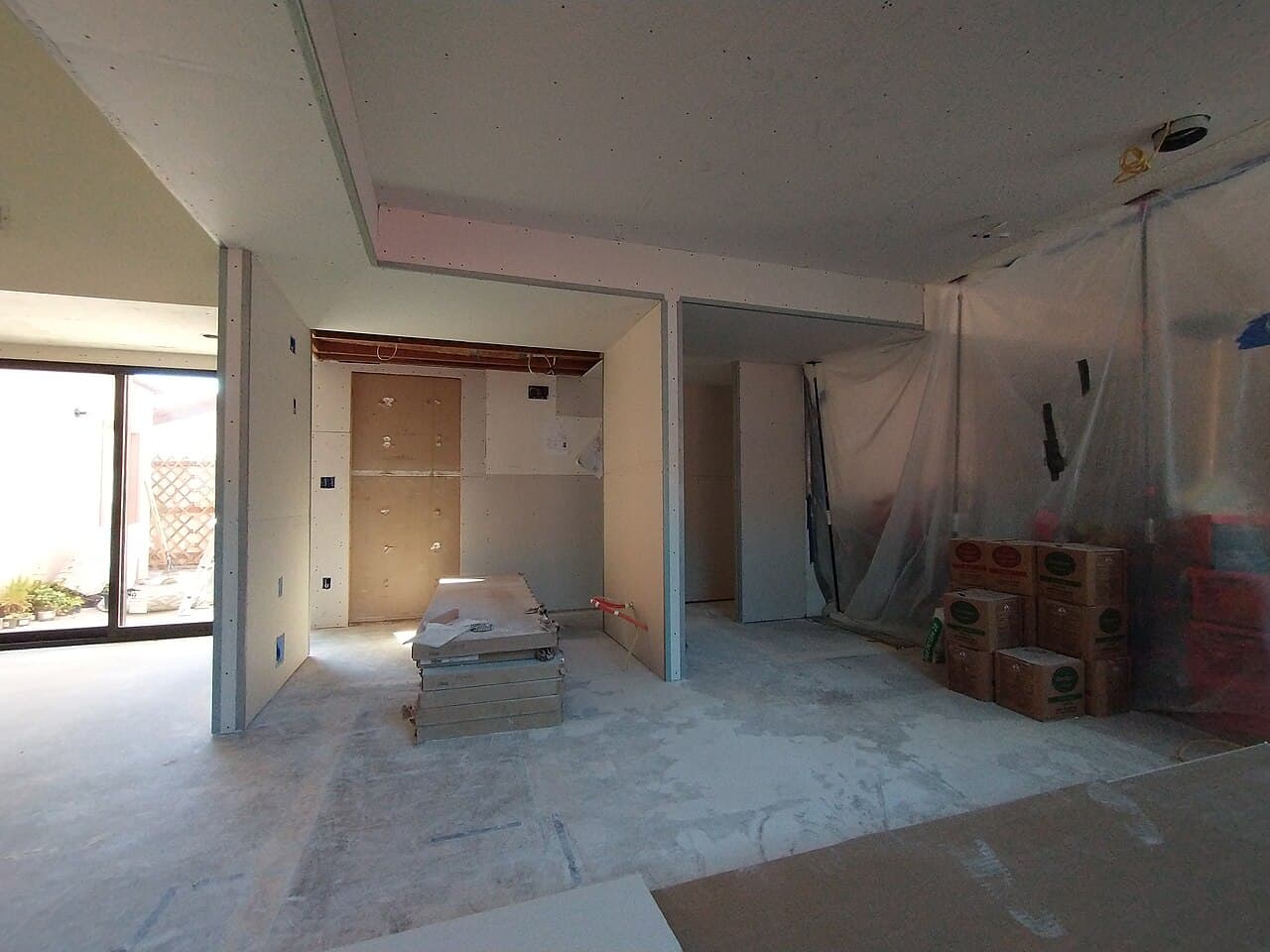
The cleanup, in order
Pick up the debris. Bag drywall scraps, tape, screws and packaging first, so the vacuum only has dust to deal with. A broom tends to throw fine dust back into the air, so use a dustpan for the larger bits and leave the rest for the vacuum. For what to do with the scraps, see how to dispose of drywall and lumber after a remodel.
Vacuum from the top down. The federal rule for renovation firms has them clean from higher to lower, with walls cleaned starting at the ceiling and working down to the floor.[4] The same order works in any house, because dust you knock loose falls onto surfaces you have not cleaned yet. Go over the tops of door and window trim, upper cabinets, shelves, light fixtures, ceiling fan blades, window sills and tracks, outlet covers and baseboards, then the floor. On carpet, the same rule calls for a HEPA vacuum with a beater bar on carpets and rugs.[4] Go slowly and make several passes in different directions.
Wipe every surface. Follow the vacuum with damp cloths: walls, sills, counters, cabinet fronts and insides, drawers, doors and fixtures. EPA's lead-safe routine is to wipe all surfaces with wet disposable cleaning cloths until the cloths are clean,[2] and that is a good test for any drywall cleanup. A cloth that is barely damp lifts dust; a wet one smears it into a paste.
Mop the hard floors. Use a mopping method that keeps the wash water separate from the rinse water, such as two buckets,[4] and change the water as soon as it turns cloudy. A white film on a dry floor usually means one more pass with clean water.
Clean the vents and change the filter. Take the plastic off the registers, vacuum the grilles and wipe them. Put in a new furnace filter, and make sure no filter is missing and that air cannot bypass the filter through gaps around the filter holder.[1] EPA suggests a filter rated at least MERV 13, or as high as your system will accommodate;[5] see which MERV filter to use. In the weeks after a remodel the filter loads up faster, and EPA's advice is that if filters become clogged, change them more often.[1]
Do a second pass. Some dust stays in the air and settles after you finish. A day or two later, damp-wipe the high ledges and flat surfaces again and mop once more. Keep in mind that furnace and HVAC filters only filter the air while the system is running.[5] A portable air cleaner can help in the room you use most; pick one with a clean air delivery rate (CADR) large enough for the size of the room.[5] If dust keeps coming back after all this, see why there is still dust everywhere after a remodel.
If the house was built before 1978
When you did lead-disturbing work yourself, EPA's final cleaning is to mop uncarpeted floors, clean walls with a HEPA vacuum or a damp cloth, vacuum all remaining surfaces and objects with a HEPA vacuum,[2] and then wipe everything with wet disposable cloths until they come away clean. Waste, including used cloths, mop heads and vacuum filters, should be collected in heavy plastic sheeting or bags and sealed with duct tape.[2] For confirmation, a certified lead dust sampling technician, lead-based paint inspector or risk assessor can test for dust-lead after the work.[2] EPA's warning is plain: even a small amount of lead dust from a home renovation project is enough to poison a child.[3] For who must be certified, see does a painter need to be lead-safe certified.
Less dust next time
Most of the dust comes from sanding joint compound. USG notes that wet sanding with a damp sponge produces no dust,[7] and DAP's joint compound data sheet recommends wet sanding to prevent generating airborne dust.[8] For dry sanding, USG describes a sanding tool equipped with a HEPA vacuum.[7] Ask your drywall finisher which they use.
Containment helps as much as sanding method. EPA's lead-safe setup is a good model for any dusty job: cover floors with plastic sheeting, close and seal the doors to the work area, turn off forced-air heating and cooling, and cover the vents with taped plastic.[2]
Stop and call a pro if
- The house was built before 1978, painted surfaces were sanded, scraped or cut, and you are not sure the cleanup met the lead rules. Ask for dust-lead testing or a lead-safe certified firm, especially if children live there or visit.
- Dust keeps blowing out of the supply vents after you have cleaned and changed the filter. EPA's reasons to consider duct cleaning include ducts clogged with excessive amounts of dust and debris, or particles actually released into the home from the supply registers.[1] See whether air duct cleaning is worth it.
- The work disturbed old insulation, ceiling texture or other material that might contain asbestos. Stop cleaning that area and have it tested. For heating and cooling systems, EPA says asbestos-containing materials should not be disturbed or removed except by specially trained and equipped contractors.[1]
- You find water damage, mold or a musty smell behind opened walls.
- The whole house is coated and the job is bigger than a weekend. A post-construction cleaning crew brings HEPA equipment and does it in a day or two.
Getting help on Loclis
Browse post-construction cleaning businesses, look up cleaning services around Blacksburg, or read more under cleaning answers. When you are ready, describe the cleanup on Loclis and local businesses will quote it.
Common questions
- Can I use a regular shop vacuum for drywall dust?
- It will pick up debris, but the fine dust is the problem. EPA advises a HEPA vacuum or the highest efficiency filter bags your vacuum can take, because vacuuming can put more dust in the air during and after vacuuming. If you use a shop vacuum, fit the finest filter or bag its maker sells for it and empty it outdoors.
- Should I sweep drywall dust with a broom?
- Not for the fine dust. A broom tends to throw it back into the air, where it settles again on surfaces you have already cleaned. Pick up larger debris by hand or with a dustpan, then vacuum with a HEPA vacuum and finish with a damp mop.
- When can I turn the heat or air conditioning back on?
- After the dust is cleaned up. EPA's advice during dusty renovation work is to seal the supply and return registers and not run the heating and cooling system until the dust is cleaned up. Put in a fresh filter before you start it again.
- Why do the walls still look hazy after I wipe them?
- Usually because the cloth is spreading a thin film of dust instead of lifting it. Rinse or change cloths often, use only a lightly damp cloth, and go over painted walls a second time once they are dry. Let new paint cure as the paint maker directs before you scrub it.
- Do I need to clean inside the cabinets and drawers?
- Yes, if they were in the house during the work. Fine dust gets into closed cabinets, drawers and closets. Vacuum them, wipe them with a damp cloth, and wash dishes and utensils that were left out.
- Is drywall dust dangerous to breathe?
- Treat it as something to avoid breathing. EPA notes that small particles can get deep into the lungs, so wear a disposable respirator while you clean. In a house built before 1978, the dust from sanding or cutting painted surfaces may contain lead, which is a more serious hazard.
Sources
- [1] Should You Have the Air Ducts in Your Home Cleaned?, U.S. Environmental Protection Agency. Checked October 27, 2026.
- [2] Lead-Safe Renovations for DIYers, U.S. Environmental Protection Agency. Checked October 27, 2026.
- [3] Renovation, Repair and Painting (RRP) Program: Consumers, U.S. Environmental Protection Agency. Checked October 27, 2026.
- [4] 40 CFR 745.85, Work practice standards, Electronic Code of Federal Regulations. Checked October 27, 2026.
- [5] Guide to Air Cleaners in the Home, U.S. Environmental Protection Agency. Checked October 27, 2026.
- [6] Indoor Particulate Matter, U.S. Environmental Protection Agency. Checked October 27, 2026.
- [7] Finishing and Decorating Gypsum Panels (white paper J2010), USG Corporation. Checked October 27, 2026.
- [8] Lightweight Wallboard Joint Compound, technical data sheet, DAP. Checked October 27, 2026.
Want a pro to handle it?
Describe the job once. Licensed local businesses send quotes, and you pay only when you book one.
Get a quote from a local pro