Should my contractor do the final cleanup after a remodel?
Your contractor should clean up after their own work, but how far that goes depends on the written contract. Hauling debris and a broom-clean finish are common; wiping every surface, cabinet and window often is not. Write the cleanup you expect into the contract. When a paid firm disturbs paint in a house built before 1978, federal lead rules make a thorough cleanup the firm's job.
Free to ask. Local shops send quotes, and you pay only when you book one.
By Kasra Taheri, Founder, LoclisPublished
Researched and drafted with AI, then checked claim by claim against the sources listed below before it was published. Prices and rules change; the dates beside each source say when it was last checked.
Step by step
Read when to stop and call a pro, further down this page, before you start.
Step 1: Read the cleanup terms
Find what your contract says about cleanup, debris removal and protecting the rest of the house before work starts.
Step 2: Spell out what clean means
Ask for a written list: debris hauled, coverings removed, floors vacuumed and mopped, surfaces wiped, vents cleaned, filter changed.
Step 3: Add it in writing
If cleanup is missing or vague, add it through a written change order signed by you and the contractor.[1]
Step 4: Ask about dust control
Ask how the crew will contain dust and whether registers will be sealed with the heating and cooling system off.[5]
Step 6: Hold back the last payment
Keep a retention until the work, including cleanup, is complete, and do not sign a completion certificate before then.[2]
Step 7: Walk the house together
Do a final walk-through with the contractor and put any cleanup misses on the punch list.
Step 8: Book a detail clean last
If you want a move-in clean, book a cleaning business after every trade has finished, so it is done once.
Step 9: Keep a job file
Keep the contract, change orders, invoices, messages and photos of the job's start, progress and completion.[2]
Your contractor should clean up after their own work, but "cleanup" can mean anything from hauling away the scraps to leaving the house ready to move back into. In Virginia the answer for your job is whatever your written contract says, so the time to settle it is before work starts. When a paid firm disturbs paint in a house built before 1978, a thorough cleanup is not optional: federal lead rules make it the renovation firm's job.
What the contract has to say
Under the Board for Contractors regulations, anyone doing residential contracting, other than subcontractors and those doing routine maintenance or service contracts, must use a legible written contract that clearly specifies the terms and conditions of the work to be performed,[1] signed by both you and the contractor before work starts or payment is accepted.[1] Among its minimum terms is "a listing of specified materials and work to be performed, which is specifically requested by the consumer."[1] And any change to the cost, materials, work to be performed or estimated completion date must be in writing and signed by all parties.[1]
DPOR's consumer guide is direct about cleanup: make sure your contract includes everything you feel is important to the job, including complete cleanup and removal of debris and materials.[2] If you check that your contractor is licensed (see how to check a Virginia contractor's licence), check this clause in the same sitting.
Broom clean or move-in ready
Contracts often say "broom clean" or "remove all debris." Those usually mean the dumpster is gone, tools and leftover materials are out, protective coverings are pulled up and floors are swept. They usually do not mean the dust is off every door frame, the cabinets are wiped inside, the windows are clean and the vents are vacuumed.
Neither is wrong; they are different jobs. A remodeling crew is set up to build, and a detail clean takes a different kind of time and equipment. What matters is that you and the contractor agree in writing. A useful cleanup clause lists:
- debris, packaging and leftover materials removed from the house and yard
- protective floor and wall coverings removed
- floors vacuumed and mopped in the work area and the path the crew used
- surfaces in the work area wiped, including cabinets inside and out
- paint drips, labels and adhesive removed from fixtures, windows and counters
- vent covers cleaned and the furnace filter changed at the end
For debris specifically, see whether the contractor should haul debris or you should rent a dumpster.
Houses built before 1978
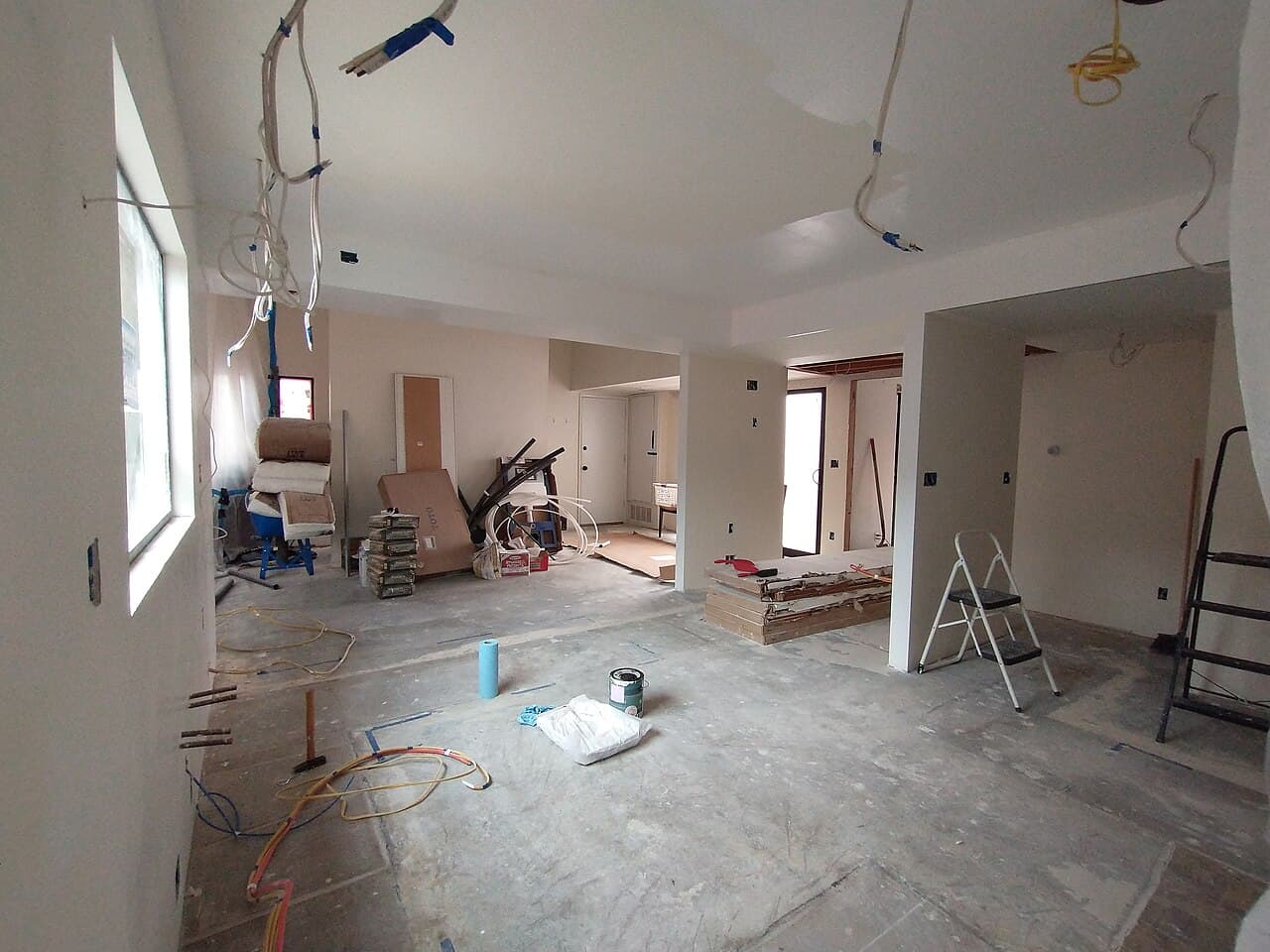
Here the law sets a floor. EPA says anyone paid to perform work that disturbs paint in housing built before 1978 must be certified in lead-safe work practices.[4] After the work, the firm must clean the work area until no dust, debris or residue remains.[3] For interior work it must clean all objects and surfaces in the work area and within 2 feet of it, from higher to lower,[3] by HEPA-vacuuming, wiping with damp cloths, and mopping floors with the wash water kept separate from the rinse water.[3] A certified renovator must then inspect the area and verify the cleaning by wiping windowsills, floors and countertops and comparing the cloths with a cleaning verification card.[3]
You can ask for more. If the contract requires dust clearance sampling by a certified inspector, risk assessor or dust sampling technician, with re-cleaning until the results are below the dust-lead action levels, that testing can take the place of cleaning verification.[3] For which trades this covers, see does a painter need to be lead-safe certified.
Dust control is part of cleanup
The cheapest cleanup is the dust that never left the work area. Ask how the crew will contain it: plastic over doorways, floor protection along the path in and out, and the heating and cooling system. EPA's advice during dusty work is to seal off supply and return registers and do not operate the heating and cooling system until after cleaning up the dust.[5] Agree on who seals the registers, when the system can run again, and who changes the filter.
When a separate cleaner makes sense
If the contract covers debris and a broom-clean finish, a post-construction cleaning business can do the detail work. Book it after the last trade has finished, including touch-up paint and the final inspection, so the house is cleaned once. For what that costs, see how much post-construction cleaning costs in Virginia. If the contractor offers to arrange the cleaner, put it in the contract or a signed change order.
Hold the last payment until it is done
DPOR's advice on payments applies to cleanup like any other part of the job. Never let your payments get ahead of the contractor's work.[2] Ask for a retention, ordinarily 10 percent, that you keep until the job is completed,[2] and never sign a completion certificate until all the work called for in the contract has been properly completed.[2] Keep a job file: DPOR lists a copy of the signed contract and any change orders, bills and invoices, a record of project-related correspondence, and photos or video of the job's start, progress and completion.[2]
If a contractor walks away from work the contract requires, the regulations say the intentional and unjustified failure to complete work contracted for or to comply with the terms in the contract is a prohibited act,[1] and complaints against contractors may be filed with the Department of Professional and Occupational Regulation.[1] See how to file a complaint against a contractor in Virginia.
Stop and call a pro if
- Painted surfaces in a pre-1978 house were sanded, scraped or cut and you have no record of cleaning verification or dust testing. Ask the firm for it before you move back into the space.
- Dust keeps blowing from the supply vents after the cleanup and a new filter. Have the heating and cooling system checked; see how to clean up drywall dust after a renovation.
- The cleanup turns up damage, such as scratched floors, chipped tile or water stains. Photograph it and raise it with the contractor before the final payment.
- You and the contractor disagree about what the contract requires. A conversation backed by the written terms usually settles it; if it does not, a lawyer can advise on your contract.
Getting help on Loclis
Browse post-construction cleaning businesses, look up cleaning services around Blacksburg, or read more under cleaning answers. When the trades are done, describe the cleanup on Loclis and local businesses will quote it.
Common questions
- What does broom clean mean in a contract?
- There is no standard definition, which is the problem. It usually means debris and tools are gone and the floors are swept, not that every surface is dust-free. If the contract says broom clean, ask the contractor to write down exactly what that includes, or replace it with a list of tasks.
- Is it normal to hire a separate cleaner after a remodel?
- Yes. Many homeowners have the contractor remove debris and leave the work area broom clean, then hire a post-construction cleaning business for the detail work: dust on every ledge, inside cabinets, windows, vents and floors. Book it after all the trades have finished.
- Can I ask the contractor to include a professional clean in the price?
- You can. Some contractors include it or arrange a cleaning company themselves. Put it in the contract, or in a signed change order if you add it later, with what the clean covers and when it happens.
- Who cleans up the dust in an older house with lead paint?
- When a paid firm disturbs paint in a house built before 1978, the federal lead rule requires the firm to clean the work area until no dust, debris or residue remains and to have a certified renovator verify the cleaning. That is part of the job, not an extra.
- What if the contractor leaves without cleaning up?
- Point to the cleanup terms in the contract and ask in writing for the work to be finished, and keep your retention until it is. Under the Board for Contractors regulations, an intentional and unjustified failure to complete contracted work is a prohibited act, and complaints can be filed with DPOR.
Sources
- [1] 18VAC50-22-260, Filing of charges; prohibited acts (Board for Contractors Regulations), Virginia Administrative Code, Virginia General Assembly. Checked October 27, 2026.
- [2] What You Should Know Before You Hire a Contractor, Virginia Department of Professional and Occupational Regulation. Checked October 27, 2026.
- [3] 40 CFR 745.85, Work practice standards, Electronic Code of Federal Regulations. Checked October 27, 2026.
- [4] Lead Renovation, Repair and Painting Program, U.S. Environmental Protection Agency. Checked October 27, 2026.
- [5] Should You Have the Air Ducts in Your Home Cleaned?, U.S. Environmental Protection Agency. Checked October 27, 2026.
Want a pro to handle it?
Describe the job once. Licensed local businesses send quotes, and you pay only when you book one.
Get a quote from a local pro