Why is there still dust everywhere after my remodel?
Usually because fine dust is still circulating. Remodel dust gets into the heating and cooling system, loads the furnace filter, and settles on high ledges and inside cabinets that the first clean missed. Dry dusting, sweeping and vacuums without fine filters put it back in the air. Change the filter, clean with a HEPA vacuum and damp cloths from the top down, and repeat.
Free to ask. Local shops send quotes, and you pay only when you book one.
By Kasra Taheri, Founder, LoclisPublished
Researched and drafted with AI, then checked claim by claim against the sources listed below before it was published. Prices and rules change; the dates beside each source say when it was last checked.
Step by step
Read when to stop and call a pro, further down this page, before you start.
Step 1: Change the furnace filter
Put in a new filter now, even if the old one is recent, and check it again in a few weeks.[1]
Step 2: Check the filter fit
Make sure the filter fits snugly with no gaps around it and that no filter slot is empty.[2]
Step 3: Clean the registers
Vacuum and wipe every supply and return grille, and note any vent that blows visible dust once the system runs.
Step 4: Find the hidden ledges
Look at the tops of doors, trim, upper cabinets, light fixtures, fan blades, window tracks and inside drawers.
Step 5: Switch to a HEPA vacuum
Use a HEPA vacuum or the highest efficiency bags your vacuum takes, instead of a broom or a dry duster.[1]
Step 6: Clean from the top down
Vacuum and then damp-wipe ceilings, walls, trim and fixtures before the floors, so falling dust lands on surfaces not yet cleaned.[5]
Step 7: Mop with clean rinse water
Mop hard floors with separate wash and rinse buckets and change the water when it clouds.[5]
Step 8: Close off unfinished areas
If work is still going on, keep plastic over doorways and vents in the work area so dust does not keep spreading.[4]
Step 9: Run an air cleaner
Run a portable air cleaner sized for the room in the space you use most while the dust settles.[2]
Step 10: Repeat after a few days
Damp-wipe the flat surfaces again a few days later; the second clean is usually much lighter than the first.
Most remodels leave dust behind for days or weeks, and the reason is usually that fine dust is still moving around the house. It got into the heating and cooling system, it is sitting on surfaces the first clean missed, or the way the house is being cleaned keeps stirring it back up. The fix is to find which of these is happening, change the filter, and clean once more from the top down with a HEPA vacuum and damp cloths.
Why remodel dust lingers
Drywall sanding, cutting and demolition make very fine dust. EPA describes particulate matter as a mixture of solid and liquid particles suspended in air,[3] and the finest construction dust behaves that way: it can hang in the air, drift into rooms where no work happened, and settle long after the sanding stopped. That is why a house can look clean on the day the crew leaves and feel gritty again a few days later.
The usual causes, in the order to check them
1. The heating and cooling system ran during the work. During construction or renovation work that produces dust, EPA's advice is to seal off supply and return registers and not run the heating and cooling system until after the dust is cleaned up.[1] If the system ran with the registers open, it pulled dust into the return side, loaded the filter, and pushed whatever got past it out of every supply vent in the house.
2. The filter is full, loose or low-grade. A filter that caught a remodel's worth of dust can clog in weeks. EPA's advice is that if your filters become clogged, change them more frequently,[1] and to make sure the filter fits snugly so air does not leak around it.[2] Check too that no filters are missing and that air cannot bypass filters through gaps around the filter holder.[1] For more filtering, EPA suggests a filter rated at least MERV 13 or as high as your system will accommodate;[2] see which MERV filter to use. Keep in mind that furnace and HVAC filters filter the air only when the system is operating,[2] which EPA says is usually less than 25% of the time during heating and cooling seasons.[2]
3. Dust in the ducts, less often than people fear. EPA says much of the dirt in air ducts adheres to duct surfaces and does not necessarily enter the living space.[1] Dust on the return grille is not by itself a sign of a problem. The cases EPA lists include ducts clogged with excessive amounts of dust and debris, or particles actually released into the home from the supply registers.[1] Run the system with a new filter and hold a dark cloth near each supply vent: dust blowing out of one is worth having looked at. Choose a duct cleaner carefully, because EPA warns that an inadequate vacuum collection system can release more dust, dirt and other contaminants than if the ducts had been left alone.[1]
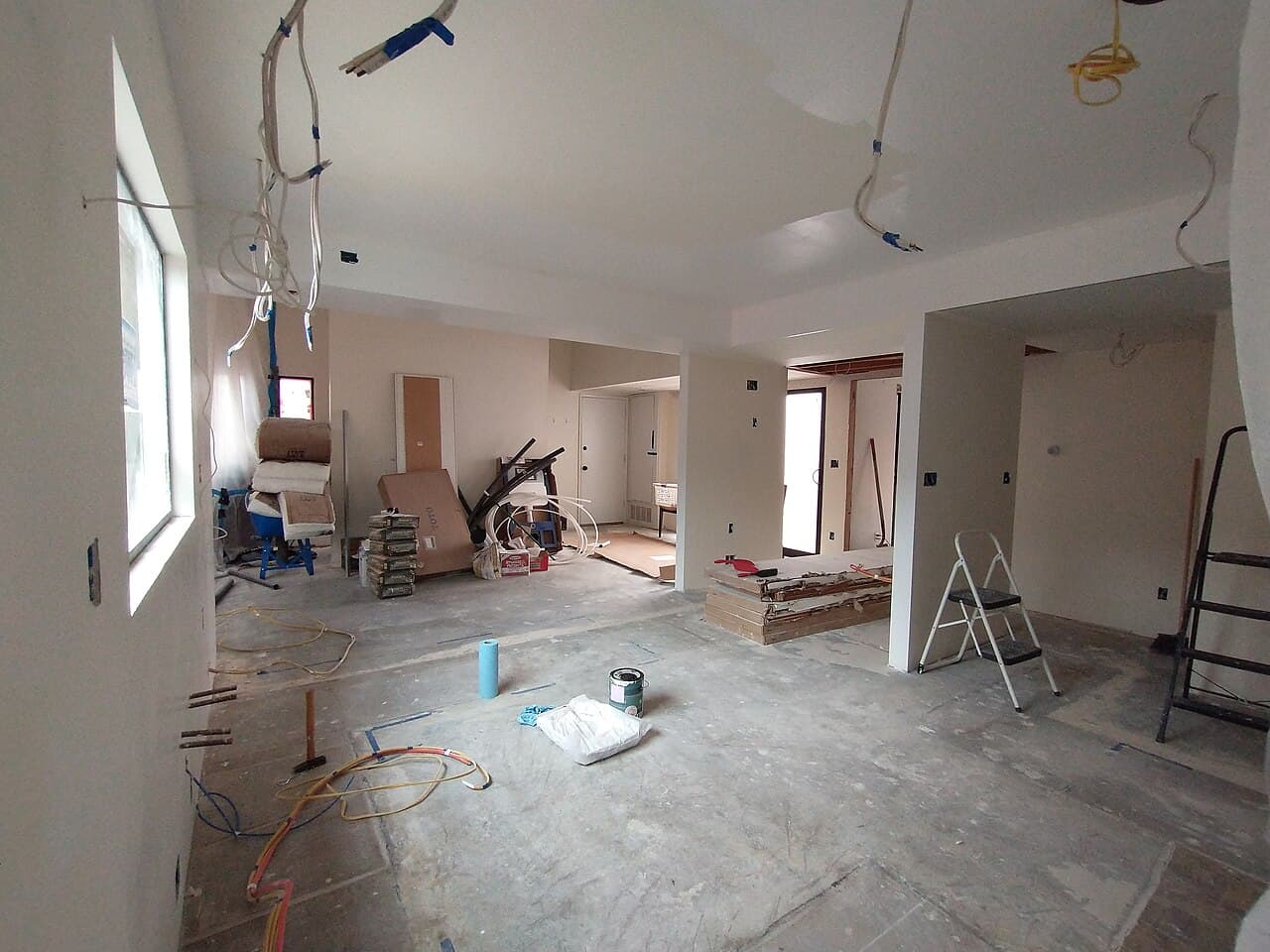
4. The cleaning is moving dust instead of removing it. Feather dusters, dry rags and brooms tend to lift fine dust into the air, where it settles again on what you just cleaned. Vacuums are not much better without a fine filter: EPA notes that vacuuming can increase the amount of dust in the air during and after vacuuming as well as in your ducts, and recommends a HEPA vacuum or the highest efficiency filter bags your vacuum cleaner can take.[1] Follow the vacuum with a damp cloth.
5. The order was bottom-up. Cleaning the floor and then dusting the shelves puts dust back on the floor. The federal lead rule for renovation firms is a good model for any post-construction clean: cleaning from higher to lower, walls from the ceiling down to the floor,[5] then floors last, mopped with a method that keeps the wash water separate from the rinse water, such as the two-bucket method.[5]
6. Missed surfaces. The tops of doors and door frames, crown and window trim, upper cabinets, light fixtures, ceiling fan blades, window tracks, closet shelves and the insides of drawers and cabinets hold a surprising amount of dust. Each time a door closes or a fan turns on, some of it comes back down.
7. Work is still going on, or dust is coming from somewhere else. Touch-up sanding, a trade coming back to finish, or an unfinished room next door keeps adding dust. Sanding method matters: USG notes that wet sanding with a damp sponge produces no dust,[6] and for dry sanding it describes using a sanding tool equipped with a HEPA vacuum.[6] Ask that any remaining work be contained. EPA's setup for lead-safe work is a good standard for any dusty job: close and seal the doors in the work area, turn off forced-air heating and air conditioning, and cover vents with plastic sheeting taped in place.[4]
Help while the dust settles
A portable air cleaner can help in the bedroom or the room you use most. Pick one with a clean air delivery rate (CADR) that is large enough for the size of the room.[2] The longer the air cleaner runs, the more air it filters.[2] EPA says the most effective ways to improve your indoor air are to reduce or remove the sources of pollutants and to ventilate with clean outdoor air, with filtration a supplement,[2] so clean the settled dust first. For the full cleanup routine, see how to clean up drywall dust after a renovation.
Stop and call a pro if
- The house was built before 1978 and painted walls, trim or windows were sanded, scraped or cut. EPA says any renovation, repair or painting project in a pre-1978 home that has lead-based paint can easily create dangerous lead dust,[4] and ordinary cleaning is not the answer; ask about dust-lead testing and a lead-safe certified firm.
- Dust keeps blowing from supply vents after a new filter and a full clean. Have an HVAC technician or a qualified duct cleaner inspect the system; see whether air duct cleaning is worth it.
- Anyone at home has breathing trouble that started with the remodel. EPA notes that small particles can get deep into your lungs,[3] and that is a question for a doctor as well as for the house.
- The work disturbed old duct insulation, register boots or ceiling texture. EPA says asbestos-containing materials require specialized procedures and should not be disturbed or removed except by specially trained and equipped contractors.[1]
- The dust is everywhere and you would rather not do the whole house twice. A post-construction cleaning crew brings HEPA vacuums and works top to bottom in a day or two.
Getting help on Loclis
Browse post-construction cleaning businesses, look up cleaning services around Blacksburg, or read why a house gets dusty so fast for the everyday causes. More answers are under cleaning. When you are ready, describe the cleanup on Loclis and local businesses will quote it.
Common questions
- How long does remodel dust keep settling?
- It varies with how much sanding was done, whether the heating and cooling system ran during the work, and how the house was cleaned. Most homes need a thorough clean followed by one or two lighter passes over the next week or so. If dust is still heavy after that, look for a source: a loose filter, dusty supply vents, or work still going on.
- Do I need my ducts cleaned after a remodel?
- Not automatically. EPA says much of the dirt in air ducts sticks to the duct surfaces and does not necessarily reach the living space. Its reasons to consider cleaning include ducts clogged with excessive dust and debris, or particles actually blowing out of the supply registers. Change the filter and clean the registers first, then look again.
- Will an air purifier fix it?
- It helps in the room where it runs, and it filters more the longer it runs, but EPA says the most effective step is to reduce or remove the sources of pollutants and ventilate, with filtration as a supplement. Clean the settled dust and fix the filter first; an air cleaner then catches what is still floating.
- Why is the dust worst on top of doors and cabinets?
- Those surfaces are above eye level, so the first clean often misses them, and they are flat, so dust settles there undisturbed. Vacuum and damp-wipe them before the walls and floors so the dust you knock loose falls onto surfaces you have not cleaned yet.
- Could the dust be from the paint or flooring instead of drywall?
- Some of it can be. Sanding wood floors, cutting tile and cutting trim make dust too, and in a house built before 1978 sanding painted surfaces can make lead dust. If you are not sure what was sanded or cut, ask the contractor.
Sources
- [1] Should You Have the Air Ducts in Your Home Cleaned?, U.S. Environmental Protection Agency. Checked October 27, 2026.
- [2] Guide to Air Cleaners in the Home, U.S. Environmental Protection Agency. Checked October 27, 2026.
- [3] Indoor Particulate Matter, U.S. Environmental Protection Agency. Checked October 27, 2026.
- [4] Lead-Safe Renovations for DIYers, U.S. Environmental Protection Agency. Checked October 27, 2026.
- [5] 40 CFR 745.85, Work practice standards, Electronic Code of Federal Regulations. Checked October 27, 2026.
- [6] Finishing and Decorating Gypsum Panels (white paper J2010), USG Corporation. Checked October 27, 2026.
Want a pro to handle it?
Describe the job once. Licensed local businesses send quotes, and you pay only when you book one.
Get a quote from a local pro