How much does regrouting cost in Virginia?
No Virginia agency publishes a price for regrouting, so the figure comes from written quotes. Cost depends on the square footage of tile, how much grout must come out, the grout type, whether corners are recaulked and what is found behind the tile. Jobs of $1,000 or more need a licensed contractor in Virginia.
Free to ask. Local shops send quotes, and you pay only when you book one.
By Kasra Taheri, Founder, LoclisPublished
Researched and drafted with AI, then checked claim by claim against the sources listed below before it was published. Prices and rules change; the dates beside each source say when it was last checked.
Step by step
Read when to stop and call a pro, further down this page, before you start.
Step 1: Measure what needs regrouting
Note whether it is the shower floor, the walls or both, and roughly how many square feet of tile, so every bidder prices the same job.
Step 2: Photograph the problem
Take close photos of cracked, missing or stained grout, loose tiles and any corner caulk that has failed.
Step 3: Say what you want redone
Decide whether you want only the damaged joints replaced or every joint in the shower, and say so in the request.
Step 4: Ask for caulk to be listed
Corners and the tub or base joint take flexible caulk rather than grout, so ask for that work to appear as its own line.[5]
Step 5: Check the licence
Work valued at $1,000 or more needs a licensed contractor, so look up the licence class and specialty at DPOR before accepting a bid.[1]
Step 6: Get three written bids
Ask for at least three written bids on the same scope so the totals can be compared fairly.[1]
Step 7: Ask about hidden damage
Ask how a bid handles loose tile, a soft wall or mold found once the old grout is out, and what rate applies to that extra work.[6]
Step 8: Check the deposit
Compare each deposit with DPOR's guideline of no more than 10% of the price or $1,000, whichever is less.[1]
What decides the price
No Virginia agency publishes a price for regrouting, and prices change with the market, so a number you read online is only as good as its date and source. The reliable figure comes from written quotes for your shower. What moves those quotes is fairly predictable.
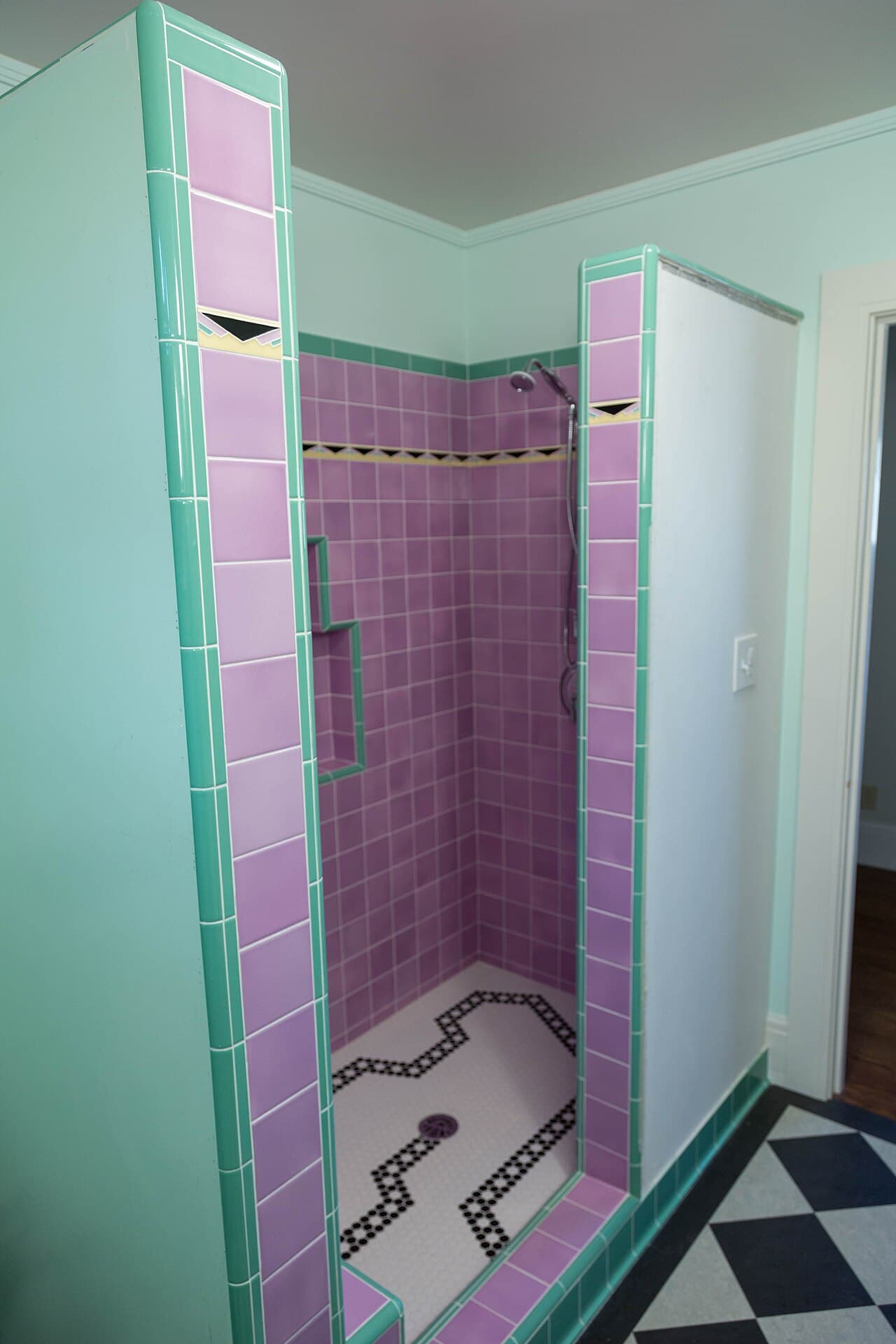
How much tile there is. Square footage sets the baseline. A small shower floor is a short job. A tiled tub surround with full-height walls is a day or more.
How much grout comes out. Replacing a few cracked joints costs far less than raking out every joint in a shower so the colour matches. Small mosaic tile has many more joints per square foot than large tiles, so it takes longer.
How hard the old grout is to remove. Dense, well-bonded grout takes more time than crumbling grout, and narrow joints take careful work to avoid chipping tile edges.
Corners and caulk. Grout is not for use in movement joints or changes of plane in the tile installation.[5] So a proper job includes recaulking the corners and the tub or base joint. Ask for it as its own line.
Sealer and grout type. A bid may include sealing, or a different grout type than you have. Ask what is being used and why.
What is found behind the tile. This is the line most likely to change the total. Mold may be hidden in places such as the back side of dry wall, wallpaper, or paneling,[6] and EPA says not to paint or caulk moldy surfaces.[6] If a pro finds loose tile or a soft wall, it can turn into a repair or a retile. Ask how the bid handles that before work starts.
Licensing and permits
If the work you are considering is valued at $1,000 or more, a valid Virginia Contractor's License is required for the license category in which the contractor is to work.[1] A Class C contractor licence covers jobs over $1,000 and under $30,000.[2]
Two licence specialties cover this kind of work. Masonry contracting includes installation of grout, caulking, tuck pointing, sand blasting, mortar washing, parging,[3] and tile, marble, ceramic, and terrazzo contracting covers the preparation, fabrication, construction, and installation of ceramic and other tile.[3] Look up the business on DPOR's license lookup before you sign.
Permits are rarely an issue for patching grout. Virginia's building code exempts ordinary repairs, including other repair work deemed by the building official to be minor and ordinary which does not adversely affect public health or general safety.[4] If a job grows into tearing out the wall or changing plumbing, ask your locality's building office whether a permit applies.
Comparing bids
DPOR advises getting at least three written bids using identical plans and specifications.[1] For regrouting, identical means the same area, the same joints, caulk included or excluded, sealer included or excluded, and the same allowance for repairs. Without that, a low bid may simply be a smaller job.
On payment, DPOR's rule of thumb is a deposit of no more than 10% of the total price or $1,000, whichever is less.[1] For a job this size, a large deposit is a warning sign.
Stop and call a pro if
- Tiles are loose or sound hollow. Regrouting will not fix them.
- The wall is soft, or you smell mold. If you believe that you may have a hidden mold problem, consider hiring an experienced professional.[6]
- Water stains show up below the shower. That points to a leak that grout cannot solve.
- The job is $1,000 or more. A licensed contractor is required.[1]
Getting help in Virginia
If you want to try it yourself first, read how to regrout a shower, and for the bigger decision, should you regrout or retile. Browse tile shower pros or more home repair answers.
To compare written quotes from licensed local businesses, describe your shower.
Common questions
- Is there an official price for regrouting in Virginia?
- No. Neither DPOR nor the Code of Virginia sets or publishes prices for regrouting, and a figure quoted without a date and a named source is a guess. Ask for written bids that spell out the scope instead.
- Do I need a licensed contractor to regrout?
- If the work is valued at $1,000 or more, DPOR says a valid Virginia Contractor's License is required for the license category. Small jobs under that threshold are a different matter, but check the licence of anyone you hire and keep the agreement in writing.
- Do I need a permit to regrout?
- Usually not for patching grout. Virginia's building code exempts ordinary repairs, including other repair work deemed by the building official to be minor and ordinary which does not adversely affect public health or general safety. If the job grows into removing the wall or changing plumbing, ask your locality's building office.
- Why do two quotes for the same shower differ so much?
- One may price only the cracked joints and the other every joint plus recaulking and sealing. Others build in a repair allowance for loose tile or damaged backer board. Put the bids side by side line by line, not just by total.
- Is it cheaper to regrout myself?
- The materials for a small shower are modest, and the labour is your time and patience. Mistakes are expensive, though: chipped tile edges and grout left to harden on the tile are hard to undo. See the step-by-step guide to decide.
Sources
- [1] What You Should Know Before You Hire a Contractor, Virginia Board for Contractors, Department of Professional and Occupational Regulation. Checked October 27, 2026.
- [2] Va. Code § 54.1-1100, Definitions (contractors), Code of Virginia, Virginia General Assembly. Checked October 27, 2026.
- [3] 18VAC50-22-30, Definitions of specialty services (Board for Contractors Regulations), Virginia Administrative Code, Virginia General Assembly. Checked October 27, 2026.
- [4] 13VAC5-63-80, Section 108 Application for permit (Virginia Uniform Statewide Building Code), Virginia Administrative Code, Virginia General Assembly. Checked October 27, 2026.
- [5] Polyblend Plus Sanded Grout, Technical Data Sheet TDS-360 (published 3/22/2023), Custom Building Products. Checked October 27, 2026.
- [6] A Brief Guide to Mold, Moisture and Your Home, U.S. Environmental Protection Agency. Checked October 27, 2026.
Want a pro to handle it?
Describe the job once. Licensed local businesses send quotes, and you pay only when you book one.
Get a quote for Home Repair