Should I regrout or retile my shower?
Regrout if the tiles are firmly bonded, the wall behind them is solid and the problem is cracked, stained or missing grout. Retile if tiles are loose or hollow, the wall is soft, mold keeps returning, or water is getting through, because new grout cannot fix a failed waterproofing layer. Jobs of $1,000 or more need a licensed contractor.
Free to ask. Local shops send quotes, and you pay only when you book one.
By Kasra Taheri, Founder, LoclisPublished
Researched and drafted with AI, then checked claim by claim against the sources listed below before it was published. Prices and rules change; the dates beside each source say when it was last checked.
Step by step
Read when to stop and call a pro, further down this page, before you start.
Step 1: Press on the tiles
Tap along the tile with a knuckle and press gently on each tile; a tile that clicks, rocks or sounds hollow has let go of the wall.
Step 2: Test the wall
Press the grout line and the wall near the tub or floor; a soft or spongy spot means the wall behind is damaged.
Step 3: Look for water signs
Check for stains on the ceiling or wall below the shower, a musty smell, and mold that returns after cleaning, and fix leaks as soon as possible.[1]
Step 4: Decide between the two
If the tiles are tight and the wall is solid, regrout and recaulk; if not, get a retile quote that includes the wall and the waterproofing.[2]
Step 5: Handle old materials with care
If the shower is in an older home, do not break out tile or backing material you suspect contains asbestos; ask an accredited asbestos professional first.[3]
Step 6: Check the licence
For work valued at $1,000 or more, confirm the contractor holds a valid Virginia licence for the work.[5]
Step 7: Get three written bids
Ask for at least three written bids on the same scope, one priced as regrout and one as retile if you are unsure.[5]
The deciding question
Regrouting fixes grout. Retiling fixes what is behind it. So the decision comes down to one question: is the problem only on the surface?
Regrout when the tiles are tight, the wall behind them is solid and the trouble is cracked, crumbling, stained or missing grout. Retile when the tiles have let go, the wall is damaged, or water is getting through. In the second case, new grout only hides the symptoms.
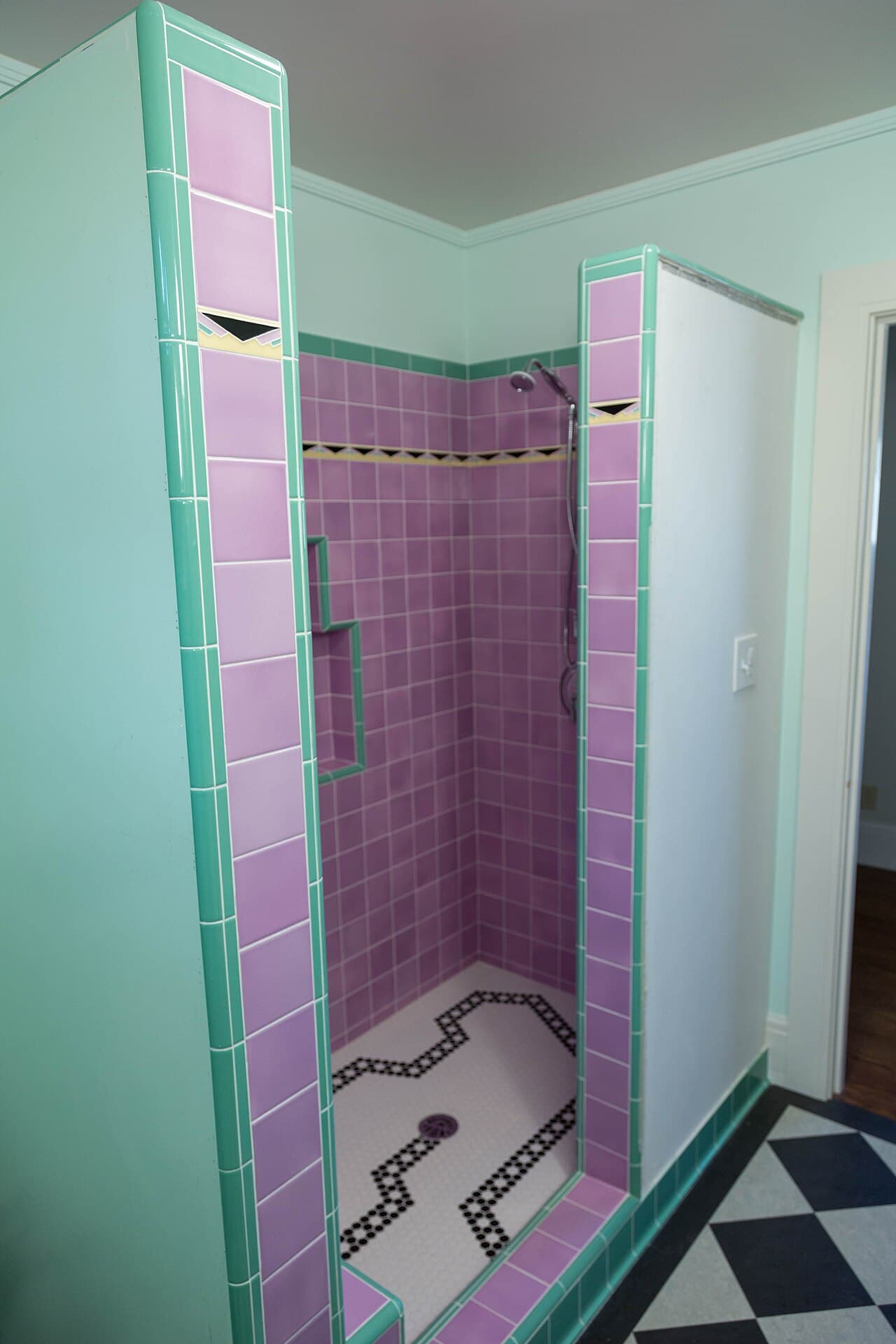
Signs you can regrout
- The tiles are firm. They do not click, rock or sound hollow when you tap them.
- The walls and floor feel solid, with no soft spots around the tub, the base or the lowest row of tile.
- There are no stains on the ceiling or wall below the shower, and no musty smell.
- The damage is limited to grout and corner caulk. Grout does not belong in the corners: it is not for use in movement joints or changes of plane in the tile installation,[7] so a failed corner is a caulk job, not a retile.
If that is your shower, the step-by-step regrouting guide covers it, and what regrouting costs in Virginia shows how to price it.
Signs you should retile
- Loose or hollow tiles, especially in more than one area, mean the bond to the wall has failed.
- A soft or spongy wall means the backing is wet or rotted.
- Mold that returns after cleaning. The key to mold control is moisture control.[1] Mold may be hidden in places such as the back side of dry wall, wallpaper, or paneling,[1] and EPA says if you believe that you may have a hidden mold problem, consider hiring an experienced professional.[1]
- Water stains below the shower, on a ceiling or an adjoining wall.
- Failing joints everywhere. Grout that keeps cracking across the whole shower often reflects movement or poor installation, not wear.
Do not caulk or paint over a problem you can see. EPA's rule is blunt: do not paint or caulk moldy surfaces.[1] Fix plumbing leaks and other water problems as soon as possible.[1]
Why retiling means more than new tile
A proper retile goes down to the wall and floor behind the tile, and the waterproofing is the part that matters. Liquid-applied membranes such as RedGard are made for this: it is a liquid-applied elastomeric waterproofing membrane listed for use in shower pans, showers and tub surrounds.[2] The same data sheet cautions: do not apply over wet surfaces or surfaces subject to hydrostatic pressure.[2] So the wall has to be sound and dry before anything goes over it.
That is why a retile quote is a different kind of document from a regrout quote. It should name the demolition, any wall repair, the waterproofing method, the tile and the plumbing work if any.
Older homes and asbestos
In an older house, tear-out has one more risk. Generally, you can't tell whether a material contains asbestos simply by looking at it, unless it is labeled.[3] Asbestos-containing materials may release fibers when they are disturbed, damaged, removed improperly, repaired, cut, torn, sanded, sawed, drilled or scraped.[3] If you suspect it, stop and ask a trained and accredited asbestos professional before demolition. Virginia's building code also covers it: a permit application is required before the removal or disturbing of any asbestos containing materials during the construction or demolition of a building or structure.[4]
Permits, licences and bids
Virginia's building code lists, among ordinary repairs that need no permit application, replacement of all classes of interior wall or ceiling finishes in other groups (that is, groups other than A, E and I, which include houses).[4] Taking out a wall or changing plumbing is a separate question, so ask your locality's building office and the contractor before work starts.
If the work you are considering is valued at $1,000 or more, a valid Virginia Contractor's License is required for the license category in which the contractor is to work.[5] Tile, marble, ceramic, and terrazzo contracting covers the preparation, fabrication, construction, and installation of ceramic and other tile.[6]
DPOR advises getting at least three written bids using identical plans and specifications.[5] If you are unsure which route you need, ask each bidder to price both and say what they found behind the tile.
Stop and call a pro if
- The wall is soft or the tiles are loose in several places. That is a retile or a wall repair.
- You suspect hidden mold. Consider hiring an experienced professional.[1]
- The shower is in an older home and you may be disturbing old materials. Ask an accredited asbestos professional first.[3]
- Water is stained or dripping on the floor below. Stop using the shower until it is checked.
Getting help in Virginia
Browse tile shower pros or more home repair answers, and see how to regrout a shower before you decide.
When you want quotes, describe the shower and licensed local businesses will bid on it.
Common questions
- Can regrouting stop a shower from leaking?
- Only if the leak is truly the grout and the layers behind are intact. If the wall is soft, the tiles are loose or water appears below the shower, the waterproofing has failed and the fix is a retile, not new grout.
- Do I need a permit to retile a shower?
- Often not for replacing the tile itself: Virginia's building code lists, among ordinary repairs that need no permit application, replacement of all classes of interior wall or ceiling finishes in groups other than A, E and I. Removing or disturbing asbestos-containing materials during construction or demolition does call for a permit application, and taking out a wall or changing plumbing is a separate question for your locality's building office.
- Why does the mold keep coming back after I clean the grout?
- Because the moisture source is still there. EPA says the key to mold control is moisture control, so cleaning alone will not hold. If you believe there is hidden mold behind the tile, consider hiring an experienced professional.
- What licence should a tile contractor hold in Virginia?
- If the work is valued at $1,000 or more, DPOR says a valid Virginia Contractor's License is required for the license category. Tile, marble, ceramic and terrazzo contracting is a specialty for tile installation; look up the business on DPOR's license lookup.
- Could the old tile or backing contain asbestos?
- In older homes it is possible. EPA says you generally cannot tell whether a material contains asbestos simply by looking at it, unless it is labeled. If in doubt, leave it alone and ask an accredited asbestos professional before demolition.
Sources
- [1] A Brief Guide to Mold, Moisture and Your Home, U.S. Environmental Protection Agency. Checked October 27, 2026.
- [2] RedGard Waterproofing and Crack Prevention Membrane, Technical Data Sheet TDS-104 (published 02/14/2025), Custom Building Products. Checked October 27, 2026.
- [3] Protect Your Family from Exposures to Asbestos, U.S. Environmental Protection Agency. Checked October 27, 2026.
- [4] 13VAC5-63-80, Section 108 Application for permit (Virginia Uniform Statewide Building Code), Virginia Administrative Code, Virginia General Assembly. Checked October 27, 2026.
- [5] What You Should Know Before You Hire a Contractor, Virginia Board for Contractors, Department of Professional and Occupational Regulation. Checked October 27, 2026.
- [6] 18VAC50-22-30, Definitions of specialty services (Board for Contractors Regulations), Virginia Administrative Code, Virginia General Assembly. Checked October 27, 2026.
- [7] Polyblend Plus Sanded Grout, Technical Data Sheet TDS-360 (published 3/22/2023), Custom Building Products. Checked October 27, 2026.
Want a pro to handle it?
Describe the job once. Licensed local businesses send quotes, and you pay only when you book one.
Get a quote for Home Repair