What electrical safety checks should I do at home every year?
Walk the house with the federal safety checklist: outlets and switches cool and working, plugs snug, cover plates on, cords undamaged, extension cords not used as permanent wiring, bulbs the right wattage and outdoor outlets covered. Test GFCI and AFCI protection and smoke alarms monthly, not yearly. Anything that fails is a job for a licensed electrician, not a fix to try yourself.
Free to ask. Local shops send quotes, and you pay only when you book one.
By Kasra Taheri, Founder, LoclisPublished
Researched and drafted with AI, then checked claim by claim against the sources listed below before it was published. Prices and rules change; the dates beside each source say when it was last checked.
This is a job for a licensed pro in Virginia
This page explains what the work involves, the permits, what a licensed pro does and what drives the cost. It does not give step-by-step instructions, because this work needs a licence, a permit or both, and doing it wrong can injure someone. Before you hire, check the licence on Virginia's DPOR record.
Once a year, at the least, walk through the house and check what you can see and touch without tools: outlets, switches, plugs, cords, bulbs, heaters, outdoor outlets and the outside of the panel. A few checks should happen far more often than yearly. Ground-fault and arc-fault protection and smoke alarms are tested monthly. Anything that fails is a call to a licensed electrician, not a repair to attempt.
How often
The U.S. Consumer Product Safety Commission publishes a room-by-room Home Electrical Safety Checklist and recommends inspecting the electrical products in your home every six months.[1] It suggests that moving into a home or changing the clocks is a good time to check smoke alarms and run through the checklist.[1] Twice a year, in March and November, is easy to remember; once a year is the floor.
Every month: the protective devices
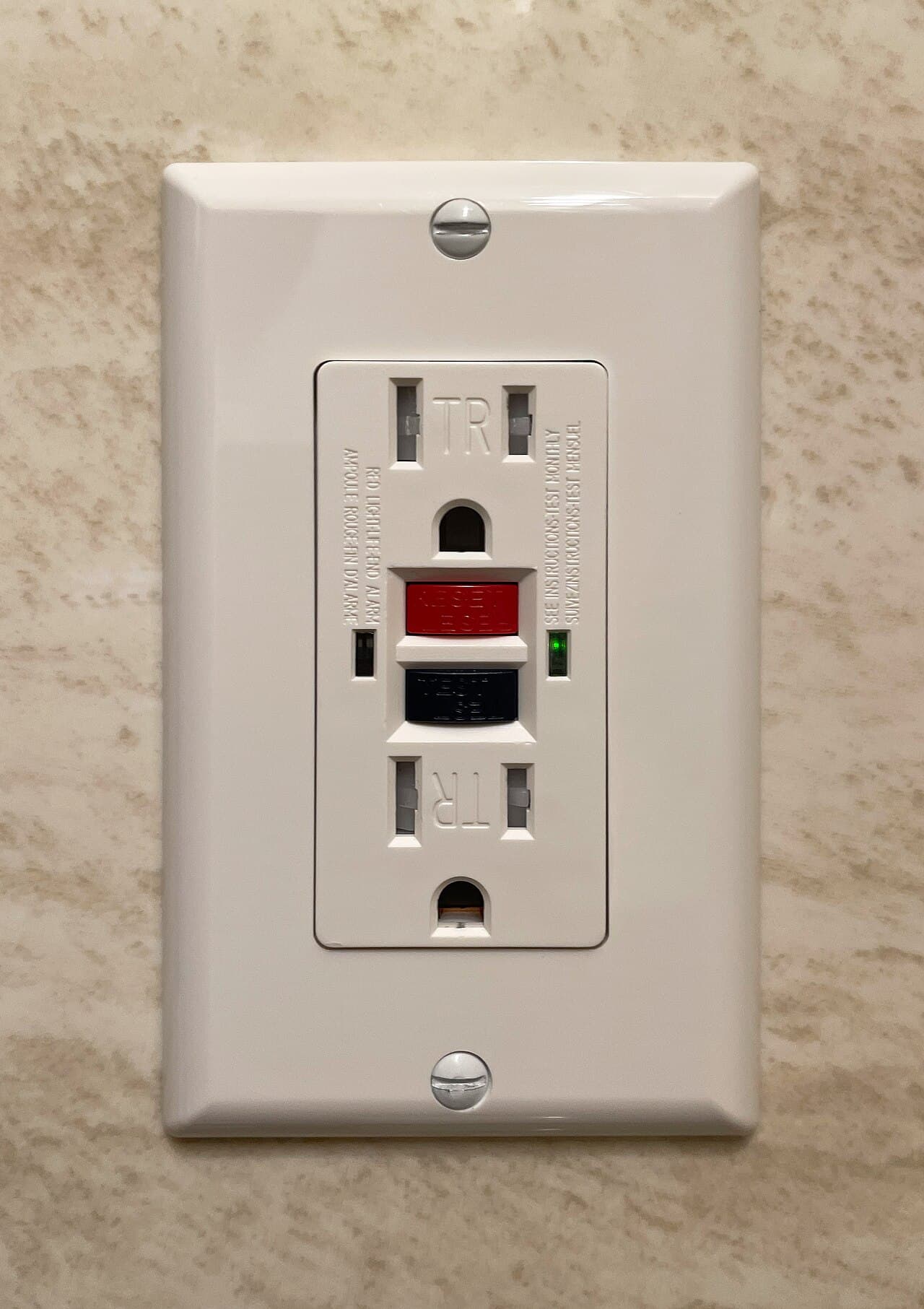
GFCI outlets and breakers. These are the outlets with test and reset buttons, usually in kitchens, bathrooms, garages, unfinished basements and outdoors, and sometimes a breaker with a test button in the panel. CPSC's guidance is to test every GFCI once a month according to the manufacturer's instructions.[1] The reason: GFCIs must be operating properly to protect against electrocution and can fail without showing any sign of failure.[1]
AFCI breakers. CPSC says AFCIs, breakers that detect the arcing a damaged wire or connection can cause, should be tested monthly too, because they can stop working without showing signs of failure.[1] A defective GFCI or AFCI breaker should be replaced by a qualified electrician.[1]
Smoke alarms. The U.S. Fire Administration says to test every smoke alarm monthly.[2] Alarms belong in every bedroom, outside each separate sleeping area, and on every level of the home, including the basement.[2]
Every year: the walk-through
Go room by room and look for these.
Outlets and switches. Each should be cool to the touch and work every time. Unusually warm outlets or switches may mean a loose connection that can start a fire, though some dimmer switches warm up in normal use,[1] and outlets or switches that do not work properly may mean an unsafe wiring condition exists.[1] Check that plugs grip firmly, because loose-fitting plugs can cause overheating and fires,[1] and the Fire Administration's advice is to replace wall outlets if plugs do not fit snugly.[3] Make sure every outlet and switch has its cover plate, because exposed wiring is a shock hazard.[1]
Cords. Damaged cords may have exposed live wires that can be shock and fire hazards.[1] CPSC also flags furniture or rugs resting on cords, cords wrapped tightly around objects, and cords fastened with nails or staples, which can all damage insulation or trap heat.[1] Look for extension cords that have quietly become permanent: extension cords are not as safe as permanent house wiring.[1] The fix is more outlets, installed by an electrician. The Fire Administration adds: never use an extension cord with a major appliance.[3]
Bulbs and fixtures. A bulb above a fixture's rated wattage can overheat it. If you aren't sure of a fixture's rating, CPSC suggests a bulb of 60 watts or less, and 25 watts for unmarked ceiling fixtures with miniature bulbs.[1] Scorched sockets or discoloured shades are a sign to have the fixture checked.
Portable heaters. CPSC wants them on a stable surface and at least 3 feet from combustibles such as drapes and newspapers.[1] A heater that smells, sparks or smokes needs repair or replacing.
Outdoors. Each outdoor outlet should have a weatherproof cover and GFCI protection.[1] Cracked covers or outlets that stay wet are worth an electrician's visit.
The panel, from the outside. In an older house with fuses, check that the fuses match the circuit labels; the wrong size fuse can let too much current flow and overheat the wiring.[1] With breakers, look for labels that are missing or wrong, rust, scorch marks, a warm cover, a buzzing sound, or a breaker that will not stay on. Leave the breakers themselves to an electrician; CPSC's checklist says circuit breakers should be exercised at least once a year so they do not stick,[1] and that can be done during an inspection.
Smoke alarm batteries and age. The Fire Administration says to replace the batteries in 9-volt alarms, and the backup batteries in hard-wired alarms, at least once every year.[2] Check the date on the back too, because smoke alarms need to be replaced 10 years from the manufacture date.[2]
Look, don't open
Everything above is done from the outside. Do not take the cover off the panel, open an outlet or switch box, or pull a fixture down to look. The checks are there to tell you when to call someone, and the call is the maintenance.
When a professional inspection makes sense
An annual walk-through is not the same as an electrician's inspection, and most homes do not need a professional one every year. Book one when you buy a house, when an older home has never been checked, when your own checks find warm outlets, scorch marks or repeated trips, or before adding a big load such as an EV charger, a hot tub or a heat pump. Our answers on the warning signs of bad wiring and how long house wiring lasts help decide.
When to call a licensed pro
Repairs that these checks turn up are licensed work in Virginia: no individual may work as an electrical tradesman unless licensed,[4] and a permit is required before work starts on installations or alterations involving electric wiring.[5] Call a licensed electrician when:
- A GFCI or AFCI fails its test, or will not reset.
- An outlet or switch is warm, discoloured, or works only sometimes.
- Plugs fall out of an outlet, or a cover plate is cracked or missing over wiring.
- Hard-wired smoke alarms are reaching 10 years old.
- The panel is warm, rusty, scorched or buzzing, or a breaker will not stay on.
- You have extension cords doing a permanent outlet's job.
Call the same day for a shock from an appliance, a hot outlet or a burning smell. See what happens during a service call and check the electrician's licence before booking.
Find an electrician
Browse electrical services on Loclis, look up electricians in Blacksburg, or read more electrical answers.
Describe what your checks turned up and licensed local electricians quote the repair.
Common questions
- How often should I check my home's electrical system?
- CPSC recommends going through its home electrical safety checklist every six months, with GFCI and AFCI tests and smoke alarm tests monthly. Once a year is the minimum, and a good habit is to do it when the clocks change.
- What if a GFCI outlet will not trip when I press test?
- Then it is not protecting you. CPSC's checklist says a GFCI that fails its test should be replaced, and replacing it is wiring work. Stop relying on that circuit near water and book a licensed electrician.
- Should I open the panel to look inside?
- No. Look at the outside: a panel that is warm, rusty, scorched, buzzing or has a breaker that will not stay on needs an electrician. The cover protects you from live parts, and what is behind it is licensed work in Virginia.
- Do I need a professional electrical inspection every year?
- Not as a rule. A licensed electrician's inspection is worth booking when you buy a house, when a home is decades old and has never been checked, when your own checks turn something up, or before adding a large load such as an EV charger or a hot tub.
- How long do smoke alarms last?
- The U.S. Fire Administration says smoke alarms need to be replaced 10 years from the manufacture date, which is printed on the back of the alarm. Hard-wired alarms are on a household circuit, so replacing them is a job for an electrician.
Sources
- [1] Home Electrical Safety Checklist (Publication 513), U.S. Consumer Product Safety Commission. Checked October 26, 2026.
- [2] Smoke Alarms, U.S. Fire Administration, FEMA. Checked October 26, 2026.
- [3] Appliance and Electrical Fire Safety, U.S. Fire Administration, FEMA. Checked October 26, 2026.
- [4] Code of Virginia § 54.1-1129, Necessity for licensure, Code of Virginia, Legislative Information System. Checked October 26, 2026.
- [5] 13VAC5-63-80, Virginia Uniform Statewide Building Code, Section 108 Application for permit, Virginia Administrative Code, Legislative Information System. Checked October 26, 2026.
Want a pro to handle it?
Describe the job once. Licensed local businesses send quotes, and you pay only when you book one.
Get a quote for Electrical Repair