How often should I water new plants?
Water new plants thoroughly the day you plant them, then check the soil about an inch down and water whenever it is dry. Without rain that usually means about once a week in average soil, every two to three days in sandy soil, and two to three times a week for container shrubs in summer heat, through the first growing season.
Free to ask. Local shops send quotes, and you pay only when you book one.
By Kasra Taheri, Founder, LoclisPublished
Researched and drafted with AI, then checked claim by claim against the sources listed below before it was published. Prices and rules change; the dates beside each source say when it was last checked.
Step by step
Read when to stop and call a pro, further down this page, before you start.
Step 1: Soak at planting
Water right after planting until the water reaches the bottom of the root ball.[1]
Step 2: Build a watering ring
Use spare soil to make a low berm around the planting hole so water soaks in over the roots instead of running off.[2]
Step 3: Mulch
Spread 2 to 3 inches of mulch around shrubs, kept off the stems, to slow water loss.[2]
Step 4: Check the soil before every watering
Feel the soil about an inch down, and in the root ball itself, and water only if it is dry.[1]
Step 5: Watch closely for three weeks
The first three weeks after planting are the most critical; inspect shrubs daily for the first week.[1]
Step 6: Set a dry-weather baseline
With no rain, plan on about once a week in average soil and every 2 to 3 days in very sandy soil.[1]
Step 7: Water container shrubs more in summer
Expect two to three waterings a week in summer dry spells; balled-and-burlapped shrubs usually need only weekly water.[2]
Step 8: Water deeply and slowly
Let a hose run slowly at the base until the ring fills, rather than sprinkling often.[3]
Step 9: Water early in the day, at the base
Morning watering loses less to evaporation, and keeping leaves dry helps prevent disease.[1]
Step 10: Skip it after a good rain
Check the soil again before watering, and fit any irrigation system with a rain sensor.[1]
Step 11: Keep going through the first season
Shrubs and trees need watching through their whole first growing year.[1]
Step 12: Ease off once established
Once plants are established, give about 1 inch of water a week only during long dry periods.[1]
Water a new plant thoroughly the day it goes in, then let the soil, not the calendar, tell you when to water again. Check the soil about an inch down, and in the plant's own root ball, and water when it is dry. Without rain, that usually works out to about once a week in average soil, more often in sand, and two or three times a week for container shrubs in summer heat. Keep it up through the first growing season.
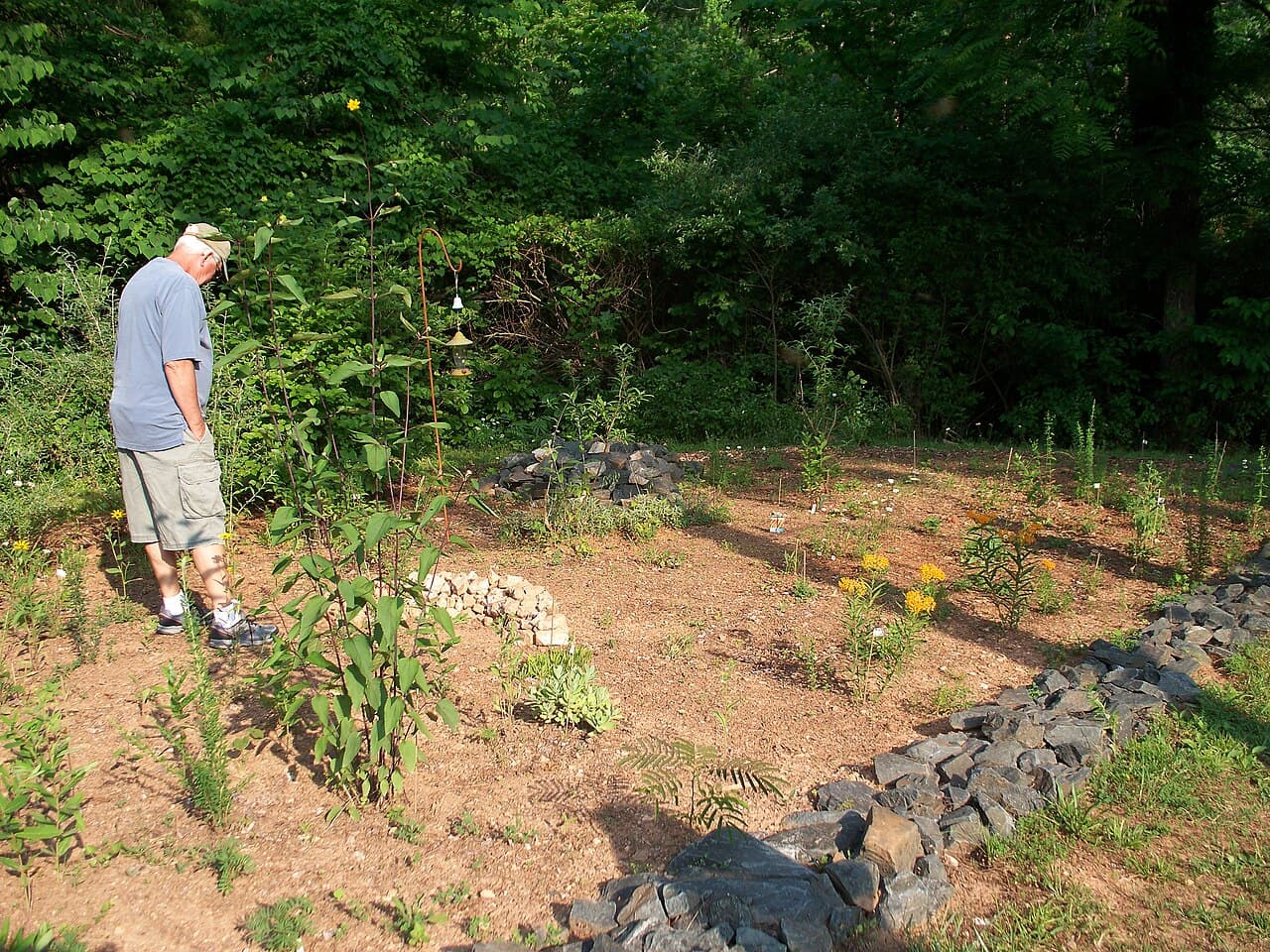
The first three weeks matter most
Virginia Tech's native plant guidance is clear on timing: "The most critical period for watering all plants is right after planting and for three weeks after planting."[1] It adds: "For vines, shrubs, and trees, this period continues through the first growing year."[1]
The reason is the root ball. A new plant draws almost all its water from the small ball of soil it came in until its roots grow into the bed,[6] and the potting soil of most container-grown plants holds only a one- to two-day supply of water.[2] The bed around it can feel moist while the root ball is dry.
A practical schedule
The simplest rule is to check the soil about an inch deep to see whether it is moist or dry, then water if needed.[1] As a baseline for dry weather:
- Average and sandy soil: If there is no rainfall and the soil is very sandy, watering might be required every 2 to 3 days; otherwise, once a week.[1]
- Container-grown shrubs in summer: watering two to three times a week in summer can be expected during periods of no rainfall.[2]
- Balled-and-burlapped shrubs: Balled-and-burlapped (B&B) plants usually need only weekly watering, because the mineral soil around their roots holds more water.[2]
- Young trees: water heavily once a week during periods of no rain, soaking the soil slowly with a hose until the water reaches the top of the berm.[3]
Over a growing season, plants need an average of 1 inch of water per week[4] from rain and watering combined. A rain gauge in the garden takes the guesswork out of that.
How to water
Deeply, not often. Virginia Tech's tree guidance notes that watering lightly encourages shallow roots, while watering deeply encourages deep root growth.[5] A slow trickle from a hose into a ring of soil around the plant soaks in where a quick spray runs off.
Early in the day, at the base. The advice is to water early in the morning, so the plant can take up water before the heat of the day and less is lost to evaporation.[1] And "Watering at the base of the plant instead of over the foliage helps prevent diseases."[1]
With mulch. Mulch slows water loss from the soil.[2] Keep it 2 to 3 inches deep and off the stems.
On a system, once a week. For a large bed, a soaker hose or drip line saves hauling hoses. Virginia Tech suggests an irrigation system set to run once a week, with a rain sensor that shuts it off when it rains.[1]
Don't drown them
More water is not always better. Virginia Tech warns, "Overwatering wastes water, may weaken roots and lead to root decay, and encourages undesirable weed growth."[4] It also notes that either excessively dry soil or waterlogged soil can cause the same plant reaction: wilt,[6] which is why so many people water a drowning plant even more. Always feel the soil first. If plants droop despite watering, see why new plants wilt after planting.
How long to keep it up
Establishment time depends on the plant: "Seeds and annuals can establish in a few weeks, while perennials and vines can take a few months or a year. Shrubs and trees can take up to three years to get established."[1] Planting season matters too. Slow-growing species, B&B plants, or shrubs planted in the fall may need supplemental irrigation in the year after planting,[2] because their roots have spread less by the following summer. Our guide to when to plant perennials in Virginia explains how timing affects watering.
Once plants are established, cut back sharply. For established native plantings, Virginia Tech's advice is to check the soil and, if needed, provide 1 inch of water per week during long dry periods,[1] and an irrigation system should run once or twice a week, or only as needed, not every day.[1]
Stop and call a pro if
- Water stands in planting holes a day after rain or watering; the bed needs drainage work.
- Plants keep wilting even though the root ball is moist and drains well.
- You need an in-ground irrigation system installed or extended, which is its own trade.
- You will be away for much of the first summer and need someone to water.
Browse more lawn and landscaping answers, see garden and bed planting services, or look up lawn and landscaping businesses around Blacksburg. For help planting or caring for a new bed, describe the job once and local businesses quote it.
Common questions
- Should I water new plants every day?
- Usually not. Daily watering suits only the first days in hot weather, very sandy soil, or container shrubs in a heat wave. For most beds, checking the soil an inch down and watering when it is dry works out to about once a week without rain. Watering every day by habit risks waterlogged, rotting roots.
- How much water does a new shrub need each time?
- Enough to soak the whole root ball and the soil just around it. A slow trickle from a hose until the watering ring fills and drains, then fills again, does the job better than a quick spray. Check a few hours later that the root ball is moist all the way down.
- Does rain count?
- Yes, if it is a real soaking. A brief shower may only wet the mulch. After rain, check the soil an inch down and in the root ball before deciding to skip a watering.
- Do I need to water new plants in fall and winter?
- Keep checking until the plants go dormant and the ground is cold, and water in dry spells. Shrubs planted in fall may have grown few new roots by spring, so Virginia Tech suggests they may need extra watering the following year too.
- Is a sprinkler or soaker hose better than hand watering?
- For a large bed, a soaker hose or irrigation system saves time and puts water at the base of the plants. Virginia Tech suggests running a system about once a week during establishment, with a rain sensor, rather than every day. A hand-held hose is fine for a few plants.
Sources
- [1] Native Plants in the Landscape: Maintaining Native Plants (SPES-799), Virginia Cooperative Extension, Virginia Tech. Checked October 27, 2026.
- [2] Shrubs: Functions, Planting, and Maintenance (426-701), Virginia Cooperative Extension, Virginia Tech. Checked October 27, 2026.
- [3] Planting Trees (426-702), Virginia Cooperative Extension, Virginia Tech. Checked October 27, 2026.
- [4] Patriotic Gardens: How to Plant a Red, White and Blue Spring Garden (426-210), Virginia Cooperative Extension, Virginia Tech. Checked October 27, 2026.
- [5] How NOT to Kill a Tree: 24 Common Tree Care Mistakes That Damage Landscape Trees (430-210), Virginia Cooperative Extension, Virginia Tech. Checked October 27, 2026.
- [6] Diagnosing Plant Problems (426-714), Virginia Cooperative Extension, Virginia Tech. Checked October 27, 2026.
Want a pro to handle it?
Describe the job once. Licensed local businesses send quotes, and you pay only when you book one.
Get a quote from a local pro