Why are my new plants wilting after planting?
New plants usually wilt because their root ball has dried out, even when the soil around it feels damp, since their roots have not yet grown into the bed. The next most common causes are the opposite, soggy soil that suffocates roots, plus heat and sun shock, planting too deep, circling roots, leftover burlap or twine, and too much fertilizer.
Free to ask. Local shops send quotes, and you pay only when you book one.
By Kasra Taheri, Founder, LoclisPublished
Researched and drafted with AI, then checked claim by claim against the sources listed below before it was published. Prices and rules change; the dates beside each source say when it was last checked.
Step by step
Read when to stop and call a pro, further down this page, before you start.
Step 1: Feel the root ball itself
Push a finger or trowel into the original root ball next to the stem, not just the soil around it, and check whether it is dry.[3]
Step 2: If it is dry, soak it slowly
Run a hose slowly at the base until water fills the ring around the plant and soaks down through the root ball.[3]
Step 3: If it is soggy, stop watering
Let the soil dry an inch or so down before you water again, because waterlogged roots wilt too.[1]
Step 4: Check the drainage
If water stands around the plant a day after rain or watering, the spot drains poorly.[2]
Step 5: Check the planting depth
The top of the root ball should sit level with or slightly above the surrounding soil, not buried.[2]
Step 6: Pull mulch back from the stems
Keep mulch 2 to 3 inches deep and clear of the stems, never heaped against them.[2]
Step 7: Look for leftover ties and wrapping
Remove tags, wire, twine or a plastic pot left on the plant or root ball.[2]
Step 8: Hold off on fertilizer
Do not feed a wilting plant; fertilizer salts can do more harm in dry soil.[2]
Step 9: Note the pattern
Write down whether one plant or the whole bed is affected and when it started.[1]
Step 10: Ask your Extension office
If the plant keeps wilting with moist, well-drained soil, take photos or a sample to your local Virginia Cooperative Extension office.[1]
New plants most often wilt because the small root ball they came with has dried out. Their roots have not yet grown into the surrounding soil, so the bed can feel damp while the plant goes thirsty. The second most common cause is the opposite: soggy soil that starves the roots of air. After that come heat and sun shock, planting too deep, circling roots, leftover burlap or twine, and too much fertilizer. Working through them in that order solves most cases.
1. The root ball is dry
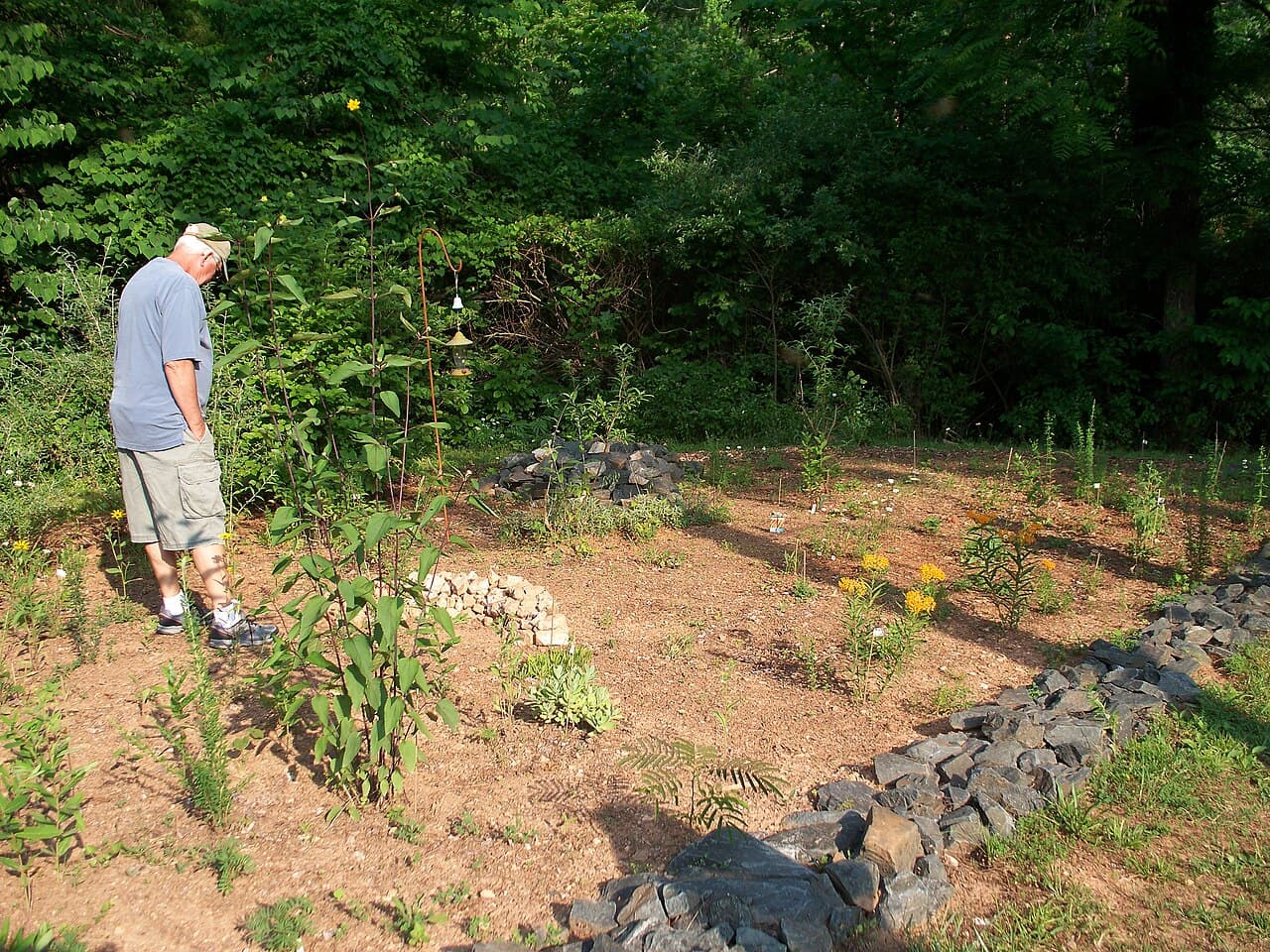
Virginia Tech's horticulture guidance explains why new plants are so easy to underwater. When a plant is not established, it relies only on the relatively limited water supply in its root ball,[1] and the potting soil of most container-grown plants holds only a one- to two-day supply of water.[2] Worse, container and balled-and-burlapped roots dry out faster than the soil around them.[3]
So test the right spot. Push a finger or trowel into the original root ball next to the stem. The rule from Virginia Tech's tree guide applies to shrubs and perennials too: if the soil near the trunk is dry, the plant needs water.[3] Water slowly at the base until the root ball is soaked, not a quick sprinkle that wets the mulch. Our guide to how often to water new plants sets out a schedule.
2. The soil is waterlogged
Wilting from too much water confuses people, because the fix is the opposite. Virginia Tech notes that either excessively dry soil or waterlogged soil can cause the same plant reaction: wilt.[1] The reason: "Waterlogging of the root zone also results in oxygen deficiency, leading to a halt in root growth and metabolism, death of the roots, and wilt."[1]
Suspect this if you have been watering daily, if the plant sits in heavy clay, or if water stands in the planting hole. Virginia Tech's drainage test for a planting site is to dig a hole, fill it with water, and "If the water doesn't drain in 24 hours, plant elsewhere."[2] A plant in a hole that holds water may need moving to a better spot or replacing with something that tolerates wet feet. Its native plant guidance is blunt: any plant can be killed by overwatering.[6]
3. Heat and sun shock
A plant moved from a shaded nursery bench into full sun goes through real stress. Virginia Tech says, "A rapid change from low light to high light intensity, or vice versa, can cause yellowing of leaves, reduced growth, and leaf drop or death."[1] And "Excess heat usually causes scorch symptoms on leaf tips and interveinal areas."[1] Some afternoon drooping in a heat wave is common; a plant that stays limp in the cool of the morning has a root problem.
Next time, harden greenhouse plants off outdoors gradually, and plant in the late afternoon or on a cloudy day.[5] Spring- and fall-planted perennials face far less of this than summer plantings; see when to plant perennials in Virginia.
4. How it was planted
If watering checks out, look at the planting itself.
- Depth. For shrubs, the top of the roots should be level or slightly above level with the surface of the ground.[2] Virginia Tech also warns that digging the hole too deep or filling it with gravel collects water and drowns roots.[4]
- Mulch. Overly deep mulch, or mulch piled against the stems, promotes shallow roots, disease and pest injury.[2] Rake it back to an even layer.
- Ties and wrapping. Tags, wires and ropes left on stems can girdle and kill a plant as it grows,[2] and synthetic twine does not readily degrade.[2] Check a balled-and-burlapped shrub for twine around the trunk.
- Circling roots. A root-bound plant whose roots were not loosened may keep growing in a circle instead of out into the bed. A plant that lifts out easily with its root ball intact weeks after planting can be a sign of this.
5. Too much fertilizer
Feeding a struggling plant feels helpful, but Virginia Tech warns that fertilizers are salts that may be damaging to plants during dry periods.[2] It also notes that brown, dry leaf edges can come from either dry weather or excess fertilizer.[1] Most nursery plants have been well fertilized in production,[2] so hold off until the plant is growing again.
6. Pests and disease
Less often, wilting is biological. Root nematodes, microscopic roundworms, damage roots and cause wilting and stunting,[1] and some fungal and bacterial diseases cause wilt too.[1] The pattern helps. Damage to all different types of plants in a particular spot can indicate nonliving factors,[1] such as drainage or heat; damage to one kind of plant that spreads over time points toward pests or disease. Take photos and a sample to your local Virginia Cooperative Extension office for a diagnosis.
Stop and call a pro if
- Water stands in the bed after rain or runs toward the house; the site needs drainage work, not more planting.
- Several plants of different kinds are failing in the same area despite correct watering.
- A large balled-and-burlapped shrub was planted too deep and has to be lifted and reset.
- The plants were installed by a landscaper and are still within their replacement period.
Browse more lawn and landscaping answers, see garden and bed planting services, or look up lawn and landscaping businesses around Blacksburg. To have failed plants replaced or a bed replanted, describe the job once and local businesses quote it.
Common questions
- Is it normal for new plants to droop for a few days?
- Some drooping in the first days, especially in afternoon heat, is common while a plant adjusts. If it perks up by evening or the next morning and the root ball is moist, it is usually settling in. If it stays limp in the cool of the morning, check the root ball and the drainage right away.
- How can I tell underwatering from overwatering?
- The leaves look much the same, so check the soil. Dig a finger or trowel into the root ball beside the stem. Dry and crumbly means water now; wet, heavy or sour-smelling soil, or water standing in the hole, means stop watering and look at drainage.
- Should I cut back a wilting new plant?
- Usually not at first. Fix the water problem and give it a week or two. Prune off stems that were broken during planting, and cut away growth that is clearly dead once you can see where healthy tissue begins.
- Will a wilted plant recover?
- Often, if the cause is a dry root ball caught within a day or so. Leaves that have gone crisp will not green up again, but the plant can push new growth. A plant whose roots have rotted in soggy soil is less likely to recover and may need replacing in a better-drained spot.
- Can transplant shock show up weeks later?
- Yes. A plant set out in spring can look fine until the first hot, dry spell of summer, because its roots may still be confined to the original root ball. Keep checking the root ball through the whole first season.
Sources
- [1] Diagnosing Plant Problems (426-714), Virginia Cooperative Extension, Virginia Tech. Checked October 27, 2026.
- [2] Shrubs: Functions, Planting, and Maintenance (426-701), Virginia Cooperative Extension, Virginia Tech. Checked October 27, 2026.
- [3] Planting Trees (426-702), Virginia Cooperative Extension, Virginia Tech. Checked October 27, 2026.
- [4] How NOT to Kill a Tree: 24 Common Tree Care Mistakes That Damage Landscape Trees (430-210), Virginia Cooperative Extension, Virginia Tech. Checked October 27, 2026.
- [5] Patriotic Gardens: How to Plant a Red, White and Blue Spring Garden (426-210), Virginia Cooperative Extension, Virginia Tech. Checked October 27, 2026.
- [6] Native Plants in the Landscape: Maintaining Native Plants (SPES-799), Virginia Cooperative Extension, Virginia Tech. Checked October 27, 2026.
Want a pro to handle it?
Describe the job once. Licensed local businesses send quotes, and you pay only when you book one.
Get a quote from a local pro