How do I clean and disinfect a dog kennel?
Move the dog out, remove bedding and waste, then scrape and wash every surface with soap and water and rinse it. Only then apply a disinfectant, mixed or used exactly as its label says, and keep the surface wet for the full contact time. Rinse if the label says to, let the kennel dry and air out before the dog returns.
Free to ask. Local shops send quotes, and you pay only when you book one.
By Kasra Taheri, Founder, LoclisPublished
Researched and drafted with AI, then checked claim by claim against the sources listed below before it was published. Prices and rules change; the dates beside each source say when it was last checked.
Step by step
Read when to stop and call a pro, further down this page, before you start.
Step 1: Move the dog and pick up waste
Put the dog somewhere safe and away from the chemicals, then bag solid waste and take out bedding, bowls and toys.
Step 2: Ventilate and gear up
Open doors or run a fan, and put on disposable gloves and glasses.[1]
Step 3: Scrape and rinse
Scrape and rinse the surfaces with water to remove stuck-on or loose dirt and grease.[1]
Step 4: Scrub with soap and water
Wash the floor, walls and bars with a detergent solution, then rinse thoroughly with clean water.[1]
Step 5: Check the disinfectant label
Find the EPA registration number on the product and read the directions, use sites and precautions.[2]
Step 6: Apply the disinfectant
Mix only as the label says, cover the clean surface evenly and do not wipe it dry.[1]
Step 7: Hold the contact time
Keep the surface wet for the whole contact time on the label.[2]
Step 8: Rinse if the label says so
Rinse with clean water if the directions call for it, so no residue is left for the dog to lick.
Step 9: Dry and air out
Let everything dry and the smell clear before the dog goes back in with clean bedding and bowls.
Step 10: Store the products
Close the lids and store cleaners where pets and children cannot reach them.[3]
Clean first, then disinfect
Disinfectant only works on a surface that is already clean. So the job is two jobs: remove the waste, hair and grease, then disinfect what is left. Skipping the first half is the most common reason a kennel still smells and stays grimy after being "sanitized."
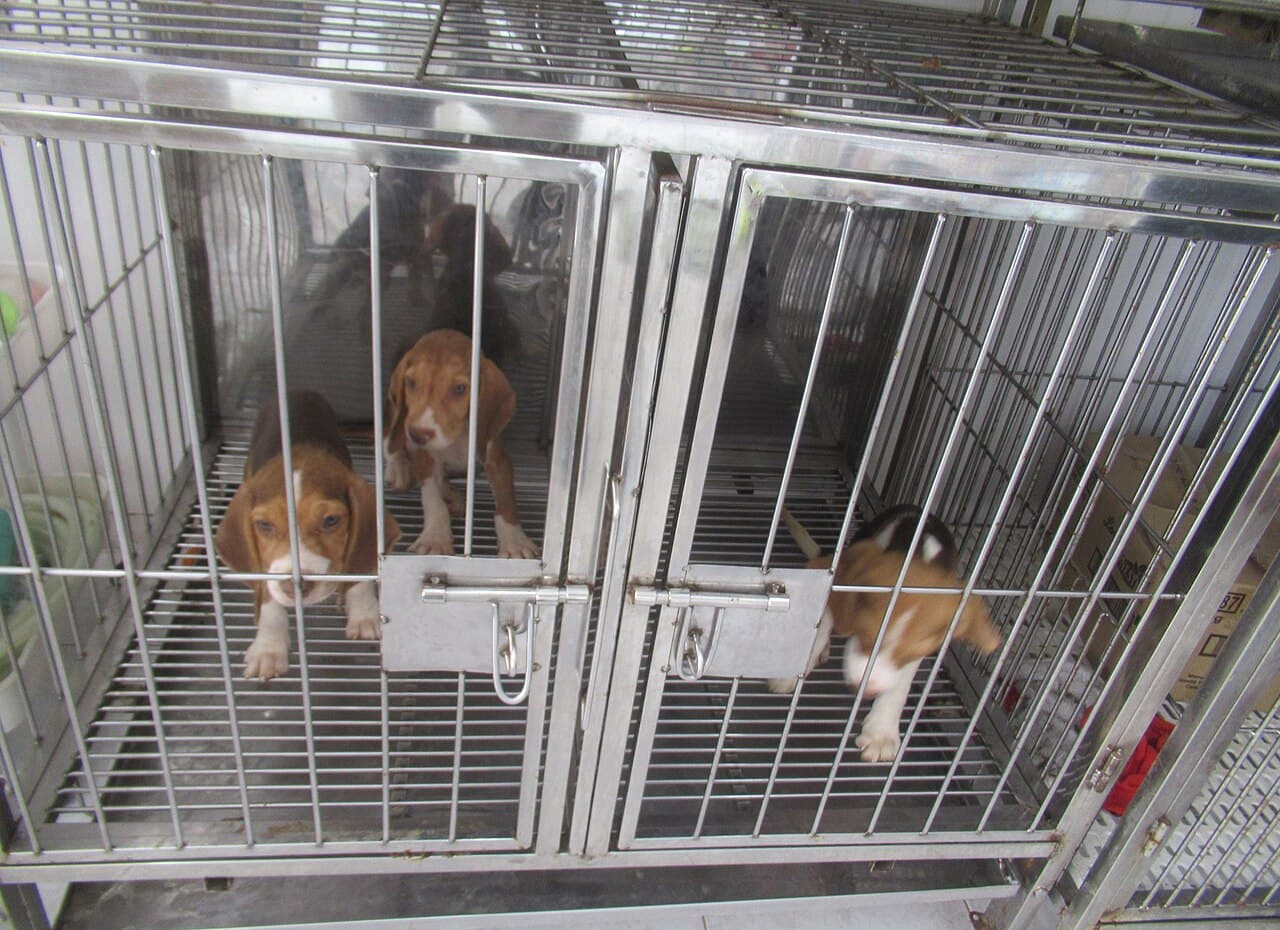
Take the dog out first, to a safe place away from the fumes and wet floor. Bag solid waste, then pull out bedding, bowls and toys. Soft items go in the washing machine; hard toys and bowls can be washed and rinsed with the rest.
Set up safely
Virginia Cooperative Extension recommends you clean, and sanitize or disinfect in well ventilated areas to prevent breathing irritating fumes.[1] Wear disposable gloves and glasses,[1] throw the gloves away when you finish, and wash your hands. Open the kennel room's doors or run a fan.
Keep products where the dog cannot reach them. The EPA says not to spray or store cleaning products near pet food or water dishes,[3] and that containers without tight fitting lids can easily spill, allowing your pet access to the product.[3] If a product is mixed in another container, label it.
Wash everything
Extension's method starts with scraping and rinsing: scrape and rinse surfaces with water to remove stuck-on or loose dirt and grease.[1] Then wash the surface with water and a soap or detergent solution, then thoroughly rinse it with clean water.[1] In a kennel that means the floor and drain area, the lower walls, the door and latch, and any bars the dog has touched.
Work from the cleanest area to the dirtiest, and from top to bottom, so dirty water does not run over surfaces you have finished. A stiff brush helps on rough concrete, where grime sits in the pores. Wipe down hard-plastic or metal crates the same way.
Choose and apply the disinfectant
Read the product label before anything else. The EPA's advice is to find the EPA registration number on the product and check that it is on EPA's list of approved disinfectants, then follow the product's directions, check use sites and surface types, and read the precautionary statements.[2] Common active ingredients include bleach, quaternary ammonium, hydrogen peroxide and alcohol solutions of at least 70 percent,[1] but the label of the product in your hand decides whether it suits kennel floors, how strong to mix it and whether it needs rinsing.
Never combine products. Extension is blunt: it is important to not mix different chemicals, for example bleach with ammonia.[1] They do not make each other stronger and can cause serious harm.
Apply the solution evenly to the clean surface. Do not rinse or wipe dry the solution as you apply it.[1] Then wait: leave the solution on the surface for as long as the label instructions say, which is known as the contact time.[1] The EPA says the surface should remain wet the whole contact time,[2] so on a warm day or a porous floor you may need to reapply to keep it wet.
Rinse, dry and return the dog
If the label calls for a rinse, do it with clean water so nothing is left for the dog to lick off paws or bars. Squeegee standing water toward the drain, then let the kennel dry fully with the doors open. The EPA says to keep pets and children away from treated areas as directed on the label,[3] and in the event of a spill, keep animals out of the area until it is cleaned up.[3]
Put in clean, dry bedding and freshly washed bowls. How often to repeat the job depends on the dog and how the kennel is used. Follow your veterinarian's advice if a dog has been sick.
Stop and call a pro if
- A dog is sick with diarrhea, vomiting or a contagious illness. Call your veterinarian before cleaning, and ask what product and routine suit that illness.
- A dog has licked or breathed a chemical. If you suspect pets have come in contact with them, call Poison Control at 1-800-222-1222.[1]
- The smell or stains return after a proper wash. Urine in cracked concrete, wood or a damaged floor coating may need sealing or replacing, or a professional kennel cleaner with the equipment for a deep clean.
- There is a large or commercial space. A boarding or breeding facility with many runs, drains and a daily schedule is more than a weekend job.
- The structure itself is damaged. Rot, rusted fencing or a failing drain is a repair for a contractor, not a cleaning issue.
Getting help in Virginia
Costs for hired help are covered in how much dog kennel cleaning costs in Virginia. If the yard side is the problem, read how to get rid of dog poop smell in your yard and how much a dog poop scooping service costs. Browse more pet services answers or local pros under pet services.
When you are ready for someone else to do it, describe the kennel and the job once and local cleaners quote it.
Common questions
- Can I just spray disinfectant on a dirty kennel?
- No. Clean first. Scrape and rinse off loose dirt and grease, wash with soap or detergent and rinse. The EPA says to wash with soap and water first if the directions mention pre-cleaning or the surface is visibly dirty, and a disinfectant does its job on a clean surface.
- What is contact time?
- It is how long the disinfectant must stay on the surface to work, and it is printed on the label. Virginia Cooperative Extension says to leave the solution on for as long as the label says and not to wipe it dry. The EPA adds that the surface should stay wet the whole time.
- Which disinfectant should I use?
- Use a product whose label lists the kennel or animal-area surfaces you are treating, and check the EPA registration number. Virginia Cooperative Extension lists bleach, quaternary ammonium, hydrogen peroxide and alcohol solutions of at least 70 percent as common choices. Whatever you pick, follow its label, and ask your veterinarian if the dog has an infection that may need a specific product.
- Can I mix bleach with another cleaner to make it stronger?
- Never. Virginia Cooperative Extension warns that different chemicals do not make each other stronger and can cause serious harm, for example bleach with ammonia, which can release gas that may make a person pass out. Use one product at a time and rinse between them.
- When can the dog go back in?
- After the surfaces are rinsed if the label requires it, dry, and the air has cleared. Follow the label's instructions on keeping pets away from treated areas.
Sources
- [1] How to Clean, Sanitize, and Disinfect Surfaces (FST-395NP), Virginia Cooperative Extension, Virginia Tech. Checked October 27, 2026.
- [2] Six Steps for Safe & Effective Disinfectant Use, U.S. Environmental Protection Agency. Checked October 27, 2026.
- [3] Read the Label First: Protect Your Pets, U.S. Environmental Protection Agency. Checked October 27, 2026.
Want a pro to handle it?
Describe the job once. Licensed local businesses send quotes, and you pay only when you book one.
Get a quote from a local pro