How do I clean an apartment to get my security deposit back?
Read your lease and move-in report first, move everything out, then clean top to bottom with most of your time on the kitchen and bathrooms: inside the oven and refrigerator, cabinets, fixtures, walls and floors. Virginia law expects the home back in good and clean order, reasonable wear and tear excepted, so photograph every room when you finish and ask to attend the move-out inspection.
Free to ask. Local shops send quotes, and you pay only when you book one.
By Kasra Taheri, Founder, LoclisPublished
Researched and drafted with AI, then checked claim by claim against the sources listed below before it was published. Prices and rules change; the dates beside each source say when it was last checked.
Step by step
Read when to stop and call a pro, further down this page, before you start.
Step 1: Read the lease and move-in report
Find any cleaning terms in your lease and the move-in report that listed damage already there when you moved in.
Step 2: Ask to attend the inspection
Tell the landlord in writing that you want to be present at the move-out inspection, which must be made within 72 hours of delivery of possession.[3]
Step 3: Empty the home
Take out every belonging, the trash and anything left in closets, cabinets, the refrigerator, storage areas and the balcony, so you can clean every surface.
Step 4: Gather supplies and ventilate
Have an all-purpose cleaner, a bathroom cleaner, a degreaser, microfiber cloths, a scrub brush, gloves and a vacuum, and open windows or run fans while you work.
Step 5: Dust from the top down
Wipe ceiling fans, light fixtures, vents, the tops of cabinets and doors, blinds and window sills before you touch counters or floors.
Step 6: Clean the kitchen
Clean the oven as its manual directs, wash the refrigerator and freezer inside, wipe every cabinet and drawer, degrease the range hood and stovetop, and scrub the sink.
Step 7: Clean the bathrooms
Scrub the tub or shower, the grout and the toilet including its base, then clean the sink, mirror, vanity drawers and the exhaust fan cover.
Step 8: Spot-clean walls and doors
Wipe scuffs, fingerprints and splashes from walls, doors, door frames, light switches and outlet covers, testing any cleaner on a hidden patch of paint first.
Step 9: Clean the floors last
Vacuum carpets slowly, including edges and closets, then sweep and mop hard floors and wipe the baseboards.
Step 10: Photograph and hand over
Take dated photos or a video of every room, return every key, and give the landlord a forwarding address in writing.
The deposit question is mostly decided by two things: the condition the home was in when you moved in, and the condition you leave it in. At the end of a tenancy, Virginia law requires the tenant to vacate promptly, remove all personal property and leave the premises in good and clean order, reasonable wear and tear excepted.[1] During the tenancy the tenant must keep the part of the home they use as clean and safe as the condition of the premises permits, and keep all plumbing fixtures as clean as their condition permits.[2] When you leave, the landlord may apply the security deposit to damages caused by a tenant's failure to meet those duties, less reasonable wear and tear, and to other damages or charges provided for in the rental agreement.[3]
So the goal is not a showroom. It is a home that is empty, clean and in the same condition it was in when you arrived, apart from ordinary wear.
Before you start
Read your lease. Look for anything about cleaning at move-out, such as professional carpet cleaning, a cleaning checklist or an expected condition for appliances. Those terms decide part of what can be charged.
Find your move-in report. Within five days after you moved in, the landlord had to give you a written report itemizing damage that already existed.[4] Anything on that report is not yours to fix or clean away.
Ask to be at the inspection. Once you give notice that you are leaving, the landlord must give you written notice of your right to be present at the move-out inspection.[3] If you tell the landlord in writing that you want to attend, the inspection must be made within 72 hours of delivery of possession.[3]
Empty the home first. Cleaning goes faster and better with nothing in the way. Plan the clean for after the furniture and boxes are out, not the same afternoon.

Supplies and safety
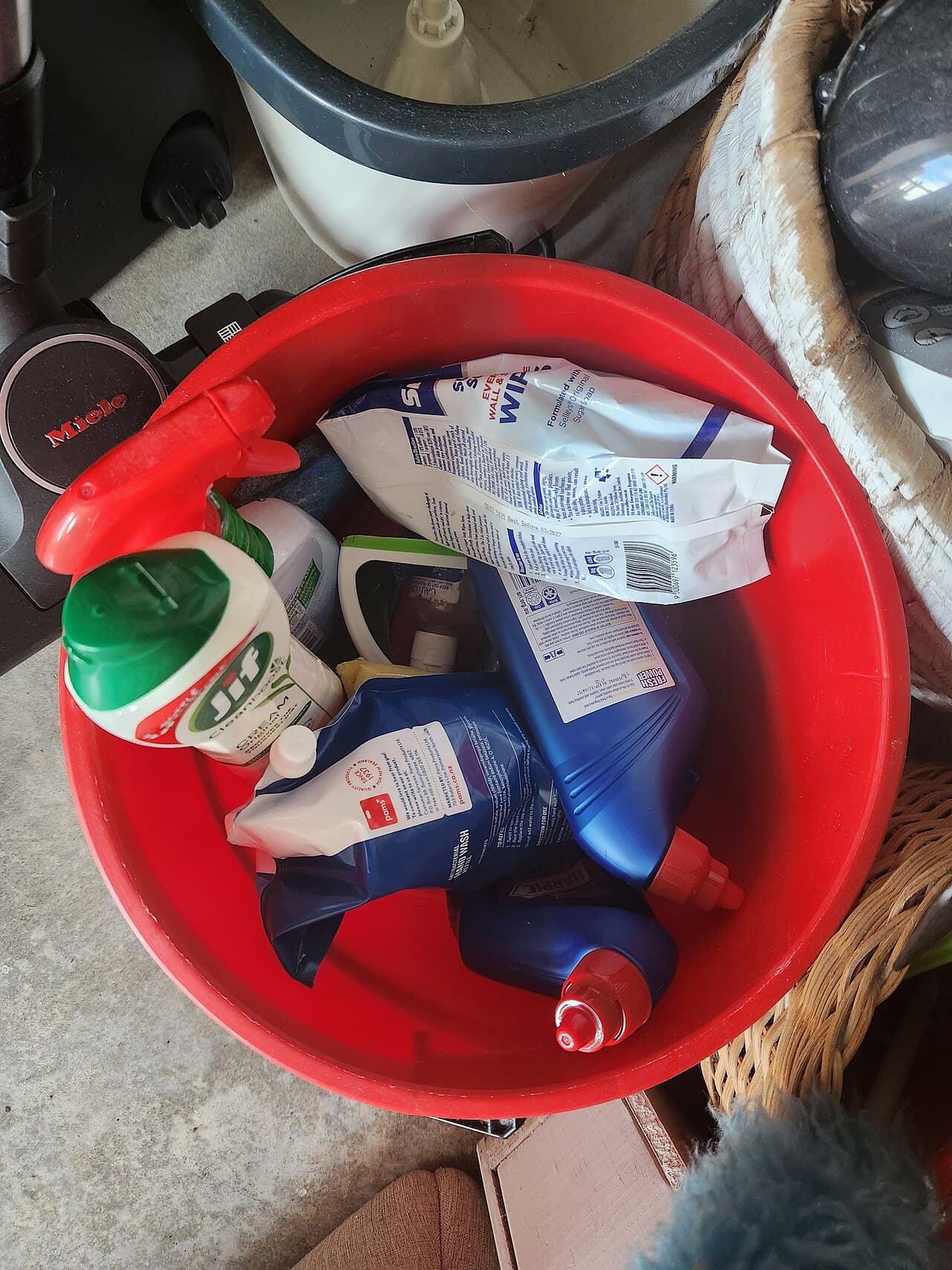
An all-purpose cleaner, a bathroom cleaner, a kitchen degreaser, glass cleaner, plenty of microfiber cloths, a non-scratch scrub pad, an old toothbrush for grout and tracks, rubber gloves, a vacuum with attachments and a mop cover nearly every move-out clean.
Read each label and follow it. Never mix different chemicals, such as bleach with ammonia: they do not make each other stronger and can cause serious harm.[5] Open windows or run the exhaust fans while you work.
Leftover cleaners, paint and similar products can count as household hazardous waste. Improper disposal can include pouring them down the drain, on the ground or into storm sewers.[7] Your county or city solid waste office can tell you where to take them. The tenant must remove all garbage, rubbish and other waste in a clean and safe manner and in the receptacles the landlord provides,[2] so do not leave bags by the door or furniture on the curb unless the landlord agrees.
Room by room
Work top to bottom. Dust ceiling fans, light fixtures, vents, the tops of door frames and cabinets, blinds and window sills before counters, and do floors last, so dust falls onto surfaces you have not cleaned yet.
Kitchen. This is where inspections usually find the most. Clean the oven inside, including the racks and the glass door, and check its manual first: self-cleaning ovens often come with their own instructions about which cleaners are safe. Wash the refrigerator and freezer inside, drawers and shelves out, and wipe the door seals. Wipe every cabinet and drawer inside and out, degrease the range hood, its filter and the stovetop, clean the dishwasher's door edges and filter, and scrub the sink and faucet. For a fuller method, see how to deep clean a kitchen.
Bathrooms. Scrub the tub or shower walls and grout, remove soap scum and hard-water film from glass and fixtures, and clean the toilet inside, outside and around the base. Clean the sink, mirror, medicine cabinet and vanity drawers, and wipe the exhaust fan cover.
Walls, doors and windows. Wipe scuffs, fingerprints and splashes from walls, doors, switches and outlet covers. Test any cleaner or melamine sponge on a hidden spot first, because flat paint can turn shiny or lighter where it is rubbed. Clean window glass, sills and tracks.
Floors. Vacuum carpets slowly, including the edges and closet floors, and treat spots. Sweep and mop hard floors, and wipe the baseboards. If stains are set in, see how to get pet stains out of carpet.
Everything else. Closets, shelves, the laundry area, the balcony or patio, and any storage unit included in the lease.
Things not to do
Do not treat mold as only a cleaning job. For a moldy patch smaller than about 10 square feet, EPA says most people can handle the job themselves: scrub hard surfaces with detergent and water, then dry them completely.[6] Virginia law also requires a tenant to promptly tell the landlord about moisture buildup or any visible mold,[2] so report it in writing as well as cleaning it.
Do not pull smoke alarm batteries. A tenant may not remove or tamper with a working smoke alarm or carbon monoxide alarm the landlord installed, including taking out working batteries.[2] Dust the covers gently instead.
Do not paint without asking. In a home built before 1978, if the landlord gave you lead-based paint disclosures and the lease requires written approval, you may not paint or disturb painted surfaces without it.[2]
Document and hand over
When the clean is done, take dated photos or a video of every room, inside the oven, refrigerator and cabinets, and the floors. Keep any cleaning invoices. Return every key and give the landlord a forwarding address in writing.
The landlord must send an itemized written notice of the deposit and any deductions within 45 days after the tenancy ends or you move out, whichever is later.[3] If no forwarding address is provided, the landlord may continue to hold the deposit in escrow.[3] To see what the landlord can and cannot charge, read can my landlord charge me for cleaning when I move out, and for the walk-through itself, what landlords check on a move-out inspection.
Stop and call a pro if
- Mold covers more than a small patch, comes back after cleaning, or there are signs of a leak. Tell the landlord in writing; that is a repair, not a cleaning task.
- You find insects or pests. Tell the landlord promptly rather than spraying on your own.
- Carpets have deep pet stains or odors, or the oven and range hood have years of baked-on grease you cannot shift. A professional cleaner is often faster and cheaper than a deduction.
- Something is broken, such as a cracked tile, a hole in a wall or a damaged appliance. Ask the landlord how they want it handled before you try a repair.
Getting help with the clean
If you would rather hand it off, see what move-out cleaning costs in Virginia, browse move-out and turnover cleaners, look up cleaning businesses around Blacksburg, or read more cleaning answers. When you are ready, describe the move-out clean on Loclis and businesses will quote.
Common questions
- If I clean everything, will I get my whole deposit back?
- No clean can promise that. Virginia law lets a landlord apply the deposit to unpaid rent, to damage beyond reasonable wear and tear, and to other charges your lease provides for. A thorough clean, dated photos and attending the move-out inspection cover the part you control.
- Should I have the carpets professionally cleaned?
- Check your lease first. Some leases ask for professional carpet cleaning at move-out and some do not. If yours does, keep the invoice. If it does not, a slow, thorough vacuum and spot-treating stains may be enough, but heavy pet stains or odors are often worth handing to a carpet cleaner.
- Should I touch up paint on scuffed walls?
- Ask the landlord before you paint. Mismatched touch-up paint can look worse than a scuff, and in a home built before 1978, if your lease requires written approval and you received lead-based paint disclosures, Virginia law says you may not paint or disturb painted surfaces without that approval.
- Should I leave the refrigerator running or turn it off?
- Ask the landlord. Many prefer it left running and empty. If it is to be switched off, prop the doors open after cleaning so the inside can dry and does not grow mold or smell.
- How long does a move-out clean take?
- It depends on the size of the home and how much buildup there is. The kitchen and bathrooms take the longest, so start there if time is short, and do not plan the clean for the same few hours as moving the furniture out.
- When should I get my deposit back?
- Virginia law gives the landlord 45 days after the tenancy ends or you move out, whichever is later, to send an itemized written notice of the deposit, any deductions and any amount due to you. Give a forwarding address in writing so it reaches you.
Sources
- [1] Va. Code § 55.1-1233, Tenant to surrender possession of dwelling unit, Code of Virginia, Virginia General Assembly. Checked October 27, 2026.
- [2] Va. Code § 55.1-1227, Tenant to maintain dwelling unit, Code of Virginia, Virginia General Assembly. Checked October 27, 2026.
- [3] Va. Code § 55.1-1226, Security deposits, Code of Virginia, Virginia General Assembly. Checked October 27, 2026.
- [4] Va. Code § 55.1-1214, Inspection of dwelling unit; report, Code of Virginia, Virginia General Assembly. Checked October 27, 2026.
- [5] How to Clean, Sanitize, and Disinfect Surfaces (FST-395P), Virginia Cooperative Extension, Virginia Tech. Checked October 27, 2026.
- [6] Mold Cleanup in Your Home, U.S. Environmental Protection Agency. Checked October 27, 2026.
- [7] Household Hazardous Waste (HHW), U.S. Environmental Protection Agency. Checked October 27, 2026.
Want a pro to handle it?
Describe the job once. Licensed local businesses send quotes, and you pay only when you book one.
Get a quote from a local pro