How do I fix a scratch on a leather couch?
Check how deep the scratch is by running your hand over it. If it is only on the surface, clean it, warm it with a blow dryer held at least 6 inches away, and massage it with your fingertips so the leather's own oils blend it in. If you can feel an indent, see exposed leather or a rough edge, call a pro.
Free to ask. Local shops send quotes, and you pay only when you book one.
By Kasra Taheri, Founder, LoclisPublished
Researched and drafted with AI, then checked claim by claim against the sources listed below before it was published. Prices and rules change; the dates beside each source say when it was last checked.
Step by step
Read when to stop and call a pro, further down this page, before you start.
Step 1: Read your maker's care advice
Check the care tag and warranty before you touch the scratch. Bassett warns that cleaning agents may cause damage and void the warranty.[1]
Step 2: Judge the depth
Run your hand over the scratch. Klaussner calls scratches you can feel medium, and ones with a tear, exposed leather or rough edges deep.[2] Only a surface scratch is a job for these steps.
Step 3: Clean the spot
Wipe it with a soft lint-free cloth and a mix of half mild soap and half distilled water, working up a foam, then blot the residue with a cloth dampened with clear distilled water until dry.[3]
Step 4: Warm it with a blow dryer
Hold the blow dryer at least 6 inches away and warm the area, not hot, to warm up the natural oils in the leather.[1]
Step 5: Massage with your fingertips
Using just your fingertips, gently massage the oils into the scratch so it blends into the surrounding leather.[1]
Step 6: Stop if it is still there
If the mark is still obvious after one or two tries, stop, photograph it and ask a leather repairer rather than adding products.
Start by checking how deep it is
Most scratches on a leather couch are shallow, and a shallow one often needs no product at all. Bassett says scratches are normal and actually enhance the look of leather, and that most surface scratches can "heal themselves" with a little help from the heat of a blow dryer.[1] So the first job is to work out which kind you have.
Klaussner describes light surface scratches as faint lines that sit on the top layer of the leather and can fade when you gently rub with a finger or apply a bit of conditioner.[2] Medium scratches are the ones you can feel if you run your hand over the surface.[2] A deep scratch is one where you can see a tear, exposed leather underneath, or rough edges, and Klaussner says these usually need a leather repair kit.[2]
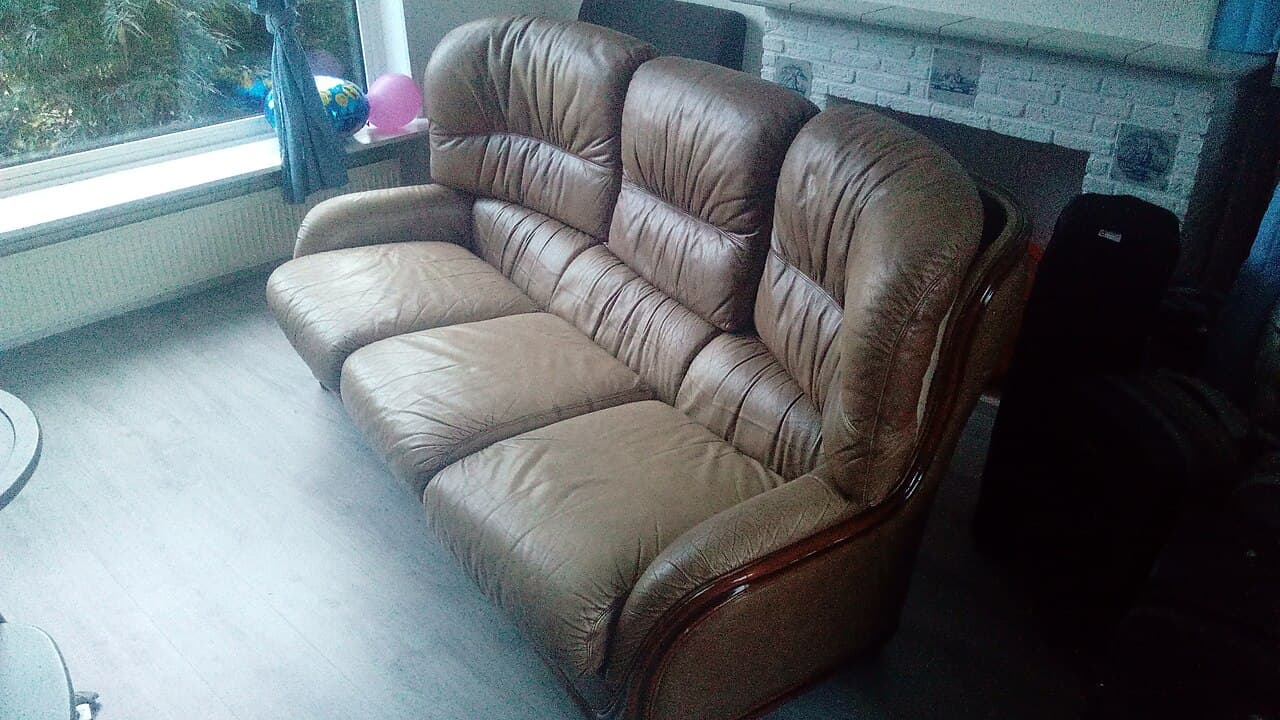
Read your care tag and warranty first
Leather types differ, and so do the makers' rules. Bassett says never to use polishes, oils, ammonia, cleaning fluids, solvents or detergents to clean leather, and that cleaning agents may cause damage and void the warranty.[1] Klaussner, by contrast, suggests a bit of conditioner on light scratches.[2] Neither is wrong for its own leather; the safe course is to follow the tag and warranty on your couch, and to test anything you use on a hidden spot such as the back or underside first.
Fix a surface scratch
Start with a clean spot, unless your maker says not to clean the leather at all (Bassett's rule above is one example, so check your tag). La-Z-Boy recommends a solution of half mild soap and half distilled water on a slightly dampened cloth, working up a foam, then blotting any remaining residue with a cloth dampened only with clear distilled water.[3] Blot until dry rather than scrubbing, and avoid soaking the leather.
Then use heat and your fingers. Hold the blow dryer at least 6 inches away to warm up the natural oils in the leather, then use just your fingertips to massage the oils into the scratch.[1] Keep the dryer moving and the setting warm, not hot, so you do not dry out or mark the surface. Work in small circles, let the leather cool, and look at it from a few angles. Light scratches are often much fainter afterwards.
If the mark is still there and your maker allows conditioner, a small dab rubbed in with a fingertip is the next step Klaussner describes for light scratches.[2] Use a little; more does not mean better.
What not to do
Do not reach for household fixes because they sound clever. Bassett's warning covers oils, polishes and solvents.[1] It also calls a marker made to mask scratches not ideal and says to consider how it could affect your warranty.[1] A colour that looks right in the bottle can look wrong on leather, and once applied it is hard to remove.
Keep the couch away from heat while you are at it. La-Z-Boy advises keeping leather furniture at least 12 inches away from radiators and other heat sources to help prevent the leather from drying and possibly cracking.[3] Dry leather scratches more easily, so the placement of the couch is part of the fix.
Stop and call a pro if
- You can feel the scratch or see exposed leather. For deeper scratches that worry you, Bassett says it is probably best to call a professional.[1]
- The leather is torn, flaking or has rough edges. That is a deep scratch, and it needs filler and colour matching, not rubbing.
- The couch is under warranty. Ask the maker or seller before doing anything beyond the dryer-and-fingertip method.
- The scratch is on a seat or arm you use every day and your first try has made it look worse. Stop and photograph it for a repairer.
Getting help in Virginia
For a torn seam or a split in the material, see how to fix a small tear in upholstery. If the couch is worn all over, is it worth reupholstering a couch helps you weigh repair against a re-cover. Browse local small repair and handyman services or more furniture repair answers.
When you are ready, describe the damage on Loclis with a photo, and local repairers will quote it.
Common questions
- Can I fix a scratch on a leather couch without any products?
- Often, for a surface scratch. Bassett's advice is to warm the area with a blow dryer held at least 6 inches away and massage the leather's own oils into the scratch with your fingertips. Klaussner makes a similar point: light marks can fade when you gently rub with a finger.
- Should I use leather conditioner, olive oil or shoe polish on a scratch?
- Makers disagree, so follow your own. Klaussner suggests a bit of conditioner for light scratches, while Bassett says never to use polishes or oils and that cleaning agents may void the warranty. Check your care tag and warranty first, and test any product on a hidden spot.
- How do I tell a light scratch from a deep one?
- Run your hand over it. A faint line on the top layer is light. If you can feel it, it is a medium scratch. If you can see a tear, exposed leather underneath or rough edges, it is deep, and Klaussner says deep scratches usually need a leather repair kit.
- Will fixing a scratch myself void my warranty?
- It can. Bassett says cleaning agents may cause damage and void its warranty, and that a scratch-masking marker may affect it too. Read the warranty, and if the couch is still covered, ask the maker or seller before trying anything beyond the dryer-and-fingertip method.
- How do I stop my cat from scratching the leather again?
- Give the cat a better place to scratch. Bassett's advice is to buy a scratching post, and Klaussner adds that trimming the pet's nails helps. Repair the leather only once the habit is under control, or the same spot will be scratched again.
Sources
- [1] How to Care for Leather, Bassett Furniture. Checked October 27, 2026.
- [2] How to Fix Scratches on a Leather Couch (Easy Step-by-Step Guide), Klaussner Home Furnishings. Checked October 27, 2026.
- [3] Fabric and Leather Care, La-Z-Boy. Checked October 27, 2026.
Want a pro to handle it?
Describe the job once. Licensed local businesses send quotes, and you pay only when you book one.
Get a quote for Furniture