How do I fix a scratch in hardwood floors?
Drag a fingernail across the scratch. If it glides over, it is in the finish: clean the spot and polish it, because polish fills in micro scratches. If the nail catches, rub in a colour-matched wax filler or touch-up marker. Deep scratches, gouges and dents usually need sanding, filling and refinishing by a pro.
Free to ask. Local shops send quotes, and you pay only when you book one.
By Kasra Taheri, Founder, LoclisPublished
Researched and drafted with AI, then checked claim by claim against the sources listed below before it was published. Prices and rules change; the dates beside each source say when it was last checked.
Step by step
Read when to stop and call a pro, further down this page, before you start.
Step 1: Test how deep it is
Drag a fingernail across the scratch. If it glides over, the scratch is in the finish; if it catches, it has reached the wood.
Step 2: Clean the area
Sweep or vacuum the grit away, then wipe with a clean, dry cloth. Skip wet mops, steam mops, ammonia and abrasive cleaners.[4]
Step 3: Polish a surface scratch
Apply a hardwood polish suited to your finish, tested first on a hidden spot, because cleaning and polishing fills in micro scratches.[1]
Step 4: Fill a scratch that catches
Rub a colour-matched wax filler stick or touch-up marker along the scratch, starting with a lighter shade than you think you need.
Step 5: Wipe and buff
Wipe the surplus off across the grain with a soft cloth, buff lightly, and judge the result from standing height.
Step 6: Leave gouges to a pro
For deep scratches, gouges and dents, get an assessment, because they are often managed by sanding, filling and refinishing.[1]
Step 7: Protect the spot
Put fabric pads under furniture and keep grit off the floor with mats, avoiding rubber backed ones.[3]
Work out how deep the scratch is first, because that decides everything else. Drag a fingernail across it. If the nail glides over, the scratch is in the finish and often disappears with a clean and a polish. If the nail catches, the damage has reached the wood, and it needs a colour-matched filler for a small mark or a pro for anything larger.
Bona, a floor-finish maker, draws the line the same way. It describes major scratches, gouges and dents as the ones that can't be fixed with your usual routine of "cleaning and polishing, which fills in micro scratches".[1] Everything lighter than that is within reach of an ordinary homeowner.
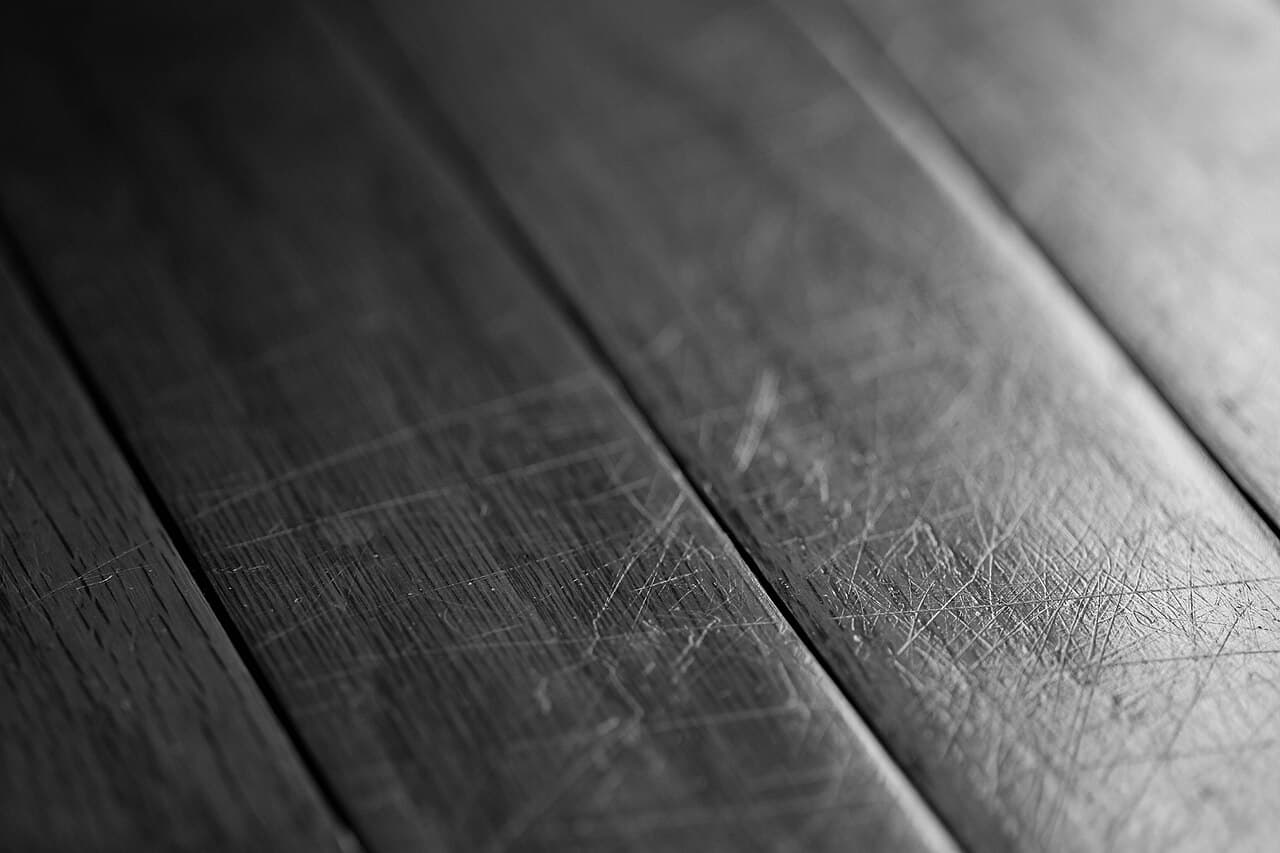
Light scratches: clean, then polish
Start with a clean floor, because grit left on the surface is what makes scratches look worse and cut new ones. Sweep or vacuum, then wipe the area with a clean, dry cloth. Shaw Floors advises sweeping or vacuuming regularly to remove dirt and grit, and says not to use wet mops or steam mops, harsh chemicals, ammonia or abrasive cleaners on hardwood.[4] That rules out scouring pads and steel wool for scratches too.
Then use a polish made for your type of finish. Polish works by filling very fine scratches rather than removing wood, which is why it only suits surface marks.[1] Test it on a hidden spot first, such as inside a closet or under a rug. The same Shaw guide says not to use oil-based wax or polish on its hardwood, so read your floor maker's care guide before choosing a product.[4] If you do not know who made the floor, a polish labelled for hardwood with a factory finish is the safer guess, and a test patch is the way to confirm it.
Scratches that reach the wood
A scratch that catches your nail has gone through the finish. For a short, narrow one, the usual homeowner fix is a wax filler stick or a touch-up marker in a colour matched to the board. Warm the filler in your hand, rub it along the scratch, and wipe the surplus off across the grain with a soft cloth. Buff lightly, and step back to look from standing height, because that is how the floor is seen.
Colour matching is the hard part. Floors darken and fade with age and sun, so pick the shade on the lighter side and build up gradually; a mark that is a little light is far less visible than one that is a little dark. If you cannot get a match you are happy with, leave it alone and book a pro, because a poor patch is harder to hide than the scratch was.
Deep scratches and gouges
For deep scratches, gouges and dents, Bona says: "Often, such issues can be managed by sanding, filling and refinishing".[1] It also recommends contacting a Bona Certified Craftsman to get a proper assessment of the damage.[1] That is sound advice. Sanding through the finish into the board in one spot leaves a visible patch, and a floor is only sanded so many times in its life. Bona says a floor can be sanded around 4-6 times in its entire life, depending on its thickness and the experience of the flooring professional.[1]
If the damage is spread across a whole room, a recoat may be the better answer. A recoat uses a buffer to lightly scuff the existing finish before the new layer goes on, and Bona lists "Fills in surfaces scratches" among its benefits.[2] Costs and trade-offs for the bigger jobs are in how much hardwood floor refinishing costs in Virginia and whether to refinish or replace hardwood floors.
Stop more scratches
Bona is blunt that "all floors will get scratched, regardless of maintenance routine", but you can slow it down.[3] Fabric pads and glides are excellent ways to guard your floors from scuffs and scratches due to furniture, and Bona advises avoiding plastic wheeled furniture.[3] Mats at the doors keep grit out, but avoid rubber backed mats, since they can lock in moisture and damage floors.[3] Shaw adds that you should not drag heavy furniture across the floor and should keep pet nails trimmed.[4]
Stop and call a pro if
- The scratch is a gouge or a dent. The wood fibres are broken and the fix is sanding, filling and refinishing.[1]
- The damage is dark, grey or black. Stained or discolored flooring is a telltale sign of water damage, and Bona recommends having it assessed because some floorboards may need replacing.[1] Mold is the other worry: the EPA says to dry water-damaged areas within 24-48 hours to prevent mold growth.[5]
- Boards are cupped, lifting or soft underfoot. That points to moisture below or a subfloor problem, not a scratch.
- You are in a house built before 1978 and the job means sanding paint on trim or doors. The EPA requires anyone paid to perform work that disturbs painted surfaces in homes built before 1978 to be certified in lead-safe work practices.[6]
Getting help in Virginia
Hardwood repair is flooring work, which the Board for Contractors defines as the installation, repair, improvement, or removal of materials that are common in the flooring industry.[7] A Virginia contractor's licence is required when the work is valued at $1,000 or more, and DPOR's licence lookup shows whether a firm holds one.[8] Browse flooring pros or more flooring answers, and see how much floor repair costs in Virginia before you ask for quotes.
When you are ready, describe the damage once and licensed local pros quote it.
Common questions
- Can I fix a scratch in hardwood floors without sanding?
- Often yes, if it is shallow. Cleaning and polishing fills in micro scratches, a fingernail test tells you whether the scratch is in the finish or the wood, and a colour-matched filler stick or marker covers a short scratch in the wood. Deep scratches and gouges usually need sanding, filling and refinishing.
- Does polish remove scratches from a hardwood floor?
- It hides fine ones. Bona says its routine of cleaning and polishing fills in micro scratches, but deeper scratches, gouges and dents cannot be resolved that way. Shaw advises against oil-based wax or polish on its hardwood, so check your floor maker's care guide and test a hidden spot first.
- Will a recoat fix scratches across a whole room?
- It can cover surface scratches. A recoat scuffs the existing finish with a buffer and adds a new layer, and Bona lists filling in surface scratches as a benefit. It does not repair gouges or damage in the wood itself, which need sanding and refinishing.
- How many times can a hardwood floor be sanded?
- Bona says that depending on a floor's thickness and the experience of the flooring professional, a floor can be sanded around 4-6 times in its entire life. That is why a single deep scratch is rarely a reason to sand a whole room.
- Do I need a licensed contractor to repair a hardwood floor in Virginia?
- For a small scratch you fix yourself, no. If you hire someone and the work is valued at $1,000 or more, a Virginia contractor's licence is required, and DPOR's licence lookup shows whether a firm holds one.
Sources
- [1] Why You Should Refinish Your Hardwood Floors, Bona. Checked October 27, 2026.
- [2] Recoat Hardwood Floors Guide, Bona. Checked October 27, 2026.
- [3] Preventing Scratches on Hardwood Floors, Bona. Checked October 27, 2026.
- [4] Hardwood Care, Shaw Floors. Checked October 27, 2026.
- [5] A Brief Guide to Mold, Moisture and Your Home, U.S. Environmental Protection Agency. Checked October 27, 2026.
- [6] Lead Renovation, Repair and Painting Program, U.S. Environmental Protection Agency. Checked October 27, 2026.
- [7] 18VAC50-22-30, Definitions of specialty services (Board for Contractors Regulations), Virginia Administrative Code, Virginia General Assembly. Checked October 27, 2026.
- [8] What You Should Know Before You Hire a Contractor, Virginia Board for Contractors, Department of Professional and Occupational Regulation. Checked October 27, 2026.
Want a pro to handle it?
Describe the job once. Licensed local businesses send quotes, and you pay only when you book one.
Get a quote from a local pro