Should I refinish or replace my hardwood floors?
Refinish when the wood is sound and the problem is the surface: scratches, dents, sun fading, worn finish or a colour you dislike. Replace when boards are cupped or buckled from water, have mold, or have been sanded down as far as they can go. Have a flooring contractor look at any water-damaged floor before you decide.
Free to ask. Local shops send quotes, and you pay only when you book one.
By Kasra Taheri, Founder, LoclisPublished
Researched and drafted with AI, then checked claim by claim against the sources listed below before it was published. Prices and rules change; the dates beside each source say when it was last checked.
Step by step
Read when to stop and call a pro, further down this page, before you start.
Step 1: Find out what caused the damage
Work out whether the problem is surface wear, sun, a stain or water, because water is the one that most often means replacing boards.[1]
Step 2: Dry any wet area quickly
Dry water-damaged areas within 24-48 hours to prevent mold growth, and fix the source of the water.[2]
Step 3: Look for cupping
Check whether board edges are raised so the surface looks wavy, which can mean moisture reached the underside.[1]
Step 4: Check how much wood is left
A floor can be sanded around 4-6 times in its life, so find out how many times yours has been done.[1]
Step 5: Try to clean the stain first
Try the usual deep cleaning on stubborn stains before assuming sanding or replacement is needed.[1]
Step 6: Get a flooring contractor to assess it
Ask a licensed flooring contractor to inspect the floor and say which boards, if any, need replacing.[4]
Step 7: Compare written bids for both options
Get at least three written bids on identical specifications for refinishing and for replacing.[5]
Refinish if the wood is sound and the trouble is on the surface. Replace if boards are damaged through, or if the floor has no wood left to sand. Bona, a maker of floor finishes, says refinishing is worth considering when there are major scratches, dents or gouges, fading from the sun, stains that will not come out, or when you simply want a new look.[1] Water damage is the case that most often tips a floor toward replacement.
When refinishing is the right call
Scratches, dents and gouges. Bona says damage that cleaning and polishing cannot fix "can often be managed by sanding, filling and refinishing."[1]
Sun fading. Bona says wood is photosensitive and direct sunlight can cause bleaching, fading and even darkening, and that sanding and refinishing will likely be in the floor's future.[1]
Stains. Some stains are too stubborn for ordinary cleaning, and pet stains can also smell. Bona suggests a professional cleaning technique may remove some without sanding, so try that first.[1]
A new look. Refinishing can also remove a floor's existing stain and let you restore the look of the original hardwood or choose a different colour.[1]
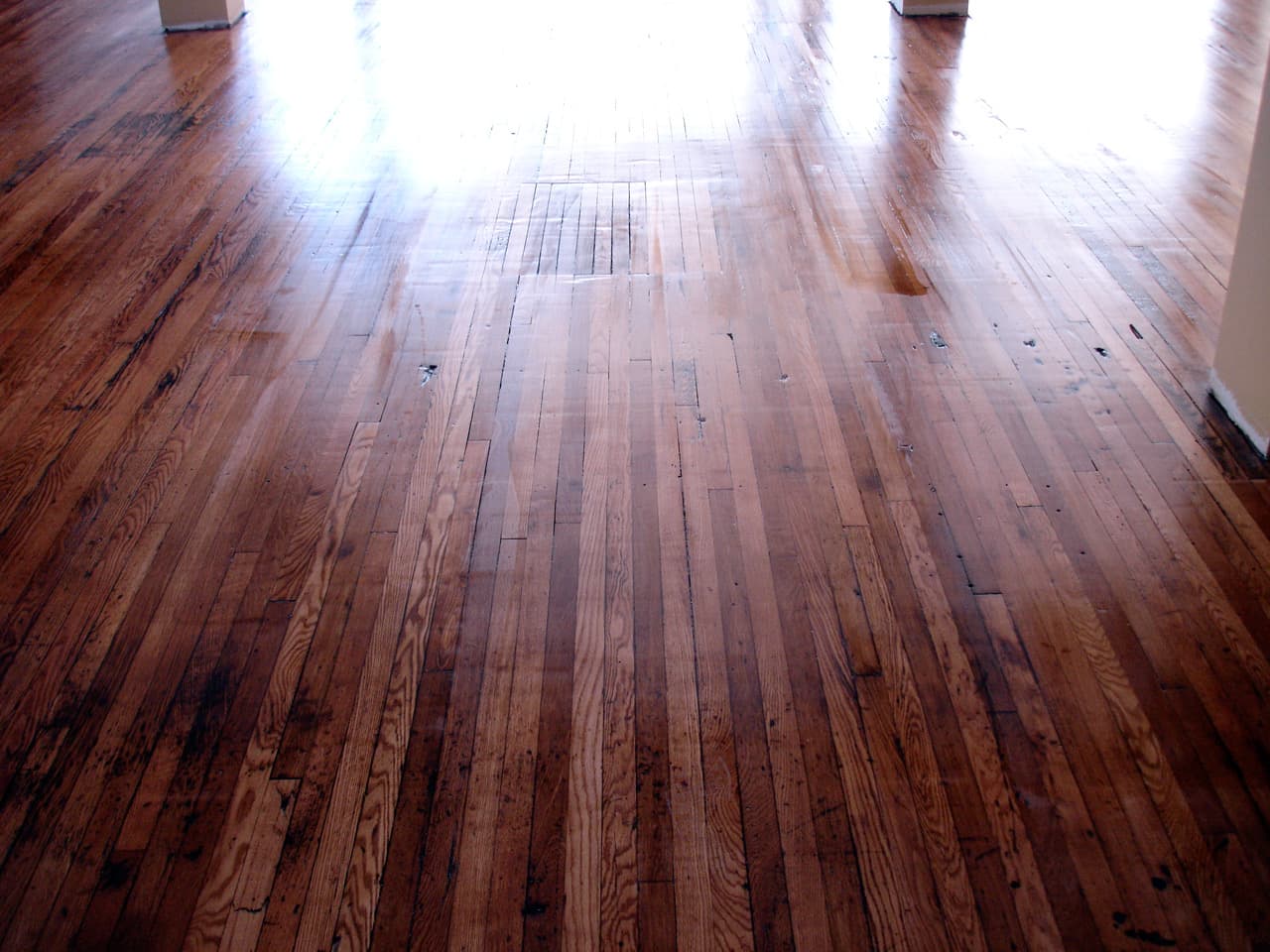
When replacing makes more sense
Cupped or buckled boards. Bona describes cupping as what happens when the unfinished underside of the boards absorbs more moisture than the top, so each board expands and the surface looks wavy with raised seams.[1] It recommends a professional assessment, because some floorboards may need replacing.[1] Sanding a badly cupped floor flat takes off a lot of wood, and the boards can cup again if the moisture is still there.
Mold. The EPA says it is important to dry water-damaged areas and items within 24-48 hours to prevent mold growth, and that if mold is a problem you should clean it up promptly and fix the water problem.[2] Boards that stayed wet for days, or smell musty, should be inspected before anyone sands or finishes over them.
Not enough wood left. Bona says a floor can be sanded around 4-6 times in its entire life, depending on its thickness and the skill of the person sanding.[1] A floor that has already been sanded several times, or has a thin wear layer, may have little left. A flooring pro can often tell from a board edge at a floor vent or a threshold.
Damage below the floor. A floor that bounces, sags or rocks may have a subfloor or framing problem. That is repair work for a licensed contractor, not something finish can fix.
Often the answer is both
Many jobs replace a patch of boards and then refinish the whole floor so the colour matches. Replacing boards is flooring work: the Board for Contractors' definition of flooring contracting covers "the installation, repair, improvement, or removal of materials that are common in the flooring industry", including wood flooring.[4] Hire a licensed contractor for that, and read how to choose a flooring installer.
Once the floor is renewed, protect it. Shaw Floors' care guidance for hardwood is to maintain consistent humidity of 35-55% to prevent warping, and to protect floors from direct sunlight to prevent fading.[6] Avoid wet mops and steam mops.[6]
Stop and call a pro if
- Boards are cupped, buckled or lifting after a leak or flood. Get an assessment before sanding, since some boards may need replacing.[1]
- The floor smells musty or shows dark staining. The EPA says to clean up mold promptly and fix the water problem.[2]
- The floor feels springy or sags. Do not sand over it; the problem is underneath.
- The house was built before 1978 and painted surfaces will be disturbed. The EPA's rule requires anyone paid to do such work to be lead-safe certified.[3]
- You cannot tell how much wood is left. Over-sanding cannot be undone, and Bona warns that oversanding can damage wood floors.[1]
Getting help in Virginia
The Board for Contractors advises getting at least three written bids on identical specifications and checking each contractor's licence.[5] Ask each bidder to price refinishing and replacement separately. See what refinishing costs in Virginia, how to refinish hardwood floors, flooring pros or more flooring answers.
When you are ready, describe your floors once and licensed local pros quote it.
Common questions
- Can water-damaged hardwood floors be saved?
- Sometimes. Dry the area within 24-48 hours, which the EPA says is needed to prevent mold growth, and fix the source of the water. Bona says standing water can cause cupping, and that some boards may need replacing, so have a flooring contractor assess it before deciding.
- How many times can hardwood floors be refinished?
- Bona says a floor can be sanded around 4-6 times in its entire life, depending on its thickness and the skill of whoever does the sanding. Thinner wear layers on engineered floors usually allow fewer, so check with a flooring pro before sanding.
- Is it cheaper to refinish or replace hardwood floors?
- Refinishing is usually cheaper when the wood is sound, because the boards stay. Replacement costs more because of the new material and installation. Get written bids for both on identical specifications, as the Board for Contractors advises, rather than relying on a general rule.
- Can scratches and dents be fixed without replacing the floor?
- Often yes. Bona says major scratches, gouges and dents can often be managed by sanding, filling and refinishing, while minor scratches are addressed by regular cleaning and polishing. Very deep damage may still call for replacing the boards.
- Will refinishing remove stains and fading?
- Sun fading usually can be sanded out, and some stains can be removed by sanding, though others sit deep in the wood. Bona suggests trying professional cleaning first for stubborn stains, as it may avoid sanding. Deep pet stains can still need boards replaced.
Sources
- [1] Why You Should Refinish Your Hardwood Floors, Bona. Checked October 27, 2026.
- [2] A Brief Guide to Mold, Moisture and Your Home, U.S. Environmental Protection Agency. Checked October 27, 2026.
- [3] Lead Renovation, Repair and Painting Program, U.S. Environmental Protection Agency. Checked October 27, 2026.
- [4] 18VAC50-22-30, Definitions of specialty services, Virginia Administrative Code, Board for Contractors. Checked October 27, 2026.
- [5] What You Should Know Before You Hire a Contractor, Virginia Board for Contractors, Department of Professional and Occupational Regulation. Checked October 27, 2026.
- [6] Hardwood Care, Shaw Floors. Checked October 27, 2026.
Want a pro to handle it?
Describe the job once. Licensed local businesses send quotes, and you pay only when you book one.
Get a quote from a local pro