How much does hardwood floor refinishing cost in Virginia?
There is no single Virginia price. The bill depends on the area, the floor's age, condition and species, how much damage needs repair, and whether you want a recoat or a full sand and refinish. Get at least three itemized written bids on identical specifications, and compare what each includes before you compare totals.
Free to ask. Local shops send quotes, and you pay only when you book one.
By Kasra Taheri, Founder, LoclisPublished
Researched and drafted with AI, then checked claim by claim against the sources listed below before it was published. Prices and rules change; the dates beside each source say when it was last checked.
Step by step
Read when to stop and call a pro, further down this page, before you start.
Step 1: Measure and photograph the floor
Note the size of each room and photograph the damage, stains and worn paths so every bidder prices the same floor.
Step 2: Decide what you are asking for
State whether you want a recoat, a full sand and refinish, or repair of damaged boards first, because they are priced very differently.[3]
Step 3: Check each contractor's licence
Look up the licence with DPOR; a Virginia contractor's licence is required when the work is valued at $1,000 or more.[6]
Step 4: Collect at least three written bids
Ask for itemized bids built on the same specifications, and be wary of one far below the rest.[6]
Step 5: Compare what is included
Check dust containment, furniture moving, repairs, stain, sealer and finish products, number of coats, and cleanup.
Step 6: Ask about lead if the house is older
In a house built before 1978, ask whether the firm is lead-safe certified.[4]
Step 7: Keep the deposit small and the contract written
Agree a deposit of no more than 10% or $1,000, whichever is less, and get the scope, price and schedule in writing.[6]
There is no single Virginia price for refinishing hardwood floors, and no honest figure can be given without knowing the floor. What you can know is what moves the price and how to get bids you can compare. Bona, a floor-finish maker, lists the factors that can affect an estimate: the area size, the age and condition of the floor, moisture levels, the extent of any damage, and the hardwood species.[1]
Three jobs with three price levels
Quotes for "refinishing" can mean very different work. Bona describes three levels of floor renewal:
- Revive: a dry mopping and a deep clean, which Bona calls the most cost-effective way to rejuvenate floors. Floors are ready in a few hours.[3]
- Recoat: the floor is deep cleaned, rinsed and prepped, and a new coat of finish is applied. Floors are ready overnight.[3]
- Refinish: the floor is sanded down to the bare wood, a sealer or stain is applied, then a new finish. Bona says floors are ready in 2-4 days, and that refinishing fixes major damage such as deep scratches, discolouration and fading.[3]
A recoat uses a buffer to lightly scuff the existing finish before the new layer goes on, and refinishing completely removes the existing layer of finish.[2] Bona says refinishing "requires the most labor", so it is normally the most expensive of the three,[2] which is why a bidder who quotes a recoat when you expected a full refinish will look cheap.
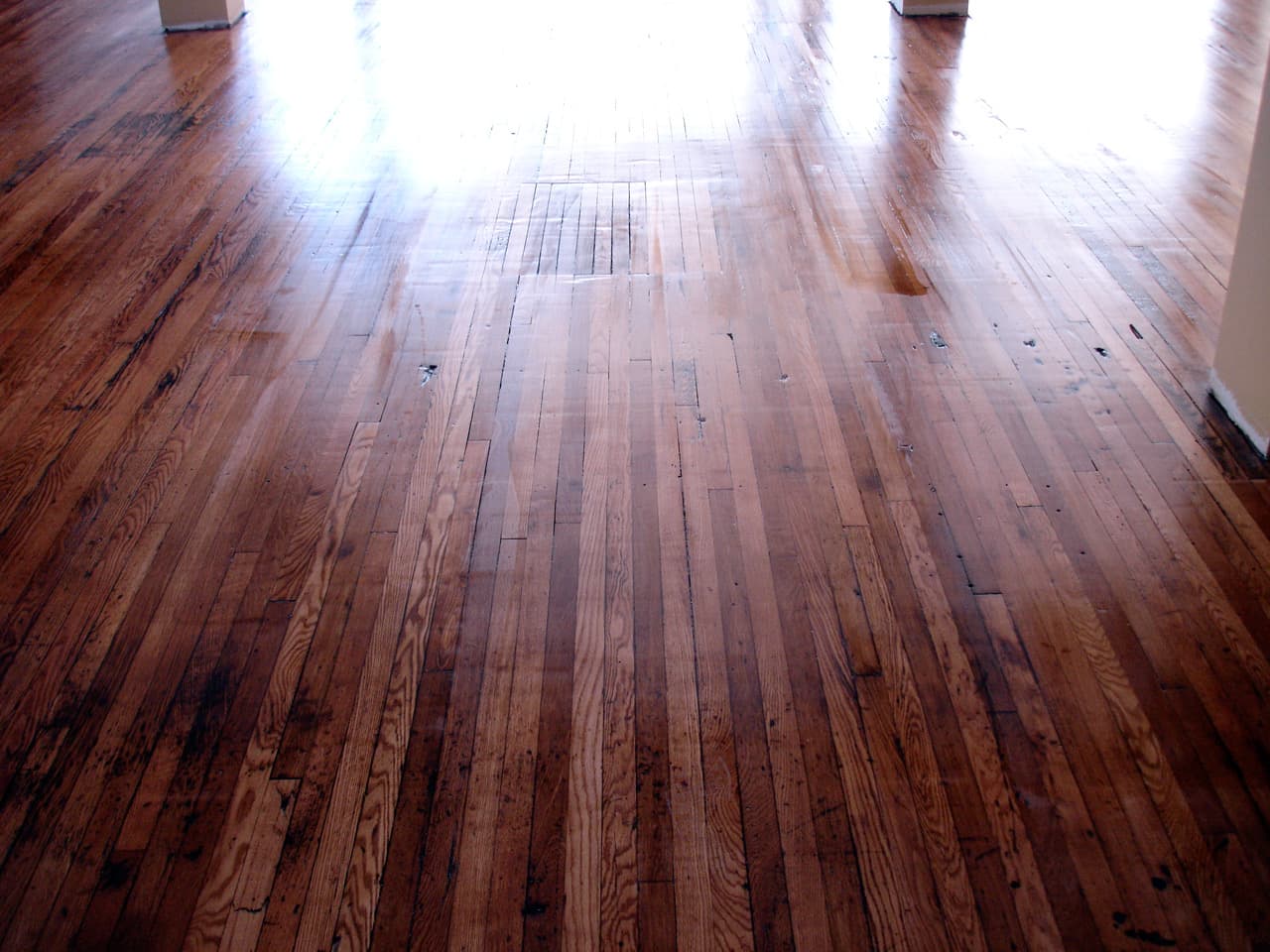
What drives the number
Size and layout. Square footage sets the base. Stairs, many small rooms and closets add edging and handwork.
Condition. Bona notes that if damage has occurred, its extent has to be assessed, because there may be different approaches depending on the type and extent of the damage.[1] Deep gouges, pet stains and sun-faded patches can all add repair work before any finish goes on.
Water damage. Standing water can cause cupping, and Bona says some floorboards may need replacing, so a bid for a water-damaged floor can include board replacement as well as finishing.[1] See whether to refinish or replace hardwood floors.
Dust containment and finish. Bona says "not all dust containment systems are created equal", and dust-free sanding systems are one reason bids differ.[1] The finish matters too: product, sheen, stain and the number of coats. Ask each bidder to name the product and the coats.
Lead in older homes. The EPA's rule requires anyone paid to perform work that disturbs painted surfaces in homes built before 1978 to be certified in lead-safe work practices.[4] If the job reaches painted trim or doors in an older house, ask whether the firm holds that certification. It can affect both who can bid and what the bid covers.
No permit fee. Virginia's Uniform Statewide Building Code lists "Installation or replacement of floor finishes in all occupancies." among the ordinary repairs that need no permit application, so a permit should not be a line on your bid.[5]
Getting bids you can compare
The Board for Contractors advises getting at least three written bids on identical plans and specifications, not automatically accepting the lowest, and being wary of any bid substantially lower than the others.[6] It adds that Virginia law requires all licensed contractors to provide a written contract for residential work.[6] A rule of thumb from the Board is an initial deposit of no more than 10% of the total price or $1,000, whichever is less.[6]
Doing it yourself costs less in labour but not in risk. Bona says oversanding can damage wood floors,[1] and a damaged floor costs far more to fix than a professional job would have cost. Read how to refinish hardwood floors if you are weighing it.
Stop and call a pro if
- A bid is far below the rest. The Board for Contractors says such a bid probably means the contractor has made a mistake or is not including all the work the others quoted.[6]
- The contractor is not licensed. A Virginia contractor's licence is required when the work is valued at $1,000 or more, and the Board says it may not be able to help if you contract with someone unlicensed.[6]
- The floor has been wet. Get the water problem fixed and the floor assessed before anyone quotes a finish.
- Someone asks for a large deposit up front. Hold to the Board's rule of thumb of 10% or $1,000, whichever is less, with payments tied to finished work.[6]
- The house is pre-1978 and the quote ignores lead. Ask directly whether the firm is lead-safe certified.[4]
Getting help in Virginia
DPOR's licence lookup shows whether a contractor is licensed and what class. Loclis lists licensed flooring businesses: browse flooring, compare it with what new flooring costs in Virginia, or see more flooring answers.
When you are ready, describe your floors once and licensed local pros quote it.
Common questions
- Why do refinishing quotes vary so much?
- Because the jobs differ. Bona lists area size, the age and condition of the floor, moisture levels, the extent of damage and the species as factors. Bids also differ in whether they cover a recoat or a full sand, the dust containment system, the finish products and the number of coats, so compare line by line.
- Is a recoat cheaper than a full refinish?
- Usually, because less work is involved. A recoat scuffs the existing finish with a buffer and adds a new layer, and floors are ready overnight in Bona's timing. A refinish sands down to bare wood and takes 2-4 days in the same guide. A recoat only suits floors whose wood is sound.
- Does refinishing hardwood floors need a permit in Virginia?
- No. The Uniform Statewide Building Code lists the installation or replacement of floor finishes among the ordinary repairs for which application for a permit and inspections are not required. A contractor still needs a Virginia licence when the work is valued at $1,000 or more.
- How much deposit should I pay a floor refinisher?
- The Board for Contractors gives a rule of thumb of no more than 10% of the total price or $1,000, whichever is less, with a larger deposit only when custom or special-order items are involved. Refinishing normally needs no special orders, so hold to the lower figure.
- What should be in the written bid?
- The area and rooms covered, whether it is a recoat or full refinish, any repairs, the stain, sealer and finish products and number of coats, dust containment, furniture handling, cleanup, the schedule, the total price and the payment plan. The Board for Contractors advises getting everything agreed in writing.
Sources
- [1] Why You Should Refinish Your Hardwood Floors, Bona. Checked October 27, 2026.
- [2] Recoat Hardwood Floors Guide, Bona. Checked October 27, 2026.
- [3] Revive, Recoat and Refinish my Floors, Bona. Checked October 27, 2026.
- [4] Lead Renovation, Repair and Painting Program, U.S. Environmental Protection Agency. Checked October 27, 2026.
- [5] 13VAC5-63-80, Section 108 Application for permit (Virginia Uniform Statewide Building Code), Virginia Administrative Code, Virginia General Assembly. Checked October 27, 2026.
- [6] What You Should Know Before You Hire a Contractor, Virginia Board for Contractors, Department of Professional and Occupational Regulation. Checked October 27, 2026.
Want a pro to handle it?
Describe the job once. Licensed local businesses send quotes, and you pay only when you book one.
Get a quote from a local pro