Should I repair or replace damaged flooring?
Repair when the damage is local and the floor and subfloor are sound: scratches, a dented board, a cracked tile. Replace when water has reached the subfloor, boards are cupped across a wide area, the wood has little sanding left, or a repair cannot be matched. Ask for both prices in writing before you decide.
Free to ask. Local shops send quotes, and you pay only when you book one.
By Kasra Taheri, Founder, LoclisPublished
Researched and drafted with AI, then checked claim by claim against the sources listed below before it was published. Prices and rules change; the dates beside each source say when it was last checked.
Step by step
Read when to stop and call a pro, further down this page, before you start.
Step 1: Look at the cause
Find out whether the damage is wear, impact or water, because with water damage some floorboards may need replacing.[1]
Step 2: Check how long it was wet
If wet materials were not dried within 24-48 hours, expect mold to be a possibility.[3]
Step 3: Mark the damaged area
Photograph and measure the damage and note whether it is one spot, a run of boards or the whole room.
Step 4: Check for spare material
Look for leftover planks, tiles or boards from the original install so a repair can match.
Step 5: Get both prices
Ask at least three bidders for a repair price and a replacement price on identical specifications.[6]
Step 6: Compare the gap
If repair costs close to replacement, or will not match, replace; if the damage is local and the subfloor is sound, repair.
Step 7: Confirm the licence
Look up the contractor's licence with DPOR; one is required when the work is valued at $1,000 or more.[6]
Repair when the damage is local and the floor and subfloor under it are sound. Replace when the damage is widespread, when water has got into the subfloor or the boards, or when the floor has worn too thin to be sanded again. A few scratches, one dented board or a chipped tile are repair jobs. A floor that has been wet for days is usually not.
Questions that decide it
Is the damage on the surface or in the material? Bona, a floor-finish maker, says major scratches, gouges and dents are the ones that can't be fixed by cleaning and polishing, and that "Often, such issues can be managed by sanding, filling and refinishing".[1] That is repair. If the planks themselves are cracked through, split or crushed, the board has to come out.
Was water involved? Stained or discolored flooring is a telltale sign of water damage, and Bona says that standing water can saturate the wood and cause cupping, the wavy look when the underside of the boards absorbs more moisture than the top.[1] Bona recommends having water damage assessed because some floorboards may need replacing.[1] A single stained patch from a puddle is a different case from a flooded room.
Has it been wet for more than a couple of days? The EPA says that if wet or damp materials are dried within 24-48 hours after a leak or spill, in most cases mold will not grow.[3] After that, absorbent or porous materials such as carpet may have to be thrown away if they become moldy, because mold can grow in the empty spaces of porous materials and be difficult or impossible to remove completely.[3] Carpet and pad are the usual casualties; solid hard floors are easier to dry but the subfloor beneath them may not be.
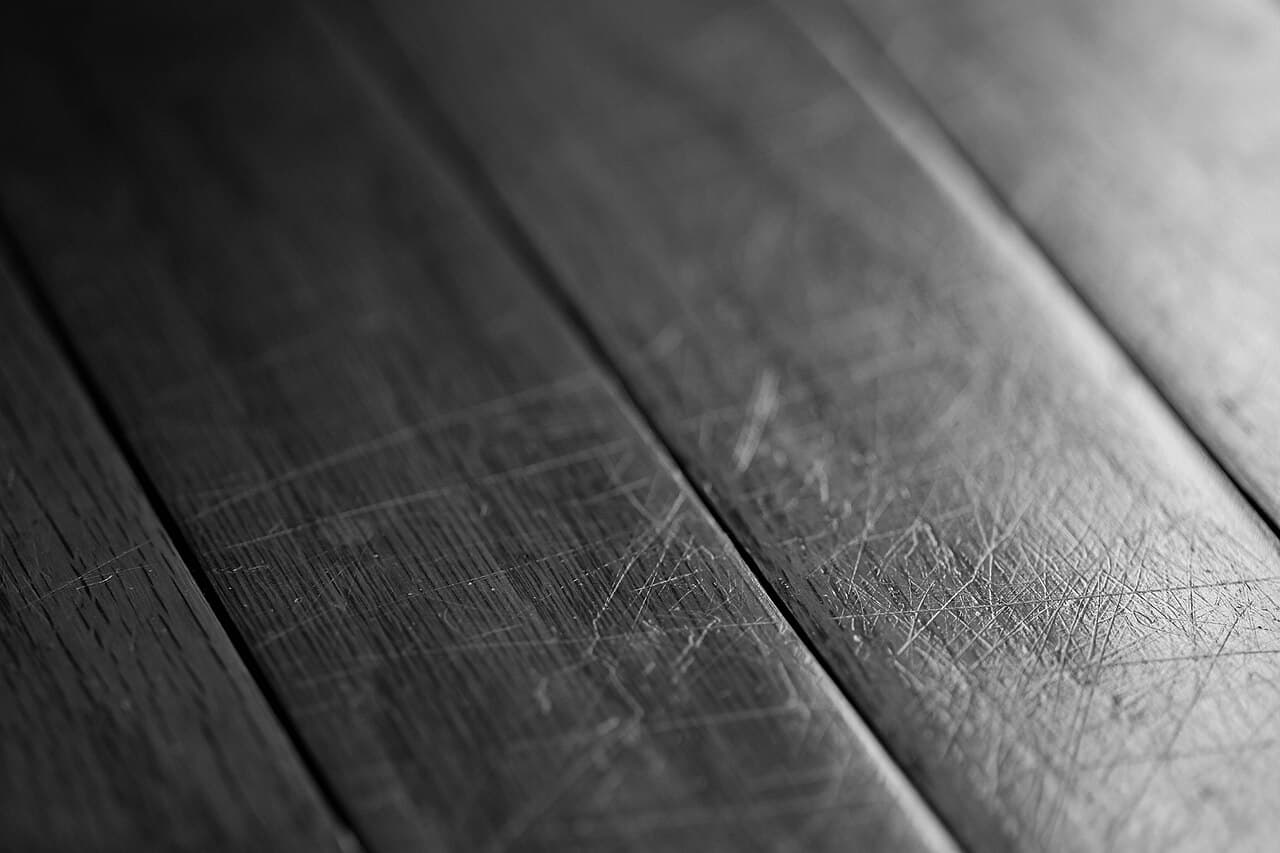
How much life is left in the wood? A solid hardwood floor can be sanded and refinished again and again, but not forever. Bona puts it at around 4-6 sandings over the entire life of a floor, depending on its thickness.[1] A floor that has been refinished several times or is a thin engineered board may be near the end, and a pro can tell you.
Can you match it? Replacing a few boards or planks only looks right if the new ones match the old in species, width, colour and finish. Old floors and discontinued products are hard to match. Sometimes the best-looking answer is to replace a whole run or room, and sometimes it is to repair and refinish the whole floor so the patch blends in.
By type of floor
Solid hardwood. Repair for scratches, dents, a few damaged boards and surface wear: fill, patch or replace boards, then refinish to blend. Bona describes refinishing as the repair for moderate to severe damage.[2] Replace when the boards are cupped across a wide area or the subfloor is damaged. See whether to refinish or replace hardwood floors.
Laminate and luxury vinyl plank. These are usually floating floors made of interlocking planks. A plank can often be swapped if you have spares from the original install, and replacing the whole floor is the better answer when it has swollen along the seams or you cannot match the product.
Tile. One cracked tile can be replaced. A run of cracked or hollow tiles points to a problem underneath, such as movement in the subfloor, and replacing the tiles without fixing the cause will only repeat the problem.
Carpet. Stains, burns and small tears can be patched or the damaged section restretched. Wet carpet that has become moldy may have to be thrown away.[3]
Getting the decision checked
Ask for a written assessment from a flooring pro, not just a price. In Virginia the Board for Contractors defines flooring contracting as the installation, repair, improvement, or removal of flooring materials, and it includes the installation or replacement of subflooring.[7] It does not include repairing floor joists or other structural components, so if the cause is below the subfloor, a different trade is needed.[7]
Get at least three written bids on identical plans and specifications, and be wary of any bid substantially lower than the others.[6] Ask each bidder to price both a repair and a replacement so you can see the gap. Virginia's Uniform Statewide Building Code lists "Installation or replacement of floor finishes in all occupancies." among the repairs that need no permit application.[5] A Virginia contractor's licence is required when the work is valued at $1,000 or more.[6] If the house was built before 1978, ask whether the firm is certified in lead-safe work practices, which the EPA requires of anyone paid to disturb painted surfaces.[4]
Stop and call a pro if
- The floor has been wet for more than 48 hours. The EPA's 24-48 hour window for drying has passed, so mold and a wet subfloor are real possibilities.[3]
- Boards are cupped, buckled or lifting across a wide area. That means moisture, not wear, and the source has to be found.[1]
- The floor is soft or springs underfoot. The subfloor or joists may be damaged, which is a carpentry job.
- Tiles keep cracking or sounding hollow. Something below is moving.
- A bid is far below the others. The Board for Contractors says it probably means the contractor has made a mistake or is not including all the work.[6]
Getting help in Virginia
Costs for each route are in how much floor repair costs in Virginia and how much new flooring costs in Virginia. For a light scratch you can handle yourself, see how to fix a scratch in hardwood floors. Browse licensed flooring pros or more flooring answers.
When you are ready, describe the damage once and licensed local pros quote it.
Common questions
- When should I replace flooring instead of repairing it?
- When damage is widespread, when water has reached the subfloor or caused cupping across a wide area, when the floor has been sanded as many times as it can take, or when you cannot match a repair. Local, surface damage on a sound floor is usually a repair.
- Can water-damaged hardwood be repaired?
- Sometimes. Bona says to assess whether the water damage is minor, such as a puddle, or major, such as a flood, and that some floorboards may need replacing. The EPA advises drying wet materials within 24-48 hours to prevent mold growth.
- How many times can hardwood floors be refinished?
- Bona says a floor can be sanded around 4-6 times in its entire life, depending on its thickness and the skill of the professional. A floor near the end of that range may be better replaced than refinished again.
- Does replacing flooring need a permit in Virginia?
- Installing or replacing floor finishes is on the Uniform Statewide Building Code's list of ordinary repairs that need no permit application. Structural work such as joist repair is different, so ask your locality's building department.
- Should a flooring contractor give me both a repair and a replacement price?
- Yes. The Board for Contractors advises getting at least three written bids on identical specifications. Asking each bidder to price both options shows you the real gap and whether a repair will match.
Sources
- [1] Why You Should Refinish Your Hardwood Floors, Bona. Checked October 27, 2026.
- [2] Recoat Hardwood Floors Guide, Bona. Checked October 27, 2026.
- [3] A Brief Guide to Mold, Moisture and Your Home, U.S. Environmental Protection Agency. Checked October 27, 2026.
- [4] Lead Renovation, Repair and Painting Program, U.S. Environmental Protection Agency. Checked October 27, 2026.
- [5] 13VAC5-63-80, Section 108 Application for permit (Virginia Uniform Statewide Building Code), Virginia Administrative Code, Virginia General Assembly. Checked October 27, 2026.
- [6] What You Should Know Before You Hire a Contractor, Virginia Board for Contractors, Department of Professional and Occupational Regulation. Checked October 27, 2026.
- [7] 18VAC50-22-30, Definitions of specialty services (Board for Contractors Regulations), Virginia Administrative Code, Virginia General Assembly. Checked October 27, 2026.
Want a pro to handle it?
Describe the job once. Licensed local businesses send quotes, and you pay only when you book one.
Get a quote from a local pro