Is a seasonal snow removal contract worth it in Virginia?
Sometimes. Virginia snowfall swings widely from year to year, so a flat season fee can cost more than paying per visit in a light winter and less in a heavy one. A contract is usually worth it when you must get out early, cannot shovel for health reasons, have a long or steep driveway, or need a sidewalk cleared while you are away.
Free to ask. Local shops send quotes, and you pay only when you book one.
By Kasra Taheri, Founder, LoclisPublished
Researched and drafted with AI, then checked claim by claim against the sources listed below before it was published. Prices and rules change; the dates beside each source say when it was last checked.
Step by step
Read when to stop and call a pro, further down this page, before you start.
Step 1: Look up your local snowfall
Check your area's seasonal snowfall record from the National Weather Service, including the light and heavy years, not just the normal.[1]
Step 2: Count likely visits
Estimate how many storms a year reach the contract's trigger depth, often around 2 inches, where plowing starts to pay off.[5]
Step 3: Get both prices
Ask the same company for a per-visit price and a season price for the same areas, so you can compare them directly.
Step 4: Read the cap
Check whether the season fee covers unlimited visits or a set number, and what each extra visit or storm costs.
Step 5: Pin down the response time
Get in writing how soon after snow stops they arrive, and whether they come during long storms or only at the end.
Step 6: List what is included
Make sure the driveway, apron, walks, steps, the street plow's ridge and any de-icing are named in the agreement.[3]
Step 7: Settle damage and insurance
Agree on who pays for damage to lawn, pavement or the mailbox, and ask for proof of insurance.[4]
Step 8: Keep your cancellation rights
If the sale was made at your door, keep your copy and the notice of your right to cancel within three business days.[9]
A seasonal snow contract is worth it for some Virginia homeowners and a poor deal for others. Because snowfall here swings so much from one winter to the next, a flat fee can cost more than paying per visit in a light year and much less in a heavy one. What a contract reliably buys is a place on the company's route and an agreed plan. That is worth paying for if you must get out early, cannot shovel for health reasons, have a long or steep driveway, or own a property you cannot reach after a storm.
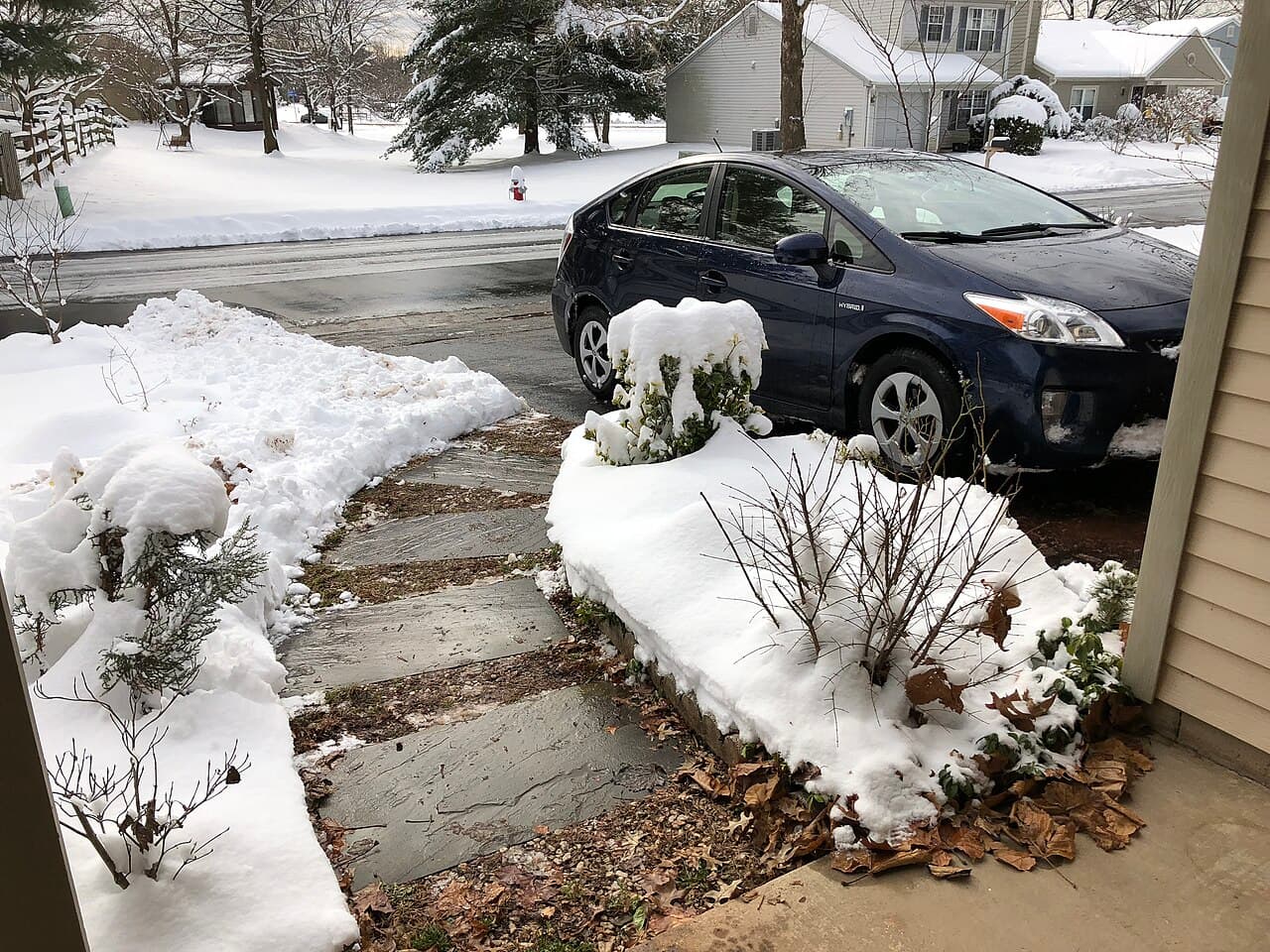
How much snow you are paying for
The weather is the biggest unknown in the math. At Washington Dulles, the National Weather Service lists a normal season of 21.0 inches of snow.[1] Hardly any winter is normal, though. At the same station, 2022-23 brought 0.4 inches and 2013-14 brought 52.8 inches, while 2019-20 brought 2.9 inches, and 2014-15 and 2015-16 each brought more than 34.[1] Nearby, the record the weather service keeps for Washington, D.C. lists a normal season of 13.7 inches, with 0.4 inches in 2022-23 and 32.0 in 2013-14.[2] Snowfall in your part of the state will differ, often a lot, but the pattern is the same: a few big winters pull the average up, and many winters fall well below it.
What matters for a contract is not total inches but the number of storms deep enough to clear. The City of Richmond notes that plowing is most useful when the total snow accumulation is above 2 inches,[5] and on state roads, plowing generally begins when 2 inches or more of snow has accumulated.[3] One 18-inch storm is one or two visits; six 3-inch snows are six.
Doing the math
Ask one company for two prices for the same areas: a per-visit price and a season price. Divide the season price by the per-visit price. The result is how many plowable storms you need in a winter just to break even. Then look back at a few recent winters for your area. If most had fewer storms than your break-even number, per-visit pricing would have cost you less. If heavy winters are common where you live, or a single bad winter would strain your budget, the season fee works like insurance: you pay a known amount whatever the weather does.
Read the cap. Some season contracts cover unlimited visits; others include a set number and charge for each one after that, which brings back the weather risk you were trying to avoid.
When a contract is clearly worth it
- You cannot shovel safely. Orthopaedic surgeons and the City of Alexandria advise people with a medical condition, or who do not exercise regularly, to talk with your doctor before shoveling, and consider hiring someone to remove the snow.[7][6] A contract means you are not hunting for help in the middle of a storm, when everyone is busy.
- You must leave early. Healthcare workers, people with medical appointments and anyone who cannot work from home need a stated response time, which one-off calls rarely get.
- You are away, or you own a rental. Alexandria spells out that owners and tenants who may be unavailable or unable to clear sidewalks themselves are responsible for making arrangements to have the work done for them,[6] with a possible $50 fine plus the cost of the city doing the work.[6] Richmond's code requires sidewalks to be cleared within 6 hours of snow stopping or by 11 a.m. the next day if snow falls through the night.[5] A contract that names the sidewalk covers that.
- The driveway is long, steep or gravel. These take equipment and an operator who knows the edges, and they are the hardest to get cleared on short notice.
When per-visit is the better deal
If your driveway is short, you can shovel it, you are flexible about when you leave, and recent winters in your area have been light, paying per visit, or clearing it yourself, will usually cost less. See the best way to clear a driveway after a big snow and what snow removal costs in Virginia.
What to read in the contract
- Trigger depth. How many inches bring them out, and whether ice or light snow is covered.
- Response time. How soon after snow stops, and whether they come during long storms.
- Areas. Driveway, apron, walks, steps, sidewalk, mailbox access.
- The street plow's ridge. Crews push snow off the road, to the right, and it can block driveways.[3] Alexandria tells residents to be prepared to clear driveways and sidewalks more than one time.[6] Ask whether a return trip for the ridge is included.
- De-icing. Included or extra, and which product.
- Damage and insurance. Who pays for torn-up lawn edges, cracked pavement or a broken mailbox. Ask for proof of insurance; VDOT requires vehicle insurance for each piece of equipment from the contractors it hires to plow.[4]
- Payment and cancellation. When payment is due, whether any of it is refundable in a snowless winter, and how either side ends the agreement.
If the contract was sold at your door
Snow companies often sell season contracts door to door in the fall. Under Virginia's Home Solicitation Sales Act, when a sale is solicited in person at your home, you can generally cancel until midnight of the third business day after you sign,[9] and the seller must give you a copy of the contract and a written notice of your right to cancel.[10] The cancellation must be in writing, sent to the address in the agreement.[9] The law does not apply to a sale made after earlier negotiations between you and the seller, or to cash sales under $25.[8]
Damage from public plows is a separate matter
A contract covers your contractor, not the state or city. To report mailbox damage from a VDOT plow, VDOT asks you to enter a ticket on myVDOT, its Customer Service Center portal, and says claims cannot be submitted by phone.[3] Cities and counties that plow their own streets have their own process.
Stop and call a pro if
- You have a heart condition or another reason to avoid heavy exertion and nobody nearby can clear for you.
- Snow is loading the roof or icicles hang over doorways. Roof snow and ice dams are a job for a professional; see roof snow and ice dam services.
- There is no room left to pile snow and it needs hauling away; see snow hauling.
- Ice keeps forming on the driveway after every clearing; see why a plowed driveway refreezes.
Browse snow removal services and snow and seasonal answers, find seasonal services around Blacksburg, or describe the job once and local businesses quote it.
Common questions
- How do I work out whether a season contract pays off?
- Divide the season price by the per-visit price. That is the number of plowable storms you need in a winter to break even. Then look at your area's snowfall record: if many recent winters had fewer storms than that, per-visit is likely cheaper; if heavy winters are common, the contract may win.
- What trigger depth is reasonable?
- Many contracts start at about 2 inches, which matches where public works departments say plowing becomes worthwhile; Richmond notes that plowing is most useful above 2 inches. If you need light snow or ice handled too, ask for that in writing, since it is often a separate treatment service.
- Does a season contract mean they come first?
- Only if the agreement says so. Contract customers are often served before one-off calls, but routes still take time. Ask for a stated response time after snow stops, and whether they visit during long storms or only once at the end.
- Can I cancel a contract I signed at my door?
- Under Virginia's Home Solicitation Sales Act you can generally cancel a sale solicited in person at your home until midnight of the third business day after signing, by written notice to the address in the agreement. It does not cover cash sales under $25 or sales that follow earlier negotiations between you and the seller.
- Who pays if the plow damages my lawn or mailbox?
- Settle that in the contract before the first storm, and ask for proof of insurance. Marking driveway edges with stakes before the ground freezes helps any operator avoid the lawn. Damage from a VDOT plow is a separate matter: for mailbox damage, VDOT starts the claims process through tickets on its myVDOT portal, not by phone.
Sources
- [1] Dulles VA Snowfall (monthly and seasonal totals), National Weather Service, Baltimore/Washington office. Checked October 26, 2026.
- [2] Washington D.C. Snowfall (monthly and seasonal totals), National Weather Service, Baltimore/Washington office. Checked October 26, 2026.
- [3] Winter weather: snow removal and treatment, and frequently asked questions, Virginia Department of Transportation. Checked October 26, 2026.
- [4] Snow contractors, Virginia Department of Transportation. Checked October 26, 2026.
- [5] Snow Removal, City of Richmond, Department of Public Works. Checked October 26, 2026.
- [6] Snow and Ice Control, City of Alexandria, Virginia. Checked October 26, 2026.
- [7] Prevent Snow Shoveling and Snowblowing Injuries, American Academy of Orthopaedic Surgeons, OrthoInfo. Checked October 26, 2026.
- [8] Code of Virginia § 59.1-21.2. Definitions (Virginia Home Solicitation Sales Act), Virginia General Assembly, Legislative Information System. Checked October 26, 2026.
- [9] Code of Virginia § 59.1-21.3. Cancellation of sale, Virginia General Assembly, Legislative Information System. Checked October 26, 2026.
- [10] Code of Virginia § 59.1-21.4. Receipt or written agreement, Virginia General Assembly, Legislative Information System. Checked October 26, 2026.
Want a pro to handle it?
Describe the job once. Licensed local businesses send quotes, and you pay only when you book one.
Get a quote from a local pro