How do I keep my drains from clogging?
Keep hair, grease, food scraps and wipes out of the drains. Clean the hair out of the tub drain after washing your hair, keep a strainer in the kitchen sink and empty it after each use, pour used grease into a covered container for the trash, wipe greasy pans with a paper towel, flush only toilet paper, and keep your sewer cleanout capped and easy to find.
Free to ask. Local shops send quotes, and you pay only when you book one.
By Kasra Taheri, Founder, LoclisPublished
Researched and drafted with AI, then checked claim by claim against the sources listed below before it was published. Prices and rules change; the dates beside each source say when it was last checked.
Step by step
Read when to stop and call a pro, further down this page, before you start.
Step 1: Clear hair after you wash
After washing your hair, clean the hair out of the tub or shower drain, or fit a hair catcher over it.[1]
Step 2: Keep the kitchen strainer in
Keep the drain strainer in your kitchen sink to catch food bits, and clean it after each use.[1]
Step 3: Put grease in a container
Pour used cooking oil, grease and fat into a covered container and put it out with the regular trash.[2]
Step 4: Dry-wipe greasy pans
Wipe grease off dishes and cookware with a paper towel before washing, and throw the towel away.[2]
Step 5: Go easy on the disposal
Scrape food scraps into the trash and use the garbage disposal as little as you can.[2]
Step 6: Flush only toilet paper
Keep wet wipes, paper towels and sanitary products out of the toilet, even wipes labeled flushable.[3]
Step 7: Clean the tub stopper now and then
Every so often, pull the tub stopper and wipe off the hair and soap scum before they build into a clog.
Step 8: Keep the cleanout capped
Know where your sewer cleanout is and keep its cap on and in good shape so rain and debris stay out.[4]
Step 9: Run water in unused drains
Add water regularly to seldom-used sinks, toilets and floor drains so their traps stay full and sewer gas stays out.[5]
The short version
Many household clogs come from a few things that should not go down the drain: hair in the bathroom, grease and food in the kitchen, and wipes in the toilet. Keeping those out usually goes a long way toward keeping drains clear. None of these habits costs anything beyond a sink strainer, a hair catcher and a container for used grease.
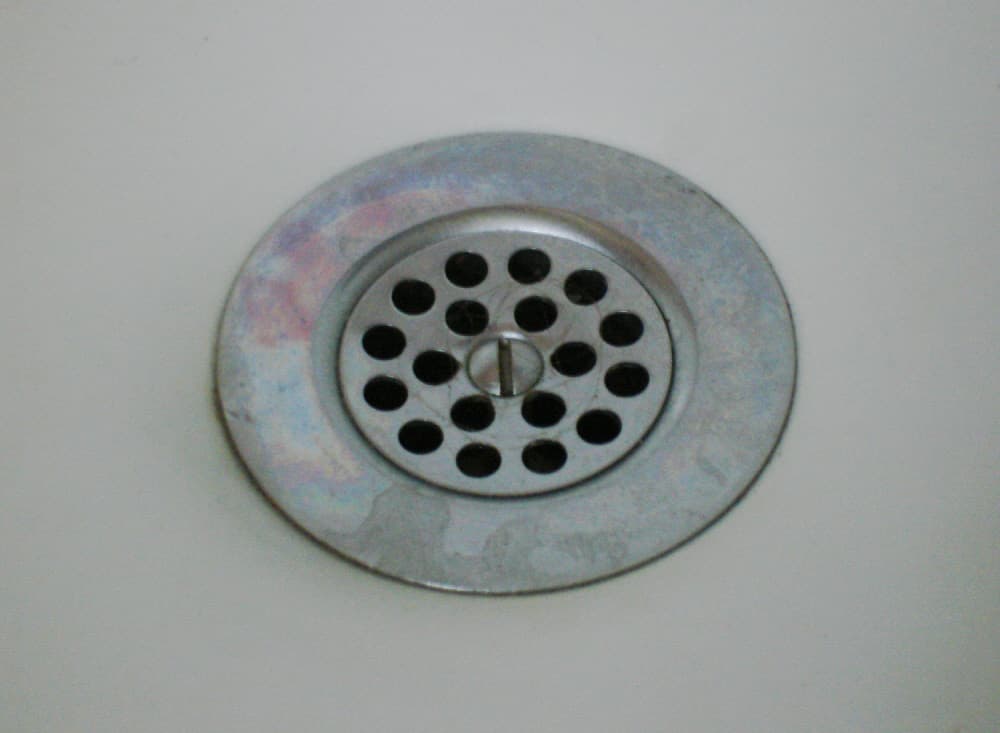
In the bathroom
The simplest rule there is: "After washing your head, clean the hair out of the drain."[1] A hair catcher that sits over the shower or tub drain does the same job, and it is easier to empty a catcher than to fish hair out of a pipe.
Every so often, pull the tub stopper and wipe off what has built up on it. On a tub with a lever on the overflow plate, the coils attached to the overflow cover collect hair, soap scum and body oils,[1] so clean them along with the stopper. See how to unclog a bathtub drain for how those parts come out.
In the kitchen
Start with the strainer: "Keep the drain strainer in your kitchen sink to catch small bits of food. Clean the strainer after each use."[1] Then grease, a common cause of kitchen clogs: "Grease hardens and will clog a drain."[1]
King George County gives practical rules for it. The county asks residents: "Pour your used cooking oil, grease & fat into a covered container."[2] The county notes that those containers can go in the trash with your regular garbage.[2] It also says to use a paper towel to dry wipe grease and oil from dishes and cookware before washing them,[2] and not to use cloth towels or rags on greasy dishes, because washing the cloth sends the grease into the sewer.[2]
The rule that surprises many people: "Do not rinse F.O.G. from cookware with hot water."[2] The county explains that hot water melts the grease off the dishes and into the sewer pipes, where it later cools and builds up into a clog and sewage backup.[2] The same goes for food: "Scrape food scraps from your dishes into the garbage."[2]
The City of Salem adds two more: "Never pour fats, oils, or grease (FOG) down the drain, even if they are liquid at room temperature."[3] And: "Use garbage disposals sparingly or not at all."[3]
In the toilet
Salem's list of what never goes down a toilet is worth taping inside a bathroom cabinet: "Never flush wet wipes, diapers, sanitary napkins, tampons, paper towels, cardboard, or cloth."[3] On the label that confuses people, Salem says even wipes labeled "flushable" build up in pipes and cause blockages.[3]
If your home is on septic
Everything that goes down the drain ends up in the tank, so the rules are stricter. The EPA's rule of thumb is not to flush anything besides human waste and toilet paper.[8] Its never-flush list includes cooking grease, wipes and diapers, and also coffee grounds, cat litter, dental floss and paper towels.[8] The EPA also notes that a garbage disposal means the tank needs pumping more often.[8]
For the sewer line
Spotsylvania County's advice for the private sewer line starts with the cleanout, the capped pipe in the yard that gives a plumber access to the line: "Know where your cleanout is for quick access to clear blockages or stop backups."[4] And: "Keep your cleanout cap on and in good shape. This keeps out rain and debris that can cause blockages, backups, or overflows."[4] If the cap is cracked or missing, ask a plumber or your sewer utility to replace it.
Think about trees too, mostly when you plant. Spotsylvania County explains why: "Broken sewer laterals can allow tree roots or debris into the pipe".[4] Keep new trees and woody shrubs well away from the line from the house to the street. Salem's guidance goes further: "Remove trees and woody plants from around the sewer lateral."[3] Taking down an established tree, or digging out its roots over a buried sewer line, is not a homeowner job: hire a tree service for the tree and a licensed plumber for the line.
For drains you rarely use, Fairfax County notes: "Water should be added regularly to plumbing fixtures, especially any seldom used sinks, toilets or floor drains that may have dried out."[5] It explains that sewer gas and odors can get in when a fixture has not been used in a while and the water in its trap has evaporated.[5]
What to skip
Monthly chemical treatments are not maintenance. Drain openers are hazardous products. Their poisonous ingredients include hydrochloric acid, lye (sodium hydroxide or caustic soda), potassium hydroxide and sulfuric acid, and they can burn the skin and the eyes.[6] For homes on a septic system the EPA's advice is: "Avoid chemical drain openers for a clogged drain."[8] It explains that pouring toxins down the drain can kill the living organisms in the system that digest and treat household waste.[8] Good habits and a strainer do more.
Stop and call a pro if
- A drain still clogs often after you have changed these habits. Fairfax County lists the signs that the sewer lateral may need repair: frequently clogged drains, odor of sewage, and basement backups during rain.[7]
- Water backs up as other fixtures are used. Fairfax says: "If the backup occurs only when facilities (such as toilet, tub, washer or sinks) are used, it is possible that you need a plumber."[5]
- Neighbors are backing up too. Call your city or county sewer utility first.
- Sewage or standing water shows up at the cleanout or in the yard. Leave the cleanout closed and call a licensed plumber, or your sewer utility if the public line may be the cause. Fairfax County advises avoiding contact with sewage overflows and keeping people, especially children, away from them, because raw sewage can carry bacteria, viruses, molds and fungi.[5]
- A tree near the sewer line needs to come out, or its roots need digging up. That is work for a tree service and a licensed plumber, not a weekend project.
Read why a drain keeps clogging for what those signs mean and when to call a plumber for a clogged drain. Loclis lists DPOR-licensed plumbers: look up plumbers in Blacksburg, browse plumbing services or more plumbing answers.
When a drain needs a professional, describe the clog and licensed local plumbers quote it.
Common questions
- Is it fine to pour grease down the drain with hot water?
- No. King George County says grease mixed with hot water flows easily but hardens inside pipes once it cools, and it specifically warns against rinsing grease off cookware with hot water. Wipe it off with a paper towel and put the towel in the trash.
- Can a garbage disposal handle grease and food scraps?
- Do not lean on it. Salem says to use garbage disposals sparingly or not at all, and King George County says to scrape food scraps into the garbage. On a septic system, the EPA says a disposal means the tank needs pumping more often.
- Should I use a monthly chemical drain treatment?
- No. Drain openers contain lye or strong acids that can burn the skin and the eyes. On a septic system, the EPA says to avoid chemical drain openers, and pouring toxins down the drain can kill the organisms that treat the waste. Keeping hair, grease and wipes out of the drains does more.
- Are flushable wipes safe for my pipes?
- The City of Salem says no: even wipes labeled flushable build up in pipes and cause blockages. Put them in the trash.
- Why does a drain I rarely use smell like sewage?
- Its trap may have dried out. Fairfax County says sewer gas and odors can enter a home when a fixture has not been used in a while and the water in its trap has evaporated, and it advises adding water regularly to seldom-used sinks, toilets and floor drains.
- Should I have my drains cleaned every year?
- Not as a rule. A house whose drains run freely does not need routine cleaning. If one line clogs again and again, have a plumber clear it and run a camera through it, so you fix the cause instead of paying for the same cleaning each year.
Sources
- [1] Making Simple Repairs: Clogged Drains (FCS5234-05, archived fact sheet), UF/IFAS Extension, University of Florida. Checked October 26, 2026.
- [2] Fats, Oils & Grease, King George County, Virginia. Checked October 26, 2026.
- [3] Water & Sewer: Backup vs. Overflow, frequently asked questions, City of Salem, Virginia. Checked October 26, 2026.
- [4] Utilities: Sanitary Sewer Lateral, frequently asked questions, Spotsylvania County, Virginia. Checked October 26, 2026.
- [5] Wastewater Management: Sanitary Sewer Emergencies, Fairfax County Department of Public Works and Environmental Services. Checked October 26, 2026.
- [6] Drain opener poisoning, MedlinePlus, U.S. National Library of Medicine. Checked October 26, 2026.
- [7] Sanitary Sewer House Lateral (published November 2024), Fairfax County Department of Code Compliance. Checked October 26, 2026.
- [8] How to Care for Your Septic System, U.S. Environmental Protection Agency. Checked October 26, 2026.
Want a pro to handle it?
Describe the job once. Licensed local businesses send quotes, and you pay only when you book one.
Get a quote for Plumbing Repair