How do I unclog a bathtub drain?
Pull the stopper and clear off any hair caught on it. On a tub with a lever on the overflow, take off the overflow cover and clean the coil behind it. If the tub is still slow, cover the overflow with a wet cloth, run about 2 inches of water and plunge 20 to 30 times, then try a hand snake. Skip chemical openers.
Free to ask. Local shops send quotes, and you pay only when you book one.
By Kasra Taheri, Founder, LoclisPublished
Researched and drafted with AI, then checked claim by claim against the sources listed below before it was published. Prices and rules change; the dates beside each source say when it was last checked.
Step by step
Read when to stop and call a pro, further down this page, before you start.
Step 1: Take out the stopper
Remove the stopper or closure from the tub drain.[1] Pull off any hair wrapped around it and wipe it clean.
Step 2: Fish out what you can reach
Wearing gloves, pull hair up from just below the drain opening with a plastic barbed drain strip or a bent wire, slowly so it does not tear.
Step 3: Clean a lever closure
On a tub with a lever on the overflow, lift out the drain cover, take out the two overflow cover screws and keep them in a container away from the tub, then clean the coil on the cover.[1]
Step 4: Test with running water
Run water through the drain to see whether cleaning the stopper or coil has cleared it.[1]
Step 5: Cover the overflow
If the tub is still slow, hold a wet washcloth or rag over the overflow opening.[1]
Step 6: Plunge 20 to 30 times
With about 2 inches of water in the tub and the cloth held over the overflow, push the plunger down, jerk it back up, and repeat 20 to 30 times.[1]
Step 7: Try a hand snake
Feed a small hand drain snake into the drain, turning the handle as you push, then pull it back out with the hair it catches.
Step 8: Put the parts back
Put the coil and rod back in the overflow, refasten the cover with its screws, and put the drain cover back in the tub.[1]
Start at the stopper
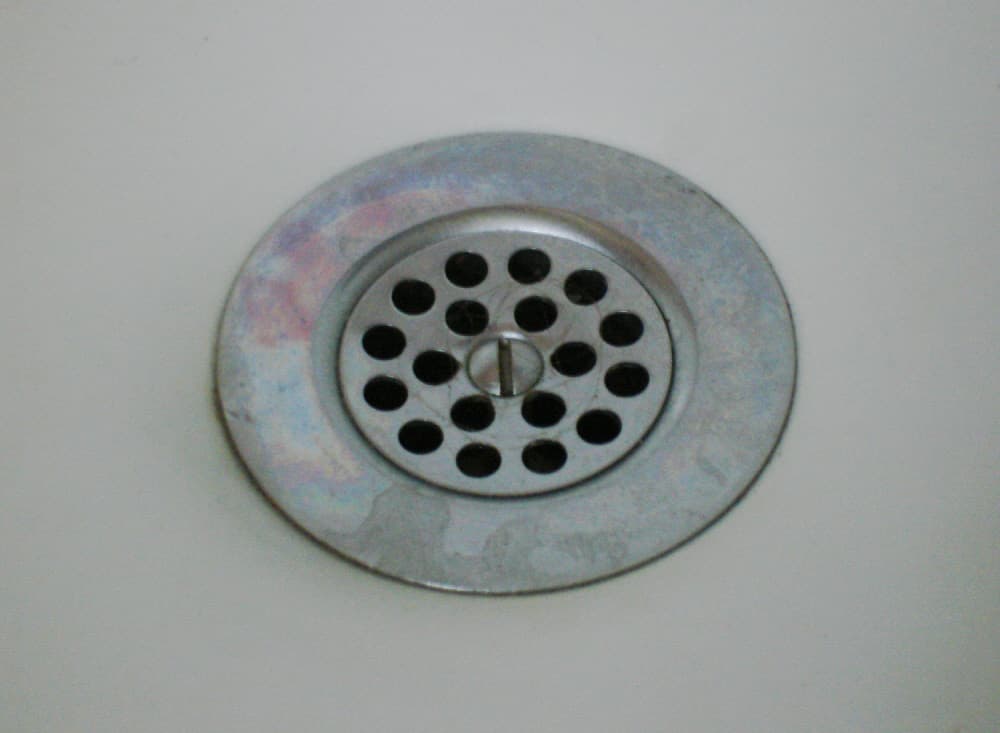
A slow bathtub is usually hair, bound up with soap, caught at the stopper or just below it. So the first fix costs nothing: take the stopper out of the drain[1] and clean off whatever is caught on it. Lift-and-turn and toe-touch stoppers usually unscrew from the drain by hand, sometimes after you pry off a small cap or loosen a set screw. A pop-up stopper worked by a lever on the overflow plate usually lifts straight out.
Pull off whatever hair is wrapped around the stopper and wipe it clean. Then, wearing gloves, fish below the drain opening with a plastic barbed drain strip or a bent wire. Pull up slowly, so the clump comes out whole instead of tearing and sliding further down.
Tubs with a lever on the overflow
Some tubs have a lever on the overflow plate that raises the drain cover.[1] Hair collects inside these too, out of sight. The coils on a lever-style tub closure collect hair, soap scum and body oils,[1] and cleaning them often clears a tub that a plunger would not.
To get at them, lift the drain cover out of the tub and clean its extension, then take out the two screws holding the overflow cover and lift the cover out with its rod and coil attached.[1] Set the screws in a container away from the tub so you do not lose them.[1] Clean the coil, run water to test the drain, plunge if needed, then put the coil and rod back in the overflow, refasten the cover with the screws and put the drain cover back in the tub.[1]
Plunge it properly
If cleaning the parts has not done it, plunge. The method that works on a tub is to cover the overflow drain with a wet washcloth or rag, take out the stopper, fill the tub to about 2 inches, set the plunger over the drain, then, holding the cloth over the overflow, push the plunger down and jerk it back up 20 to 30 times.[1]
The cloth matters more than people expect. The overflow is a second opening into the same drain, and without it covered, most of each push escapes there instead of reaching the clog. A cup plunger with a flat rim usually seals better on a tub floor than a flanged toilet plunger.
Then a hand snake
The EPA lists a plunger or a plumber's snake as the alternative to chemical drain cleaner.[2] A small hand snake, sometimes sold as a drum auger, is the next tool if plunging fails. Feed the cable into the drain opening, or through the overflow opening once its cover is off, turning the handle as you push. When it catches, keep turning and draw it back slowly; the hair usually comes up wound around the tip. Run hot water to check the result.
If the snake stops hard and will not turn past a point, do not force it. Old tub drains have tight bends, and forcing a cable can damage the pipe or the tub's finish.
Skip the chemical opener
Chemical drain openers are hazardous products, which is why the plunger and the snake come first. Their poisonous ingredients include hydrochloric acid, lye (sodium hydroxide or caustic soda), potassium hydroxide and sulfuric acid.[4] Splashed into the eyes while pouring, a drain opener can cause burns that may result in permanent vision loss, and breathing the fumes of foaming openers can cause breathing difficulty.[4] On the skin they can cause burns and holes in the skin or the tissue underneath.[4]
For homes on a septic system, the EPA says to avoid chemical drain openers for a clogged drain and to use a drain snake instead.[3] Pouring toxins down the drain can kill the living organisms in a septic system that digest and treat household waste.[3]
If you use one anyway, follow the instructions for use on the product label carefully.[2] Open windows and doors, and wear rubber gloves to prevent burning your hands.[1] Do not look into or hold your head over the drain, and do not use a plunger on it.[1] Never mix chemicals: if one opener did not work, do not pour another brand or type on top of it, because that can produce deadly fumes.[1] If the chemical is on the skin or in the eyes, flush with lots of water for at least 15 minutes.[4] For any exposure, call 911 or the national Poison Help line, 1-800-222-1222, which reaches a poison control center from anywhere in the United States.[4]
Stop and call a pro if
- The tub backs up when other fixtures are used. Fairfax County's wastewater division puts it this way: "If the backup occurs only when facilities (such as toilet, tub, washer or sinks) are used, it is possible that you need a plumber."[6]
- Sewage comes up with nothing running. In Fairfax County, sewage backing up when nothing in the house is in use can mean a problem in the county main line, and the county sends someone to check it.[6] The City of Salem's advice is that if the problem is affecting multiple buildings, call the city water department, and if it appears to be one building, a licensed plumber.[5]
- A chemical opener is sitting in the drain. Do not use a plunger on it, pour a second product on top or hold your head over the drain.[1] A splash in the eyes can cause burns that may result in permanent vision loss.[4] Tell the plumber which product you used.
- The clog keeps coming back. Fairfax County lists the signs that the sewer line from the house may need repair: frequently clogged drains, odor of sewage, and basement backups during rain.[7]
- Water shows up where it should not, such as a stain on the ceiling below the tub or a damp wall behind it. That is a leaking drain, not a clog.
Getting help in Virginia
If the tub turns into a plumber's job, read when to call a plumber for a clogged drain and why a drain keeps clogging, and once it is clear, how to keep drains from clogging. Loclis lists DPOR-licensed plumbing businesses with their licence number and class: look up plumbers in Blacksburg or another town, browse drain cleaning, or see more plumbing answers.
When you are ready, describe the clog once and licensed local plumbers quote it.
Common questions
- Why does a plunger not work on my bathtub?
- Usually because the push escapes through the overflow opening, or there is too little water to seal the plunger. Hold a wet washcloth or rag over the overflow, take out the stopper, run about 2 inches of water into the tub, and plunge 20 to 30 times before deciding it has failed.
- Should I use a chemical drain opener on a clogged tub?
- It is the last thing to try, not the first. Drain openers contain lye or strong acids that can burn skin and eyes, and a splash in the eyes can cause permanent vision loss. If you use one, follow the label, wear rubber gloves, never pour a second brand or type on top of one that did not work, and do not use a plunger on the drain afterwards. On a septic system, the EPA says to avoid them.
- What is actually clogging my tub?
- Usually hair, often bound up with soap. On a tub with a lever on the overflow, the coil behind the overflow cover collects hair, soap scum and body oils, and hair also tends to catch on the stopper or just below the drain opening. That is why cleaning those parts often clears the tub without any tools.
- The tub backs up when I flush the toilet. Is that still a tub clog?
- Probably not. Fairfax County's wastewater division says that if a backup happens only when fixtures such as a toilet, tub, washer or sinks are used, it is possible that you need a plumber. The blockage is likely further down the shared line, past where a tub plunger or hand snake reaches.
- Can I use a hand snake through the overflow opening?
- On many tubs, yes. With the overflow cover off, the opening gives a snake a straighter path into the drain than the drain opening does. Feed it gently and stop if it will not go further; forcing it can scratch the tub or damage old pipe.
Sources
- [1] Making Simple Repairs: Clogged Drains (FCS5234-05, archived fact sheet), UF/IFAS Extension, University of Florida. Checked October 26, 2026.
- [2] Household Hazardous Waste (HHW), U.S. Environmental Protection Agency. Checked October 26, 2026.
- [3] How to Care for Your Septic System, U.S. Environmental Protection Agency. Checked October 26, 2026.
- [4] Drain opener poisoning, MedlinePlus, U.S. National Library of Medicine. Checked October 26, 2026.
- [5] Water & Sewer: Backup vs. Overflow, frequently asked questions, City of Salem, Virginia. Checked October 26, 2026.
- [6] Wastewater Management: Sanitary Sewer Emergencies, Fairfax County Department of Public Works and Environmental Services. Checked October 26, 2026.
- [7] Sanitary Sewer House Lateral (published November 2024), Fairfax County Department of Code Compliance. Checked October 26, 2026.
Want a pro to handle it?
Describe the job once. Licensed local businesses send quotes, and you pay only when you book one.
Get a quote for Plumbing Repair