Why does my drain keep clogging?
A drain that clogs again and again is being fed by something: hair and soap scum in a tub or shower, grease that hardens as it cools in a kitchen line, or wipes in a toilet. When several drains clog, you smell sewage, or the basement backs up in rain, the sewer line itself may be cracked or full of roots, and a camera inspection can show it.
Free to ask. Local shops send quotes, and you pay only when you book one.
By Kasra Taheri, Founder, LoclisPublished
Researched and drafted with AI, then checked claim by claim against the sources listed below before it was published. Prices and rules change; the dates beside each source say when it was last checked.
Step by step
Read when to stop and call a pro, further down this page, before you start.
Step 1: Note which drains clog
Write down which fixtures clog, how often, and whether it happens after rain, and tell the plumber; the pattern points to the cause.
Step 2: Check the stopper and coil
Pull the tub stopper, and on a lever-style tub the overflow cover with its coil, and clean off the hair, soap scum and body oils.[1]
Step 3: Watch what goes down the kitchen sink
Keep cooking oil, grease and food scraps out of the drain; grease that cools hardens inside pipes.[2]
Step 4: Watch what goes down the toilet
Keep wipes, paper towels and sanitary products out of the toilet, including wipes labeled flushable.[3]
Step 5: Test for a shared-line backup
If water rises in one fixture when you use another, such as the tub when the washer drains, the blockage is usually further down a shared line; Fairfax County says that pattern means it is possible that you need a plumber.[6]
Step 6: Ask for a camera inspection
If clogs keep returning, ask a licensed plumber for a closed-circuit video inspection of the sewer lateral.[5]
A repeat clog has a steady source
A drain that clogs once may be bad luck. A drain that clogs every month is being fed by something, or the pipe has a defect that catches what passes through it. The fix is to find which.
The pattern is your best clue, so start by noting which drains clog, how often, and whether it happens after rain.
- One fixture only usually means the trap or the short pipe right below it, and the cause is usually what goes down that fixture.
- Several fixtures, or the lowest drain in the house, usually means the main line or the sewer lateral, the pipe that carries waste out to the public sewer.
- Water rising in one fixture when you use another usually means the blockage is in a shared line. Fairfax County says: "If the backup occurs only when facilities (such as toilet, tub, washer or sinks) are used, it is possible that you need a plumber."[6]
Bathroom drains: hair and soap
Tubs and showers clog on hair bound up with soap. The coils on a lever-style tub closure collect hair, soap scum and body oils.[1] Clearing the drain with a plunger can leave that coil packed, so the clog comes back within weeks. Cleaning the stopper and coil, not just plunging, is usually the real fix. See how to unclog a bathtub drain for how those parts come out.
The prevention is just as simple: "After washing your head, clean the hair out of the drain."[1] A hair catcher over the drain does the same job without the habit.
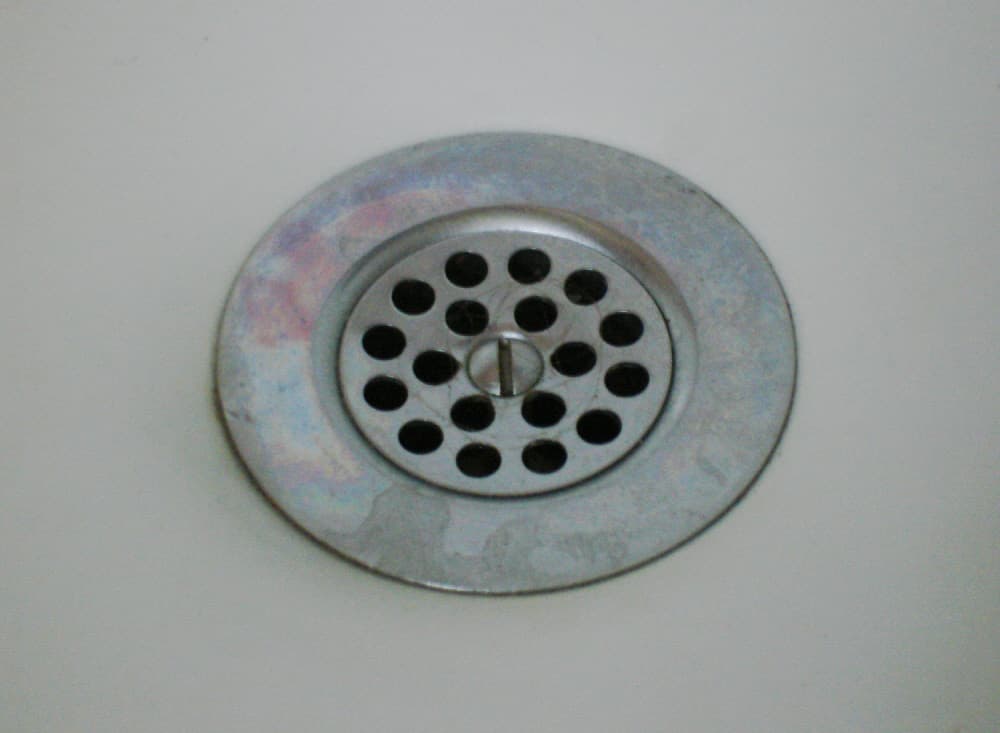
Kitchen drains: grease and food
"Grease hardens and will clog a drain."[1] What makes grease so persistent is that it goes down looking harmless. King George County explains: "When mixed in small amounts with hot water, F.O.G. flows easily. But once it cools, it hardens inside pipes."[2] The county warns that rinsing grease off cookware with hot water melts it into the sewer pipes, where it later cools, builds up and causes a clog and sewage backup,[2] and that washing cloth towels or rags used on greasy dishes sends the grease into the sewer as well.[2]
Food scraps join the grease. King George says: "Do not put food scraps down the drain."[2] The City of Salem's advice on disposals: "Use garbage disposals sparingly or not at all."[3] A grease layer can catch food scraps and coffee grounds, so the clog grows back each time.
Toilet lines: wipes and paper
A toilet that clogs over and over, or a main line that keeps backing up, often comes down to what gets flushed. Salem's list is specific: "Never flush wet wipes, diapers, sanitary napkins, tampons, paper towels, cardboard, or cloth."[3] It adds that even wipes labeled "flushable" build up in pipes and cause blockages.[3]
The sewer line itself: roots, cracks and rain
Sometimes the cause is the pipe and not what goes into it. Spotsylvania County notes: "Broken sewer laterals can allow tree roots or debris into the pipe, which may cause blockages, building backups, or overflows".[4] Roots that get in are cut back by cleaning but usually grow back, which is why a root clog returns on a schedule.
Fairfax County lists the warning signs: "Signs that laterals may require repair include: Frequently clogged drains, odor of sewage, and basement backups during rain."[5] The rain link has a reason. In Fairfax County, basement backups usually occur during heavy rain storms because the sanitary system is inundated by rain water getting in.[5] The county lists the ways in: root intrusion, cracked or broken laterals and defective lateral connections let water seep in, while roof drain connections, uncapped cleanouts and illegal foundation drain connections send it in directly.[5] Spotsylvania County adds that improper connections include roof downspouts, groundwater sump pumps, foundation drains, and drains from window wells and driveways.[4]
To see what is in the line, Fairfax's advice is: "The best way to assess the condition of a lateral is by Closed Circuit Television Video (CCTV) examination."[5] If the camera finds a break, Fairfax notes that a repair or replacement of a lateral on private property needs a plumbing permit from the county,[5] which is work for a licensed plumber.
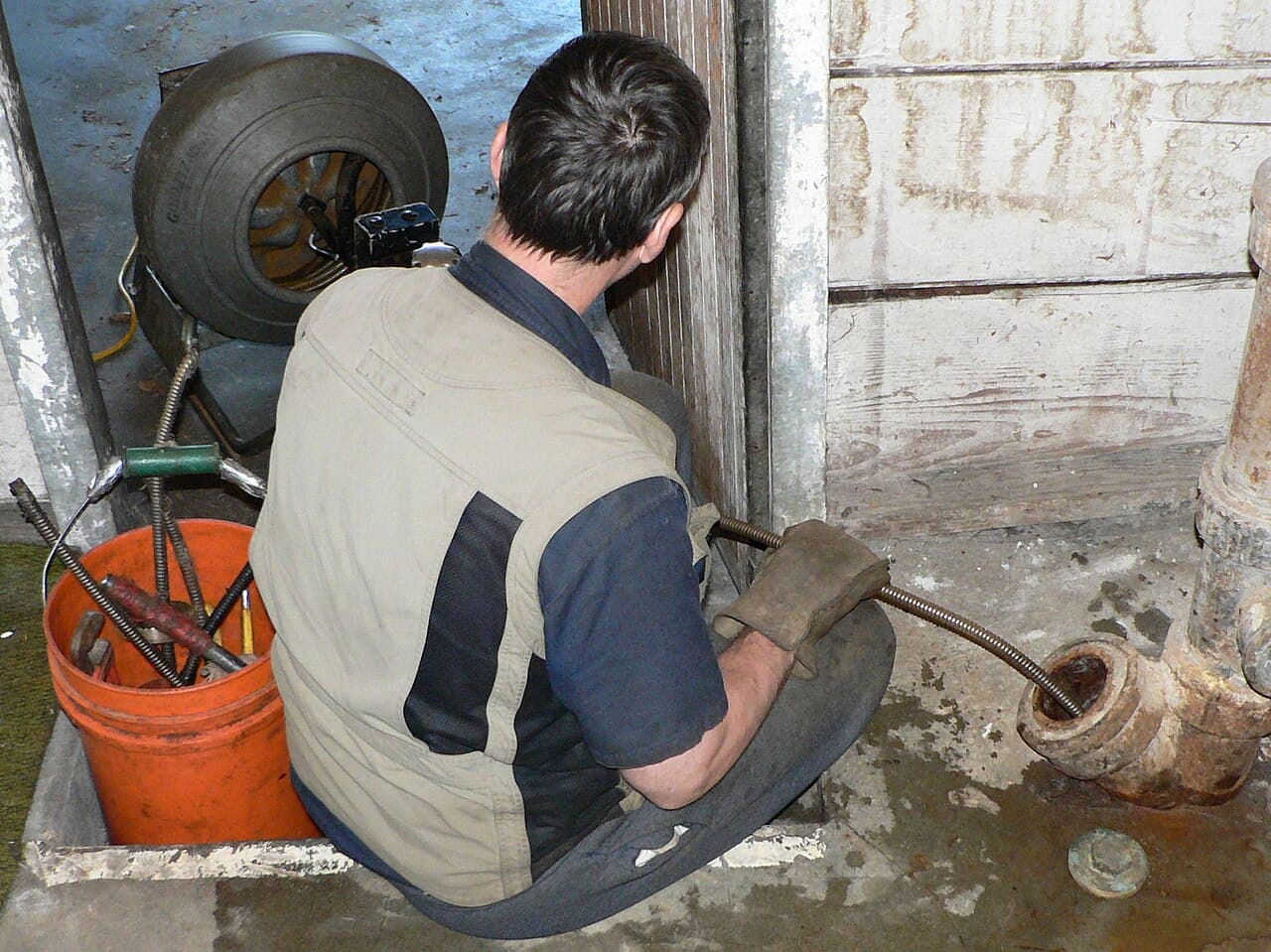
Homes on a septic system
If your house is on septic and drains all through the house are slow, the system itself may be part of the problem, so it is worth ruling out. Septic systems clog in their own way: the EPA explains that if a large amount of water enters the septic tank or the tank fills up with solids, it can push the solids into the drainfield, causing the pipes to clog.[7] Those are the drainfield's pipes in the yard, not the house drains, and clearing them is a job for a septic service professional. Its guidance is that household septic systems should be inspected at least every three years by a septic service professional, and household tanks are typically pumped every three to five years.[7] If yours is overdue, start there, with a septic service professional.
What will not fix it
Monthly drain cleaner treats the symptom. For a backup, Salem's water department says: "Chemical drain cleaners are not likely to help and can cause additional damage."[3] A drain that needs one every month has a cause worth finding.
Stop and call a pro if
- Water backs up as other fixtures are used, or several drains are slow at once.
- You see the lateral warning signs: frequent clogs, a sewage smell, or a basement that backs up in heavy rain.
- Neighbors are backing up too. Salem's advice: "Contact neighbors to help determine if the blockage is inside the building or on the sewer main."[3] If several buildings are affected, call the sewer utility first.
- Snaking has cleared the same line more than once and it keeps returning. Ask for a camera inspection instead of another cleaning.
Next steps
Read when to call a plumber for a clogged drain, what drain cleaning costs in Virginia and how to keep drains from clogging. Loclis lists DPOR-licensed plumbers with their licence number and class: look up plumbers in Blacksburg or browse drain cleaning.
To get a camera inspection or a line cleaned, describe the problem and licensed local plumbers quote it.
Common questions
- Why do I have to snake the same drain every few weeks?
- Either something keeps going down it, such as hair, grease or wipes, or the pipe itself has a defect that catches waste, such as roots, a crack or a low spot. A snake punches a hole through the blockage but often leaves material on the pipe walls. If habits are not the cause, a camera inspection is the way to find out.
- Why do my drains back up when it rains?
- Rain water is getting into the sewer. Fairfax County explains that basement backups usually happen during heavy storms because the sanitary system is flooded with rain water, through cracked laterals and roots or through connections such as roof drains, uncapped cleanouts and foundation drains.
- Can tree roots really block a sewer line?
- Yes. Spotsylvania County says broken sewer laterals can let tree roots or debris into the pipe, which may cause blockages and building backups. Cleaning cuts the roots back, but they usually return until the pipe is repaired.
- Every drain in my house is slow. Is that one clog?
- Often it is one clog in the main line or lateral that all the fixtures share. If neighbors are having trouble too, it may be the public sewer, so ask them and call your utility. On a septic system, the tank or drainfield may be the cause, so have a septic service professional check it.
- Does pouring drain cleaner every month fix it?
- No. In a backup, Salem's water department says chemical drain cleaners are not likely to help and can cause additional damage. If a drain needs a cleaner regularly, something is feeding the clog or the pipe has a defect, and that cause is what needs fixing.
Sources
- [1] Making Simple Repairs: Clogged Drains (FCS5234-05, archived fact sheet), UF/IFAS Extension, University of Florida. Checked October 26, 2026.
- [2] Fats, Oils & Grease, King George County, Virginia. Checked October 26, 2026.
- [3] Water & Sewer: Backup vs. Overflow, frequently asked questions, City of Salem, Virginia. Checked October 26, 2026.
- [4] Utilities: Sanitary Sewer Lateral, frequently asked questions, Spotsylvania County, Virginia. Checked October 26, 2026.
- [5] Sanitary Sewer House Lateral (published November 2024), Fairfax County Department of Code Compliance. Checked October 26, 2026.
- [6] Wastewater Management: Sanitary Sewer Emergencies, Fairfax County Department of Public Works and Environmental Services. Checked October 26, 2026.
- [7] How to Care for Your Septic System, U.S. Environmental Protection Agency. Checked October 26, 2026.
Want a pro to handle it?
Describe the job once. Licensed local businesses send quotes, and you pay only when you book one.
Get a quote for Plumbing Repair