How do I check my house for leaks once a year?
Once a year (March's Fix a Leak Week is a good time), look at your winter water use, do a two-hour meter test with nothing running, and dye-test every toilet. Then walk the house: under every sink, behind the washer, under the dishwasher and ice maker, beneath the water heater, along walls and ceilings, and outside at spigots and sprinklers. Fix small drips right away.
Free to ask. Local shops send quotes, and you pay only when you book one.
By Kasra Taheri, Founder, LoclisPublished
Researched and drafted with AI, then checked claim by claim against the sources listed below before it was published. Prices and rules change; the dates beside each source say when it was last checked.
Step by step
Read when to stop and call a pro, further down this page, before you start.
Step 1: Pick a date
Put the check on the calendar for the same time each year; the EPA's Fix a Leak Week each March is an easy one to remember.[1]
Step 2: Read your winter bill
Look at January or February water use; a family of four using more than 12,000 gallons a month in winter likely has a serious leak.[2]
Step 3: Run a two-hour meter test
Read the meter when no water will be used for two hours, then read it again; any change means you probably have a leak.[2]
Step 4: Dye-test every toilet
Put a few drops of food coloring in each tank, wait 10 minutes without flushing, and flush afterwards; color in the bowl means a leak.[2]
Step 5: Look at the flappers
Lift each tank lid and check the rubber flapper, which should be replaced at least every five years to keep a good seal.[1]
Step 6: Check faucets and showers
Listen for drips, turn each tap on to check for water going the wrong way, and look for stray spray at showerheads.[2]
Step 7: Check under every sink
Use a flashlight to look for pooling water under the pipes and rust around joints and edges in every sink cabinet.[2]
Step 8: Check appliance lines
Look for leaks or wear on the dishwasher, ice maker and sink supply lines, and note when the washing machine hoses were last replaced, which Prince William Water suggests every three to five years.[4]
Step 10: Scan walls, ceilings and floors
Look for damp spots, stains or mold on walls, ceilings and floors, especially below bathrooms and around the laundry.[2]
Step 11: Go outside
Check each spigot and hose connection, replace a worn hose washer, and check an irrigation system each spring before using it.[1]
Step 12: Write down what you found
Note the meter readings, the date and anything you fixed or need a plumber for, so next year's check has something to compare against.
A yearly leak check
Most leaks start small and quiet: a toilet that runs between flushes, a supply line that weeps under a cabinet, a sprinkler head cracked by frost. A yearly check catches them while they are still cheap. It needs a flashlight, some food coloring and a quiet stretch for the meter test, and works best in the same month each year so you can compare.
March is an easy month to remember. The EPA's Fix a Leak Week runs every March; in 2026 it was March 16 through 22.[1] Some Virginia utilities join in: Charlottesville, the Albemarle County Service Authority and the Rivanna Water & Sewer Authority hosted Fix a Leak events in March 2026,[7] and your own utility may have dye tablets or a home checklist.
Start with the numbers
Your winter bill. Winter bills are a clean baseline because there is little watering. A family of four whose winter water use exceeds 12,000 gallons (or 16 CCF) a month likely has a serious leak problem.[2] Also look for a month that jumps for no reason.
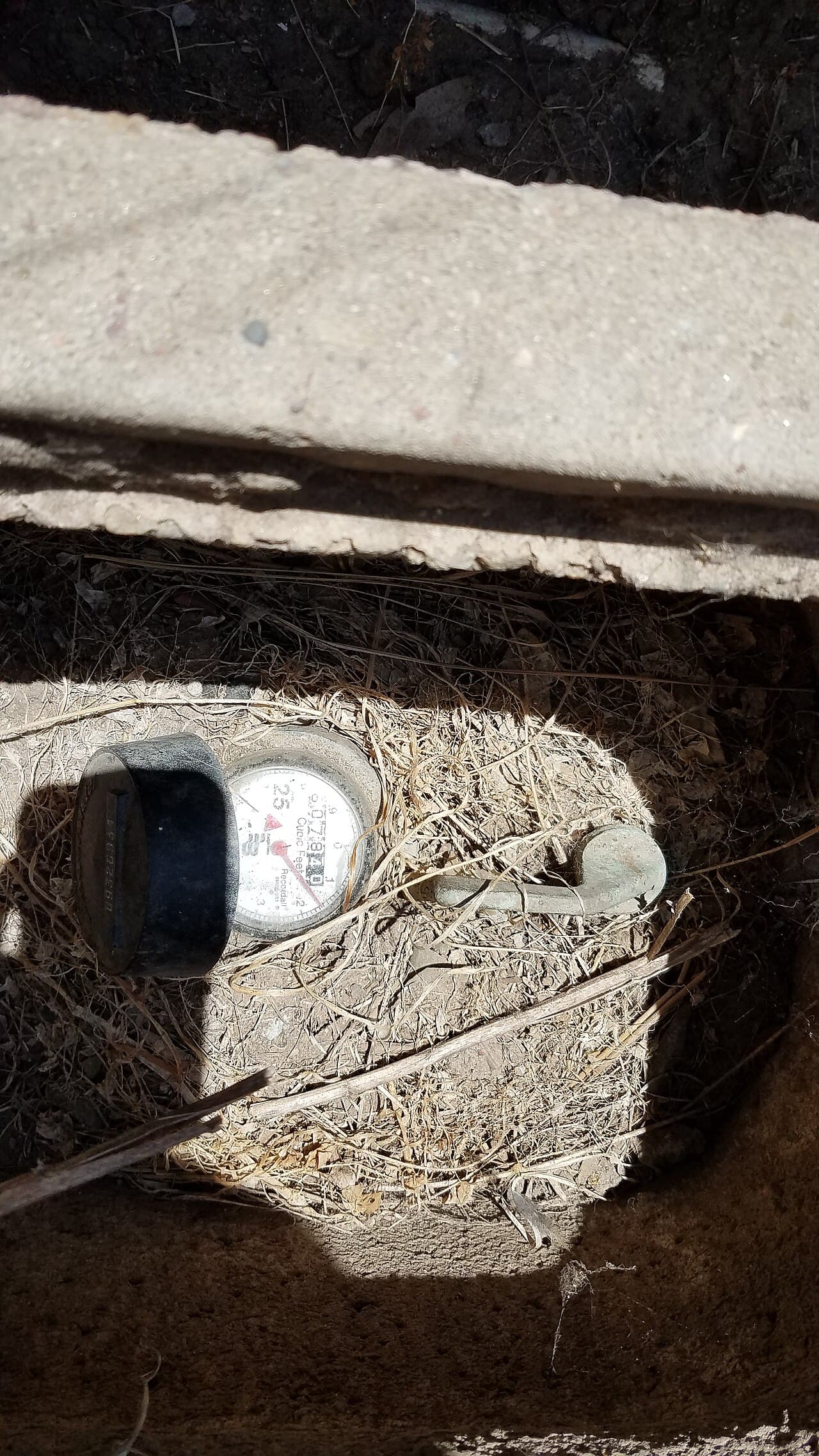
The meter test. On most homes the meter is usually near the curb in front of the house, but can be inside, in a basement for example, in cold climates.[2] Pick a two-hour window when nobody will use water, then take a reading when no water is being used, and if the meter does not read exactly the same after two hours, you probably have a leak.[2] Newer meters have a leak detector, a red triangle on the dial that turns when water passes through and shows small flows more clearly than the sweep hand.[5] Some utilities let you read usage online instead: Lynchburg residents may be able to track daily water use on their phones as new meters are installed across the city.[6] Montgomery County's Public Service Authority, for one, says the meter box and meter are PSA property and should be entered by PSA personnel only,[8] so check your utility's rule before you open the box.
Then the toilets
Toilets leak silently, so test each one. Put a few drops of food coloring into the tank and let it sit for 10 minutes. If color shows up in the bowl, the toilet leaks.[2] The City of Lynchburg suggests waiting 15 to 30 minutes instead.[6] Flush afterwards so the dye does not stain.
While the lid is off, look at the flapper. Rubber wears out: the flapper should be checked periodically and replaced at least every five years to ensure a good seal and avoid leaks.[1] Bring the old flapper, or a picture of it, to the hardware store so the new one fits.[1] The fill valve matters too: a stuck fill valve in a toilet can waste 4,300 gallons of water per day.[3]
Walk the house, room by room
Bathrooms. In the bathroom, listen for drips at faucets and turn on the tap to check for water going the wrong direction, look for drips or stray spray at showerheads, and at the tub, divert the water to the shower and see whether a lot still comes from the tub spout, which can mean the diverter needs replacing.[2]
Under every sink. Empty the cabinet if you need to, and with a flashlight check for pooling water under pipes and rust around joints and edges.[2] Feel the cabinet floor for soft or swollen spots.
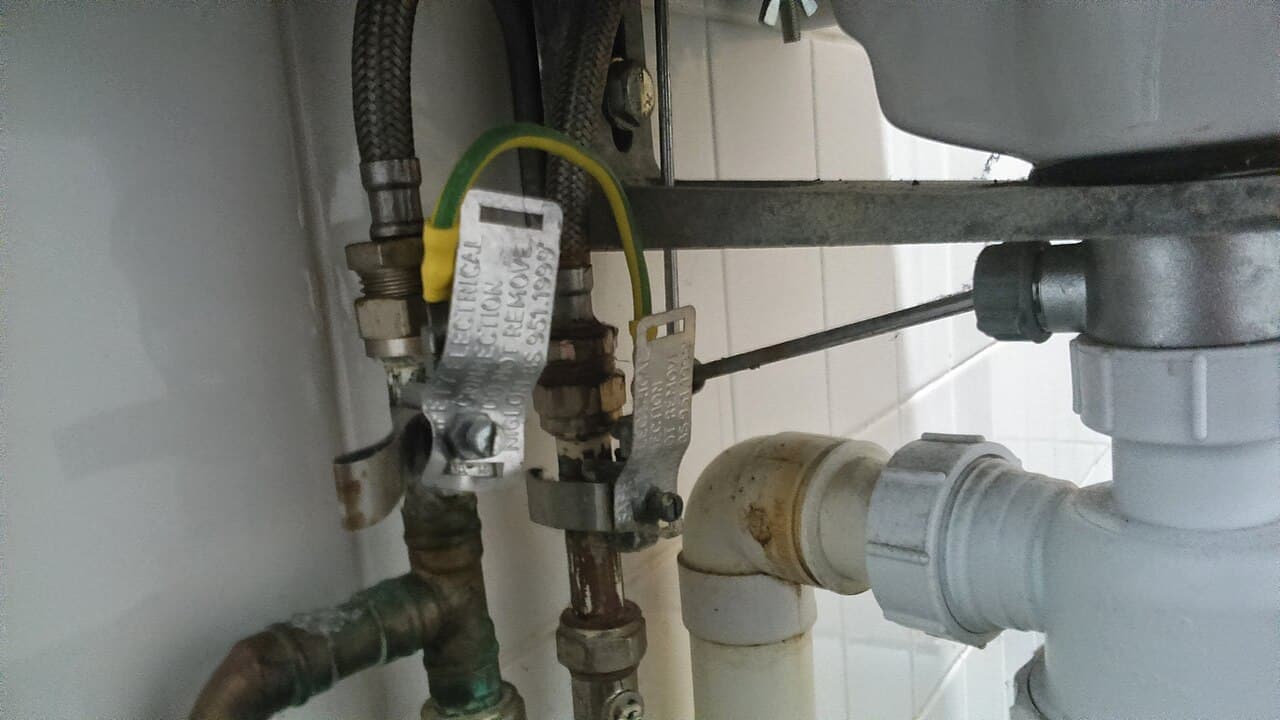
Kitchen and laundry appliances. Pooling water under dishwashers and refrigerators with ice makers can mean a supply line leak, and so can pooling water by the clothes washer.[2] Prince William Water recommends two habits here. Replace washing machine hoses every three to five years to prevent them from leaking.[4] Check sink, ice machine, and dishwasher water lines for leaks and other damage or deterioration.[4]
The water heater. Check beneath the tank for pooling water, rust, or other signs of leakage.[2] Prince William Water advises making sure the heater has a pan and drain under it.[4] If either is missing, ask a plumber about adding them rather than fitting one yourself. Prince William Water also notes that most water heaters last eight to 12 years, so one that age should be checked to make sure it is working properly.[4] Looking is the homeowner's part; any work on the heater itself is a plumber's.
Walls, ceilings and floors. Look at the ceiling under each bathroom, the wall behind the washer, and the floor around toilets. Moisture or mold on walls, ceilings or floors could mean a pipe is leaking behind the scenes and needs a professional's attention.[2] Sweating pipes are a moisture problem too. If you see condensation or moisture collecting on windows, walls or pipes, act quickly to dry the wet surface and reduce the source of the moisture.[9]
Outside
Check each spigot while a hose runs. If a hose leaks at the spigot while it runs, replace the hose washer and make a tight connection.[1] For an in-ground irrigation system, check it each spring before use to make sure it was not damaged by frost or freezing; a leak 1/32 of an inch across, about the thickness of a dime, can waste about 6,300 gallons a month.[1]
Prince William Water's advice before winter: remove garden hoses and turn off the water to exterior taps. If there is no exterior cut-off valve, insulate the tap.[4]
Between checks
A yearly check misses a leak that starts in May. Leak detection devices fill the gap. The main types are moisture sensors installed at fixtures in leak-prone areas that sense when water is present, in-line flow monitors that send an alert when water flows continuously, and whole-house devices on the main water line that can identify leaks anywhere downstream.[3] Some require professional installation and others are DIY.[3] Prince William Water also suggests an automatic water shut-off device for emergencies.[4]
Stop and call a pro if
- The meter moves with everything off and you cannot find the cause indoors.
- You find stains, soft drywall or mold on a wall, ceiling or floor.
- The water heater is leaking, rusty at the base or sitting in water, or you want the pan and drain Prince William Water recommends added under it.
- A pipe itself is leaking, or a shut-off valve leaks or will not close.
- You want a shut-off device installed on the main water line.
Next steps
If the check turns something up, find the hidden leak, fix a leaking pipe under the sink, or read when you need a plumber for a water leak. Before winter, see how to keep pipes from freezing. Loclis lists DPOR-licensed plumbers with their licence number and class: find plumbers in Blacksburg or read more plumbing answers.
If it is more than a quick fix, describe the leak once and licensed local plumbers quote it.
Common questions
- When is the best time of year to check for leaks?
- Any fixed date works, as long as you keep it. March is a natural choice: the EPA runs Fix a Leak Week then, winter bills give a clean baseline before lawn watering starts, and it is the time to check an irrigation system for frost damage before you turn it on.
- How much water use is too much?
- The EPA's rule of thumb is that a family of four using more than 12,000 gallons a month in winter likely has a serious leak. Also look for spikes, a month much higher than the one before it, with no obvious reason such as guests or a filled pool.
- How often should washing machine hoses be replaced?
- Prince William Water recommends replacing them every three to five years to prevent leaks. Write the date on the hose or in your notes when you change them, so the yearly check tells you when they are due.
- Are leak detectors worth it?
- They watch the house between yearly checks. The EPA describes moisture sensors for leak-prone spots, in-line flow monitors that alert when water runs continuously, and whole-house devices on the main line. Some can be installed by a homeowner and others need a professional; a whole-house device on the main line usually means hiring a plumber.
- What if the yearly check finds something I cannot fix?
- Shut off the fixture's valve if you can, and call a licensed plumber for anything in the pipes themselves, inside walls or ceilings, at the water heater, or in the line to the street. Small fixes like a flapper or a hose washer are usually homeowner jobs.
Sources
- [1] Fix a Leak Week, U.S. Environmental Protection Agency, WaterSense. Checked October 26, 2026.
- [2] Detect and Chase Down Leaks at Home checklist, U.S. Environmental Protection Agency, WaterSense. Checked October 26, 2026.
- [3] Know Your Flow: Leak Detection and Flow Monitoring Devices (February 2026), U.S. Environmental Protection Agency, WaterSense. Checked October 26, 2026.
- [4] Preventing leaks and floods at home, Prince William Water. Checked October 26, 2026.
- [5] High Usage and Leaks, Chesterfield County, Virginia, Department of Utilities. Checked October 26, 2026.
- [6] Water Conservation, City of Lynchburg, Virginia. Checked October 26, 2026.
- [7] Fix a Leak, City of Charlottesville, Virginia. Checked October 26, 2026.
- [8] Water/Sewer: PSA frequently asked questions, Montgomery County, Virginia, Public Service Authority. Checked October 26, 2026.
- [9] A Brief Guide to Mold, Moisture and Your Home, U.S. Environmental Protection Agency. Checked October 26, 2026.
Want a pro to handle it?
Describe the job once. Licensed local businesses send quotes, and you pay only when you book one.
Get a quote for Plumbing Repair