How do I keep a garage door seal from cracking in winter?
Before freezing weather, rinse the seal, clean it with a vinyl cleaner, and coat it with a silicone-based lubricant. Avoid petroleum-based oils, which attack rubber and reduce its flexibility. Keep water from pooling under the door, use sand rather than salt on ice, and replace a seal that is already cracked, dried out or droopy.
Free to ask. Local shops send quotes, and you pay only when you book one.
By Kasra Taheri, Founder, LoclisPublished
Researched and drafted with AI, then checked claim by claim against the sources listed below before it was published. Prices and rules change; the dates beside each source say when it was last checked.
Step by step
Read when to stop and call a pro, further down this page, before you start.
Step 1: Look the seal over
Check the bottom seal and the side seals for cracking, drying out, discolouring or drooping.[1] Replace any that are already damaged rather than trying to save them.
Step 2: Rinse off dust and dirt
Rinse the seal with water to remove dust and dirt, which turns abrasive over time.[1]
Step 3: Clean it with vinyl cleaner
Wipe the weather stripping with an all-purpose vinyl cleanser.[1] Let it dry.
Step 4: Apply silicone lubricant
Coat the seal with a silicone-based weather stripping lubricant.[1] Wipe off any excess so it does not drip onto the floor.
Step 5: Keep petroleum products away
Do not use petroleum-based oils on the rubber.[1]
Step 6: Stop water pooling
Sweep standing water and debris away from the threshold, and check that gutters and downspouts do not drain toward the door.[2]
Step 7: Use sand on ice
If water freezes under the door, spread sand instead of salt.[1]
Step 8: Repeat every three months
Clean and lubricate the weather stripping on a regular schedule.[1]
Clean it, then protect it
A garage door seal does not crack because it is old alone: dirt, sun and the wrong products wear it out, and cold weather exposes the damage. The best defence is to keep the rubber clean and flexible before the first hard freeze.
Dust is the first enemy. Rinse the seal, then clean it with an all-purpose vinyl cleanser, because the stripping is a vinyl product. Garaga's guidance is that weather stripping should be cleaned every three months, and the lubricant goes on after: lubricate the weather stripping after with a silicone-based lubricant.[1] In winter that lubricant makes water bead and helps prevent ice from forming on the door.[1]
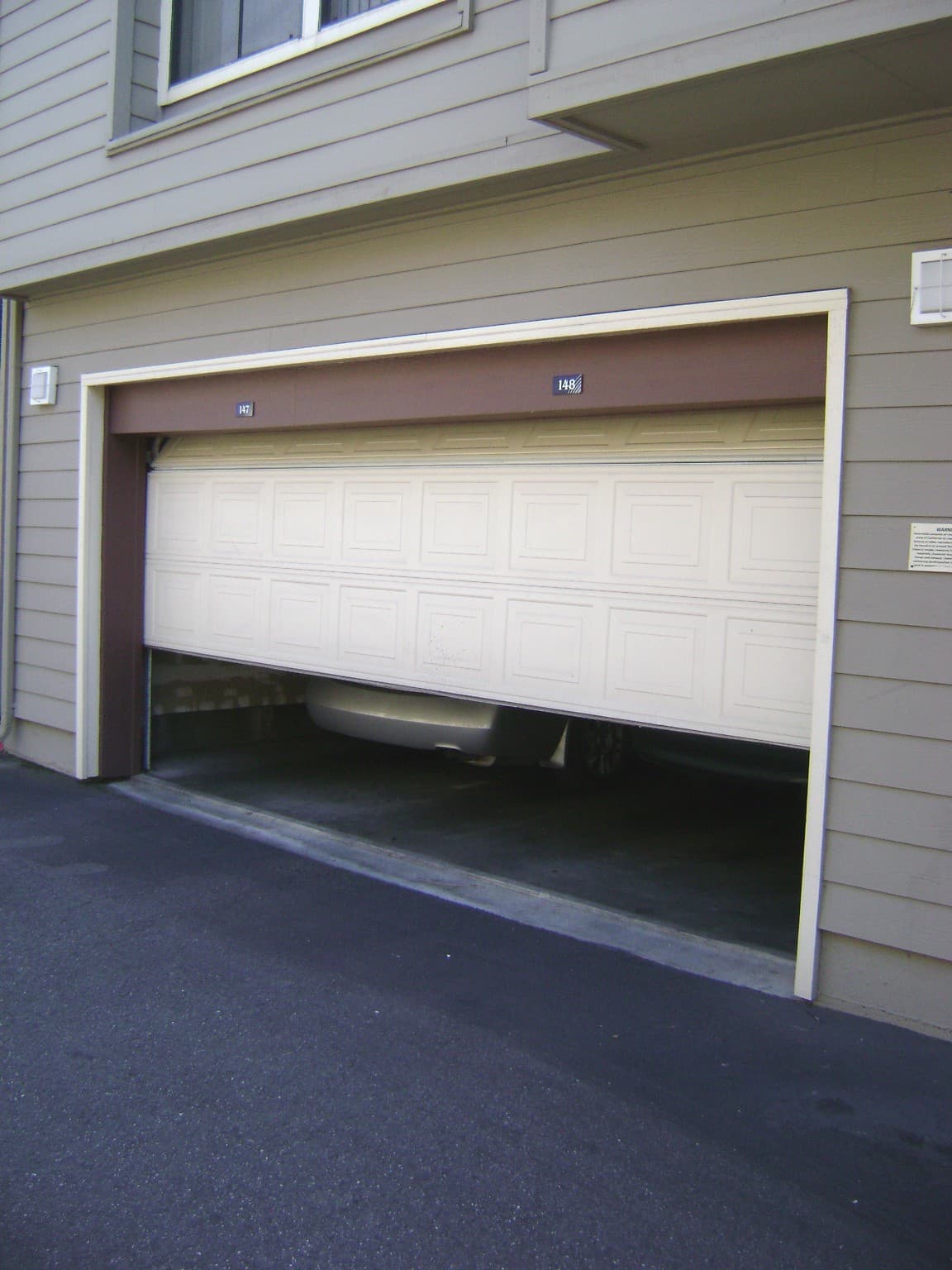
Pick the right product
Not every spray is good for rubber. Petroleum-based oils should always be avoided,[1] since petroleum attacks the polymers in the rubber and reduces its flexibility. That includes general-purpose oils kept in the garage. Wipe off excess silicone so it does not drip on the floor.
The seal is not the place for the lubricant meant for rollers and hinges either. LiftMaster's yearly checklist covers those: oil the rollers, bearings and hinges, and do not grease the tracks.[5]
Handle ice carefully
Most winter damage happens when water freezes under the door and bonds the seal to the slab. Garaga advises you spread sand under the door before the water freezes, which prevents sticking without damaging the rubber and concrete like salt would.[1] The catch: sand is temporary, because once it is wet the ice can stick again.[1] The lasting fix is to keep water away from the threshold, so sweep it clear and check drainage. The EPA says to make sure the ground slopes away from the building foundation, so that water does not enter or collect around the foundation.[2]
Never force a frozen door. A door that is stuck to the slab can tear the seal or strain the opener. Free the bottom edge gently, and if the door will not move, stop and call someone.
Watch the sun-facing seals
Cold is not the only cause. The sun's UV rays attack the polymers in the rubber, which, over time, cause the rubber to crack, and the side seals take the most sun.[1] Check them when you check the bottom seal, and replace the ones that have gone hard.
Replace what is already cracked
If the seal looks cracked, dried out, discoloured or droopy,[1] lubricant will not repair it. Replace it, and match the retainer, because garage doors are manufactured with varying types of weather seal retainer designs.[3] Our walkthrough on how to replace the bottom seal shows the job, and water getting under the door explains what to check if leaks continue. For the price, see what a bottom seal replacement costs in Virginia.
Stop and call a pro if
- The door is unbalanced or binds. LiftMaster's checklist is direct: manually operate the door, and if it is unbalanced or binding, call a trained door systems technician.[5]
- The seal is stuck behind a bottom corner bracket or spring hardware. Clopay's manual says the brackets at the bottom corners of your garage door are under great tension, and warns against loosening bracket fasteners except as directed in the door's instructions.[4]
- The retainer is bent or rusted through. That is a door section repair, not a seal job.
- The door freezes shut every winter. The cause is probably the slab or drainage, which needs more than a lubricant.
Getting help in Virginia
Browse more garage door answers, or see garage door pros on Loclis.
When you would rather hand it over, describe the job and local garage door pros will quote it.
Common questions
- What should I put on a garage door seal in winter?
- A silicone-based weather stripping lubricant, applied after cleaning. Garaga says it makes water bead and helps keep ice from forming on the door through the winter. Avoid petroleum-based oils, which attack the rubber.
- Is it safe to use salt on ice at the door?
- Sand is the safer choice. Garaga says sand prevents the door sticking without damaging the rubber and concrete like salt would, though it only works until it gets wet, so keep water from pooling there.
- Does sunlight crack the seal too?
- Yes. Garaga says the sun's UV rays attack the polymers in the rubber and over time cause it to crack, most on the side seals, which get the most sun. Winter cold is not the only cause.
- How often should I clean the seal?
- Garaga recommends every three months, with a vinyl cleaner followed by silicone lubricant. At minimum, do it before the first hard freeze.
- What if the seal is already cracked?
- Lubricant will not repair it. Replace the seal, matching the retainer type on your door, and use a lubricant afterwards to keep the new one supple.
Sources
- [1] What are the signs your garage door needs new weatherstripping?, Garaga. Checked October 28, 2026.
- [2] A Brief Guide to Mold, Moisture and Your Home, U.S. Environmental Protection Agency. Checked October 28, 2026.
- [3] Installation instructions for bulb-shaped and U-shaped astragal (garage door weather seal), Clopay Building Products. Checked October 28, 2026.
- [4] Avante Garage Door Installation Instructions, Clopay Building Products. Checked October 28, 2026.
- [5] LiftMaster Residential Maintenance, LiftMaster. Checked October 28, 2026.
Want a pro to handle it?
Describe the job once. Licensed local businesses send quotes, and you pay only when you book one.
Get a quote for Garage Doors