Why is water getting under my garage door?
Usually the bottom seal is worn, cracked or drooping, or the slab at the threshold is uneven or slopes toward the door, so water collects there and finds a gap. Rain pooling against the door from poor drainage outside makes it worse. Check the seal and where the water comes from first, then fix the seal or add a threshold seal.
Free to ask. Local shops send quotes, and you pay only when you book one.
By Kasra Taheri, Founder, LoclisPublished
Researched and drafted with AI, then checked claim by claim against the sources listed below before it was published. Prices and rules change; the dates beside each source say when it was last checked.
Step by step
Read when to stop and call a pro, further down this page, before you start.
Step 1: Watch where the water comes from
During or just after rain, look at where the water runs from: along the whole door, one corner, or off the driveway toward the threshold. Note whether it pools outside the door first.
Step 2: Inspect the bottom seal
Look along the full width for a seal that is cracked, dried out, discoloured or droopy.[1] Flex it by hand and check the ends.
Step 3: Look for gaps
With the door closed, check from inside for daylight along the bottom edge. Even a small gap can let hot or cold air seep into your garage, and it lets water in too.[3]
Step 4: Clear the water path
Clean out gutters and make sure downspouts do not discharge toward the garage.[4] Sweep leaves and grit off the threshold.
Step 5: Check the slab
Pour a little water along the threshold and see whether it runs toward the door or pools in a low spot. A seal cannot close a gap that changes with the floor.
Step 6: Replace or upgrade the seal
Replace a worn seal with the same type of retainer fit, or on an uneven floor ask the maker about a special seal.[2] Our guide to replacing a bottom seal has the steps.
Step 7: Consider a threshold seal
A rubber threshold seal installed under the door creates an artificial slope that keeps water from entering.[1]
Step 8: Test it
Run a garden hose along the outside of the door for a few minutes and look for leaks from inside.
Start with the seal and the threshold
Water under a garage door almost always has one of three causes: a worn bottom seal, a threshold where the slab dips or slopes toward the door, or runoff that is directed at the door by the way the yard and roof drain. Often it is a combination, so look at all three before you buy anything.
Begin with the seal. You can tell it needs replacing if it is cracked, dried out, discoloured or droopy.[1] A seal in that state no longer follows the slab, and the gaps let water through. Garaga also notes that the bottom weather seal could also break if there is water accumulation under the garage door,[1] which is why a small leak tends to get worse over time.
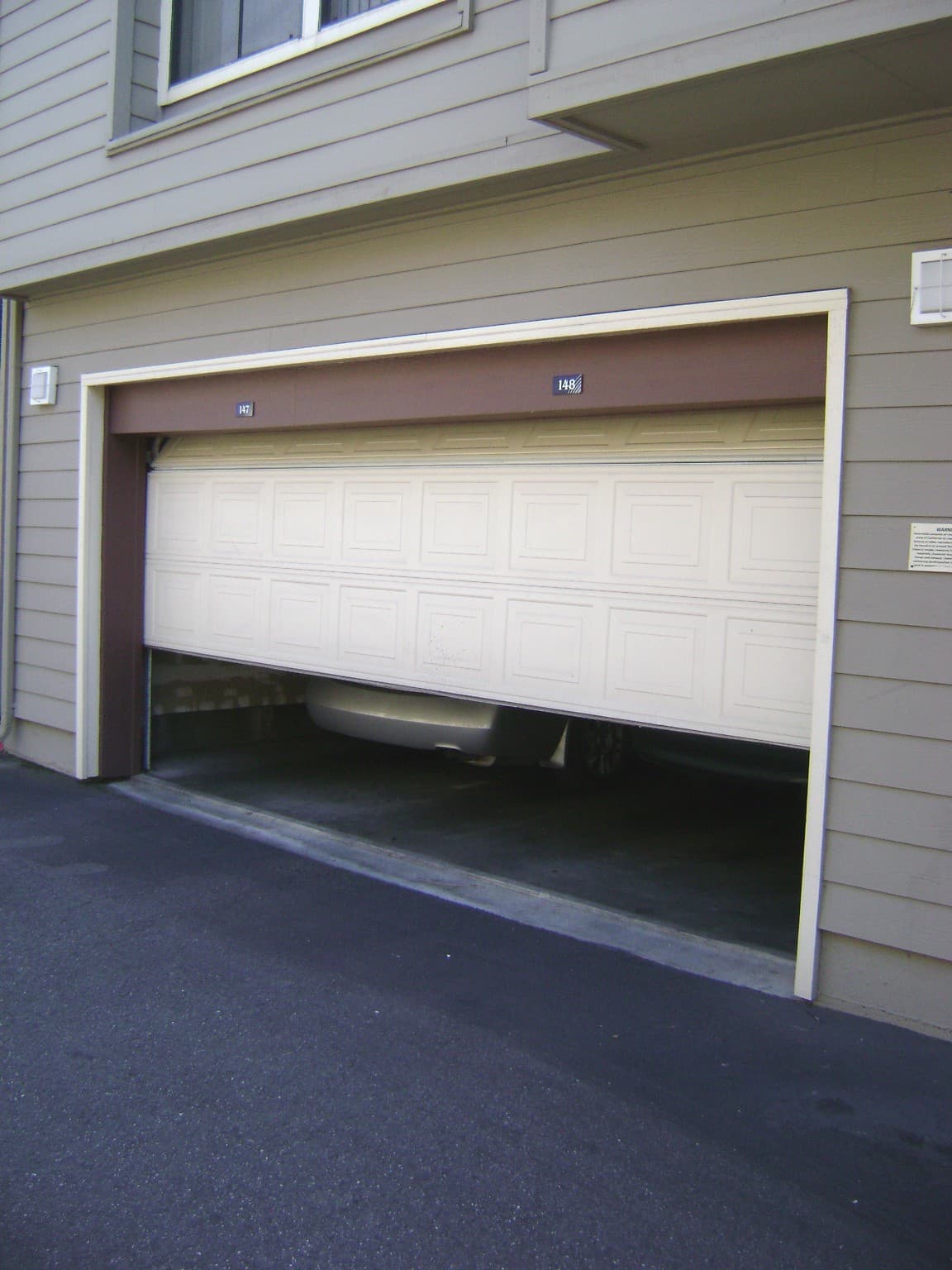
See where the water is coming from
The pattern tells you the cause. Water along the entire width points to the seal or a slab that tilts toward the door. Water at one corner points to a torn seal end or a low spot. Water that arrives only in heavy rain, in a sheet from the driveway, is a drainage problem that a new seal will only hold back for a while.
Check the outside too. The EPA's moisture guidance says to clean and repair roof gutters regularly,[4] and to make sure the ground slopes away from the building foundation, so that water does not enter or collect around the foundation.[4] The same logic applies at the garage apron: a downspout that empties toward the door will put water exactly where the seal is weakest.
Fix the seal
Light a flashlight along the bottom edge from inside with the door closed. Even a small gap can let hot or cold air seep into your garage,[3] and where air passes, rain can too.
If the seal is the problem, replace it. The key point is to match the retainer: garage doors are manufactured with varying types of weather seal retainer designs,[2] so take a piece of the old seal to the store or ask the door maker. Our guide on how to replace the bottom seal on a garage door covers the job, and what it costs in Virginia covers hiring it out.
When the floor is the problem
A new seal cannot make up for a floor that is out of level. Clopay notes that for non level floor surfaces, special weather seal may be available.[2] Another option is a rubber threshold seal under the door, which creates an artificial slope that will prevent water from entering your garage.[1] It also makes a good second line of defence for a door that sees heavy runoff.
If the slab is cracked or has sunk toward the door, or the driveway pitches toward the garage, the lasting fix is regrading or drainage work outside, not a seal.
Stop and call a pro if
- The door is heavy, unbalanced or will not stay up. Do not work on it. Springs and cables are a job for a trained door technician; Clopay's manual warns that attempting to remove a torsion spring assembly without proper training or tools may result in an uncontrolled release of spring forces which can cause serious or fatal injury.[5]
- The seal is hidden behind a bottom corner bracket. The brackets at the bottom corners of your garage door are under great tension.[5] Leave them alone.
- The retainer is bent or rusted through. That is a bottom section repair, not a seal swap.
- Water keeps coming in after the seal and threshold are sound. The cause is drainage or the slab, and a landscaper, paving contractor or foundation specialist should look at it.
Getting help in Virginia
Browse more garage door answers, see garage door pros on Loclis, or read how to keep a garage door seal from cracking in winter.
When you would rather hand it over, describe the job and local garage door pros will quote it.
Common questions
- Can a worn bottom seal alone let water in?
- Yes. Garaga lists a seal that is cracked, dried out, discoloured or droopy as one that needs replacing, and any such seal leaves gaps along the slab. Check the full width, since water finds the one low or torn spot.
- Will a new seal fix water that pools at the door?
- Only partly. If the slab dips or the driveway slopes toward the door, water will stand against the seal. A threshold seal that creates an artificial slope, or correcting the drainage outside, deals with the cause.
- Does the seal type matter?
- A great deal. Clopay notes that garage doors come with varying types of weather seal retainer designs, so a replacement must match the retainer on your door, and special seals exist for floors that are not level.
- Could gutters be the real cause?
- They can contribute. The EPA advises cleaning and repairing roof gutters regularly and making sure the ground slopes away from the building, so water that is dumped by a downspout onto the driveway may end up at your door.
Sources
- [1] What are the signs your garage door needs new weatherstripping?, Garaga. Checked October 28, 2026.
- [2] Installation instructions for bulb-shaped and U-shaped astragal (garage door weather seal), Clopay Building Products. Checked October 28, 2026.
- [3] Improve Energy Efficiency With Insulated Garage Doors, Clopay. Checked October 28, 2026.
- [4] A Brief Guide to Mold, Moisture and Your Home, U.S. Environmental Protection Agency. Checked October 28, 2026.
- [5] Avante Garage Door Installation Instructions, Clopay Building Products. Checked October 28, 2026.
Want a pro to handle it?
Describe the job once. Licensed local businesses send quotes, and you pay only when you book one.
Get a quote for Garage Doors