How do I keep landscape lights working through the winter?
Reset the timer for shorter days, keep the outdoor outlet under a weatherproof in-use cover and test its GFCI monthly, clear leaves off well lights and lenses, and mark fixtures before snow so shovels and plows miss them. Have a pro check transformer terminals, buried splices and gaskets once a year, and call an electrician if the outlet keeps tripping.
Free to ask. Local shops send quotes, and you pay only when you book one.
By Kasra Taheri, Founder, LoclisPublished
Researched and drafted with AI, then checked claim by claim against the sources listed below before it was published. Prices and rules change; the dates beside each source say when it was last checked.
This is a job for a licensed pro in Virginia
This page explains what the work involves, the permits, what a licensed pro does and what drives the cost. It does not give step-by-step instructions, because this work needs a licence, a permit or both, and doing it wrong can injure someone. Before you hire, check the licence on Virginia's DPOR record.
Most landscape lighting problems in a Virginia winter come from a short list: a timer still set for summer, a tripped GFCI outlet after rain or snow, fixtures buried under leaves or pushed out of line by frost, and connections that loosen or corrode over the year. Most of the prevention is simple upkeep you can do from the yard. The wiring checks belong to a pro, ideally once a year before the cold sets in.
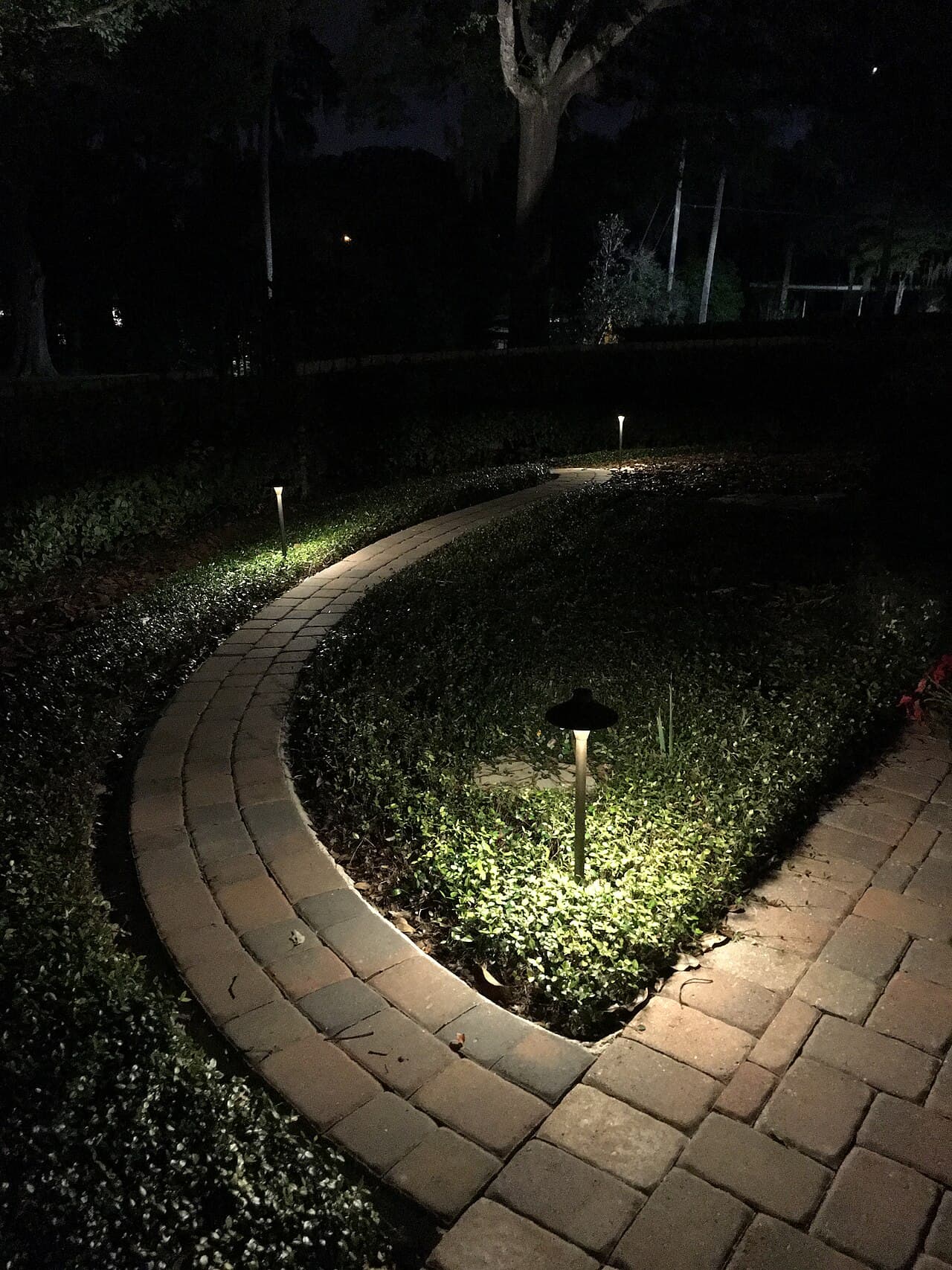
Match the schedule to shorter days
Days shorten quickly in late fall, and a timer set in June will switch the lights on long after dark, or off too early. VOLT recommends adjusting the transformer's timer to match the new daylight hours,[1] and notes that a photocell set to dusk-to-dawn follows sunset and sunrise on its own.[1] Check again after the clocks change. On a smart controller, the app usually handles this, but confirm the schedule.
Controls are a frequent cause of "dead" systems. Kichler's troubleshooting guide tells installers to check whether a schedule needs to be reset and whether a backup battery needs replacing[5] in digital and smart timers, and whether photocells need cleaning. A photocell half-covered by leaves, snow or a growing shrub can behave oddly.
Keep the outdoor outlet dry
The transformer plugs into an outdoor outlet, and winter weather is hard on it. VOLT's installation requirements call for the transformer to be plugged into a GFCI circuit and never run on an extension cord.[2] The U.S. Consumer Product Safety Commission warns that Moisture can get into outside outlets and cause a malfunction,[6] and that most covers don't keep water out when a cord is plugged in, because water drips between the plug and the outlet.[6] Its checklist recommends a "weatherproof while in use" cover for outlets that must be used in wet weather,[6] which describes a landscape transformer that is plugged in all year.
CPSC also says to test every GFCI once a month[6] with its test and reset buttons. If the outlet's cover is cracked or missing, the GFCI will not reset, or it trips every time it rains, call an electrician. Replacing an outlet is line-voltage work, and Virginia defines a tradesman as anyone who does electrical work for the general public for compensation,[7] so the person you pay needs a licence.
Clear and straighten the fixtures
Leaves are the first winter problem. Kichler notes that Well lights are particularly prone to having debris such as leaves settling on the lens or in the well,[4] and that a soft paintbrush can lift debris off a lens.[4] Clearing fallen leaves from in-ground fixtures after the last trees drop keeps them shining.
Frost moves things. According to Kichler, path and spread lights may heave over time with the freezing and thawing of the ground;[4] when one leans, adjust them from the base, not the shade, which bends easily.[4] Spotlights knocked off their aim by a mower or by plant growth over the season are worth re-aiming before the long nights.
Snow, shovels and plows
Fixtures along walks and driveways are the ones most often broken in winter. Before the first snow, note or flag where they sit so whoever shovels or plows can avoid them, and keep plowed snow from being piled onto path lights. A shovel blade or plow edge can snap a stem or crush a well light lens.
The yearly check by a pro
The part of winter prep that involves the wiring is a job for your installer or a licensed electrician, and Kichler encourages installers to offer a maintenance visit once or twice a year.[4] A good visit includes inspecting and tightening the terminal block screws, with no copper visible on the wires,[4] because wires loosen as they heat, expand, cool and contract.[4] The technician also looks at gaskets, since dry gaskets stop keeping water and dust out and can shorten a fixture's life,[4] and at cable, because wire chewed by pests should be replaced.[4]
Buried splices matter most. VOLT advises inspecting connections every year, especially at splice points, since corrosion is the most common cause of fixture failure over time.[3] A technician with a meter can also catch a run that has started to dim before it fails.
If the lights go out in winter
If the whole system is out, Kichler's first check is the 120-volt power source, meaning whether the outlet has power;[5] a tripped GFCI or breaker is the usual reason it does not. If only some lights are out, a technician will ask about recent construction, edging, new plants or mulching,[5] since a cut cable is a common cause. Our answer on dim lights at the end of a run covers uneven brightness.
Plan any spring additions with digging in mind. Under Virginia law, no person may begin any excavation without first submitting a locate request to the notification center,[8] which applies to new cable trenches too.
When to call a licensed pro
Call a licensed electrician when the outdoor outlet will not reset, trips in every rain, has a cracked or missing cover, or is not GFCI-protected. Call your landscape lighting installer or an electrician when part of the system stays dark after the timer and outlet check out, when fixtures flicker or dim, when cable has been cut or chewed, or for the yearly check of terminals, splices and gaskets. Check the licence of anyone you hire.
For a wider home checklist, see the electrical safety checks to do every year, and for how the system is put together, how low-voltage landscape lighting works. You can also see outdoor lighting repair on Loclis, find electricians in Blacksburg, or read more electrical answers.
Describe your landscape lighting problem and licensed local pros quote the repair.
Common questions
- Should I turn my landscape lights off for the winter?
- There is usually no need. Low-voltage LED systems are built to stay outdoors year-round, and long winter nights are when lighting along walks and steps is most useful. Adjust the timer for the shorter days and keep fixtures clear of snow and leaves.
- Why does my outdoor GFCI trip when it rains or snows?
- Water getting into the outlet or the transformer's plug is a common reason. CPSC notes that moisture can get into outside outlets and cause a malfunction, and that most covers don't keep water out with a cord plugged in. An outlet that keeps tripping needs a licensed electrician, not repeated resets.
- Do I need to bring fixtures inside before it freezes?
- Not for a permanent low-voltage system. Fixtures stay in place; the winter work is keeping lenses clear, straightening fixtures that frost heave pushes out of line, and protecting them from shovels and plows.
- Can I add more lights in spring?
- Yes, but adding fixtures adds load and may mean new trenches. Have the installer check the transformer's capacity and the run's voltage first, and remember that Virginia law requires a utility locate request before any excavation.
- What should a maintenance visit include?
- A check of the outdoor outlet and GFCI, the timer and photocell, the transformer's terminal screws, the voltage at fixtures on each run, buried and above-ground splices, lenses, gaskets and aim, plus replacing failed lamps and any damaged cable.
Sources
- [1] Easy Steps to Prepare Your Landscape Lighting Fixtures for Winter, VOLT Lighting. Checked October 27, 2026.
- [2] How to Install a Low Voltage Transformer, VOLT Lighting. Checked October 27, 2026.
- [3] How to Install Landscape Lighting: Step-by-Step Guide, VOLT Lighting. Checked October 27, 2026.
- [4] Landscape Maintenance, Kichler Lighting. Checked October 27, 2026.
- [5] Troubleshooting a Landscape Lighting System, Kichler Lighting. Checked October 27, 2026.
- [6] Home Electrical Safety Checklist (Publication 513), U.S. Consumer Product Safety Commission. Checked October 27, 2026.
- [7] Code of Virginia § 54.1-1128, Definitions (tradesmen), Code of Virginia, Legislative Information System. Checked October 27, 2026.
- [8] Code of Virginia § 56-265.17, Notification required prior to excavation or demolition, Code of Virginia, Legislative Information System. Checked October 27, 2026.
Want a pro to handle it?
Describe the job once. Licensed local businesses send quotes, and you pay only when you book one.
Get a quote for Electrical Repair