How do I keep a septic system in good shape between inspections?
Most of the work is habit: spread out water use and fix leaks, flush only toilet paper and human waste, keep grease and harsh chemicals out of drains, and keep vehicles, trees and roof water off the drainfield. Keep your records, know where the tank is, and leave opening the tank to a licensed professional on the schedule VDH recommends.
Free to ask. Local shops send quotes, and you pay only when you book one.
By Kasra Taheri, Founder, LoclisPublished
Researched and drafted with AI, then checked claim by claim against the sources listed below before it was published. Prices and rules change; the dates beside each source say when it was last checked.
This is a job for a licensed pro in Virginia
This page explains what the work involves, the permits, what a licensed pro does and what drives the cost. It does not give step-by-step instructions, because this work needs a licence, a permit or both, and doing it wrong can injure someone. Before you hire, check the licence on Virginia's DPOR record.
The short answer
A septic system stays healthy mostly through what happens in the house and on the lawn between visits. Use water steadily rather than in floods, keep the wrong things out of the drains, protect the drainfield, and keep the records and schedule that let a professional catch problems early. According to VDH, a septic system lasts 30 to 40 years on average, and longer with good maintenance.[1]
Know your schedule
VDH recommends having an average household system inspected by a septic service professional at least every three years.[1] VDH also advises pumping a household tank every three to five years.[1] Virginia Cooperative Extension goes a step further and suggests a tank inspection every two years as good practice,[4] especially if you do not know when the tank was last pumped.
Two groups have firm rules on top of that. Under Virginia rules, an alternative system must be inspected by a licensed operator at least once a year.[1] In Chesapeake Bay Preservation Areas, the state's Bay Act regulations call for a pump-out at least once every five years.[6] A local government may offer two alternatives: a plastic filter in the tank's outflow pipe, if the local health department deems it appropriate and under any conditions it sets, or a report every five years from a licensed or certified operator or onsite soil evaluator stating that the system has been inspected, works properly and the tank does not need pumping.[6]
Since July 1, 2023, the Virginia Department of Health has managed and enforced pump-out compliance in Accomack, Essex, Gloucester, King and Queen, King William, Lancaster, Mathews, Middlesex, Northampton, Northumberland, Richmond and Westmoreland Counties and the incorporated towns in them.[6] If you live in one of those counties, ask the local health department what it needs from you. Elsewhere, ask your local government whether your lot is in a preservation area and which options it allows.
Go easy on water
Every gallon that goes down a drain goes through the tank and into the field, and a flood of water gives solids less time to settle. Even a small trickle, left for a long time, can send a lot of water into the tank.[2] One leaking or running toilet can add up to 200 gallons of water a day.[3] Fix drips and running toilets promptly.
Spread heavy use out. Doing all household laundry in one day can flood the drainfield, so spread washing machine use through the week.[3] Water-efficient toilets, showerheads and washers help too. One caution: some alternative systems need a minimum amount of flow to work properly,[1] so if you have one, ask your operator before cutting water use sharply or leaving the house empty for long stretches.
Keep the wrong things out
The EPA's rule of thumb is "not to flush anything besides human waste and toilet paper".[3] VDH sorts the problems into two groups:
- Cloggers. Diapers, baby wipes, cat litter, cigarettes, coffee grounds, grease and feminine hygiene products clog the system.[1]
- Killers. Household chemicals, gasoline, oil, pesticides, antifreeze, paint and large amounts of antibacterial soaps and detergents can kill the microbes that treat the wastewater.[1]
The kitchen matters as much as the bathroom. Both VDH and the EPA advise using a garbage disposal as little as possible, or not at all.[1][3] Pour cooking grease into a container for the trash rather than down the sink.
Skip the additives. Virginia Cooperative Extension puts it plainly: "We have no data or information to confirm that additives improve the performance of a septic system."[2] Worse, some enzyme products can break down the scum layer and carry grease into the drainfield, where it coats the soil.[2]
Protect the drainfield
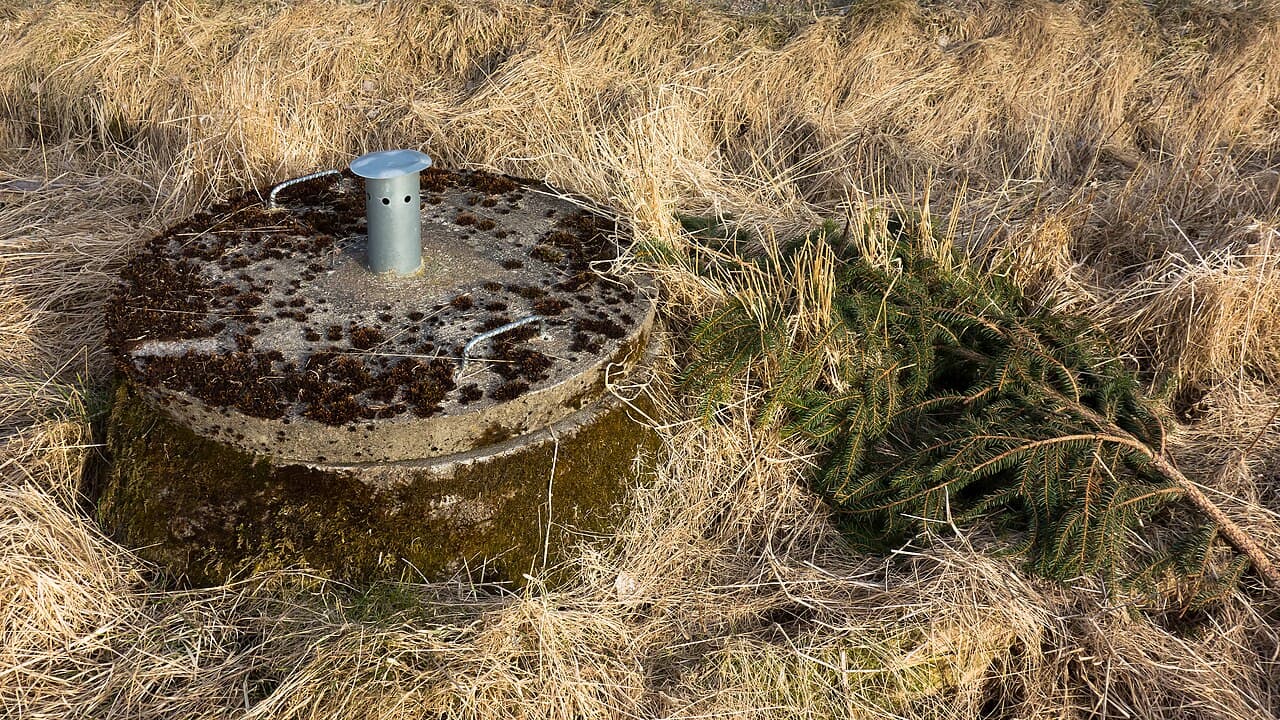
The field is the part that is hardest and most expensive to replace. VDH's advice is to keep cars and anything heavier than a lawnmower off the tank and the drainfield.[1] That rules out parking, driveways, sheds and pools over it.
Plant with care. Grass is the usual cover. Virginia Cooperative Extension, citing VDH, advises that you keep water-loving vegetation at least 10 feet from the absorption area.[5] Keep extra water away as well. Roof drains and sump pumps should not empty close to the drainfield or uphill of it.[2] Walk the field now and then, look for wet spots and odors, and watch for depressions forming along the trenches as the soil settles.[2]
Keep records and know where things are
Once you know where the tank and field are, Virginia Cooperative Extension suggests you draw a simple map of the system to keep for later,[4] showing the house, tank, ports, distribution box, drainfield and nearby features like the well. Your local health department's permit file often has a drawing to start from.
VDH recommends that you keep records of the maintenance done on your system.[1] Ask for the scum and sludge measurements at every visit so the next inspector can see the trend. VDH also suggests that an annual inspection is a good time to consider fitting access ports at or above ground level with a tamper-proof, child-resistant lid[1] and a removable inner grate or similar secondary feature, which your septic professional can do.
Stay out of the tank
Do not open the tank to check it yourself. Toxic gases collect in a septic tank and can quickly overcome a person, with a risk of death.[4] Measuring layers and checking baffles belong to the professional's visit.
When to call a licensed pro
Book an inspection on the schedule above, and call sooner if drains turn slow or gurgle, sewage backs up, you see standing water or smell sewage over the field, or the grass over the lines turns unusually green. For alternative systems, VDH's instruction is direct: if the system has an alarm and it goes off, contact your service provider right away.[1]
Servicing the system is licensed work in Virginia. Virginia requires an onsite sewage system operator licence from DPOR, in the right class, for anyone who operates or maintains a conventional or alternative septic system,[8] and the state's licensing rules count pumping the tank as maintenance.[7] VDH recommends checking a provider's licence on the DPOR website[9] before you hire.
For what a visit covers and costs, see what a septic inspection includes and septic inspection costs. If something already looks wrong, start with what makes a septic system fail an inspection. You can also browse more inspection answers or septic inspection services.
Due for a check? Describe the job once and licensed businesses near you can quote.
Common questions
- Do septic tank additives help?
- Virginia Cooperative Extension says it has no data showing that additives improve septic performance, and a working system already has the bacteria it needs. Some enzyme and chemical products can do harm by pushing grease into the drainfield or corroding concrete tanks. Additives never replace inspection and pumping.
- How often should my septic system be inspected in Virginia?
- VDH recommends an inspection at least every three years for an average household system, and Virginia Cooperative Extension suggests every two years as good practice. Alternative systems must be visited at least once a year by a licensed operator, or more often if the operation permit says so.
- Can I use a garbage disposal with a septic system?
- VDH and the EPA both advise eliminating or limiting it. Food waste adds solids that fill the tank faster and can reach the drainfield, so a household that uses one will usually need pumping more often.
- What can I plant over a drainfield?
- Grass is the usual choice. Keep trees, shrubs and other water-loving plants away, since roots can damage the lines, and VDH recommends keeping water-loving vegetation at least 10 feet from the absorption area. Vegetable gardens do not belong on a drainfield.
- Should I check the sludge level myself?
- Leave it to a licensed septic professional. Septic tanks build up toxic and flammable gases that can overcome a person quickly. A septic professional measures the scum and sludge layers as part of a routine visit, so ask for the numbers in writing.
Sources
- [1] Onsite Sewage System Owner Responsibilities, Virginia Department of Health. Checked October 26, 2026.
- [2] Septic System Best Management Practices (SPES-380), Virginia Cooperative Extension, Virginia Tech. Checked October 26, 2026.
- [3] How to Care for Your Septic System, U.S. Environmental Protection Agency. Checked October 26, 2026.
- [4] What to Expect When Getting Your Septic Tank Pumped (SPES-574), Virginia Cooperative Extension, Virginia Tech. Checked October 26, 2026.
- [5] What Happens If My Septic System Fails? (SPES-379), Virginia Cooperative Extension, Virginia Tech. Checked October 26, 2026.
- [6] 9VAC25-830-130, Chesapeake Bay Preservation Area Designation and Management Regulations: General performance criteria, Virginia Administrative Code, Legislative Information System. Checked October 26, 2026.
- [7] 18VAC160-40-10, Onsite Sewage System Professionals Licensing Regulations: Definitions, Virginia Administrative Code, Legislative Information System. Checked October 26, 2026.
- [8] 18VAC160-40-170, Onsite Sewage System Professionals Licensing Regulations: License required (operators), Virginia Administrative Code, Legislative Information System. Checked October 26, 2026.
- [9] Septic System and Private Well Service Providers, Virginia Department of Health. Checked October 26, 2026.
Want a pro to handle it?
Describe the job once. Licensed local businesses send quotes, and you pay only when you book one.
Get a quote from a local pro