What does a septic inspection include?
A septic inspection usually starts with the system's records from the local health department, then a look inside the tank at the scum and sludge layers, the baffles and any leaks, a check of the distribution box and drainfield, and sometimes a water loading test. Alternative systems add a review of the licensed operator's log and alarms.
Free to ask. Local shops send quotes, and you pay only when you book one.
By Kasra Taheri, Founder, LoclisPublished
Researched and drafted with AI, then checked claim by claim against the sources listed below before it was published. Prices and rules change; the dates beside each source say when it was last checked.
This is a job for a licensed pro in Virginia
This page explains what the work involves, the permits, what a licensed pro does and what drives the cost. It does not give step-by-step instructions, because this work needs a licence, a permit or both, and doing it wrong can injure someone. Before you hire, check the licence on Virginia's DPOR record.
The short version
A good septic inspection has two halves: the paperwork and the ground. The inspector reads the system's records to learn what was permitted, then checks the tank, the distribution box and the drainfield to see whether the system matches those records and is still working. The type and age of the system set how deep the inspection goes.
If you are buying a house, schedule it early. Our guide on whether Virginia requires a septic inspection to sell covers the timing and who asks for one.
The records come first
In Virginia, septic system records are available at your local health department on request.[1] A careful inspector, or you, pulls them before the visit, because they show what the system is supposed to be.
- Construction permit. The permit describes the system's parts, such as the tank size, any pump chamber and the drainfield size, and gives its design capacity in gallons per day.[1] Residential systems are designed on a peak flow of 150 gallons per day per bedroom, and using a system above that flow may lead to early failure.[1] A house with more bedrooms than the permit allows is a red flag.
- As-built drawing. The as-built drawing, where one exists, shows where the parts were actually installed,[1] which saves time finding the tank.
- Operation permit. It notes the permitted capacity and any ongoing requirements, such as annual operator visits for an alternative system.[1]
- Enforcement records. Check for any outstanding enforcement action, such as a Notice of Violation requiring the owner to repair a failing system.[1]
At the tank
The tank has to be found and uncovered before anything else happens. Some septic services charge extra to locate and uncover the tank.[6] Records and a marked lid keep that part short.
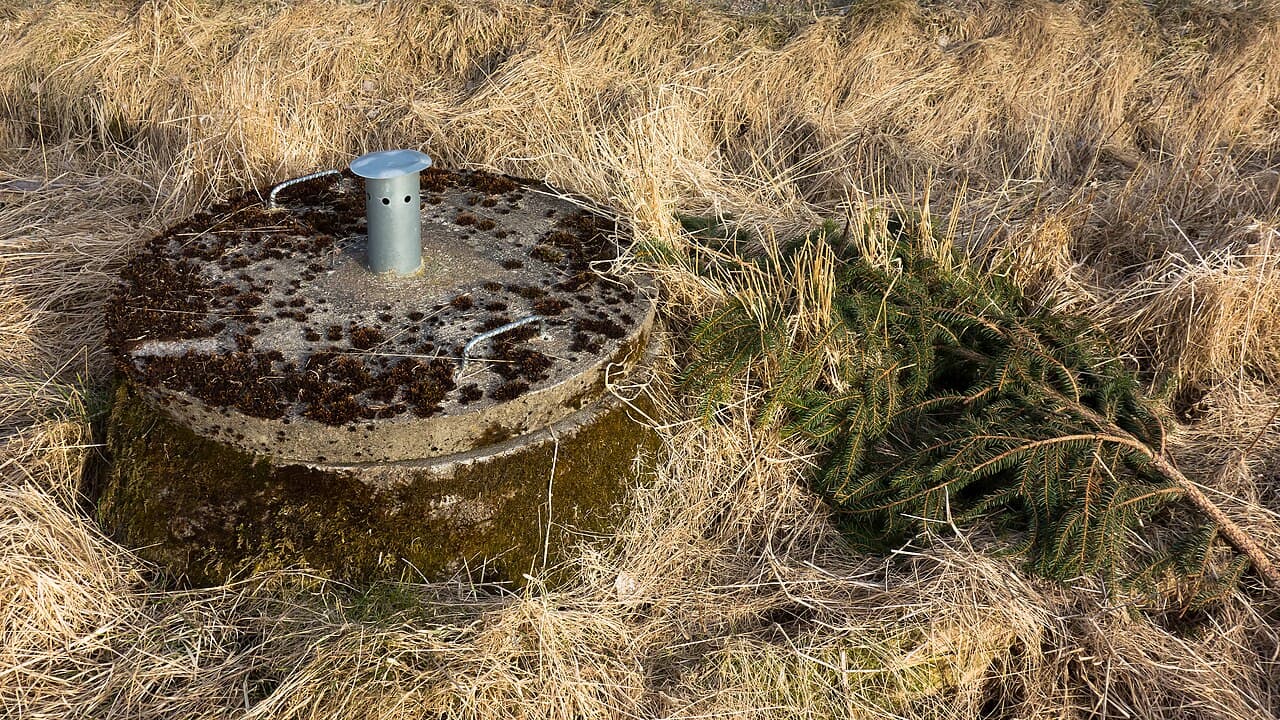
With the lid off, the professional checks the tank for leaks and looks at the scum and sludge layers.[3][2] Those layers decide whether it needs pumping. By the EPA's rule of thumb, the tank "should be pumped if the bottom of the scum layer is within six inches of the bottom of the outlet, if the top of the sludge layer is within 12 inches of the outlet, or if more than 25 percent of the liquid depth is sludge and scum".[3] Ask for the measurements in the report so you can compare them next time.
The inspector also looks at the inlet and outlet baffles, the fittings that keep scum and sludge in the tank. Baffles can degrade, which is more common in concrete tanks, and a worn outlet baffle lets solids reach the drainfield and clog the soil.[5] Cracks, roots and signs that sewage has stood above the outlet are noted as well.
The distribution box and drainfield
For a conventional system, the Virginia Department of Health says an inspection may include a look at the septic tank and the distribution box, because those parts give a good view of whether the system is working.[1] A level, intact distribution box usually sends effluent evenly to the trenches, while a tilted or broken one can overload part of the field.
Your service provider may also run a loading test, "placing a set volume of water into the system to look for evidence of a blockage of failure".[1] VDH calls this test especially important when the house is empty.[1] An empty house can make a weak system look fine, because nothing is flowing into it.
The drainfield itself is mostly checked from the surface. Warning signs include standing water over the drainlines, a distinct smell of effluent, unusually lush green grass over the lines, or algae-choked water in nearby ditches.[4] The inspector also notes trees close to the lines, driveways or sheds built over the field, and gutters or sump pumps draining onto it.
What changes for an alternative system
An alternative system adds pumps, floats, alarms or a treatment unit, so the inspection covers more. If the system is pump fed or dosed, it has high and low water alarms, and these should be located and checked.[4]
Under Virginia rules, alternative onsite sewage systems are required to be inspected at least annually by a licensed operator.[2] The owner must keep a copy of the operator's log and the Operation and Maintenance Manual on the property and make a reasonable effort to pass both to the next owner.[2] A buyer's inspector should read that log: missed visits or repeated alarms tell you more than a single visit can.
What a useful report looks like
A report you can act on lists the system type and the permit it was checked against, the tank's scum and sludge measurements, the condition of the baffles and distribution box, the result of any loading test, what was seen over the drainfield, and anything that could not be checked, with the reason. "Functioning at the time of inspection" means little without those details. If something needs work, the report should say whether it is routine maintenance or a repair; our guide to what makes a septic system fail an inspection explains the difference.
Stay out of the tank
Never climb into or lean into an open septic tank. Toxic gases collect in a septic tank and can quickly overcome a person, with a risk of death.[6] Keep children and pets away while the lid is off.
When to call a licensed pro
Virginia requires an onsite sewage system operator licence from DPOR, in the right class, for anyone who operates or maintains a conventional or alternative septic system.[7] For the inspection itself, VDH recommends having the system inspected by a licensed professional.[1] Before you book, VDH recommends checking a provider's licence on the DPOR website.[8]
Call one before you buy a house with a septic system, when you do not know when the tank was last checked, when you see wet spots or smell sewage over the field, and on the schedule your operation permit sets for an alternative system. For costs, see what a septic inspection costs in Virginia. You can browse more inspection answers or septic inspection services.
Ready to book one? Describe the job once and licensed businesses near you can quote.
Common questions
- Is a septic inspection the same as having the tank pumped?
- No. Pumping removes the solids. An inspection checks the tank, the baffles, the distribution box and the drainfield and records what was found. Some inspections include pumping and some do not, so ask before you book.
- How long does a septic inspection take?
- It depends mostly on how quickly the tank can be found and uncovered, the tank size, and whether a loading test or pumping is part of the job. Having the permit and as-built drawing from the local health department ready usually shortens the visit.
- Does a regular home inspection cover the septic system?
- Often only at a glance, if at all. Ask the home inspector in writing what they check. For the tank, distribution box and drainfield, hire a septic professional, and check their licence on the DPOR website.
- What is different about inspecting an alternative septic system?
- Alternative systems have pumps, floats, alarms or treatment units, and Virginia requires a licensed operator to visit at least once a year. An inspection should include the operator's log, the Operation and Maintenance Manual and a check that the alarms work.
- Can I open the tank and look myself?
- It is not a good idea. Septic tanks build up toxic gases that can overcome a person quickly, and open flames near the opening are a fire risk. Leave opening and checking the tank to a licensed septic professional.
Sources
- [1] What You Should Know When Buying a House with an Onsite System, Virginia Department of Health. Checked October 26, 2026.
- [2] Onsite Sewage System Owner Responsibilities, Virginia Department of Health. Checked October 26, 2026.
- [3] How to Care for Your Septic System, U.S. Environmental Protection Agency. Checked October 26, 2026.
- [4] Septic Systems: What to Ask When Buying a House (SPES-575NP), Virginia Cooperative Extension, Virginia Tech. Checked October 26, 2026.
- [5] What Happens If My Septic System Fails? (SPES-379), Virginia Cooperative Extension, Virginia Tech. Checked October 26, 2026.
- [6] What to Expect When Getting Your Septic Tank Pumped (SPES-574), Virginia Cooperative Extension, Virginia Tech. Checked October 26, 2026.
- [7] 18VAC160-40-170, Onsite Sewage System Professionals Licensing Regulations: License required (operators), Virginia Administrative Code, Legislative Information System. Checked October 26, 2026.
- [8] Septic System and Private Well Service Providers, Virginia Department of Health. Checked October 26, 2026.
Want a pro to handle it?
Describe the job once. Licensed local businesses send quotes, and you pay only when you book one.
Get a quote from a local pro