When should I take a small engine in for carburetor service?
Take it in when fresh fuel, a clean air filter and a carburetor cleaner used as labelled do not fix hard starting, surging, stalling or poor idle, or when fuel is leaking. Adjusting the mixture screws or taking the carburetor apart are also shop jobs. A seasonal check before storage costs less than a repair after.
Free to ask. Local shops send quotes, and you pay only when you book one.
By Kasra Taheri, Founder, LoclisPublished
Researched and drafted with AI, then checked claim by claim against the sources listed below before it was published. Prices and rules change; the dates beside each source say when it was last checked.
Step by step
Read when to stop and call a pro, further down this page, before you start.
Step 1: Replace old fuel first
If the engine has sat for more than a month, drain the tank and refill with fresh gasoline.[1]
Step 2: Disconnect the spark plug
Pull the plug wire before you inspect anything on the engine.[4]
Step 3: Clean the air filter
Replace a clogged or oil-soaked filter before blaming the carburetor.
Step 4: Add stabilizer and run it
Add stabilizer as the package directs and run the engine for a few minutes.[2]
Step 5: Note what still goes wrong
Write down whether it hard starts, surges, stalls, will not idle or leaks, and when.
Step 6: Book a shop
If the trouble remains, ask for a written estimate that names the level of work, the parts and the diagnosis fee.
The short answer
Take the engine in when the simple fixes have failed. If new fuel, a clean air filter and a carburetor cleaner used as its label directs do not fix it, or if you see any sign of a leak, a shop is the right next step. Likewise if the cure would involve removing the carburetor or touching the mixture screws.
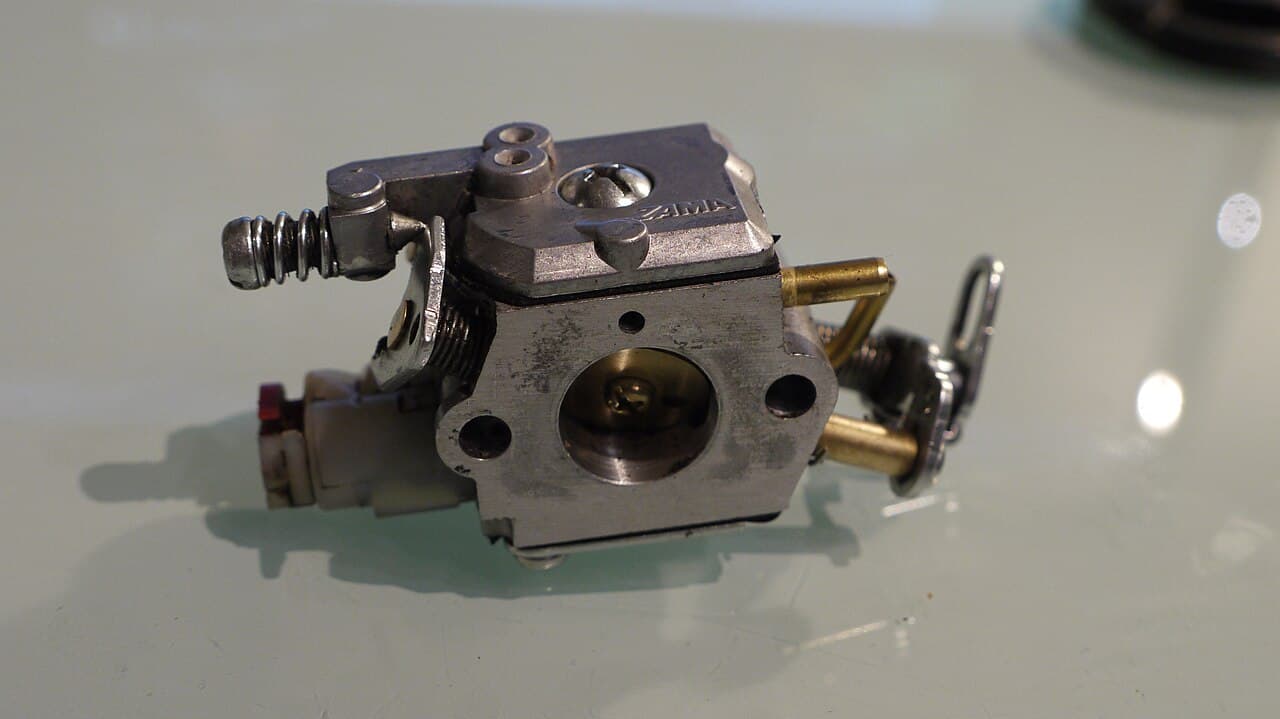
Try these first
Old fuel is the commonest cause. Briggs & Stratton says "Gasoline deteriorates after 30 days and can negatively affect engine and starting performance."[1] If the machine has sat, drain the tank and refill it with fresh gasoline, then clean or replace the air filter.
Disconnect the spark plug wire before checking the engine: "Disconnect the spark or electric plug before troubleshooting or repairing the mower."[4]
Add stabilizer as the package directs. Briggs & Stratton advises: "Add the stabilizer according to package directions and then run the engine for a few minutes to circulate the solution through the carburetor."[2]
Signs it is time for a shop
- It still hard starts or will not start with fresh fuel, a good plug and a clean filter.
- It surges, hunts or stalls at idle or under load.
- It will not idle unless you hold the throttle.
- Fuel leaks from the carburetor, a fuel line or the tank.
- It floods, or smells strongly of fuel when running.
- It runs only with the choke on.
Do not turn the mixture screws
The Forest Service's chain saw guide says "The high- and low-end adjustments should be made by a qualified saw mechanic. Improper adjustment can result in poor operation or severely damage the chain saw."[3] The same logic applies to mowers, trimmers and generators. A shop sets the mixture with the right tool and checks the result under load.
Seasonal timing
The best time to have a carburetor looked at is before storage, when you can tell the shop what it did all season. Penn State Extension says "Engines that are rarely or seasonally used, such as lawnmowers or chainsaws, are especially prone to difficulties."[5] Fill the tank before storing, since "Keeping the tank full will minimize accumulation of moisture that causes carburetor-clogging rust."[2]
What to expect at the shop
Ask what the quote covers: cleaning on the engine, removal and cleaning, or a rebuild. Ask about the diagnosis fee, parts and turnaround, and get it in writing. Prices vary shop to shop; see what carburetor cleaning costs.
Stop and call a pro if
- You smell gasoline with the engine off, or see fuel pooling.
- The engine overheats or smokes heavily.
- You would have to take the carburetor apart or turn its mixture screws.
- The machine is a ride-on or generator and you are unsure of the fuel system.
Getting help in Virginia
Start with how to clean a small engine carburetor, then see the answers for carburetor cleaning cost. Browse local handyman and repair businesses or more small engine answers.
When you are ready, describe the engine problem and local businesses will quote it.
Common questions
- How do I know it is the carburetor and not the spark plug?
- You often cannot tell without testing. Hard starting, surging and stalling can come from fuel, the air filter, the plug or the carburetor. Rule out the cheap items first, then take it in with a list of what you tried.
- When is the best time to have a carburetor serviced?
- Before storage or at the end of the season, not in the spring rush. Equipment that sits is where trouble starts, and Penn State Extension says engines used rarely or seasonally are especially prone to difficulties.
- Is it fine to keep running an engine that surges?
- Better not to. An engine that runs unevenly may not be getting the right fuel mix. Have it checked rather than running it hard.
- Can a shop fix it the same day?
- Sometimes, for simple cleaning. A rebuild or a part order takes longer, and spring is busy. Ask for a turnaround time when you drop it off.
- What should I tell the shop?
- The make, model and what the engine does. Say how long the fuel sat, whether you added stabilizer and what you have already tried. Ask for the estimate in writing.
Sources
- [1] How to Perform Lawn Mower Maintenance, Briggs & Stratton. Checked October 27, 2026.
- [2] The Importance of Fuel Stabilizer, Briggs & Stratton. Checked October 27, 2026.
- [3] Chain Saw and Crosscut Saw Training Course, Instructor's Guidebook, Chapter 3: Chain Saw Use and Maintenance, USDA Forest Service, Technology and Development Program. Checked October 27, 2026.
- [4] Lawn Care: Rotary Mower Safety (BSE-42P), Virginia Cooperative Extension, Virginia Tech. Checked October 27, 2026.
- [5] Fuel Ethanol: Hero or Villain?, Penn State Extension. Checked October 27, 2026.
Want a pro to handle it?
Describe the job once. Licensed local businesses send quotes, and you pay only when you book one.
Get a quote for Small Engines