Why does my living room feel off even with nice furniture?
Usually it is the lighting, layout or scale rather than the furniture. Match every bulb to the same warm colour range, add lamps at lower heights, pull the seating into a group on a rug large enough to hold the front legs, and check that no piece is too big or small for the room. Then add texture, height and something personal.
Free to ask. Local shops send quotes, and you pay only when you book one.
By Kasra Taheri, Founder, LoclisPublished
Researched and drafted with AI, then checked claim by claim against the sources listed below before it was published. Prices and rules change; the dates beside each source say when it was last checked.
Step by step
Read when to stop and call a pro, further down this page, before you start.
Step 1: Test the lighting
Switch on every lamp and fixture and check that the bulbs are in the same colour range.[1] Replace the odd one out.
Step 2: Add light at lower heights
Put a lamp on a table or floor beside the main seating so the overhead light is not the only source.
Step 3: Pull the seating together
Move chairs and sofa toward each other so people can talk, and keep a clear path through the room.
Step 4: Check the rug
Make sure at least the front legs of every seat in the group sit on the rug, or swap for a larger one.
Step 5: Check scale
Stand back and look for a piece that is too big or too small for the room, and consider swapping or moving it.
Step 6: Rehang art
Move art so the centre sits near eye level and relates to the furniture below it.
Step 7: Add texture and height
Bring in a throw, cushions in a different fabric and one tall element such as a plant or lamp.
Step 8: Edit surfaces
Clear tabletops and shelves, then return only what you like and use.
Usually it is light, scale and an empty middle
A room with good furniture still feels off when the pieces do not relate to each other or to the room. In most living rooms the cause is one of five things: the lighting, the layout, the scale of the pieces, a missing layer of texture or height, or wall colour and sheen that fight the light. All five can be tested for free before you buy anything.
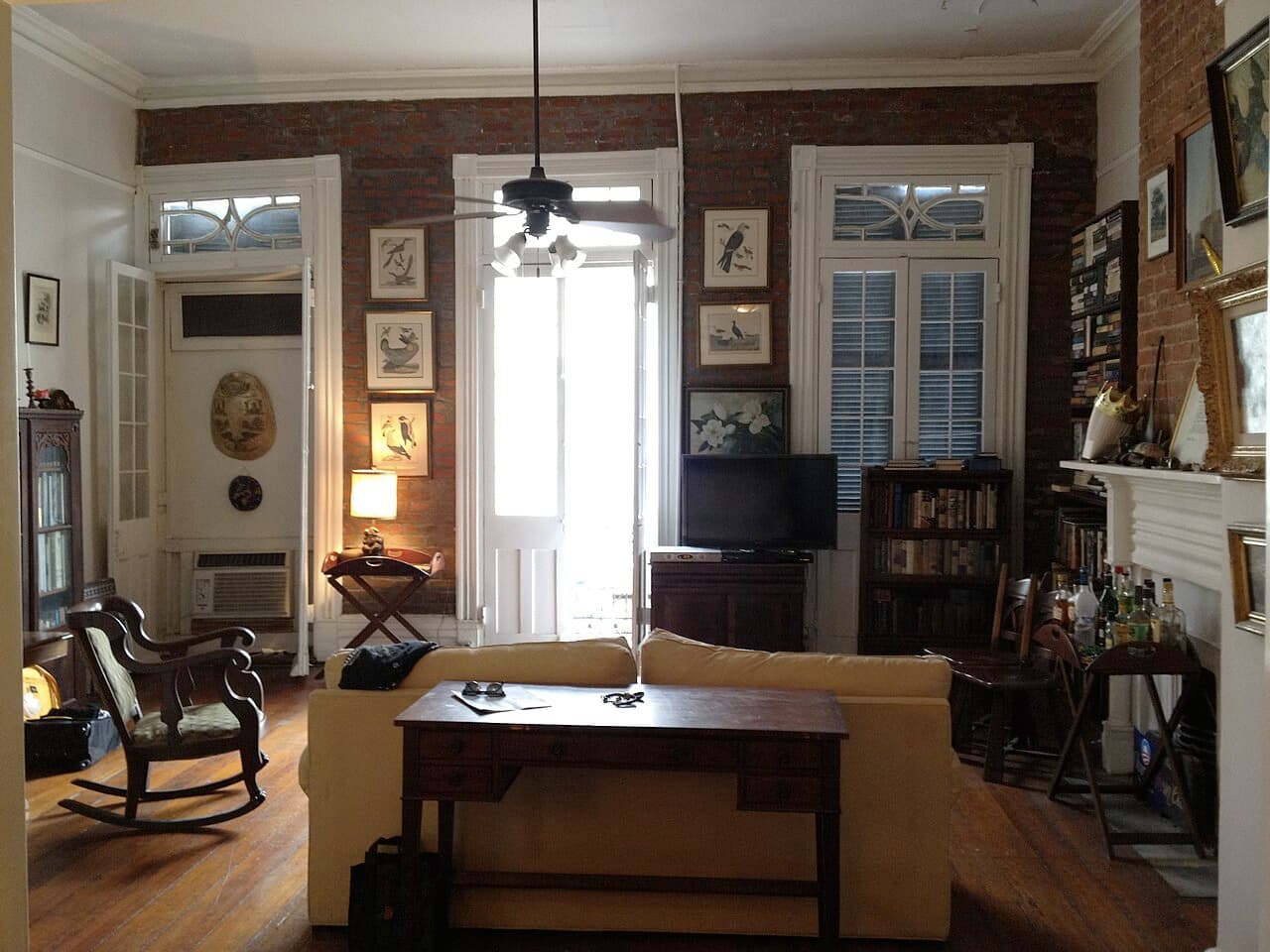
Check the lighting first
Lighting changes how everything else looks, and it is the most common culprit. Two things go wrong: one bright overhead source doing all the work, and bulbs of mismatched colour.
Colour appearance is measured in Kelvin. Lower Kelvin numbers mean the light appears more yellow or "warmer", and higher numbers mean it appears whiter or bluer.[1] ENERGY STAR notes that some downlights match the color of incandescent bulbs at 2200-3000K, with 3500-4100K for a whiter light and 5000-6500K for bluer white light.[1] If a lamp is at 2700K and the ceiling fixture is at 5000K, the room will look patchy and cold in places. Put every bulb in the room in the same range, and for a living room that usually means the warmer end.
Then add light at different heights. A floor lamp and a table lamp beside the seating, plus the overhead, make a room feel finished in the evening. A dimmer helps, but not every LED works well with every dimmer switch,[1] so check the bulb packaging and the dimmer maker's compatibility list before assuming a flicker or hum is a wiring fault.
Look at the layout
Stand in the doorway and ask where the room wants you to sit. If the sofa is pushed against the wall and the other chairs are lined up like a waiting room, conversation is hard and the middle of the room sits empty. Try pulling the seating together into a group, with the pieces close enough that people can talk without raising their voices, and keep a clear path to walk through.
A rug that is too small is the next most common fault. When only the front legs of the sofa sit on it, or it floats in the middle with nothing touching it, the seating looks scattered. A rug large enough for at least the front legs of every seat in the group ties the pieces together.
Check scale
"Nice" furniture can still be wrong for the room. A big sectional in a small room swallows the floor, and a small loveseat in a large room looks lost. Visible legs and a lighter shape help a heavy piece. If the sofa is the issue, how to choose the right size sofa for a living room walks through it, and how to make a small room look bigger covers the opposite problem.
Scale applies to what hangs on the wall too. Art hung too high is a classic reason a room feels unfinished. The centre of a piece usually belongs near eye level, and it should relate to the furniture below it instead of floating above it.
Add the missing layers
Rooms that feel off are often "flat": every surface is the same texture and the same height. Look for what is missing.
- Texture. A throw, cushions in a different fabric, a woven basket, a wood tray.
- Height. Something tall (a plant, a floor lamp, a bookcase) to draw the eye up.
- Something personal. Books, art, a few objects you chose. A room with none looks like a showroom.
- Edit. Too many small objects is as bad as none. Clear surfaces down and put back only what earns its place.
Wall colour and sheen
Paint affects how light moves around the room. Sheen is a measure of how much light reflects off a painted surface.[2] Flat paint does not reflect light and is more forgiving of flaws, but Benjamin Moore advises caution with flat paint in high-traffic areas because stains are harder to remove from low-sheen paint.[2] Eggshell is a low-sheen finish that reflects more light than flat or matte and suits most areas of a home, including family rooms.[2] A living room with very dull walls and little light can look dead, and a sample on the wall in morning and evening light will tell you more than a chip.
If you repaint a pre-1978 home, know that any renovation, repair or painting project in a pre-1978 home that has lead-based paint can easily create dangerous lead dust.[3] Check the age of the home and read the EPA guidance before sanding.
Stop and call a pro if
- Fixing the light means new wiring. Adding ceiling or wall fixtures where there is no existing wiring is electrician work, not decorating.
- The layout needs a wall, a doorway or a window changed. That is a contractor job and may need a permit.
- You are sanding or scraping paint in a pre-1978 home. Lead dust is the reason to bring in a lead-safe certified contractor.[3]
- You have tried the basics and still cannot see what is wrong. A designer can look at the room in one visit. See how much an interior designer costs in Virginia and whether interior designers need a licence in Virginia.
Getting help in Virginia
Browse more interiors answers or see interiors services. When you are ready, describe your room and local businesses can send written quotes.
Common questions
- Why does my living room feel cold even with warm colours?
- Often the bulbs. Lower Kelvin numbers appear warmer and higher numbers whiter or bluer.[^energystar] Whiter or bluer bulbs can make a warm palette look cold, so check the packaging and bring every bulb into the same, warmer range.
- Can the wrong paint sheen make a room feel off?
- It can. Sheen measures how much light reflects off the wall.[^bm] Flat paint does not reflect light and is more forgiving of flaws, while eggshell reflects somewhat more light and suits most areas of a home, including family rooms.[^bm]
- Is it the furniture or the room?
- Try rearranging and lighting first. Move the seating into a group on a properly sized rug and add lamps. If the room still feels wrong, the furniture's scale is the next suspect.
- My dimmer makes the lights flicker. Is it a wiring problem?
- Possibly not. Not every LED light works well with every dimmer switch.[^energystar] Check which bulbs the dimmer maker recommends, and have an electrician look only if the problem continues with a compatible bulb.
- Do I need a designer to fix this?
- Not usually. A few hours of rearranging, lighting and editing fixes most rooms. A designer is worth it when you cannot tell what is wrong or the changes are large.
Sources
- [1] Light Fixtures (Downlights), ENERGY STAR, U.S. Environmental Protection Agency. Checked October 27, 2026.
- [2] How to Choose a Paint Finish, Benjamin Moore. Checked October 27, 2026.
- [3] Renovation, Repair and Painting Program: Do-It-Yourselfers, U.S. Environmental Protection Agency. Checked October 27, 2026.
Want a pro to handle it?
Describe the job once. Licensed local businesses send quotes, and you pay only when you book one.
Get a quote from a local pro