How do I stop mosquitoes from breeding around my house?
Take away standing water and keep it away all season. Once a week, dump and scrub every container that holds water, refresh bird baths, and check gutters and downspout extensions. Fix the things that keep refilling, such as old tires and low spots, treat rain barrels and ponds with Bti, and keep pools circulating. Start in spring, before the season begins in May.
Free to ask. Local shops send quotes, and you pay only when you book one.
By Kasra Taheri, Founder, LoclisPublished
Researched and drafted with AI, then checked claim by claim against the sources listed below before it was published. Prices and rules change; the dates beside each source say when it was last checked.
Step by step
Read when to stop and call a pro, further down this page, before you start.
Step 1: Pick a weekly day
Choose one day each week from spring to fall to walk the yard and empty anything holding water, since mosquitoes spend at least a week in water before flying.[3]
Step 2: Dump and scrub containers
Dump water from containers and wash them out before refilling, because eggs can stick to the sides and survive dry spells.[1]
Step 3: Wipe out the bird bath
Wipe out and refill the bird bath every few days so eggs stuck to the bottom are removed.[7]
Step 4: Store things upside down
Store buckets, wheelbarrows, kiddie pools and small boats upside down or under cover so they cannot collect rain.[1]
Step 5: Deal with old tires
Get rid of unused tires, or puncture tires you keep in the yard so water cannot pool inside them.[7]
Step 6: Keep gutters draining
Keep gutters and downspout extensions clear and draining so they do not hold stagnant water between rains.[8]
Step 7: Fill low spots
Fill in small areas of the yard that do not drain properly so they stop holding water after rain.[3]
Step 8: Treat water you keep
Use Bti mosquito dunks in rain barrels, ornamental ponds and other water you cannot empty, following the label.[6]
Step 9: Add fish to garden ponds
Stock a small garden pond that is not connected to natural waters with fish that eat mosquito larvae.[7]
Step 10: Keep the pool running
Keep swimming pool water treated and circulating, and pump rainwater off a pool cover.[5]
Step 11: Trim resting spots
Keep grass mowed and shrubs trimmed so adult mosquitoes have fewer shady places to rest.[7]
Mosquitoes breed in standing water, so stopping them is a matter of finding that water and keeping it from coming back. It is not a one-time job. A short weekly round from spring to fall, plus a few permanent fixes, keeps most of the breeding off your property.

The weekly round
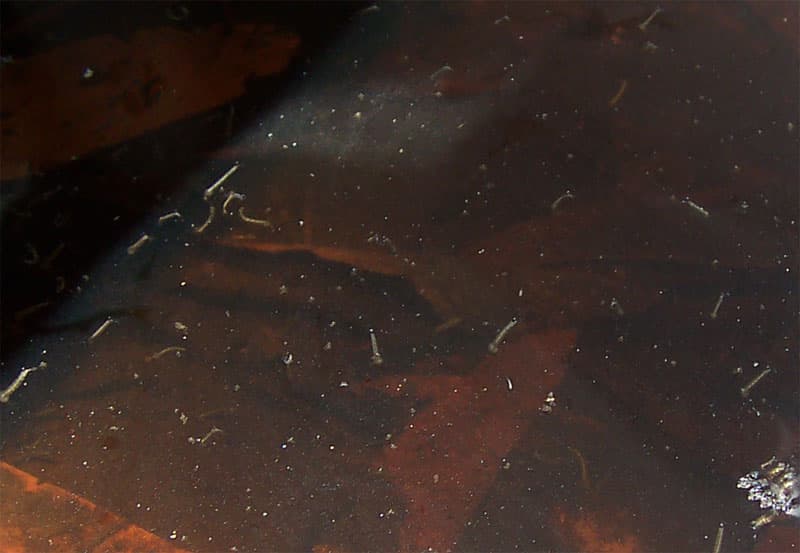
The schedule is set by the mosquito. Mosquitoes live in standing water for at least a week before they start flying.[3] Empty a container once a week and nothing in it gets that far.
Dumping is only half of it. The eggs can survive dry conditions for a few months and hatch when water returns.[4] Do both every week. Dump water that collects in containers at least every week, and wash containers out at least each week before refilling them with clean water.[1] Put away anything you are not using. Cover or store boats and buckets upside down so water cannot collect in them.[1]
Bird baths need more attention. Wipe out the bird bath every few days, because the eggs can get stuck to the bottom and survive dry periods.[7]
On each round, check the usual places: roof gutters, downspout extensions, artificial containers, old tires, bird baths, ornamental ponds, tarps on woodpiles and drainage ditches.[3] Add your own yard's regulars, such as plant saucers, a pet's outdoor bowl, toys, a grill cover or a recycling bin.
Fix the things that keep refilling
Some sources come back after every rain no matter how often you dump them. Fix those once:
- Tires. Throw out tires you do not need. Puncture unusable tires in the yard so pools of water cannot form inside them.[7]
- Gutters and downspouts. A gutter that sags or is packed with leaves holds stagnant water between storms. Keep it clear, and make sure downspout extensions drain rather than sit full. See why gutters overflow and how often to clean them.
- Low spots. If areas of your yard do not drain properly, fill them in so they do not hold water.[3] A wet area that is more than a low spot is a drainage question; see who to call for a wet yard.
- Tarps and covers. Pull tarps tight or prop them so rain runs off rather than pooling in the folds.
- Containers with no purpose. Old buckets, cans and broken pots are easier to recycle than to empty every week.
Water you want to keep
If you have standing water you cannot get rid of that lasts for more than a week, consider treating it with a larvicide.[3] For homeowners that usually means Bti, sold as dunks or granules. Bti is a naturally occurring bacterium found in soils, and its toxins affect only the larvae of mosquitoes, black flies and fungus gnats.[6] EPA says Bti has no toxicity to people, and studies indicate it has minimal toxicity to honey bees.[6] Follow the label, and check it before treating a barrel or cistern used for drinking water: Some Bti products are allowed on certain drinking water, such as cisterns, and others are not.[6]
Rain barrels. A tight lid, or fine screen over every opening, keeps females from laying eggs on the water. Add a dunk in the warm months.
Garden ponds. Consider adding mosquito fish to a water garden or small pond if it is not connected to natural waters.[7] Keep the size of the water in mind. Open bodies of water, such as large ponds and streams, are not mosquito-breeding areas and should not be treated, but small backyard ponds should be checked for mosquito larvae.[8]
Pools. Keep swimming pool water treated and circulating.[5] A winter cover that collects rain needs that water pumped off.
Fewer places to rest
Breeding happens in water, but adults spend the day in shade. Keep grass and shrubs trimmed short to reduce places for adult mosquitoes to rest.[7] That will not stop breeding, but it makes the yard less comfortable for the mosquitoes that hatch next door.
Timing through the year
In Virginia, mosquito season runs from early May to early November.[2] Do a spring clean-up in April: clear gutters, throw out what collected water over the winter, set up rain barrel lids, and fill low spots. Keep the weekly round going through the summer and into the fall, and stop when the season ends.
Work with your neighbors
Breeding water on the next lot reaches your yard too. Residents, neighbors and landlords can all help by eliminating standing water or alerting others to it.[5] A friendly word about a tarp or a kiddie pool usually solves it. For anything bigger, bring in local government. Report abandoned pools to your local health department.[7]
Stop and call a pro if
- Gutters that keep holding water are on a second storey or a steep roofline. Hire a gutter cleaner or repair company rather than working from a tall ladder.
- Part of the yard stays wet for days after every rain. A drainage contractor or landscaper can regrade or add drainage.
- Mosquitoes stay heavy after several weeks of steady weekly rounds. A licensed pest control company can inspect for sources you have missed; read whether monthly mosquito treatments are worth it first.
For quick fixes right now, see how to get rid of mosquitoes in your yard, and for the causes, why there are so many mosquitoes in your yard. Browse mosquito control services, find pest control around Blacksburg, or read more pest control answers.
When you want help, describe the job on Loclis and licensed businesses can quote it in writing.
Common questions
- How often do I need to empty standing water?
- At least once a week. Mosquitoes spend at least a week in water before they fly, so a weekly round empties containers before a new batch can emerge. Bird baths are better wiped out and refilled every few days.
- Why scrub containers instead of just dumping them?
- Mosquito eggs can stick to the inside of a container and survive dry conditions for months, then hatch when it fills again. Washing a container out before refilling it, as the Virginia Department of Health advises, removes them.
- Do I need to empty my rain barrel?
- No. Keep it covered or screened so mosquitoes cannot reach the water, and treat it with a Bti dunk during the warm months. Check the product label first, because some Bti products are approved for certain drinking water and others are not.
- Is my backyard pond a mosquito problem?
- A small, still pond can be, so check it for larvae. Fish that eat mosquito larvae help in a pond that is not connected to natural water, and Bti dunks are another option. Large ponds and streams are not mosquito-breeding areas and should not be treated.
- When should I start each year?
- Before the season, which the Virginia Department of Health gives as early May to early November. A spring clean-up of gutters, containers, tires and low spots in April means fewer sources once warm weather arrives.
- What can I do about a neighbor's standing water?
- Talk to them first; a tarp or toy holding water is easy to overlook, and mosquitoes from it reach your yard too. For an abandoned pool or a problem you cannot resolve, contact your local health department.
Sources
- [1] Mosquito Prevention, Virginia Department of Health. Checked October 27, 2026.
- [2] Mosquitoes, Virginia Department of Health. Checked October 27, 2026.
- [3] Get Rid of Standing Water, Fairfax County Health Department. Checked October 27, 2026.
- [4] Mosquito Life Cycle, U.S. Environmental Protection Agency. Checked October 27, 2026.
- [5] Success in Mosquito Control: An Integrated Approach, U.S. Environmental Protection Agency. Checked October 27, 2026.
- [6] Bti for Mosquito Control, U.S. Environmental Protection Agency. Checked October 27, 2026.
- [7] Mosquitoes, National Pesticide Information Center, Oregon State University and U.S. EPA. Checked October 27, 2026.
- [8] 2026 Pest Management Guide: Home Grounds and Animals, Nuisance Insects of the House and Yard, Virginia Cooperative Extension, Virginia Tech. Checked October 27, 2026.
Want a pro to handle it?
Describe the job once. Licensed local businesses send quotes, and you pay only when you book one.
Get a quote from a local pro