Is a spring and fall cleanup service worth it?
It is worth it if you have a large lot, many deciduous trees or a physical reason you cannot do the work, and usually not on a small yard where you can mulch-mow leaves yourself. The fall visit matters most. Compare at least three written bids, and ask where the leaves go.
Free to ask. Local shops send quotes, and you pay only when you book one.
By Kasra Taheri, Founder, LoclisPublished
Researched and drafted with AI, then checked claim by claim against the sources listed below before it was published. Prices and rules change; the dates beside each source say when it was last checked.
Step by step
Read when to stop and call a pro, further down this page, before you start.
Step 1: Count your fall hours
Estimate how long it takes to mulch-mow or rake your yard once, and how many times leaves fall in a season.
Step 2: Check your locality's leaf service
Look up whether your county or city collects leaves, in which months, and how they want them set out.[3]
Step 3: List what you want done
Write down the fall jobs, such as leaves, fertilizer, aeration and gutters, and any spring jobs.[2]
Step 4: Get three written bids
Ask each company for a written bid against the same list.[6]
Step 5: Compare to your own time
Weigh the lowest sensible bid against the hours you would spend and whether you can do the work safely.
It is worth it if you have a large lot, a lot of deciduous trees, or a physical reason you cannot do the work, and usually not if you have a small yard and a mower. The fall visit is the one that matters most: leaves are the biggest seasonal job, and the one most likely to hurt the lawn if left.
What a fall cleanup protects
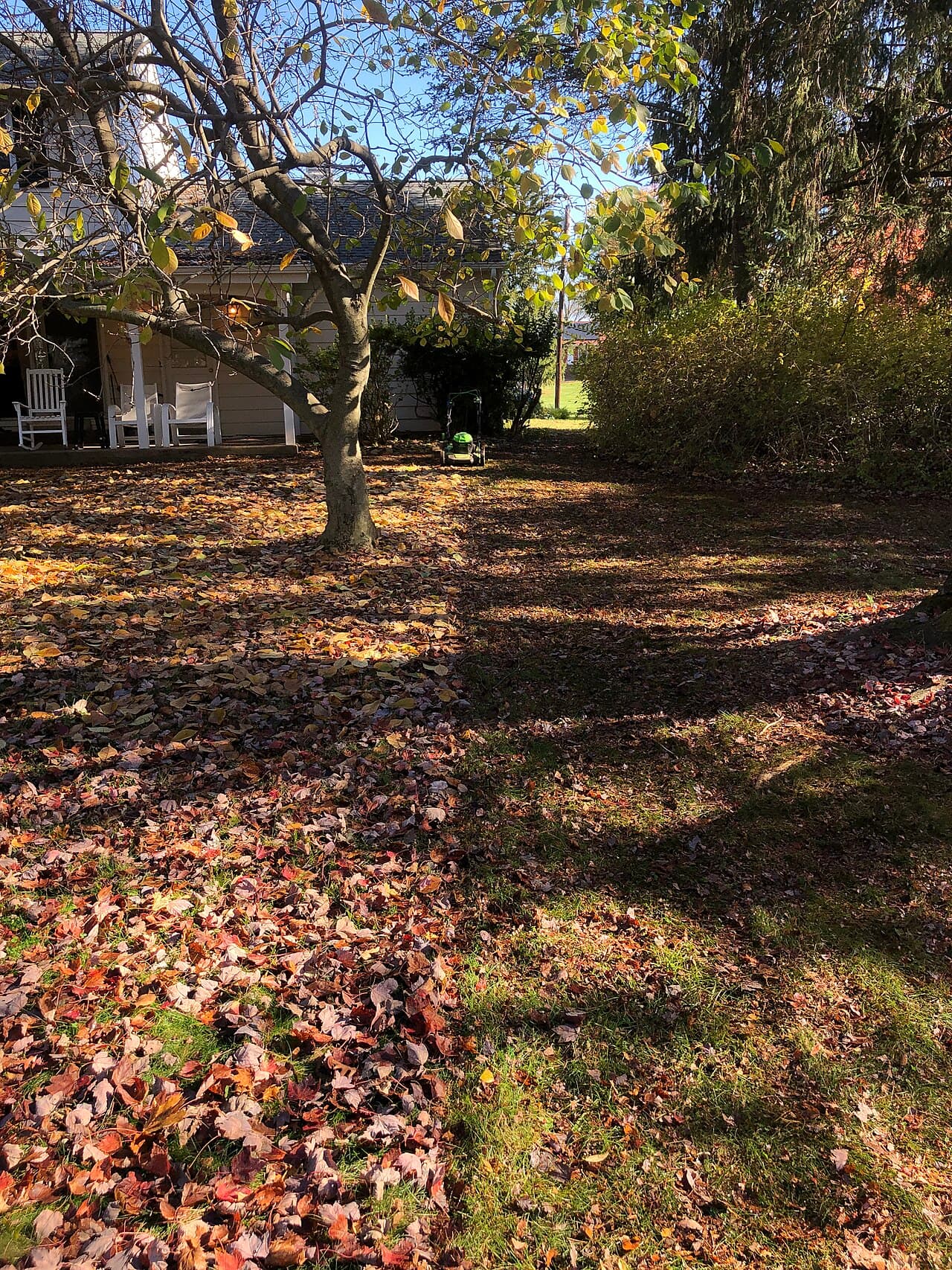
Leaves left to sit hurt a lawn. A thick layer of leaves blocks sunlight, reducing turf growth because of the shading effect, and the leaves trap and hold moisture in the turf canopy, increasing the potential for turf disease.[1] Getting them off or chopped up in time is the point of the fall visit.
You can also do this cheaply yourself. Virginia Cooperative Extension calls mulching leaves directly into the turf a relatively cost effective and time-saving means of leaf disposal.[1] If your lawn is small enough to mow in an hour or two, a few passes over moist leaves with your own mower will do most of what a crew would.
What a spring visit adds
Spring has less of a deadline. It is mainly about clearing winter debris and tidying beds, and, for a warm-season lawn such as bermudagrass or zoysia, a window for core aeration or dethatching, because Extension says fall is too late to safely do either on warm-season turf and recommends late spring or early summer.[2] Those are jobs a service can bundle, and they are easy to forget.
When a service earns its fee
- You have a lot of trees or a big lot. Extension warns that treatment and disposal of leaves can be time consuming and costly, and the volume is what makes it so.[1] A large leaf load may need several passes with a mower, and Extension notes that a depth of up to 6 inches can be mulched at a time, depending on the mower.[1]
- You cannot lift, rake or push a mower. Then the question answers itself.
- Your locality does not collect or limits what it takes. Fairfax County collects vacuum leaves only in designated areas, from November through January, and leaves raked out after the third pickup will not be collected.[3] A service that mulches or hauls solves the gap.
- You want the extra jobs done at the right time. A good company will do the fertilizer, aeration and gutter cleaning in the window when they work: Extension ties cool-season fertilizer to September through November and aeration to the fall.[2]
When it is not worth it
- You have a small lot with one or two trees. Mulch-mowing will do it.
- The service only blows leaves into a pile. That moves the problem. Ask where the leaves go.
- You are asked to commit to a big seasonal contract without a written scope. The DPOR guide says to put the details in writing.[6]
How to decide
Count your fall hours honestly, price what a service quotes for the same work, and compare. When you ask for quotes, the Virginia Board for Contractors advises at least three written bids or estimates using identical plans and specifications so you can compare prices.[6] Make sure each bid names the visits, what is included on each, and where the leaves go.
Ask about chemicals too. If the service sprays weed or pest products, a business that applies pesticides in exchange for compensation needs a pesticide business license in Virginia.[7]
Stop and call a pro if
- The yard work includes tree limbs, stumps or removal. Fairfax County does not treat material from tree removal as ordinary yard waste.[4] Hire a tree service, not a cleanup crew.
- Gutters are above the first story. Do not climb up yourself; ask the company if it does gutters, or hire a gutter pro. The Northern Virginia Soil and Water Conservation District advises that gutters be cleaned at least once a year.[5]
- A company wants to spray without a license. Ask for its pesticide license number first.[7]
- A bid is far lower than the rest. The DPOR guide says an abnormally low bid probably means the contractor made a mistake or is not including all the work the others quoted.[6]
Getting help in Virginia
For the do-it-yourself version, see what yard work to do in the fall. For pricing, read what a fall yard cleanup costs in Virginia. More in snow and seasonal answers and seasonal services on Loclis.
When you are ready, describe your yard once and local pros quote it.
Common questions
- Is a fall cleanup more important than a spring one?
- Usually, yes. Leaves left in a thick layer block sunlight and hold moisture on the lawn, which can lead to turf disease.[^vce-leaves] Spring is mostly tidying, plus aeration for warm-season lawns, which Extension puts in late spring or early summer.[^vce-fall]
- Can I do it myself instead?
- Often. Extension says mulching leaves directly into the turf is a relatively cost effective and time-saving means of leaf disposal.[^vce-leaves] Hire out if the lot is large, you cannot do the physical work, or the job involves ladders or tree limbs.
- Does my town pick up leaves?
- It depends on your locality. Fairfax County runs vacuum leaf collection in designated areas from November through January.[^ffx-leaf] Check your own county or city website.
- Should I sign a season-long contract?
- Only with a written scope. The Virginia Board for Contractors says to put agreements in writing and to compare at least three written bids.[^dpor-guide]
Sources
- [1] "Leave" Them Alone: Lawn Leaf Management (430-521), Virginia Cooperative Extension, Virginia Tech. Checked October 27, 2026.
- [2] Fall Lawn Care (430-520), Virginia Cooperative Extension, Virginia Tech. Checked October 27, 2026.
- [3] Vacuum Leaf Collection, Fairfax County Department of Public Works and Environmental Services. Checked October 27, 2026.
- [4] Yard Waste, Fairfax County Department of Public Works and Environmental Services. Checked October 27, 2026.
- [5] Gutters and Downspouts: Wetness or Erosion Problems, Northern Virginia Soil and Water Conservation District, Fairfax County. Checked October 27, 2026.
- [6] What You Should Know Before You Hire a Contractor, Virginia Board for Contractors, DPOR. Checked October 27, 2026.
- [7] Pesticide Business License, Virginia Department of Agriculture and Consumer Services. Checked October 27, 2026.
Want a pro to handle it?
Describe the job once. Licensed local businesses send quotes, and you pay only when you book one.
Get a quote from a local pro