Why does my lawn look worse after winter?
Usually because the grass is dormant, or because of what sat on it over winter: leaves that block sunlight, matted turf, compacted soil. Warm-season grasses like zoysia and bermudagrass go brown for 4 to 5 months, and cool-season lawns often just need time and a light rake. Wait for green-up before judging, and do not push heavy spring nitrogen.
Free to ask. Local shops send quotes, and you pay only when you book one.
By Kasra Taheri, Founder, LoclisPublished
Researched and drafted with AI, then checked claim by claim against the sources listed below before it was published. Prices and rules change; the dates beside each source say when it was last checked.
Step by step
Read when to stop and call a pro, further down this page, before you start.
Step 1: Find out which grass you have
Work out whether the lawn is cool-season (tall fescue, Kentucky bluegrass) or warm-season (bermudagrass, zoysia), because brown in March means different things for each.[1]
Step 2: Wait for green-up before judging
A warm-season lawn can be almost completely brown for 4 to 5 months and still be healthy.[1]
Step 3: Clear leaves and debris
Rake off leaves, sticks and matted debris so sunlight and air reach the grass.[2]
Step 4: Rake matted patches gently
Use a leaf rake to lift flattened, matted grass so new growth can come through.
Step 5: Mark the dead patches
Note where the turf stays brown after neighbouring grass greens up, and whether those spots are compacted or high-traffic, which is where spring dead spot tends to show up on bermudagrass.[3]
Step 6: Test the soil
Take a soil sample to learn pH and nutrient levels before buying anything.[4]
Step 8: Mow at the right height
Once the grass is growing, cut no more than one-third of the height at a time.[3]
Step 9: Plan the real repair
Leave bare cool-season patches for seeding in late summer to mid-fall, the best time to establish them.[4]
Brown in March is not always dead
Most lawns that look worse after winter are in one of three situations: the grass is dormant, it was smothered by what sat on it, or part of it has really died. Dormant turf is the easy one. Warm-season grasses are adapted to consistent temperatures in the 80- 95°F range,[1] and repeated frost events will eventually result in winter dormancy for the warm- season grasses (and a loss of green color) for 4 to 5 months from late fall to early spring.[1] Dormant turf still functions as a highly effective ground cover.[1]
So the first move is to identify the grass and wait. Tall fescue, Kentucky bluegrass and perennial ryegrass are cool-season and green up early. Bermudagrass and zoysia are warm-season and green up late, often well after neighbouring cool-season lawns. Judge the lawn after green-up, not before.
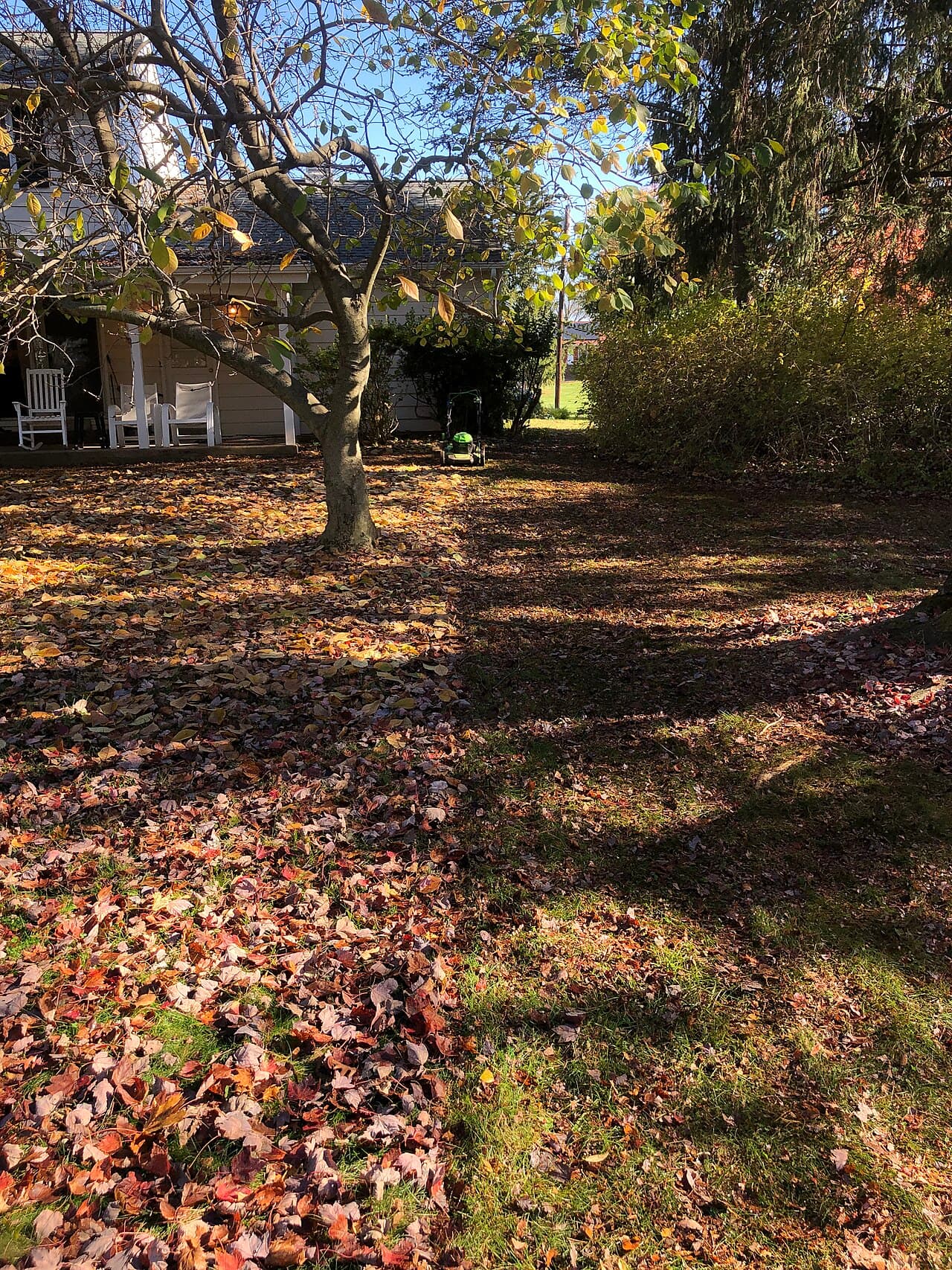
What sits on the lawn matters
Leaves, sticks and storm debris left over winter do real harm. A thick layer of leaves blocks sunlight, reducing turf growth because of the shading effect.[2] Under a wet mat, grass thins out and stays pale after the rest of the yard has recovered. Raking or mowing this off in early spring is the cheapest repair there is.
Snow cover and salt spray from the road or driveway cause a similar pattern: browning along edges and beside pavement. Rinse salt-edged areas with plenty of water once the ground thaws, and see why a plow can tear up lawn or gravel if the damage is a line of torn turf.
Disease, compaction and thatch
Some winter damage is disease. Excessive readily-available nitrogen can increase the likelihood of brown patch, gray leaf spot, Pythium blight, and snow mold development.[3] That is one more reason not to over-feed in late fall.
Bermudagrass has its own spring problem. Spring dead spot is the most common disease for bermudagrass,[3] with dead patches in the turf that appear in the spring as the turf emerges from winter dormancy.[3] It is usually found in high traffic or compacted areas and after severe winters.[3] Applying fungicides curatively in the spring when symptoms are present will not speed recovery of the bermudagrass.[3] Prevention is a fall job, so mark the patches now and plan around them.
Thatch is the brown layer between the grass blades and the soil. Dethatch in spring or early fall if thatch (the brown layer between the grass blades and the soil surface) is greater than ½ inch deep.[3] Anything thinner is not worth disturbing.
What to do and what to hold off on
Rake gently, test the soil, and resist the urge to pour on fertilizer. For warm-season grass, Extension says to initiate N fertilization for warm-season grasses AFTER spring greening is complete.[6] For cool-season grass, adding small amounts of nitrogen to cool-season grasses can be beneficial for spring root growth, but very aggressive spring nitrogen programs are counter-productive and increase the injury potential to lawns from summer disease and drought.[5]
A soil test is cheap and usually answers the question of whether to lime or add other nutrients. The fall provides a great time to test your soil to determine nutrient levels and pH,[4] and the same sampling works in spring.
When mowing resumes, only cut one-third of the height of the lawn at a time.[3]
Real bare patches in a cool-season lawn are best fixed in the fall. Late summer to mid-fall is the best time to establish cool-season turfgrass.[4] For the method, see how to aerate and overseed a lawn.
Stop and call a pro if
- Large areas stay brown long after green-up. Several weeks after the rest of the neighbourhood has greened, big dead areas may mean disease, insects or a drainage problem that needs a diagnosis and probably a renovation.
- You are being offered fungicide or weed-killer service. A pesticide business license is required for any person or business operating in Virginia, which, in exchange for compensation, sells, stores, distributes, mixes, applies or recommends pesticides.[7] Ask for the licence before agreeing.
- Water pools where the grass died. That is a grading or downspout problem, not a lawn problem.
- Ruts, torn turf or a regrade are needed. That is renovation work and worth a written quote.
Getting help in Virginia
If you would rather hand the spring work over, read what to put on a spring yard cleanup checklist, the fall companion what yard work to do in the fall in Virginia, and whether a spring and fall cleanup service is worth it. Browse more snow and seasonal answers or the seasonal services on Loclis.
When you are ready, describe your yard once and local pros quote it.
Common questions
- Is my brown lawn dead or dormant?
- If it is a warm-season grass such as zoysia or bermudagrass, brown in winter is normal. Virginia Cooperative Extension says these grasses go dormant for 4 to 5 months, from late fall to early spring, with a loss of green color.[^vce-turf] Wait until the neighbours' lawns green up, then judge. Patches that stay brown after that are the ones to investigate.
- Why are there dead patches on my bermudagrass every spring?
- It may be spring dead spot, the most common bermudagrass disease. Dead patches show up as the turf comes out of dormancy, and the disease is usually found in high-traffic or compacted areas and after severe winters.[^vce-pmg] Spraying a fungicide once the patches appear will not speed recovery.[^vce-pmg]
- Can leaves left over winter kill the lawn?
- A thick layer of leaves blocks sunlight and reduces turf growth because of the shading effect.[^vce-leaves] Rake or mow off what is left before the grass starts growing, so the lawn does not stay shaded through spring.
- Should I fertilize right away to green it up?
- Usually not. For warm-season grass, Extension says to start nitrogen only after spring greening is complete.[^vce-warm] For cool-season grass, small amounts can help spring root growth, but very aggressive spring nitrogen programs are counter-productive.[^vce-fert] Test the soil first.
- When should I reseed bare spots?
- For cool-season grasses such as tall fescue and Kentucky bluegrass, late summer to mid-fall is the best time to establish turf.[^vce-fall]
Sources
- [1] Selecting Turfgrass for Virginia (SPES-748), Virginia Cooperative Extension, Virginia Tech. Checked October 27, 2026.
- [2] "Leave" Them Alone: Lawn Leaf Management (430-521), Virginia Cooperative Extension, Virginia Tech. Checked October 27, 2026.
- [3] 2026 Pest Management Guide: Home Grounds and Animals, Chapter 5: Lawn (456-018, ENTO-634-E), Virginia Cooperative Extension, Virginia Tech. Checked October 27, 2026.
- [4] Fall Lawn Care (430-520), Virginia Cooperative Extension, Virginia Tech. Checked October 27, 2026.
- [5] Lawn Fertilization in Virginia (430-011), Virginia Cooperative Extension, Virginia Tech. Checked October 27, 2026.
- [6] Maintenance Calendar for Warm-Season Turfgrasses in Virginia (430-522), Virginia Cooperative Extension, Virginia Tech. Checked October 27, 2026.
- [7] Pesticide Business License, Virginia Department of Agriculture and Consumer Services. Checked October 27, 2026.
Want a pro to handle it?
Describe the job once. Licensed local businesses send quotes, and you pay only when you book one.
Get a quote from a local pro