Is a tankless water heater worth it?
Often, for a home with natural gas or propane, moderate hot water use and a plan to stay put. A tankless heater uses less energy, never runs a tank dry and can last more than 20 years. Against that: by 2012 federal cost figures it can cost 1½ to 2 times as much to install, may need a bigger gas line and new venting, and needs descaling in hard water.
Free to ask. Local shops send quotes, and you pay only when you book one.
By Kasra Taheri, Founder, LoclisPublished
Researched and drafted with AI, then checked claim by claim against the sources listed below before it was published. Prices and rules change; the dates beside each source say when it was last checked.
This is a job for a licensed pro in Virginia
This page explains what the work involves, the permits, what a licensed pro does and what drives the cost. It does not give step-by-step instructions, because this work needs a licence, a permit or both, and doing it wrong can injure someone. Before you hire, check the licence on Virginia's DPOR record.
A tankless water heater is usually worth it when three things line up: you have natural gas or propane, your household's hot water use is moderate, and you will stay in the house long enough for lower energy bills and a longer life to repay a higher installed cost. It is a harder case for a very large household, for an all-electric house, or when the switch means a new gas line and venting on top of the heater.
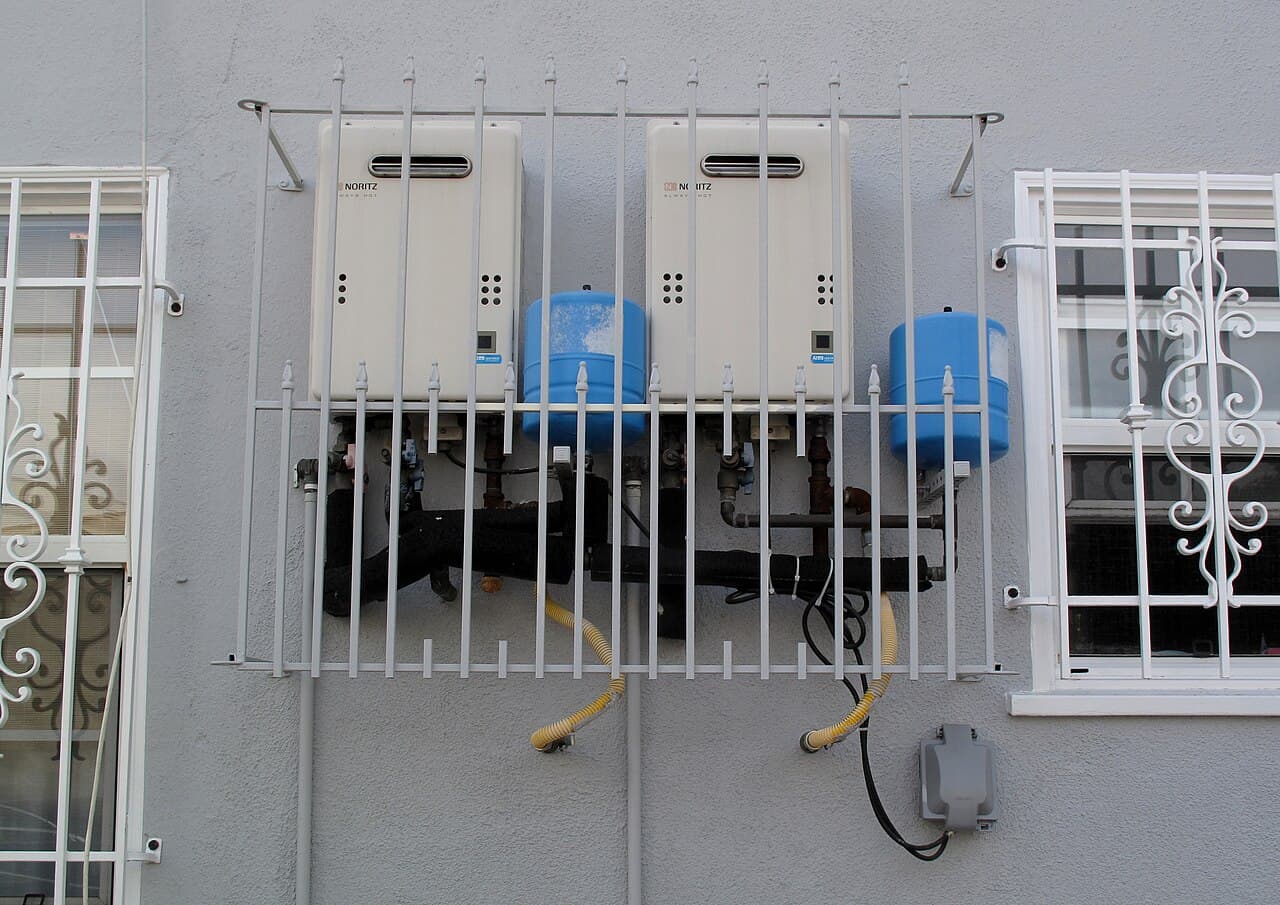
What you gain
Lower energy use. A tank keeps water hot all day whether you use it or not; a tankless heater fires only when a tap is open. The Department of Energy's Energy Saver guide says that for homes that use 41 gallons or less of hot water a day, gas on-demand heaters can be 24% to 34% more energy efficient than conventional storage tank heaters, and 8% to 14% more efficient in homes that use around 86 gallons a day.[1]
How you use water matters as much as how much. A single-home Building America field test, in an existing home occupied by two people,[2] found that tankless efficiency tracks the size of each draw more closely than total daily use: savings are smaller on short draws and come close to the rated efficiency at draws of 10 gallons or more.[2] In that house, "The greatest energy savings occur at a daily use quantity of about 50 gallons."[2] That is one house, so take the pattern rather than the number: a household of quick hand-washes saves less than one of steady showers. The Energy Saver ranges above are the broader guide to how much.
A longer life. "Most storage water heaters last 10-15 years, while tankless water heaters can last more than 20 years."[1] Over a long stay in one house, that can mean buying one tankless heater instead of two tanks.
No tank to run dry. The Building America guide puts it simply: "One can theoretically shower forever because there is no tank to drain."[3] Back-to-back showers do not wait for a tank to recover.
Space. A wall-mounted unit frees the floor a tank stood on, and gas units are often vented out a side wall rather than up a chimney.[3]
What it costs you
Flow, not volume, is the limit. A tankless heater makes only so many gallons a minute. If people try to take two showers, start laundry and wash dishes at once, the hot water may not be as hot as they want.[3] If you tend to use hot water in several places at the same time, you may need two or more tankless water heaters to keep up.[1] Our answer on how a tankless heater works explains the sizing.
A higher installed price. The Department of Energy's Building America guide says the initial installed cost of a tankless water heater can be 1½–2 times as much as that of a tank-type water heater.[3] Read that as a rough, dated ratio: the average industry costs in the guide come from an analysis from 2012, and it notes that tankless water heater costs have fallen as the systems have become more popular.[3] The heater is part of the price. The rest is the house: most tankless gas heaters need at least a ¾-inch gas line from the street, where ½-inch is typically enough for a tank heater,[3] and a replacement for a tank heater will likely need a new vent pipe, and the ideal spot is on or near an outside wall.[3] Even natural gas units need a 120-volt outlet for their controls, sensors and electric spark ignition,[3] so they stop in a power cut. See what a tankless installation costs in Virginia.
Descaling. Hard water does not go away because there is no tank. Rheem explains: "Tankless water heaters can have mineral deposits form inside the heat exchanger, restricting water flow and forcing the unit to work harder."[6] Virginia Cooperative Extension is blunt about hard water in general: "Hard water can also reduce the efficiency and life span of water heaters."[7] If your water is hard, budget for periodic descaling or a softener; see how often a tankless heater needs descaling and whether you need a water softener.
Quirks at the tap. A tankless heater needs a minimum flow to fire, so a trickle may stay cold, and some setups with a recirculation pump send a short burst of cold water between two hot ones.[3] Most of these are fixable; see why a tankless heater goes cold in the shower.
Gas, electric, or neither
For whole-house use, gas is where tankless makes its strongest case. The Building America guide notes that electric versions provide less hot water flow than gas-fired units and can create high peak loads for electric utilities.[3] If natural gas is not available, the guide suggests considering a heat pump water heater instead.[3]
Among gas units, condensing models cost more but use less fuel. ENERGY STAR says: "An ENERGY STAR certified gas tankless water heater uses a secondary heat exchanger to use 9 percent less energy than a conventional gas tankless water heater."[5]
A quick way to decide
Tankless is likely worth a quote if:
- you already have natural gas or propane at the heater, or near an outside wall;
- your current tank is old enough that you will replace it soon anyway;
- your household runs out of hot water with a tank, or wants the floor space back;
- you plan to stay in the house for many years.
It may not pay off if:
- your house is all-electric with no room in the panel;
- your household often runs several showers and appliances at once and would need two units;
- your water is very hard and you do not plan to soften it or keep up with descaling;
- you are likely to sell within a few years.
When to call a licensed pro
Choosing tankless is a decision you make; sizing and installing it is not. ENERGY STAR advises that you plan ahead for your next water heater replacement, because your installer may need time to order the right model and the job may take longer than a standard installation.[4] It also suggests you get cost estimates in writing and see whether the company will obtain a local permit if one is needed.[4] Noritz adds: "Make sure the installer you choose is a licensed professional and has knowledge of tankless water heaters."[8]
In Virginia, no individual may work as a tradesman without a licence, and a tradesman is anyone doing electrical, plumbing or heating, ventilation and air conditioning work for the public for pay.[11][10] Check any installer on DPOR's License Lookup[12] or read how to check a contractor's licence. Virginia's Board for Contractors also advises: "It is advisable to get at least three written bids or estimates using identical plans and specifications so you can compare prices and contractors."[9] Ask at least one bidder to price a like-for-like tank replacement as well, so you can compare the two choices directly.
Compare tank and tankless quotes on Loclis
Browse plumbing services, look up plumbers in Blacksburg, or read more plumbing answers.
Describe your water heater project and licensed local plumbers quote it, tank, tankless or both.
Common questions
- How much energy does a tankless water heater save?
- For gas tankless heaters, the Department of Energy puts it at 24% to 34% for homes using 41 gallons or less of hot water a day, and 8% to 14% for homes using around 86 gallons. Real savings depend on your habits: lots of short draws save less than fewer, longer ones.
- How long does a tankless water heater last compared with a tank?
- The Department of Energy's Energy Saver guide says most storage heaters last 10 to 15 years and tankless heaters can last more than 20. Hard water and skipped descaling shorten that.
- Is a tankless water heater worth it for a big family?
- It can be, but it has to be sized for everyone showering, washing and running the dishwasher at once. Very heavy users save less energy in percentage terms, and some homes need two units, which raises the cost. Ask for a sizing based on your busiest hour.
- Is an electric tankless water heater worth it?
- As a whole-house heater, often not: it delivers less flow than a gas unit and needs a large electrical supply, which can mean electrical service work. Federal guidance suggests a heat pump water heater where natural gas is not available. Small electric units can make sense at a single distant fixture.
- Does a tankless water heater work in a power outage?
- Not without power. Even gas tankless heaters need a 120-volt supply for their controls and ignition. Some owners add a battery backup sized for the heater.
- What are the biggest downsides of tankless water heaters?
- A higher installed cost, a possible gas line and venting upgrade, a short wait or a brief cold burst at the tap in some setups, a minimum flow needed to fire, and regular descaling where the water is hard.
Sources
- [1] Energy Saver Guide: Tips on Saving Money and Energy in Your Home (2022), U.S. Department of Energy. Checked October 26, 2026.
- [2] Tankless Gas Water Heater Performance (Building America Top Innovations profile), Building America program, U.S. Department of Energy. Checked October 26, 2026.
- [3] Gas-Fired Tankless Water Heaters, Building America Solution Center, Pacific Northwest National Laboratory (U.S. Department of Energy). Checked October 26, 2026.
- [4] Whole Home Tankless Gas Water Heaters, ENERGY STAR, U.S. Environmental Protection Agency. Checked October 26, 2026.
- [5] How It Works — Whole-Home Gas Tankless Water Heaters, ENERGY STAR, U.S. Environmental Protection Agency. Checked October 26, 2026.
- [6] How to Keep Your Tank and Tankless Water Heaters Running at Peak Performance, Rheem Manufacturing Company. Checked October 26, 2026.
- [7] Virginia Household Water Quality Program: Hardness in Household Water (publication 442-664), Virginia Cooperative Extension, Virginia Tech. Checked October 26, 2026.
- [8] Qualified installer, Noritz America. Checked October 26, 2026.
- [9] What You Should Know Before You Hire a Contractor, Virginia Board for Contractors, DPOR. Checked October 26, 2026.
- [10] Va. Code § 54.1-1128, Definitions, Code of Virginia, Virginia General Assembly. Checked October 26, 2026.
- [11] Va. Code § 54.1-1129, Necessity for licensure, Code of Virginia, Virginia General Assembly. Checked October 26, 2026.
- [12] License Lookup, Virginia Department of Professional and Occupational Regulation. Checked October 26, 2026.
Want a pro to handle it?
Describe the job once. Licensed local businesses send quotes, and you pay only when you book one.
Get a quote for Plumbing Repair