How often should a tankless water heater be descaled?
It depends on how hard your water is. With hard water and no softener, Noritz says the heater needs flushing annually, and Rheem says about every six months in hard-water areas. In an area with softer water, a Noritz manager estimates four to five years. Your heater's manual sets the interval for your model, and a heater with scale detection shows an error when service is due.
Free to ask. Local shops send quotes, and you pay only when you book one.
By Kasra Taheri, Founder, LoclisPublished
Researched and drafted with AI, then checked claim by claim against the sources listed below before it was published. Prices and rules change; the dates beside each source say when it was last checked.
This is a job for a licensed pro in Virginia
This page explains what the work involves, the permits, what a licensed pro does and what drives the cost. It does not give step-by-step instructions, because this work needs a licence, a permit or both, and doing it wrong can injure someone. Before you hire, check the licence on Virginia's DPOR record.
A tankless water heater needs descaling as often as your water demands, which on hard water with no softener means at least once a year. Noritz puts the rule plainly: "If the unit is supplied with hard water and a softener or water treatment is not installed, the unit will need to be flushed annually to clean up and remove scale deposits that have formed inside the heat exchanger."[1] Rheem recommends that a tankless heater's key maintenance tasks be done at least once a year,[6] and adds: "In hard-water areas, plan to flush or descale about every six months."[6]
Softer water changes the answer. Jason Fleming, a marketing manager at Noritz America, explains the range: "In a very hard-water area, this could mean servicing the unit once a year, but in an area with softer water, you might go four to five years without any maintenance," he estimates.[3] Your heater's manual has the interval for your model.
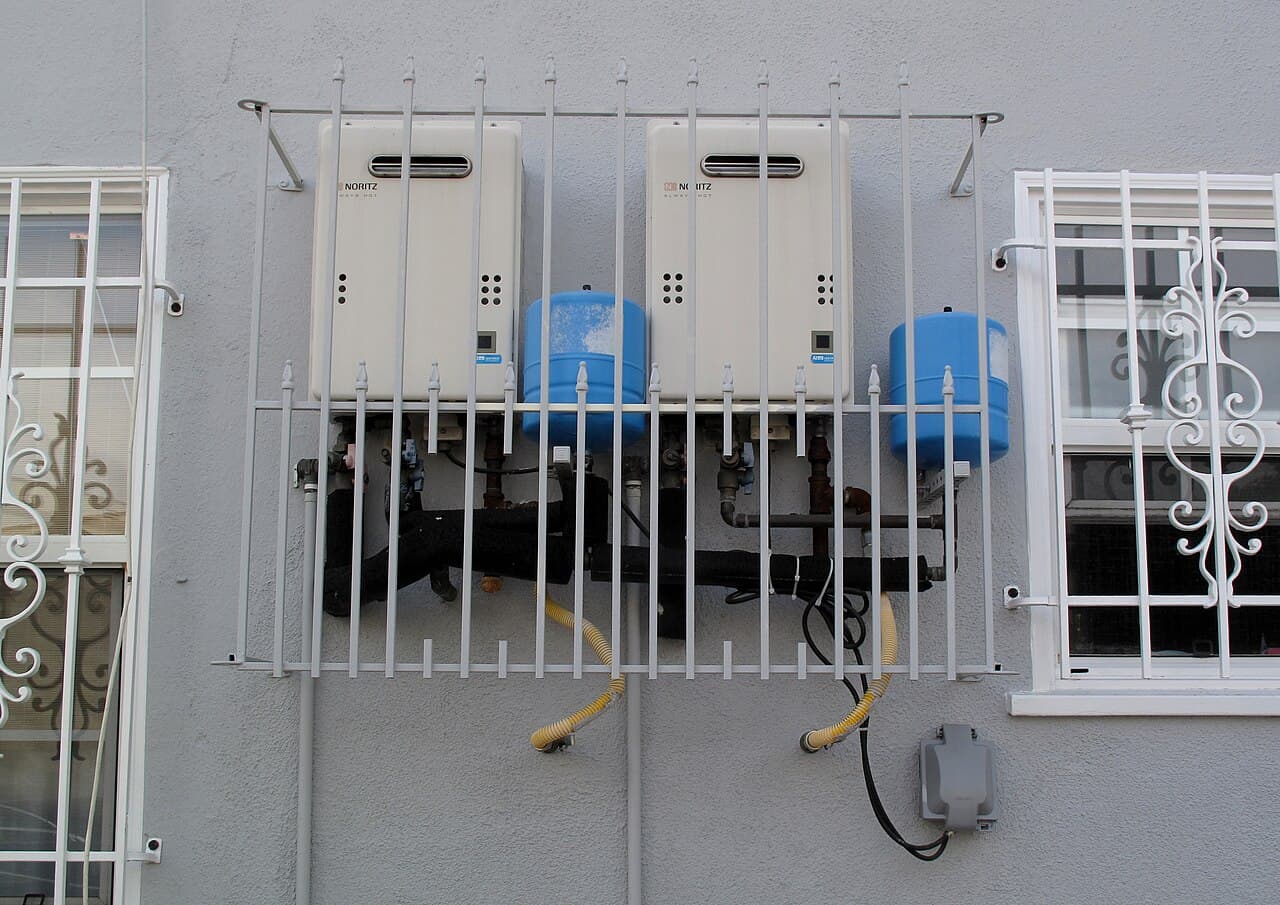
Why a tankless heater needs descaling
A tank heater collects sediment at the bottom of the tank, which is why it is flushed. A tankless heater has no tank; the water runs straight through a narrow heat exchanger, and minerals in hard water coat its inside. Rheem describes the effect: "Tankless water heaters can have mineral deposits form inside the heat exchanger, restricting water flow and forcing the unit to work harder."[6]
The Department of Energy's Building America guide sums up the standard practice: "Many manufacturers recommend professional, yearly cleaning of the heat exchanger with a mild acid solution (such as vinegar)."[7] For tank heaters, see how often a water heater should be flushed.
Set the schedule by your water
Three things decide your interval.
Your water's hardness. Rinnai notes that the time between maintenance visits depends on the water quality in your home.[5] Virginia Cooperative Extension gives the yardstick: "Generally, water hardness levels less than 7.0 gpg or 120 mg/L do not require treatment, and treatment is only necessary when the hardness level is causing a problem for the homeowner."[9] If your test result is in mg/L or ppm, one grain of hardness equals 17.1 mg/L of dissolved calcium carbonate.[4]
On a public water system, your water provider can tell you its hardness. On a private well, a lab test answers it; the Virginia Household Water Quality Program, run with Virginia Cooperative Extension, periodically holds county-based household water sampling clinics.[9]
Whether you soften the water. Noritz says scale-related heat exchanger failure is one of the easiest problems to prevent, by using a water softener, a Noritz Scale Shield or flushing the unit yearly.[4] Extension notes that water softeners can treat all the water entering a house or only the water to be heated and used for washing.[9] Our answer on whether you need a water softener in Virginia covers the choice.
Your model's manual. Noritz tells owners to descale the unit periodically based on the guidelines in the manual,[2] which includes charts of water quality and flush frequency. Some units also watch for scale themselves: Noritz says scale buildup forces the burner to work at a higher temperature, and heaters with scale detection will show an error message that service is required.[3]
Signs it is overdue
- Inconsistent or lukewarm hot water. Rheem: "If your tankless unit struggles to deliver consistent hot water, or if your tank model takes longer to reheat, sediment buildup or scaling may be restricting heat transfer or water flow."[6] Our answer on a tankless heater going cold in the shower covers the other causes.
- A higher energy bill. Rheem notes that a sudden jump in energy use with no change in household demand can point to scale.[6] Virginia Cooperative Extension agrees on the mechanism: "Mineral scaling in water heaters can increase heating costs by reducing their efficiency."[9]
- Lower flow and flakes. "Mineral build-up reduces flow and produces flakes at your fixtures."[4]
- A scale or service error code on the controller, on heaters with scale detection.[3]
What skipping it costs
Scale is not just an efficiency problem. Noritz says: "Hard water and scale build up is one of most common reasons for a heat exchanger failure."[4] A. O. Smith notes that regular descaling resolves hard water deposits, but severe buildup may require component replacement,[8] and the Building America guide warns that in extreme cases scale can cause the heater to fail completely.[7]
What a descaling service involves
Knowing what the visit covers helps you book it and compare quotes. The core of it is cleaning scale out of the heat exchanger, and the job goes faster when "flush kit" valves were fitted at installation, so the heater can be isolated from the rest of the home's plumbing.[7] The same visit should cover the rest of the yearly checks: Noritz says the filter on the cold water inlet should be checked for debris about once a year, and the front cover, fan and venting checked for dust and debris.[1]
Questions worth asking when you book:
- Does the price include the inlet filter and the vent check as well as the descale?
- Does the heater have isolation valves, and if not, what would adding them cost?
- Is the cleaning solution one the heater's manual allows?
- Will the technician read and clear any error code, and tell you what caused it?
- Based on your water, what interval would they set for the next service?
When to call a licensed pro
Descaling means shutting down and isolating a gas or high-power electric appliance, opening its water connections and putting it back into service. The manufacturers say it is professional work. Noritz: "The procedures shown in this video should be performed by a trained service professional as it deals with gas, water and electricity within confined spaces."[1] Rinnai says the flush should be completed by a professional installer,[5] and Rheem lists flushing the heat exchanger among the tasks best left to a licensed professional.[6]
In Virginia, no individual may work as a tradesman without a licence, and a tradesman is anyone doing electrical, plumbing or heating, ventilation and air conditioning work for the public for pay.[11][10] Check the business's licence before the visit. Call sooner than the schedule if the heater shows an error code or leaks. For a gas smell, Columbia Gas of Virginia's advice is: "If you smell gas, think you have a gas leak, have carbon monoxide symptoms or have some other emergency situation, go outside and call 911 and then call us,"[12] meaning the gas company.
Book the service
Look up plumbers in Blacksburg, browse plumbing services, or read more plumbing answers, including how a tankless heater works.
Request a tankless water heater descaling and licensed local plumbers quote it.
Common questions
- Does a tankless water heater need descaling every year?
- With hard water and no softener, yes: Noritz says the unit will need flushing annually, and Rheem says about every six months in hard-water areas. In an area with softer water, a Noritz manager estimates four to five years without maintenance. Your manual has the interval for your model.
- How do I know if my water is hard enough to matter?
- Ask your water provider for its hardness figure, or have a private well tested. Virginia Cooperative Extension says hardness under 7.0 grains per gallon (120 mg/L) generally does not need treatment, and that treatment is only necessary when hardness is causing a problem. For a tankless heater on hard water with no softener, Noritz's rule is a flush once a year.
- What are the signs a tankless heater needs descaling?
- Hot water that turns inconsistent or lukewarm, lower flow, mineral flakes at faucets, an energy bill that rises without any change in use, or a scale or service error code on the controller.
- Will a water softener stop scale in a tankless heater?
- It helps. Noritz names a water softener as one of the easiest ways to prevent scale-related heat exchanger failure, and its once-a-year flushing rule is for hard water without a softener or other treatment. Virginia Cooperative Extension notes a softener can treat just the water that is heated.
- What happens if I never descale my tankless water heater?
- Scale narrows the heat exchanger and insulates it, so the heater works harder, delivers less hot water and uses more energy. Noritz calls hard water and scale one of the most common reasons for heat exchanger failure, and severe buildup can mean replacing parts or the heater.
- Can I descale a tankless water heater myself?
- Loclis treats it as a job for a licensed pro. Noritz says its maintenance procedures should be done by a trained service professional because they deal with gas, water and electricity in confined spaces. Rinnai says the flush should be completed by a professional installer, and Rheem says flushing the heat exchanger, like other work involving gas lines, burners or electrical parts, is best left to a licensed professional.
Sources
- [1] What maintenance is recommended?, Noritz America. Checked October 26, 2026.
- [2] How do I descale/flush the heat exchanger, Noritz America. Checked October 26, 2026.
- [3] Tankless Myths 1: Tankless Needs An Annual Maintenance?, Noritz America. Checked October 26, 2026.
- [4] Water hardness, Noritz America. Checked October 26, 2026.
- [5] FAQ, Rinnai America Corporation. Checked October 26, 2026.
- [6] How to Keep Your Tank and Tankless Water Heaters Running at Peak Performance, Rheem Manufacturing Company. Checked October 26, 2026.
- [7] Gas-Fired Tankless Water Heaters, Building America Solution Center, Pacific Northwest National Laboratory (U.S. Department of Energy). Checked October 26, 2026.
- [8] How Long Do Tankless Water Heaters Last?, A. O. Smith. Checked October 26, 2026.
- [9] Virginia Household Water Quality Program: Hardness in Household Water (publication 442-664), Virginia Cooperative Extension, Virginia Tech. Checked October 26, 2026.
- [10] Va. Code § 54.1-1128, Definitions, Code of Virginia, Virginia General Assembly. Checked October 26, 2026.
- [11] Va. Code § 54.1-1129, Necessity for licensure, Code of Virginia, Virginia General Assembly. Checked October 26, 2026.
- [12] Natural Gas Safety, Columbia Gas of Virginia. Checked October 26, 2026.
Want a pro to handle it?
Describe the job once. Licensed local businesses send quotes, and you pay only when you book one.
Get a quote for Plumbing Repair