Should I get a pool inspected before buying a house?
Yes. A Virginia home inspection report is not required to cover a swimming pool, and the seller's disclosure statement makes no representations about the property's condition. Have the pool, barrier, drains, equipment and permits looked at during your inspection period, and get the pool named in the written scope.
Free to ask. Local shops send quotes, and you pay only when you book one.
By Kasra Taheri, Founder, LoclisPublished
Researched and drafted with AI, then checked claim by claim against the sources listed below before it was published. Prices and rules change; the dates beside each source say when it was last checked.
Step by step
Read when to stop and call a pro, further down this page, before you start.
Step 1: Ask for the pool paperwork
Ask the seller for permits, final inspection records, service records and the manuals for the equipment.
Step 2: Check the permits with the locality
Ask the building department whether the pool, electrical and any heater permits were closed out.[3]
Step 3: Put the pool in the inspection scope
Have the pool, spa and barrier named in the written scope of the home inspection or in a separate pool inspection contract.
Step 4: Book it inside your inspection period
Schedule the pool inspection early enough to leave time for repair quotes before your deadline.
Step 5: Walk the barrier yourself
Check the height, gate and clear zone and photograph what you see.[4]
Step 6: Get written repair quotes
Ask licensed pros to price what the report finds before you negotiate.
The short answer
Yes, if the property has a pool, hot tub or spa. A home inspection is not built around pools: the list of what a Virginia home inspection report must cover names the structure, roof, exterior walkways and patios, interior, plumbing, electrical, heating and air conditioning, but not a swimming pool.[1] A pool is also where the costly and the dangerous problems hide: the barrier, the drains, the electrical safety items and the permits. Look at it before your inspection period ends, not after.
Why the sale does not protect you
In Virginia the buyer carries the due diligence. The residential property disclosure law has the seller's statement say that the owner makes no representations or warranties as to the condition of the real property or any improvements thereon, and that purchasers are advised to exercise whatever due diligence a particular purchaser deems necessary, including obtaining a home inspection.[2] A pool is an improvement on the property, so what you do not check is yours after closing.
What to look at
The barrier. A pool with a missing or weak barrier is a safety and liability problem the day you take possession. Roanoke County's published pool requirements call for the top of the barrier at least 48 inches above grade, pedestrian gates that open outward and are self-closing and self-latching, and drain covers that are listed, labeled and dated.[4] Other localities publish their own versions, so ask the building department which one applies. See what a pool inspection checks for the full list.
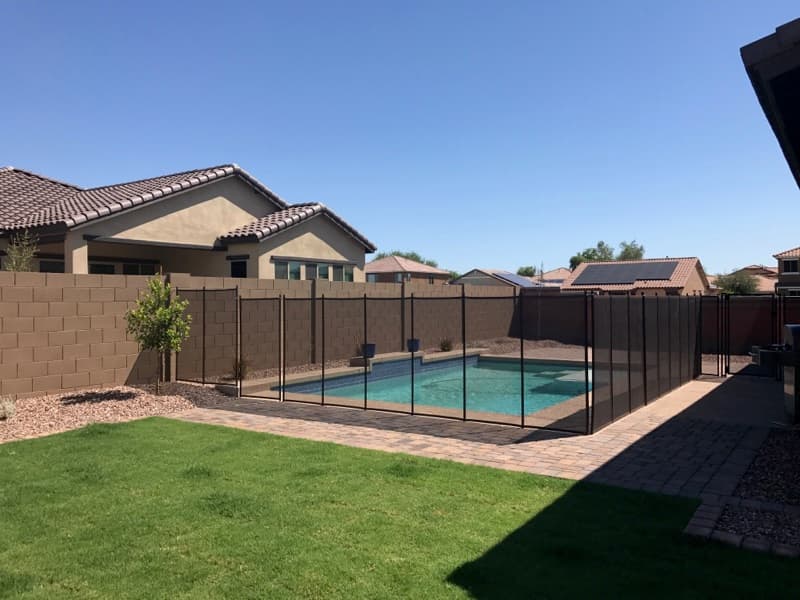
The permits. The Virginia Uniform Statewide Building Code requires a building permit for any swimming pool with a surface area greater than 150 square feet or more than 24 inches deep, according to Roanoke County, which adds that the code makes no distinction between in-ground, above-ground or inflatable pools, hot tubs or spas.[3] A pool that has lighting, circulation equipment or receptacle outlets needs an electrical permit, a field-installed heater needs a mechanical permit and a fuel-fired heater needs a gas permit.[4] Ask the seller for the permit paperwork and ask the building department whether the permits were closed out. An open or missing permit becomes your problem.
The equipment. Pump, filter, heater, lights, cover and automation are separate from the shell and the deck. Ask for service records, and have the inspector run what is safe to run. If the pool is closed for the winter, the inspector may not be able to test it, so ask what can be done and write down what could not be checked.
The shell and the deck. Cracks, lifting or sinking decking, a loose coping and a pool that loses water are all signs worth a specialist look before you waive anything.
Who does it
A pool inspection can be added to the home inspection or booked as a separate visit. Whichever you choose, get the pool named in the written scope. Virginia's contractor regulations define swimming pool construction contracting as the construction, repair, improvement or removal of in-ground swimming pools, and say no trade-related plumbing, electrical, backflow or HVAC work is included in that specialty,[5] so expect a licensed electrician or gas fitter to be needed for anything beyond looking. For what to expect on price, see how much a pool inspection costs in Virginia.
What to do with the results
Use the report to ask the seller for repairs, a credit or a lower price, or to walk away within the time your contract allows. Get repair quotes in writing before you decide. A fence gate latch is a small job; a leaking shell or an unpermitted electrical installation can be a large one.
Stop and call a pro if
- A drain cover is broken, missing or undated, or the pool has a suction problem.
- Lights, junction boxes or wiring around the water look damaged.
- A gas heater smells of gas or shows scorching.
- The seller cannot produce permits and the building department has no record.
- The pool is losing water or the shell is cracked.
To compare inspectors, read how to compare quotes and what a home inspection costs. You can also browse inspection answers and inspection services.
Buying a house with a pool? Describe the job once and local inspectors can quote it.
Common questions
- Does a home inspection cover the pool?
- Not by default. The list of what a Virginia home inspection report must cover names the structure, roof, exterior walkways and patios, interior, plumbing, electrical, heating and air conditioning, but not a swimming pool. Ask for it to be included in writing or book a separate pool inspector.
- Does the seller stand behind the pool?
- Not under the disclosure statement. Virginia's law has the owner state that the owner makes no representations or warranties as to the condition of the real property or any improvements thereon, and advises buyers to do their own due diligence.
- Does every pool need a permit?
- In Roanoke County, a pool with a surface area over 150 square feet or deeper than 24 inches needs a building permit, and pools with lighting, circulation equipment or receptacles need an electrical permit. Rules are local, so ask the building department.
- What if the pool is closed for the winter?
- An inspector may be unable to test equipment that is shut down or covered. Ask what can be checked, get what cannot be checked written down, and ask the seller about service records.
- Is the barrier the buyer's problem after closing?
- Yes, in practice. Once you own the property, the barrier, gate and drain covers are yours to maintain, so check them before you buy.
Sources
- [1] 18VAC15-40-130, Home inspection report, Virginia Administrative Code, Virginia General Assembly. Checked October 27, 2026.
- [2] Va. Code § 55.1-703, Required disclosures for buyer to beware; buyer to exercise necessary due diligence, Code of Virginia, Virginia General Assembly. Checked October 27, 2026.
- [3] Residential: Installing a Swimming Pool or Hot Tub, Roanoke County, Virginia, Building Safety. Checked October 27, 2026.
- [4] Residential Pools, Spas, & Hot Tubs Barrier & Safety Requirements, Roanoke County Office of Building Safety. Checked October 27, 2026.
- [5] 18VAC50-22-30, Definitions of specialty services (Board for Contractors Regulations), Virginia Administrative Code, Virginia General Assembly. Checked October 27, 2026.
Want a pro to handle it?
Describe the job once. Licensed local businesses send quotes, and you pay only when you book one.
Get a quote from a local pro