Should I hire a handyman or a carpenter to fix doors and windows?
Hire by the job, not the title. Virginia licenses neither "handyman" nor "carpenter"; it licenses contractors by contract size and type of work. A handyman suits small fixes like latches, hinges, sash cords and weatherstripping. Over $1,000, the business needs a contractor's licence, and anything that changes the framed opening or structure needs a permit and a contractor who does framing.
Free to ask. Local shops send quotes, and you pay only when you book one.
By Kasra Taheri, Founder, LoclisPublished
Researched and drafted with AI, then checked claim by claim against the sources listed below before it was published. Prices and rules change; the dates beside each source say when it was last checked.
Step by step
Read when to stop and call a pro, further down this page, before you start.
Step 1: Write down every problem
List each door and window, what is wrong with it, and add photos of the frame, sill and hardware.
Step 2: Check for rot and movement
Note soft wood at sills and jambs, cracks above openings, or several doors sticking at once, since those point to a bigger repair.
Step 3: Settle the permit question
If the job changes a framed opening or any structural component, plan on a building permit and a contractor who does that work.[5]
Step 4: Ask about historic districts
If the house is in a locally designated historic district, ask the building department whether replacement windows need a permit there.[5]
Step 5: Estimate the contract size
Ask for a total price, because a single contract or project over $1,000 needs a Virginia contractor's licence.[1]
Step 6: Look up the licence
On larger jobs, check the business on DPOR's licence lookup and confirm the licence is current and covers the work.[6]
Step 7: Ask about lead-safe certification
In a home built before 1978, ask whether the business is lead-safe certified before it disturbs painted doors, sashes or trim.[7]
Step 8: Ask repair or replace
Ask each bidder whether the existing door or window can be repaired, and what it would cost compared with a new unit.[9]
Step 9: Get three written bids
Ask at least three businesses to bid on the same list of work, and question any bid far below the rest.[6]
Step 10: Sign a written contract
Make sure it lists the work, materials, total price, payment schedule, dates and the contractor's licence number and class.[4]
Hire for the job in front of you, not the title on the truck. Virginia does not license "handymen" or "carpenters" as such. It licenses contracting businesses by the value of the contract and the kind of work. For small, self-contained fixes, such as a door that won't latch, a sagging hinge, a sticking sash or worn weatherstripping, a handyman with door and window experience is usually the right call. Once a single contract is over $1,000, the business needs a Virginia contractor's licence. And when the work changes an opening or touches the framing, you need a permit and a contractor who does structural work.
What Virginia law says
The starting point is the Code of Virginia: "No person shall engage in, or offer to engage in, contracting work in the Commonwealth unless he has been licensed"[2] under the contractor chapter. The smallest class starts where the money does. Class C contractors take on a single contract or project worth over $1,000 but less than $30,000,[1] and the law says the contract price shall be prima facie evidence of value.[1] The lowest class begins just over $1,000, so for a job priced above that the business you hire needs a licence.
"Carpenter" is not a licence in itself, but carpentry is spelled out in the Board for Contractors' specialties. They include finish carpentry contracting (FIN), which covers the installation, repair and finishing of cabinets, sash casing, door casing, baseboards and other millwork;[3] framing (FRM), which covers framing or rough carpentry, including repair of individual parts of a framing system;[3] glass and glazing (GLZ), which includes the glazing of frames, panels, sashes and doors and installing them;[3] and insulation and weather stripping (INS).[3] The home improvement (HIC) specialty and the residential building contractor (RBC) classification also cover each of these.[3] The licence class and specialty on DPOR's record matter more than what the business calls itself. One limit applies to all of them: "The HIC specialty does not provide for electrical, plumbing, HVAC, or gas fitting functions."[3]
When a permit enters the picture
Most door and window fixes need none. Under the Uniform Statewide Building Code, replacing windows and doors with ones of similar operation and opening dimensions, with no change to the existing framed opening and no fire rating required, needs no permit in a house,[5] and the installation or replacement of trim is also on the list of work that needs no permit.[5] By contrast, removing or adding any part of a wall, or work on any structural component, needs a permit.[5] Widening an opening, adding a door, or turning a window into a door is that kind of work. There is one local twist: a building official may require a permit for replacement windows in a historic district designated by the locality,[5] so ask your county or city before replacing windows in one.
When a permit is needed, the person applying for a permit must show proof of a contractor's licence or file a written statement that they are not subject to licensing.[5] DPOR's consumer guide is direct: "Licensed contractors should apply for and obtain all building permits, not the consumer."[6]
Matching the job to the right person
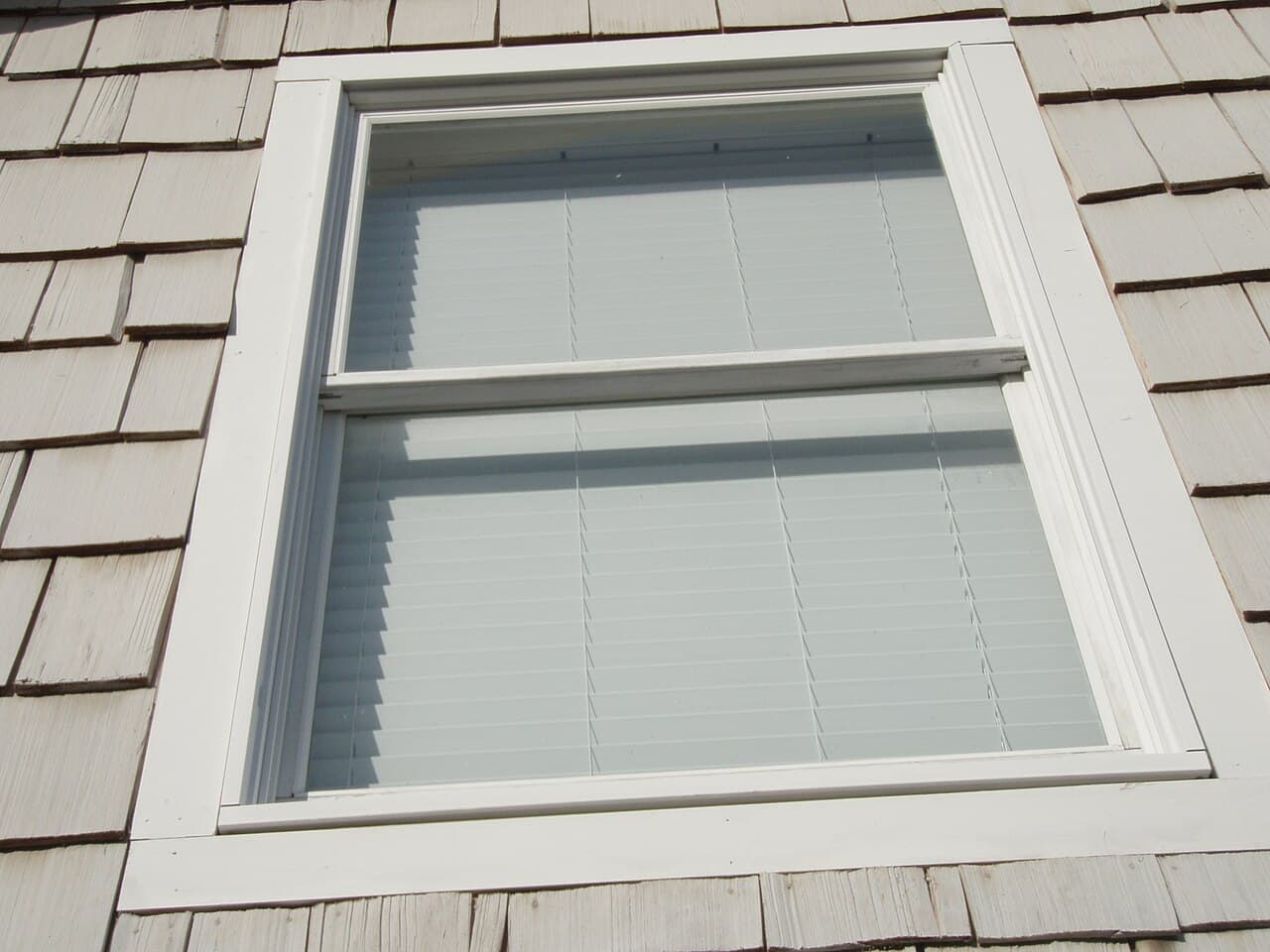
A handyman fits adjusting doors and strikes, replacing hinges, locksets and weatherstripping, freeing a sticking sash, replacing sash cords or balances, reglazing a pane, and caulking trim. The National Park Service notes that repairs to wooden windows are usually labor intensive and relatively uncomplicated,[9] so an old window that sticks or rattles is often worth having repaired before anyone prices a replacement.
A finish carpenter fits work where the trim is the job: new casing, a slab door fitted to an old frame, or matching old millwork.
A contractor who does framing fits anything that changes an opening, and any repair where rot has gone past the door or window into the framing. The Park Service says moisture is the primary contributing factor in wooden window decay,[9] and water that has been getting in for years rarely stops at the sill.
An electrician is needed for anything wired, such as a lit doorbell, an electric strike or a light beside the door.
Older homes. Doors and windows are where old paint wears. The EPA warns that old or worn lead-based paint on surfaces subject to constant friction, like doors and window sills, can produce chips and dust that become a hazard.[8] Under its rule, anyone paid to perform work that disturbs paint in housing built before 1978 must be certified in lead-safe work practices.[7] "This includes all firms, even sole proprietorships."[7] That applies to the handyman as much as the contractor.
Checking whoever you hire
Look the business up yourself. DPOR warns: "A license number in an advertisement or on a business card does not necessarily mean the contractor’s license is valid."[6] The guide also says: "If you contract with someone who does not hold a license, the Board for Contractors may not be able to help you resolve a complaint",[6] while hiring a licensed contractor makes you eligible for compensation from the Contractor Transaction Recovery Fund in case of improper or dishonest conduct.[6] How to check if a contractor is licensed in Virginia walks through the lookup.
Get at least three written bids or estimates using identical plans and specifications.[6] Licensed contractors doing residential work must use a written contract, signed by both sides before work starts or any payment is taken, unless the job is routine maintenance or a service contract.[4] It has to include, among other things, when work will begin and end, the total cost, the payment schedule and down payment, the materials and work specified, and the contractor's name, address, licence number, class and specialties.[4]
Stop and call a pro if
- The sill, the bottom of a jamb or the wall below a window is soft, stained or crumbling.
- New cracks have opened above doors or windows, or several of them started sticking at once.
- You want an opening made wider, taller, moved, or added.
- The door or window has wiring, or the door is one that must be fire rated.
- The house was built before 1978 and the work disturbs painted doors, sashes or trim.
For entry doors in particular, see whether to hire a contractor or a handyman to replace an exterior door, and for the licence line in detail, what jobs a handyman can do without a contractor licence. Browse handyman services, handymen around Blacksburg and more handyman answers. When you are ready, describe the door or window repair once and licensed local businesses quote it.
Common questions
- Is a carpenter licensed in Virginia?
- Not as a carpenter. Virginia licenses contracting businesses, and carpentry falls under specialties such as finish carpentry (trim, casing and millwork) and framing (rough carpentry), or under the broader home improvement and residential building licences. A carpenter working on a job worth $1,000 or less needs no contractor licence; over that, the business needs one.
- Can a handyman replace a window or an exterior door?
- Yes, if the job is within what the business can legally contract for and the new unit fits the existing framed opening. A like-for-like replacement needs no permit in a house unless the door must be fire rated or the locality requires one in a historic district. Ask how the installer flashes and seals the unit, because that is where leaks start.
- Who fixes a window that is painted shut or has broken sash cords?
- A handyman or carpenter who repairs old windows. The National Park Service describes this kind of repair as labour intensive but relatively uncomplicated. In a house built before 1978, the person you pay must be lead-safe certified, because freeing a painted sash disturbs old paint.
- When do I need a contractor instead of a handyman?
- When the total is over $1,000, when the job changes a framed opening or any structure, when rot has reached the framing around the opening, or when wiring is involved. A contractor who does framing pulls the permit in its own name, which keeps the responsibility for the job with the business doing it.
- Should I split a big list into small jobs to stay under $1,000?
- No. Licensing goes by the value of a single contract or project, and the contract price is the evidence of that value. If you hire someone unlicensed for a larger job, the Board for Contractors may not be able to help you with a complaint.
Sources
- [1] Va. Code § 54.1-1100. Definitions (contractors), Code of Virginia, Virginia General Assembly. Checked October 27, 2026.
- [2] Va. Code § 54.1-1103. Necessity for license, Code of Virginia, Virginia General Assembly. Checked October 27, 2026.
- [3] 18VAC50-22-30. Definitions of specialty services, Virginia Administrative Code, Virginia General Assembly. Checked October 27, 2026.
- [4] 18VAC50-22-260. Filing of charges; prohibited acts, Virginia Administrative Code, Virginia General Assembly. Checked October 27, 2026.
- [5] 13VAC5-63-80. Section 108 Application for permit (Virginia Uniform Statewide Building Code), Virginia Administrative Code, Virginia General Assembly. Checked October 27, 2026.
- [6] What You Should Know Before You Hire a Contractor, Virginia Board for Contractors, DPOR. Checked October 27, 2026.
- [7] Lead Renovation, Repair and Painting Program, U.S. Environmental Protection Agency. Checked October 27, 2026.
- [8] Protect Your Family from Sources of Lead, U.S. Environmental Protection Agency. Checked October 27, 2026.
- [9] Preservation Brief 9: The Repair of Historic Wooden Windows, Technical Preservation Services, National Park Service. Checked October 27, 2026.
Want a pro to handle it?
Describe the job once. Licensed local businesses send quotes, and you pay only when you book one.
Get a quote from a local pro