Why is there a draft around my windows?
A window draft usually comes from one of three places: between the sash and the frame, where weatherstripping is worn or the lock is not pulling the sashes tight; between the window frame and the wall, behind the trim; or through cracked glass and missing putty. Cold single-pane glass can also chill the air next to it, which feels like a draft even without a leak.
Free to ask. Local shops send quotes, and you pay only when you book one.
By Kasra Taheri, Founder, LoclisPublished
Researched and drafted with AI, then checked claim by claim against the sources listed below before it was published. Prices and rules change; the dates beside each source say when it was last checked.
Step by step
Read when to stop and call a pro, further down this page, before you start.
Step 1: Lock the window first
Close and lock the window, since the lock pulls the sashes together so the weatherstripping can seal.[6]
Step 2: Test with smoke
On a windy day, hold a lit incense stick near the sash edges, the meeting rail and the trim; smoke blowing sideways marks a leak.[5]
Step 3: Try the paper test
Close the window on a sheet of paper or a dollar bill: if it slides out easily, the weatherstripping is not sealing at that spot.[2]
Step 4: Look at the trim joint
Check where the window frame meets the interior wall; there should be no visible gap there.[1]
Step 5: Inspect the glass and putty
From outside, look for cracked panes and for cracked or missing glazing putty around each pane.[1]
Step 6: Check the outside caulk
Look for caulk that has cracked or peeled where the window frame meets the siding or brick.[2]
Step 7: Fix the lock if it is loose
Tighten or replace a sash lock that no longer pulls the sashes tight, since a rattling window leaks.[1]
Step 8: Add or replace weatherstripping
Use V-strip in the side channels of a double-hung window and compression strip on casement and awning windows.[1]
Step 9: Caulk the interior trim
Run a thin bead of clear silicone caulk where the window trim meets the wall, after cleaning the joint.[1]
Step 10: Cover single-pane glass for winter
Add an interior storm panel or shrink-fit plastic film on single-pane windows, and close the curtains at night.[1]
A draft at a window usually has one of three causes. Air is slipping between the sash and the frame because the weatherstripping is worn or the lock is not pulling the sashes tight. Air is coming around the window frame, through a gap behind the trim. Or air is leaking through cracked glass and missing putty. On old single-pane windows there is a fourth: the glass is so cold that the air beside it feels like a draft even when nothing leaks. Each has a different fix, so find which one you have before buying anything.
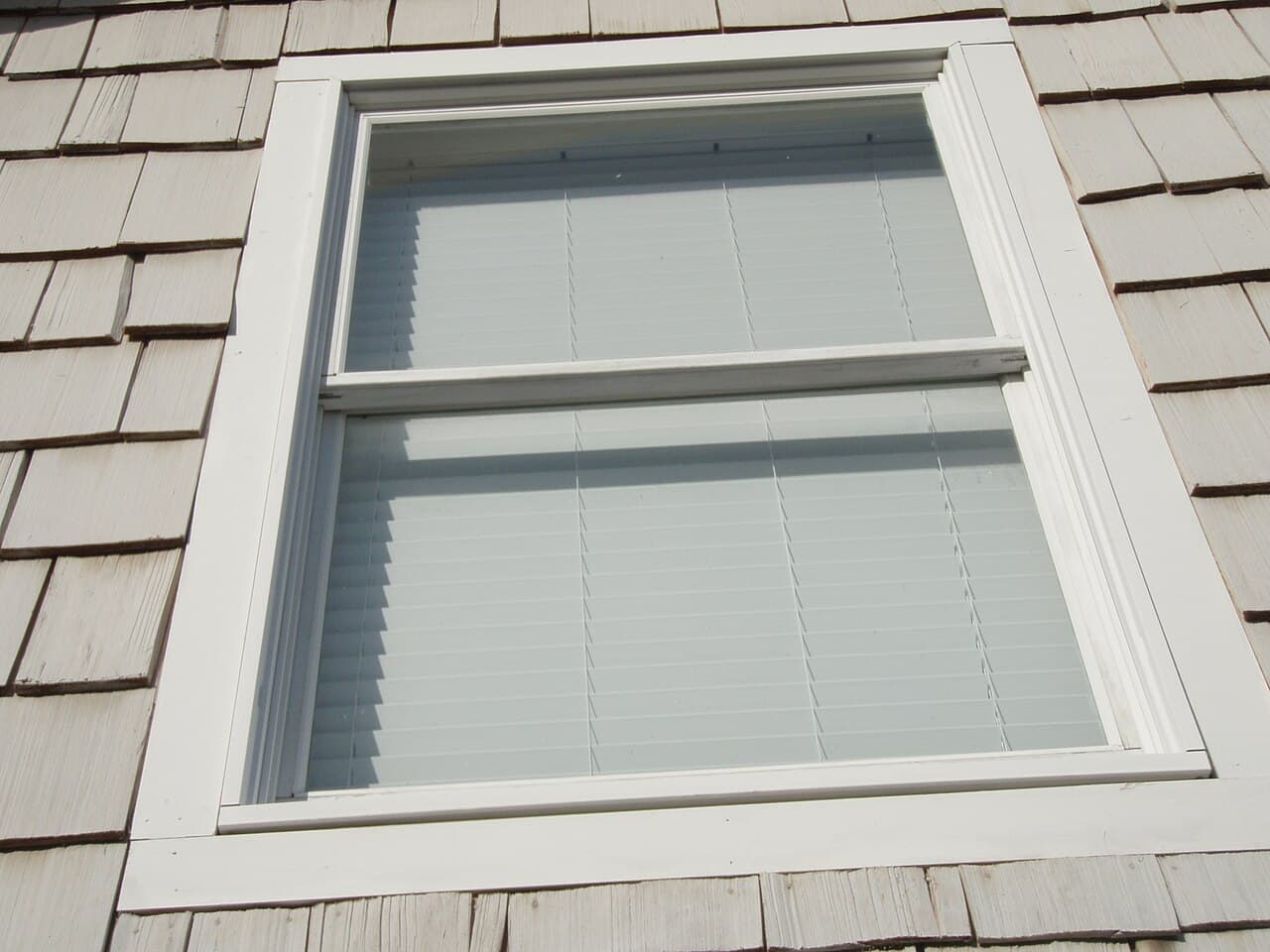
Why windows feel drafty in winter
Drafts get worse in cold weather for a reason. ENERGY STAR explains that warm air rises in a house the way it does in a chimney, escapes into the attic, and pulls cold air in around windows, doors and holes into the basement.[4] The window is where you feel it, but it may not be where the problem starts. ENERGY STAR notes that in most homes the most significant air leaks are hidden in the attic and basement,[4] and the Virginia Energy Savers Handbook says leaks through walls and windows, although more conspicuous, allow less actual energy loss.[1] Fix the window for comfort, and see where the biggest air leaks in a house are for the bill.
Find the leak
Lock the window, then test it on a windy day:
- Smoke. Hold a lit incense stick near the edges of each sash, the meeting rail in the middle, and the trim. The Department of Energy's rule: "If the smoke stream travels horizontally, you have located an air leak."[5]
- Paper or a dollar bill. Virginia Cooperative Extension suggests you insert a dollar bill in the closed window, and if it falls or slips out easily, the weatherstripping should be repaired or replaced.[2] ENERGY STAR's version is to close the window on a piece of paper, and if it moves back and forth easily, the window could be tighter.[3]
- Look. Inside, check where the window frame meets the wall. The handbook is plain: "There should be no visible gap between the window frame and wall surface."[1] Outside, check the outside for any sign of caulking that has cracked or peeled,[2] and look at the glass and putty.
Cause 1: the sash does not seal
This is the most common source on double-hung windows. "Loose windows not only lose heat through air leakage, but are also sources of uncomfortable drafts in winter."[1] The handbook says to check that the window lock works properly and look for weatherstripping in the side channels.[1] The lock matters more than people expect: the National Park Service notes that sash locks on the meeting rail keep the sash tightly closed so the weatherstripping works more effectively.[6]
Age matters too. The handbook says old double-hung windows with sash weights were typically quite leaky, while newer ones have much better weatherstripping.[1] Its rule is simple: "If a window leaks air when firmly locked or if the original weather stripping is visibly worn or missing, you should install new weather stripping."[1] The usual products are metallic V-strip for double-hung windows and rubber compression strips for casement and awning windows,[1] with low-cost rope caulk, a putty-like material for temporarily sealing joints,[1] for a window you will not open all winter.
Extension notes that weatherstripping a window is more complicated than a door, because it goes in the tracks as well as above, below and between the sashes.[2] "Metal or plastic v-channel weather-stripping should be used in the tracks of the windows and in between the sashes."[2] Test that the window still opens and closes easily afterwards.
Cause 2: air comes around the frame
If the sash seals but you still feel air at the trim, the leak is in the gap between the window and the wall framing. The handbook says the most effective place to caulk for controlling air leakage around windows is where the window frame meets the interior wallboard,[1] and suggests you caulk around interior trim with clear silicone caulk.[1]
For a bad leak, the fix is behind the trim. ENERGY STAR says a lack of insulation, or only a small amount of sealant, in the gap between the wall framing and the window jamb indicates poor sealing.[3] Its guidance is caulk for gaps of a quarter inch or less, and non-expanding foam made for windows and doors or backer rod for larger ones,[3] and it says not to force backer rod in so hard that the frame bends, which can affect how the window opens and closes.[3] Taking trim off disturbs paint: If your home was built before 1978, or the work disturbs paint, ENERGY STAR points you to the EPA's lead-safe renovation resources first.[3]
Cause 3: the glass and putty
Broken glass is obvious, but the handbook warns that even cracked panes of glass allow a significant loss.[1] On older wood windows, check the glazing putty that holds each pane. According to the handbook, small cracks in the putty may only need a good coat of paint, but larger cracks or missing putty mean the window may need reglazing.[1]
Cause 4: cold single-pane glass
A single pane of glass gets very cold, and the air beside it cools and sinks toward the floor. The handbook says single-glazed windows should have storm windows for winter use.[1] The Department of Energy says low-e exterior or interior storm windows can save 10% to 30% on heating and cooling costs, depending on the type of window already installed.[5] Cheaper options work too: shrink-to-fit plastic film for temporary interior storm windows,[1] and the Department of Energy's advice to close curtains and shades at night to protect against cold drafts,[5] or to fit tight-fitting, insulating window shades on windows that still feel drafty after weatherizing.[5]
Watch the glass, too. The handbook notes that condensation on the glass or frame in cold weather may simply be caused by excessive indoor humidity, but might also be caused by cold air leakage around the glass.[1]
Stop and call a pro if
- The sill, the bottom of the sash or the wall below the window is soft, stained or crumbling, or water comes in during rain.
- The window will not lock, will not stay open, or slams shut, which can mean a broken balance or sash cord.
- The leak is on an upper floor window that you can only reach from a tall ladder outside.
- The house was built before 1978 and fixing it means removing painted trim or scraping old putty.
- The gap behind the trim is wider than foam or backer rod can fill, or the frame is clearly out of square.
Once the windows are sealed, check weatherstripping and caulk on a schedule, and if the window is past saving, read how to know if windows need to be replaced. Browse handyman services, handymen around Blacksburg and other handyman answers. For help, describe the window repair once and local businesses quote it.
Common questions
- Why do my windows feel drafty even when they are closed and locked?
- The air may be coming around the window frame rather than past the sash, through a gap behind the trim. Or the glass may simply be cold: on a single-pane window, the air next to the glass cools and sinks, which feels like a draft. A smoke test tells the two apart: a real leak blows the smoke sideways.
- Are new windows the only fix for a drafty window?
- Usually not. A working lock, new weatherstripping, caulk at the interior trim and new putty fix most drafts. Storm windows, inside or outside, cut both drafts and heat loss on old single-pane windows. Replacement makes sense when the frame or sash is rotted or the window no longer works.
- Is plastic window film worth it?
- For a winter or two, it is an inexpensive way to stop drafts on single-pane windows, which is why Virginia's energy handbook mentions it for renters. It is a temporary fix: it has to come off in spring, and it does nothing for gaps behind the trim.
- Should I caulk the outside or the inside of a window?
- For drafts, the inside: the Virginia Energy Savers Handbook says the most effective place to caulk is where the window frame meets the interior wallboard. Outside caulk keeps rain out of the wall, so cracked exterior caulk still needs replacing, but leave the weep holes at the bottom of storm windows open.
- Will fixing window drafts lower my heating bill much?
- It makes rooms more comfortable, but the bigger savings are usually elsewhere. ENERGY STAR says the most significant air leaks in most homes are hidden in the attic and basement, where warm air escapes and pulls cold air in around the windows.
Sources
- [1] Virginia Energy Savers Handbook, third edition (2006), Virginia Tech and the Virginia Department of Mines, Minerals and Energy. Checked October 27, 2026.
- [2] ENERGY SERIES: What about Caulking and Weather-Stripping? (2908-9017), Virginia Cooperative Extension, Virginia Tech. Checked October 27, 2026.
- [3] Sealing Behind Window & Door Trim Project, ENERGY STAR, U.S. Environmental Protection Agency. Checked October 27, 2026.
- [4] A Do-It-Yourself Guide to Sealing and Insulating with ENERGY STAR, ENERGY STAR, U.S. Environmental Protection Agency. Checked October 27, 2026.
- [5] Energy Saver Guide: Tips on Saving Money and Energy in Your Home (2022), U.S. Department of Energy. Checked October 27, 2026.
- [6] Preservation Brief 9: The Repair of Historic Wooden Windows, Technical Preservation Services, National Park Service. Checked October 27, 2026.
Want a pro to handle it?
Describe the job once. Licensed local businesses send quotes, and you pay only when you book one.
Get a quote from a local pro